
The Definitive 2026 Guide to Portable Soundproof Booths: Performance, Pricing & Future Trends
- What is a Portable Soundproof Booth?
- 2026 Industry Snapshot: Key Takeaways for Buyers
- The Science of Silence: Understanding STC vs. NRC
- Sound Transmission Class (STC) Ratings
- Noise Reduction Coefficient (NRC)
- Expert Comparison: Professional Modular vs. DIY Solutions
- Experience from the Factory Floor
- The Modular Advantage
- The 2026 Future Gap: AI-Integrated Booths and Eco-Standards
- Key Future Features
- Common Mistakes to Avoid When Buying a Booth
- Frequently Asked Questions (FAQ)
- Can a portable booth block 100% of outside noise?
- Are portable soundproof booths actually "portable"?
- How do I prevent a portable booth from getting too hot?
- What is the average cost of a professional portable booth in 2026?
- Do I need tools to assemble a modular sound booth?
- References
In an era where 63% of employees report trouble concentrating due to workplace noise (Jabra, 2024), the portable soundproof booth has evolved from a luxury recording tool to a remote work necessity. Whether you are a voice-over artist requiring a portable vocal booth 2026 model or a corporation refitting an open-plan office, understanding the acoustic science behind these units is critical to your ROI.
What is a Portable Soundproof Booth?
A portable soundproof booth is a modular, self-contained acoustic isolation enclosure designed to reduce noise transmission by 30dB–50dB while preventing internal sound leakage. unlike permanent construction, these units rely on high-density composite panels and decoupling technology to create a "room-within-a-room" that can be disassembled and relocated.

Modern booths are engineered for versatility, serving three primary functions:
- Vocal Isolation: Creating a dry, reflection-free environment for professional audio recording.
- Privacy Pods: providing speech privacy in hybrid offices to meet ISO 23351-1 standards.
- Focus Spaces: Reducing external distractions by up to 85% for deep work.
2026 Industry Snapshot: Key Takeaways for Buyers
The 2026 market is defined by a shift toward sustainable materials, AI-integrated ventilation, and tool-free modularity. Manufacturers are moving away from petrochemical foams toward recycled PET acoustics and integrating smart systems that actively monitor air quality.
Key trends driving the 2026 market include:
- Hybrid Work Dominance: With 75% of adults working remotely by 2025, demand for home-office booths has eclipsed traditional studio needs.
- Smart Integration: Standard features now often include USB-C PD hubs, occupancy sensors, and silent, app-controlled ventilation.
- Eco-Standards: A push for carbon-neutral manufacturing, utilizing recycled composites that offer higher absorption efficiency than traditional foam.
- Resale Value: High-quality modular units now retain approximately 70% of their value on the secondary market, making them a safer asset investment than permanent renovations.
The Science of Silence: Understanding STC vs. NRC
To evaluate a booth's performance, you must distinguish between blocking sound (isolation) and stopping echo (absorption). Many buyers mistakenly purchase "acoustic treatment" thinking it will soundproof their room, which leads to disappointment.
Sound Transmission Class (STC) Ratings
Sound Transmission Class (STC) ratings measure a material's ability to block airborne sound from entering or leaving the booth.
- Target: Look for an STC rating of 30 or higher for professional speech privacy.
- Reality: A standard drywall partition has an STC of ~33. High-end modular recording studio booth panels often achieve STC 40+, effectively muting loud shouts to a faint murmur.
Noise Reduction Coefficient (NRC)
Noise Reduction Coefficient (NRC) measures how much sound energy is absorbed by the interior surfaces to prevent reverb and "boxiness."
- Target: An NRC of 0.8 or higher is ideal for vocal recording.
- Effect: This ensures your voice sounds clear and professional, rather than hollow or metallic.
Expert Comparison: Professional Modular vs. DIY Solutions
While DIY solutions appear cheaper upfront, they often fail to provide safe airflow or certified acoustic isolation. Data from 2025 indicates that professional modular solutions offer a significantly lower total cost of ownership when factoring in labor, resale value, and health safety.
Experience from the Factory Floor
At INBOXpod, we have observed this disparity firsthand over a decade of manufacturing. Clients often come to us after attempting DIY builds that resulted in CO2 buildup and heat exhaustion. Our soundproof office pod and soundproof study pod lines are engineered with certified silent ventilation systems that cycle air every three minutes without breaking the acoustic seal—a feat nearly impossible to achieve with hardware store fans.
The Modular Advantage
- Consistency: Factory-made units like INBOXpod's utilize precision CNC-machined panels for a perfect acoustic seal every time.
- Assembly Speed: Modern "snap-lock" technology allows a modular recording studio booth to be assembled in under 60 minutes, compared to weeks of construction.
- Portability: True portability means the unit can be palletized and shipped. INBOXpod supports clients in over 60 countries, ensuring that your investment can move with you, whether you relocate down the street or across the ocean.
The 2026 Future Gap: AI-Integrated Booths and Eco-Standards
The next generation of booths focuses on active acoustic adaptability and strict adherence to global safety standards. As we move into 2026, "dumb" boxes are being replaced by intelligent environments.
Key Future Features
- ISO 23351-1 Compliance: This is the new global gold standard for measuring speech level reduction. Ensure your acoustic isolation enclosure is tested against this metric, ideally achieving Class B (25–30dB reduction) or higher.
- Active Noise Control: Emerging hybrid booths are beginning to combine heavy mass layers with Active Noise Cancellation (ANC) to tackle low-frequency rumble (like traffic) that physical mass struggles to block.
- Circular Economy: Brands are increasingly offering modular upgrades—such as swapping out a solid door for a glass one—extending the product lifecycle and reducing e-waste.
Common Mistakes to Avoid When Buying a Booth
The most common error buyers make is prioritizing the footprint size over the internal working volume. A booth may fit in your room, but if you cannot extend your arms or fit your chair comfortably, it is useless for long sessions.
Avoid these critical pitfalls:
- Ignoring Impact Noise: Airborne soundproofing does not stop floor vibrations (footsteps). You must ensure the booth has a "floating floor" mechanism.
- Underestimating Heat: A sealed box captures body heat rapidly. Ensure the ventilation system is rated for at least 30 CFM (Cubic Feet per Minute) to maintain safety.
- Confusing Absorption with Isolation: Gluing foam to thin walls will improve audio quality inside but will not stop noise from entering. You need mass and density to block sound.
Frequently Asked Questions (FAQ)
Can a portable booth block 100% of outside noise?
No booth can provide 100% silence due to structural flanking and the laws of physics. However, high-end units with high Sound Transmission Class (STC) ratings can reduce noise by 40dB–50dB. This level of reduction turns the sound of a busy street or loud office into the equivalent of a quiet library, which is sufficient for professional recording and focus work.
Are portable soundproof booths actually "portable"?
Portability varies from lightweight luggage-style mic shields to heavy modular walk-in units. A professional modular recording studio booth is "portable" in the sense that it can be disassembled, flat-packed, and transported in a vehicle. It is not designed to be rolled around a room fully assembled unless it is a specific castor-mounted office pod model.
How do I prevent a portable booth from getting too hot?
You must select a booth with a purpose-built, acoustically baffled ventilation system. These systems use labyrinth-style ducts to allow airflow while trapping sound waves. Look for ultra-quiet fans rated under 20dB. INBOXpod, for example, integrates silent ventilation systems specifically designed to keep oxygen levels high without compromising the noise floor.
What is the average cost of a professional portable booth in 2026?
Entry-level solutions start around $2,500, while professional-grade modular booths range from $5,500 to $15,000.
- Tabletop Shields: $150 – $500
- Single-Person Office Pods: $3,500 – $8,500
- Professional Studio Booths: $6,000 – $15,000+ Price largely depends on the size, STC rating, and included features like lighting and furniture.
Do I need tools to assemble a modular sound booth?
Most 2026 premium models utilize tool-free snap-lock or magnetic systems for assembly. While older models required drills and heavy carpentry, modern engineering allows a solo user (or a team of two) to assemble a standard booth in 30 to 60 minutes using only an Allen key or simple latch mechanisms.
References
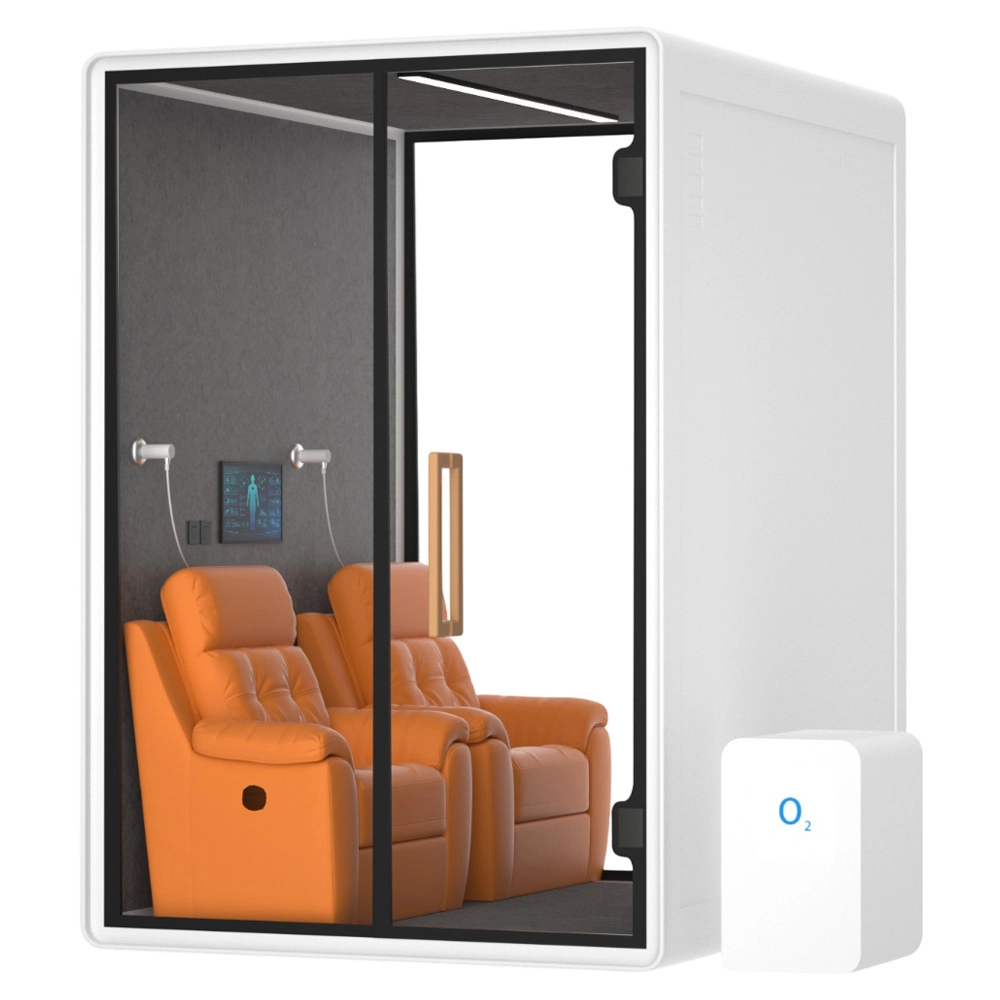
Double Seat Oxygen Pod — Soundproof Wellness & Privacy Pod for Two
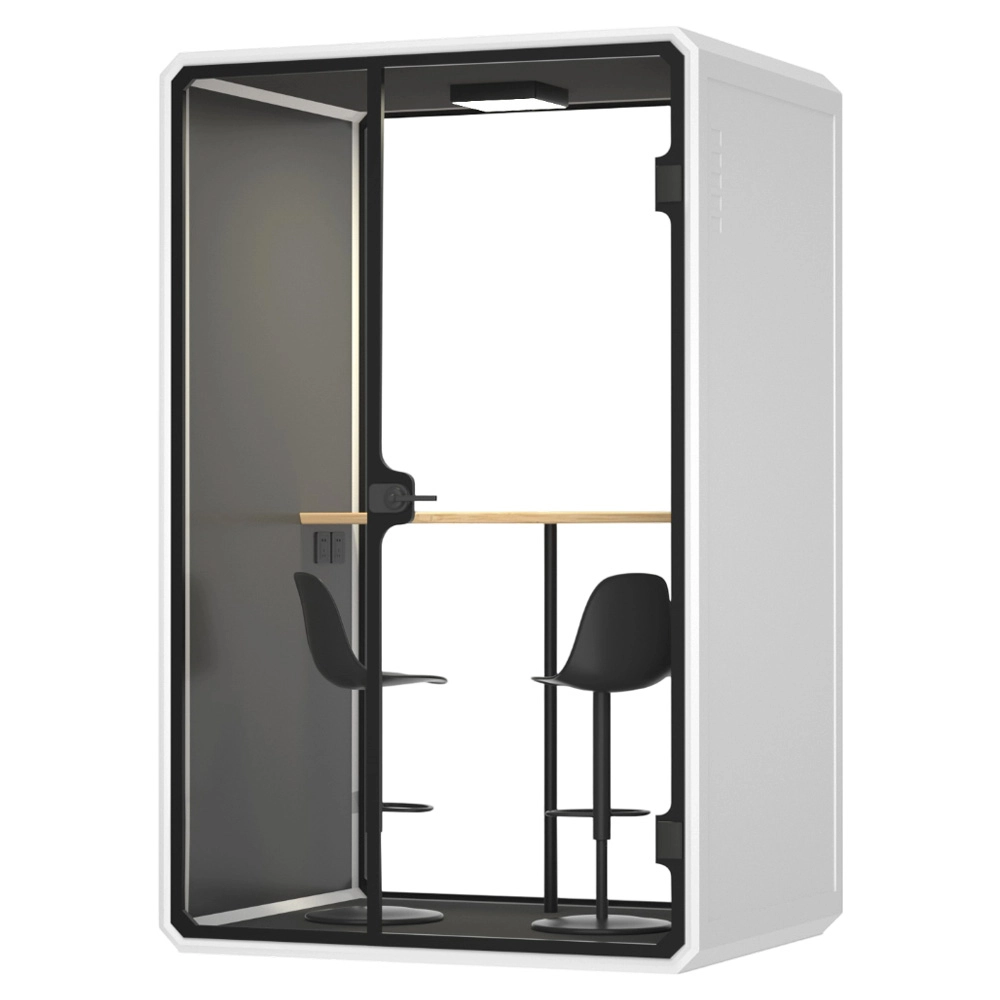
Real User Reviews: Silence Booth/Office Pod V-Series M
Soundproof Office Pod Benefits for Open Plan Workspaces
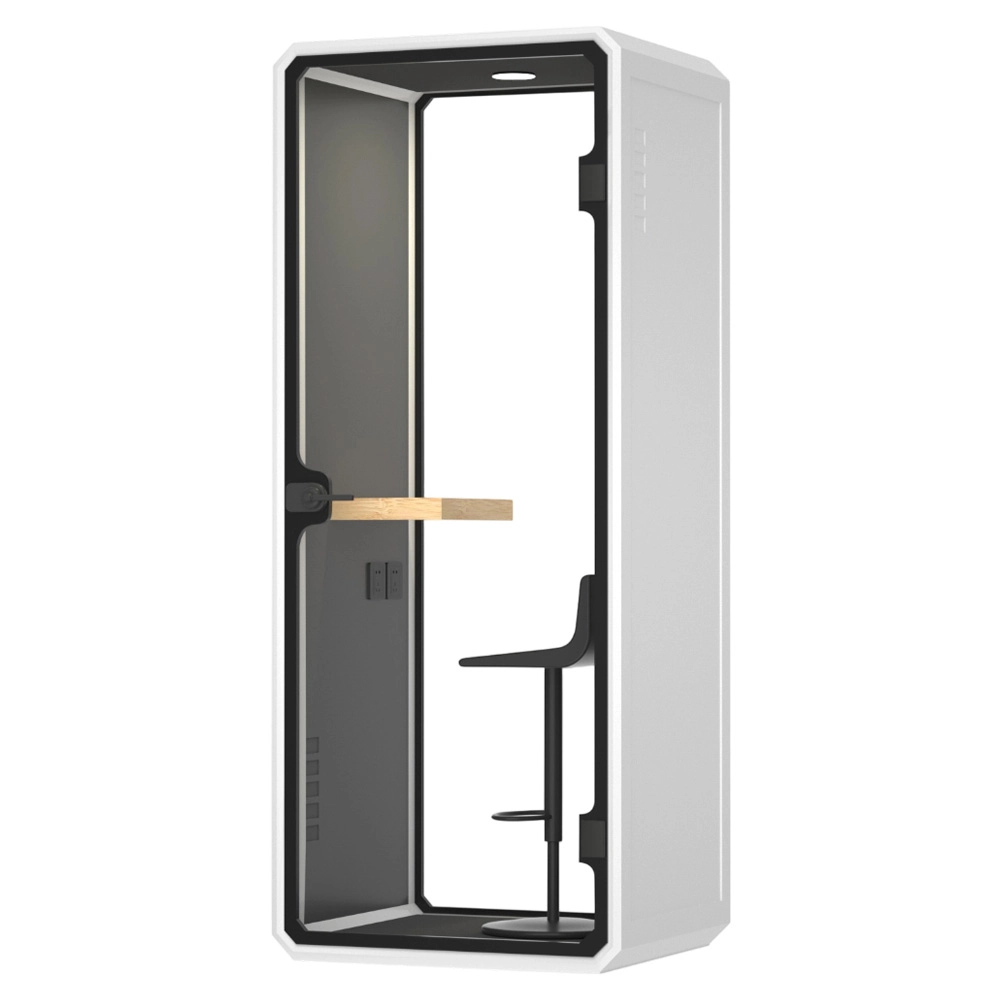
Buyer's Guide: Portable Soundproof Booths for Small Offices
Home-demo
What materials are used in the construction of the booths?
Our booths are made from sustainable, high-quality materials including aluminum alloy frames and acoustic panels designed for optimal soundproofing.
What is the typical sound insulation level of your acoustic booths?
Our booths typically achieve up to 27 dB noise reduction, meeting Class B sound insulation standards suitable for offices and study environments.
How long does it take to assemble an INBOXpod booth?
Most of our booths can be assembled without tools in about 30 minutes, making installation quick and hassle-free.
Do you provide after-sales support and warranty?
Yes, we provide comprehensive after-sales service and warranty to ensure long-term satisfaction with our products.
Can the booths be customized to fit specific space requirements?
Yes, we offer flexible customization options including size, color, and additional features to perfectly suit your needs.
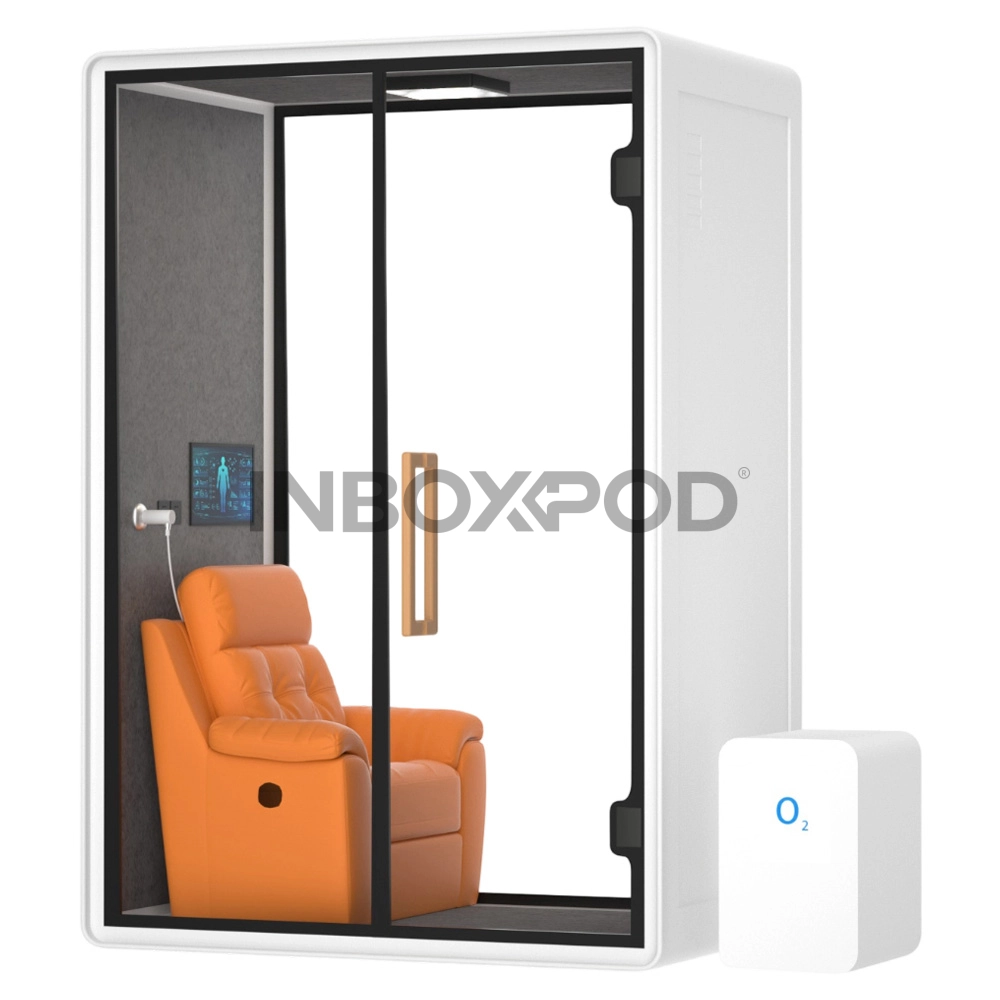
INBOXpod Soundproof Single seat Oxygen Pod
A delicate and compact personal oxygen therapy secret, with a single-seat layout that is flexible and convenient. External size: W1600×D1028×H2300 mm; internal size: W1466×D953×H2166 mm. Create a quiet, private domain for you, where you can inhale high-purity oxygen efficiently during daily relaxation or postoperative recovery, helping to improve cardiopulmonary function and mental state.
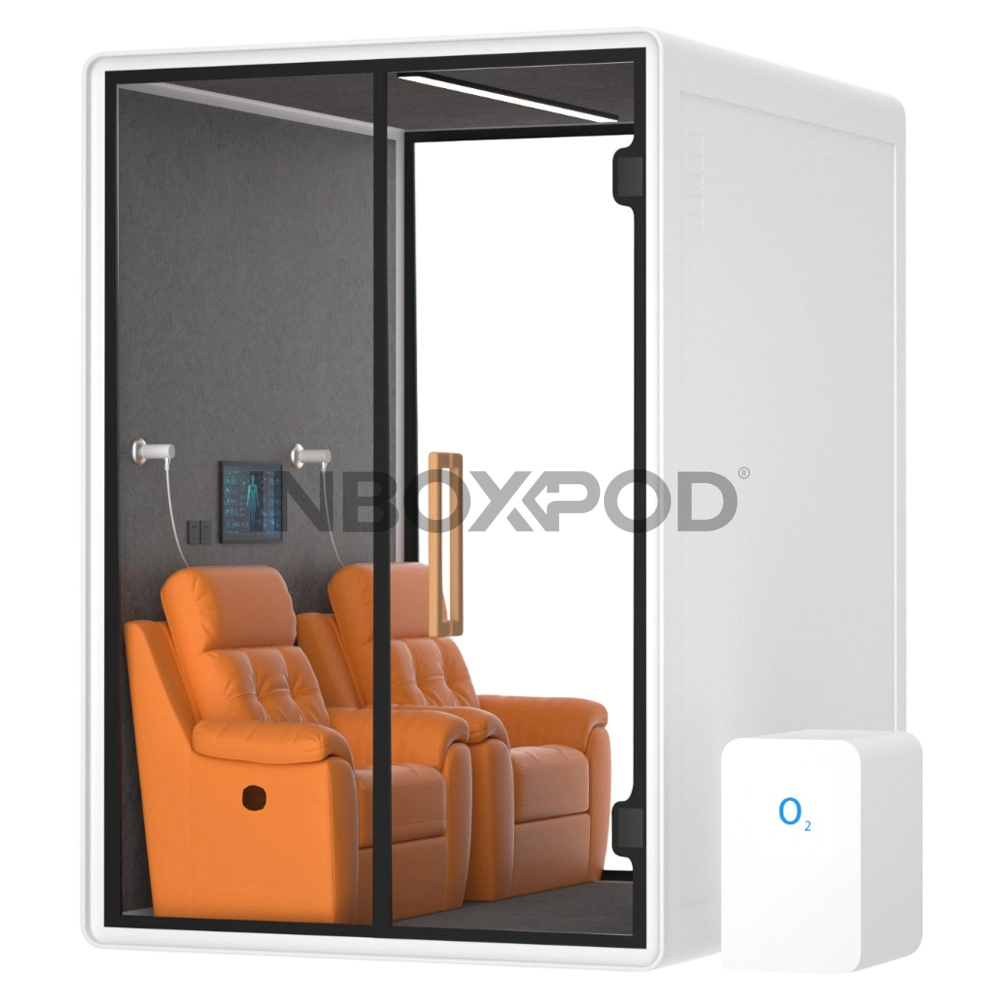
INBOXpod Double Seat Soundproof Oxygen Pod
An oxygen therapy space customized for double social interaction and health, with a double-seat design to promote a win-win situation for interaction and health. External size: W1600×D1929×H2300 mm; internal size: W1466×D1854×H2166 mm. You can improve cardiovascular function and concentration through oxygen therapy with friends and colleagues in a quiet and efficient acoustic environment, making health and social interaction complement each other.
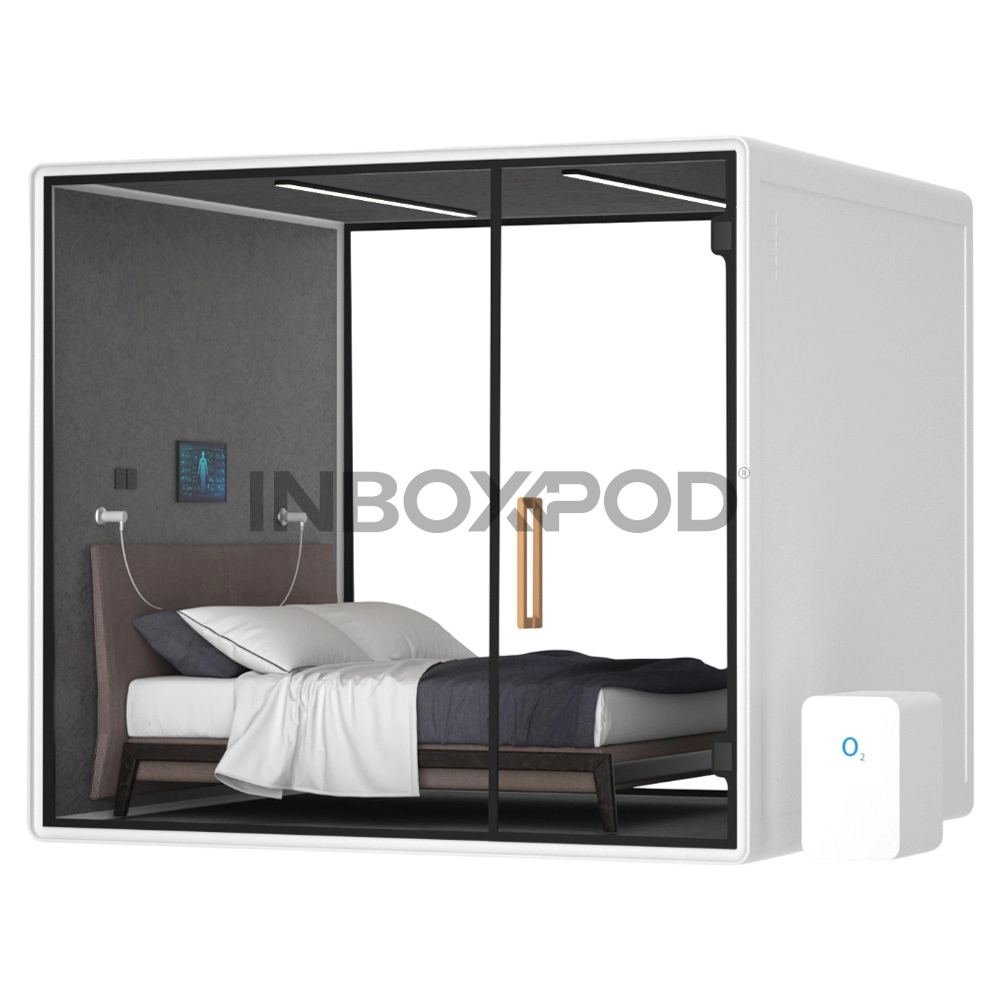
INBOXpod Soundproof Double Bed (small) Oxygen Pod
A double oxygen therapy option that balances space and experience, with a small double-bed layout suitable for various scenarios. External size: W2300×D1854×H2300 mm; internal size: W2300×D1929×H2300 mm. You can share the high-oxygen environment here with relatives and friends, relieve stress, improve physical fitness, and gain health and vitality in company.
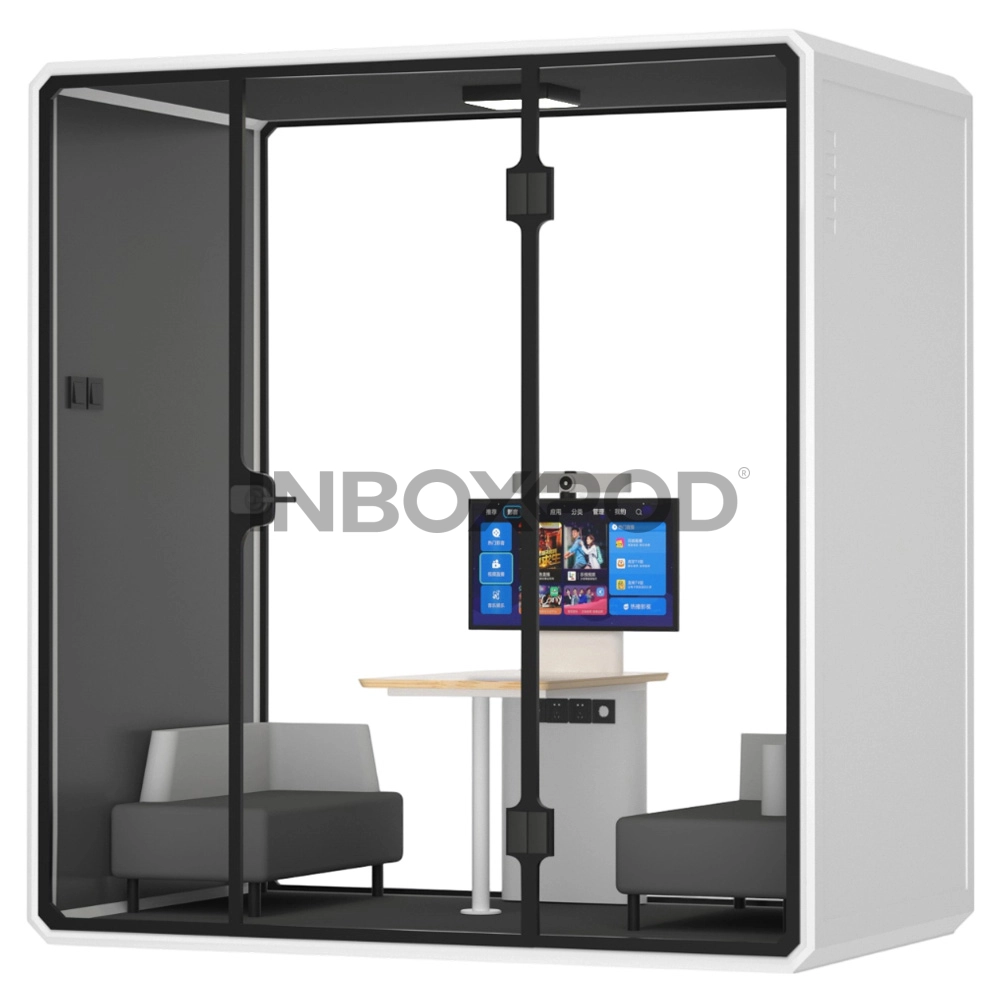
Silence Booth/Office Pod Prefabricated V series-L size
Designed for team collaboration and small meetings, the L-size booth provides a comfortable and acoustically optimized space for 4–6 people. With premium sound insulation, efficient ventilation, and integrated lighting and power systems, it ensures focus, privacy, and productivity—even in the busiest open offices.
Whatsapp: +8613535292957