
Acoustic Performance Metrics Procurement Teams Must Know
- Acoustic Performance Metrics Procurement Teams Must Know
- Why procurement teams need to speak acoustic metrics when buying a soundproof audio booth
- Key metric: Decibel (dB) reduction — the headline measure for a soundproof audio booth
- Sound Transmission Class (STC) / Weighted Sound Reduction Index (Rw): international comparators for a soundproof audio booth
- Noise Reduction Coefficient (NRC) — what a soundproof audio booth does to inside acoustics
- Reverberation time (RT60) — user comfort inside a soundproof audio booth
- Background noise criteria (NC) — how quiet should the interior of a soundproof audio booth be?
- Venting, fresh-air systems, and their acoustic trade-offs in a soundproof audio booth
- Practical procurement checklist for specifying a soundproof audio booth
- Table: Acoustic metrics and practical target values for a home soundproof audio booth
- How to interpret lab reports and measurement standards for a soundproof audio booth
- Value beyond numbers — ergonomics, aesthetics, sustainability, and service
- Comparing vendors: creating a scoring matrix that weights acoustic metrics appropriately
- Why INBOXpod? Brand summary linking acoustic metrics to product strengths
- FAQs — Acoustic performance and procurement for soundproof audio booths
- Q: What is the difference between 30 dB reduction and STC 30?
- Q: Will a soundproof audio booth eliminate all outside noise?
- Q: How noisy will the ventilation system make the interior?
- Q: Do vendors provide on-site testing after installation?
- Q: Are there standards I should reference in an RFP?
- Next steps — contact and view the INBOXpod Soundproof Study Pod
- Authoritative references and further reading
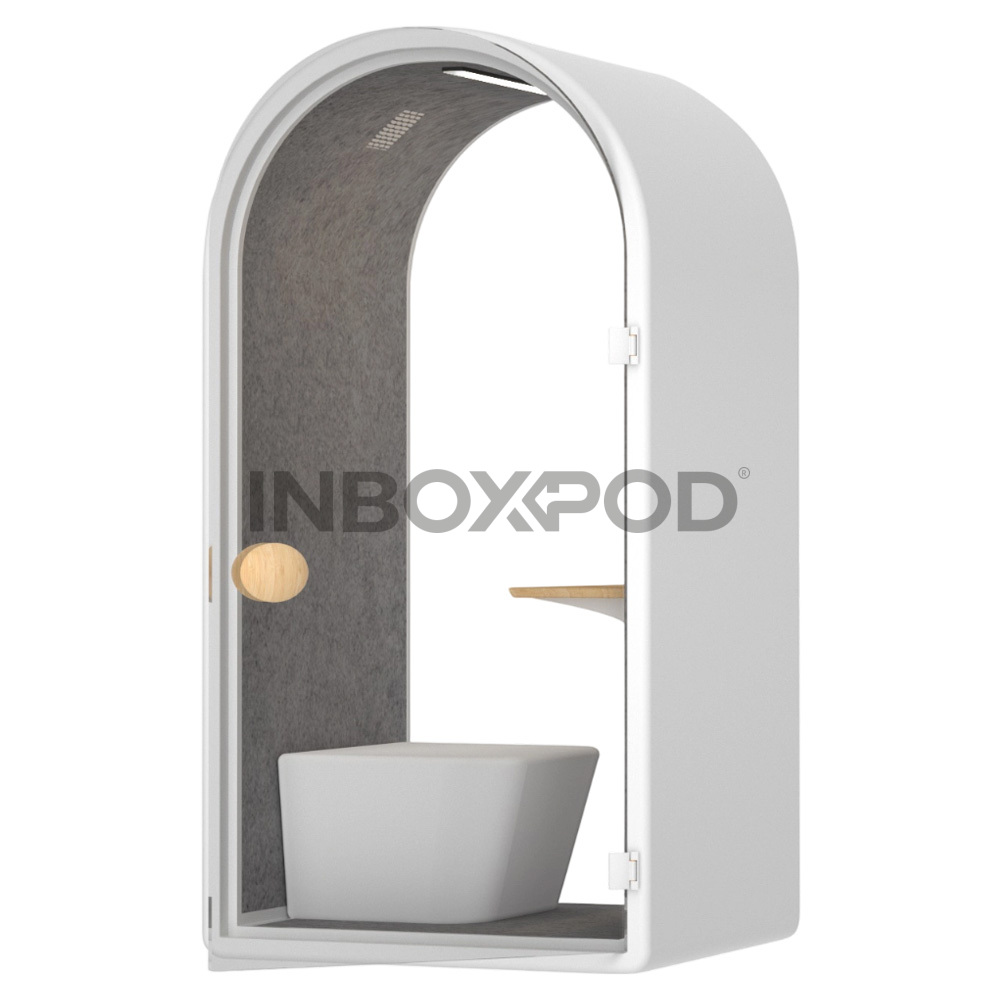
Acoustic Performance Metrics Procurement Teams Must Know
Why procurement teams need to speak acoustic metrics when buying a soundproof audio booth
Procurement teams evaluate many factors—cost, lead time, warranty, ergonomics—but acoustic performance is the single most important technical area when the purchase intent is a soundproof audio booth for quiet focus, hybrid work, or recording. A clear specification of measurable acoustic metrics reduces scope creep, helps compare vendors objectively, and protects the end-user experience. This guide translates key acoustic metrics into procurement language so teams can write robust requirements and choose between products like the INBOXpod Soundproof Study Pod - Home Third Space for Quiet Focus, Balancing Aesthetics and Practicality.
Key metric: Decibel (dB) reduction — the headline measure for a soundproof audio booth
Decibel (dB) reduction quantifies how much outside noise is lowered when you move inside a booth. The INBOXpod Study Pod advertises 30 dB noise reduction — a meaningful single-number claim for procurement evaluation. In practical terms, each 10 dB reduction corresponds roughly to a perceived halving of loudness. So 30 dB reduction can reduce a noisy environment (e.g., 70 dB) to an interior level of about 40 dB, which is close to quiet office or library conditions.
Procurement action: Request measured insertion loss or A-weighted sound level difference (dB(A)) across representative external noise sources (speech, HVAC hum, adjacent offices). Ask vendors to supply measurement reports showing test setup, microphone positions, and frequency-specific data.
Sound Transmission Class (STC) / Weighted Sound Reduction Index (Rw): international comparators for a soundproof audio booth
STC (North America) and Rw (international/ISO) are single-number ratings that describe how well an assembly (wall, panel, door) reduces airborne sound across mid-frequencies important to human speech. These metrics are useful for procurement because they enable apples-to-apples comparisons across vendors and building components. An STC or Rw of 30–35 is typical for lightweight partitions and many small pods; higher values (40–60) are seen in heavy-duty acoustic booths or specialized recording isolation rooms.
Procurement action: Specify minimum STC or Rw targets in RFPs and require third-party lab test reports (ASTM E90 / ISO 140 series). If the vendor provides only a dB reduction figure, ask for the underlying frequency data or ask them to convert to STC/Rw for clarity.
Noise Reduction Coefficient (NRC) — what a soundproof audio booth does to inside acoustics
NRC measures a material's sound absorption, not how well the booth blocks outside noise. It matters for interior quality: a highly reflective pod can sound “boomy” even if it blocks external noise well. For a comfortable focus or recording environment, aim for interior surface treatments giving NRC 0.6–0.9, balancing speech clarity and reduced reverberation.
Procurement action: Ask for interior surface NRC values and RT60 (reverberation time) targets for the pod interior at typical occupancy. For voice clarity and podcasting in a small pod, a target RT60 below 0.6s is usually desirable.
Reverberation time (RT60) — user comfort inside a soundproof audio booth
RT60 is the time it takes for sound to decay by 60 dB in an enclosed space. Shorter RT60 values mean tighter, clearer audio (good for calls and recordings); longer times cause muddiness. Small study pods typically target RT60 values between 0.3–0.6 seconds for balanced speech intelligibility and a natural feel.
Procurement action: Include interior RT60 targets (by frequency band if possible) in technical specifications and ask for measured values or a validated acoustic model showing compliance.
Background noise criteria (NC) — how quiet should the interior of a soundproof audio booth be?
NC rating is a standard way to express interior background noise levels from mechanical systems, outside sources, and the pod’s own ventilation. For focus work and critical listening, an interior NC ≤ 35 is commonly recommended; for detailed audio work or recording, NC ≤ 25 is preferable.
Procurement action: Specify maximum interior NC numbers under defined conditions (e.g., with the pod’s fresh-air system on) and request measured dB(A) noise levels at the user’s ear position for typical fan speeds.
Venting, fresh-air systems, and their acoustic trade-offs in a soundproof audio booth
Ventilation is essential for occupant comfort but can degrade acoustic isolation and raise background noise. The INBOXpod Study Pod includes a fresh air system designed to balance 30 dB external noise reduction with airflow and low fan noise. Procurement must evaluate noise-vs-ventilation trade-offs, including whether the vendor offers multiple fan speed settings, low-noise configurations, and acoustic baffles or lined ducts that preserve transmission loss.
Procurement action: Require the vendor to provide measured insertion loss with ventilation on and off, sound power and SPL levels of the ventilation system, and control options for fan speed and acoustic baffles.
Practical procurement checklist for specifying a soundproof audio booth
Use this checklist when preparing RFPs and comparing proposals:
- Required dB reduction (insertion loss) at user position (e.g., ≥ 25–30 dB for home/office pods).
- Minimum STC / Rw value for walls, doors, and glazing.
- Interior RT60 target (e.g., ≤ 0.6 s across speech frequencies).
- Interior NC target with ventilation active (e.g., NC ≤ 35).
- NRC of interior finishes and recommended acoustic treatment levels.
- Measured test reports from accredited labs (include test standards and setup).
- Ventilation specifications: airflow (L/s), fan SPL at ear height, filtration, maintenance needs.
- Installation requirements, floor load, clearances, and modularity options.
- Warranties, serviceability, and lead times.
Table: Acoustic metrics and practical target values for a home soundproof audio booth
| Metric | What it measures | Typical target for a home study pod | Why it matters to procurement |
|---|---|---|---|
| dB reduction (insertion loss) | Reduction in external noise level when inside | ≥ 25–30 dB (INBOXpod: 30 dB) | Direct user-perceived quiet; primary headline spec |
| STC / Rw | Weighted rating for airborne sound insulation | STC/Rw 30–40 for standard pods | Comparable, lab-verified metric for vendor comparison |
| NRC | Average absorption coefficient of interior surfaces | 0.6–0.9 (depending on finish) | Affects interior clarity and perceived comfort |
| RT60 | Reverberation time for sound decay | 0.3–0.6 s (speech-focused) | Speech intelligibility and recording quality |
| NC (Noise Criteria) | Background noise level from mechanical and outside sources | NC ≤ 35 for focus, NC ≤ 25 for recording | User comfort during prolonged use and recordings |
How to interpret lab reports and measurement standards for a soundproof audio booth
Procurement teams should insist on recognized test standards and clear measurement conditions. Common references include ASTM E90 / ISO 10140 series for airborne sound insulation, ASTM E336 for field sound transmission, and ISO 3382 for reverberation time. Lab reports should include frequency-specific data (octave or 1/3-octave bands), test locations, and whether ventilation was active during measurements.
Procurement action: Require copies of full test reports (not just summary numbers) and confirm tests were performed by accredited third-party labs. If only vendor in-house tests exist, build acceptance criteria and field verification into the contract.
Value beyond numbers — ergonomics, aesthetics, sustainability, and service
Acoustic metrics are necessary but not sufficient. Procurement teams must also weigh ergonomics (desk height, power/data access), visual aesthetics (finishes and integration into workspaces), sustainability (recyclable materials, VOC emissions), and lifecycle costs (maintenance, filters, replacement parts). The INBOXpod Soundproof Study Pod balances a 30 dB noise reduction with stylish aesthetics and a fresh air system to deliver both performance and lived experience in the home third space.
Procurement action: Include non-acoustic acceptance criteria and request sample finishes, lifecycle cost estimates, and maintenance plans. Consider a trial or short-run pilot to validate fit and user satisfaction.
Comparing vendors: creating a scoring matrix that weights acoustic metrics appropriately
Create a vendor scoring matrix that assigns weights to the most relevant factors. Example weighting might be: Acoustic performance 40%, Ventilation & comfort 20%, Ergonomics & features 15%, Aesthetics 10%, Warranty & service 10%, Cost 5%. Adjust weights to match your organization’s priorities (e.g., for recording studios, raise acoustic weight; for home use, prioritize comfort and aesthetics).
Procurement action: Use the scoring matrix during bid evaluation and require score justification for each vendor claim. Include field acceptance testing to validate scores before final payment.
Why INBOXpod? Brand summary linking acoustic metrics to product strengths
INBOXpod brings together measurable acoustic performance and user-centered design. The INBOXpod Soundproof Study Pod - Home Third Space for Quiet Focus, Balancing Aesthetics and Practicality offers:
- 30 dB advertised noise reduction — a clear metric procurement teams can use as a baseline.
- A fresh air system engineered to keep interior NC low while preserving transmission loss.
- Thoughtful finishes and interior treatments to control RT60 and provide a comfortable work or study atmosphere.
- Design that integrates into home interiors, reducing the friction of adoption for hybrid workers and students.
Procurement action: When evaluating INBOXpod, request test reports for insertion loss, STC/Rw if available, RT60 and NC with ventilation active, plus sample finishes and maintenance data. If a pilot is viable, set pass/fail criteria tied to the acoustic metrics above.
FAQs — Acoustic performance and procurement for soundproof audio booths
Q: What is the difference between 30 dB reduction and STC 30?
A: 30 dB reduction is usually an insertion-loss or A-weighted level difference measured for a specific noise scenario and microphone positions. STC 30 is a standardized rating based on laboratory measurements across a band of frequencies and may not directly equal a simple dB reduction measurement in-situ. Always ask for the test method and conditions.
Q: Will a soundproof audio booth eliminate all outside noise?
A: No. Even high-performing booths reduce but do not completely eliminate external sound. The effectiveness depends on the external source, frequency content, and how well doors, glazing, and ventilation are sealed. A 30 dB reduction significantly improves privacy and focus but may not remove very low-frequency noise (e.g., heavy traffic or HVAC vibration) entirely.
Q: How noisy will the ventilation system make the interior?
A: That depends on fan design, airflow rate, and acoustic treatment of ducts. Good designs provide sufficient airflow at low fan speeds with NC targets met (e.g., NC ≤ 35). Require measured SPL at ear height with the ventilation system at normal operating speeds.
Q: Do vendors provide on-site testing after installation?
A: Reputable vendors either provide or can facilitate field verification testing. Procurement teams should include field acceptance testing clauses to confirm performance under real conditions, including with building background noise and ventilation active.
Q: Are there standards I should reference in an RFP?
A: Yes. Common standards include ASTM E90 and ISO 10140 for airborne sound insulation, ISO 3382 for reverberation, and recognized NC/RC guides for mechanical noise. Specify the standard you want test data to follow and require accredited lab reports where possible.
Next steps — contact and view the INBOXpod Soundproof Study Pod
To evaluate the INBOXpod Soundproof Study Pod and obtain detailed acoustic test data, product samples, or to arrange a trial, contact INBOXpod sales at support@inboxpod.com or visit the product page: https://www.inboxpod.com/inboxpod-study-pod. Include your facility’s typical noise profile and the metrics you require (dB reduction, STC/Rw, RT60, NC) so the team can provide relevant documentation and recommendations.
To understand how these metrics apply across product types, explore Comparing INBOXpod vs Modular Booths: What Buyers Need.
Authoritative references and further reading
- Decibel — Wikipedia: https://en.wikipedia.org/wiki/Decibel
- Soundproofing / Sound insulation — Wikipedia: https://en.wikipedia.org/wiki/Soundproofing
- Weighted sound reduction index — Wikipedia: https://en.wikipedia.org/wiki/Weighted_sound_reduction_index
- Noise reduction coefficient — Wikipedia: https://en.wikipedia.org/wiki/Noise_reduction_coefficient
- Sabine formula (Reverberation time) — Wikipedia: https://en.wikipedia.org/wiki/Sabine_formula
- ISO 3382 — Acoustics — Measurement of room acoustic parameters (overview at ISO): https://www.iso.org/standard/35325.
- ASTM E90 — Standard Test Method for Laboratory Measurement of Airborne Sound Transmission Loss of Building Partitions: https://www.astm.org/Standards/E90.htm
- World Health Organization — Environmental Noise Guidelines for the European Region: https://www.who.int/publications/i/item/9789289053563
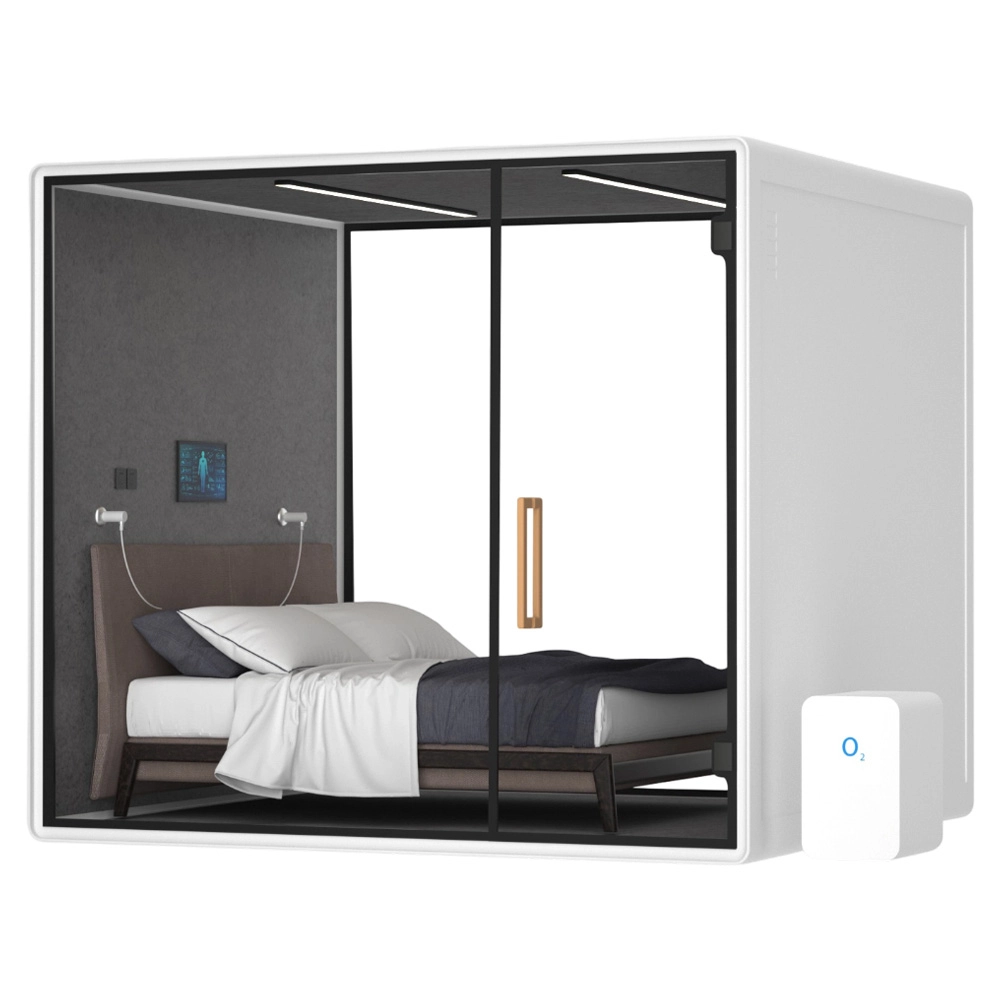
How to Evaluate Soundproofing in Hyperbaric Oxygen Chambers
How to Choose the Right Soundproof Office Pod for Your Needs
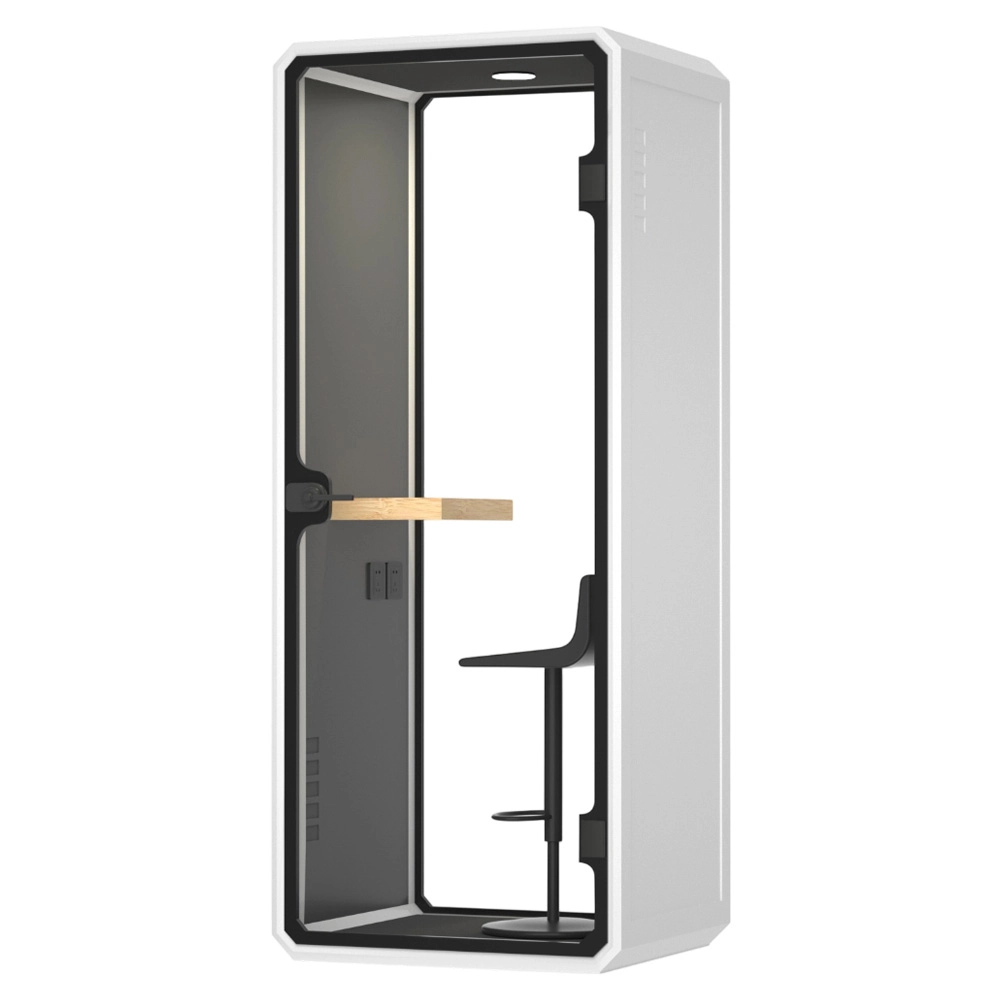
Portable Soundproof Booths for Remote Teams & Studios
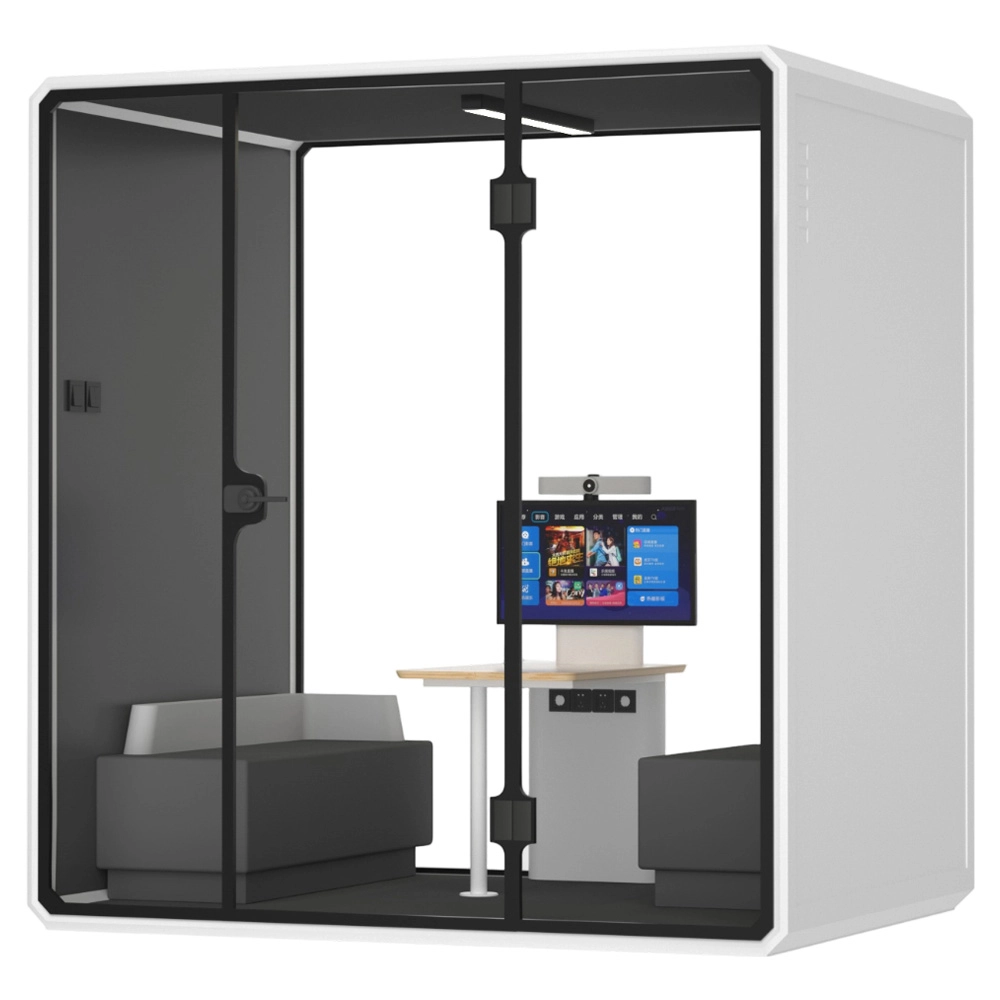
Silence Booth V-Series XL — Prefabricated Soundproof Office Pod for Focused Work
Home-demo
How long does it take to assemble an INBOXpod booth?
Most of our booths can be assembled without tools in about 30 minutes, making installation quick and hassle-free.
Can the booths be customized to fit specific space requirements?
Yes, we offer flexible customization options including size, color, and additional features to perfectly suit your needs.
What is the typical sound insulation level of your acoustic booths?
Our booths typically achieve up to 27 dB noise reduction, meeting Class B sound insulation standards suitable for offices and study environments.
What materials are used in the construction of the booths?
Our booths are made from sustainable, high-quality materials including aluminum alloy frames and acoustic panels designed for optimal soundproofing.
Do you provide after-sales support and warranty?
Yes, we provide comprehensive after-sales service and warranty to ensure long-term satisfaction with our products.
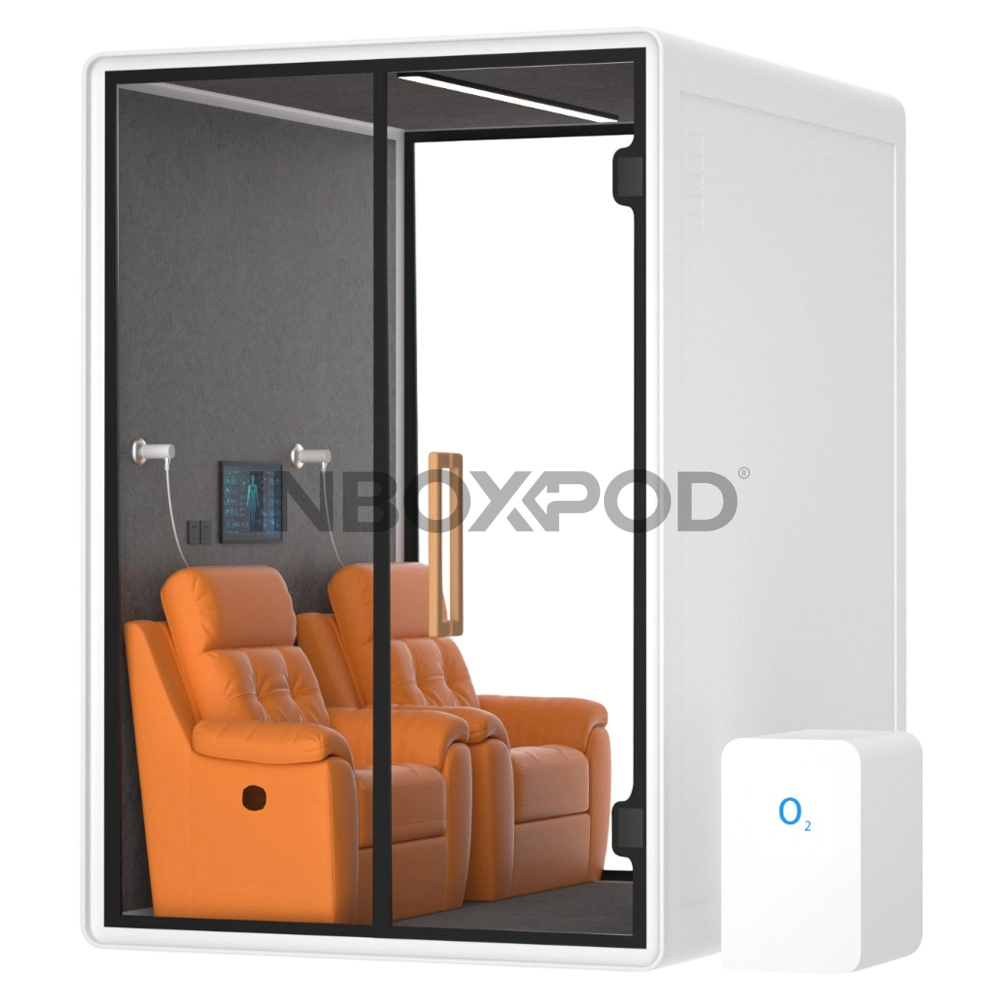
INBOXpod Double Seat Soundproof Oxygen Pod
An oxygen therapy space customized for double social interaction and health, with a double-seat design to promote a win-win situation for interaction and health. External size: W1600×D1929×H2300 mm; internal size: W1466×D1854×H2166 mm. You can improve cardiovascular function and concentration through oxygen therapy with friends and colleagues in a quiet and efficient acoustic environment, making health and social interaction complement each other.
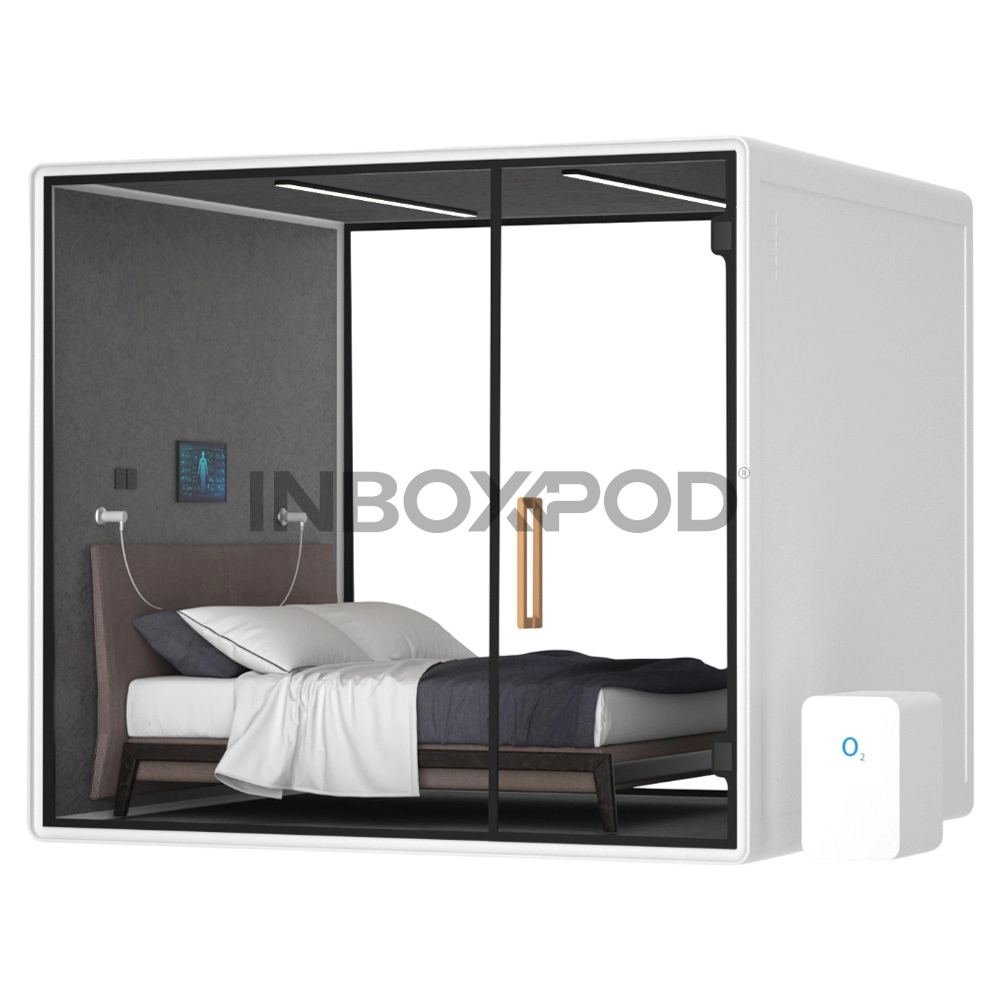
INBOXpod Soundproof Double Bed (small) Oxygen Pod
A double oxygen therapy option that balances space and experience, with a small double-bed layout suitable for various scenarios. External size: W2300×D1854×H2300 mm; internal size: W2300×D1929×H2300 mm. You can share the high-oxygen environment here with relatives and friends, relieve stress, improve physical fitness, and gain health and vitality in company.
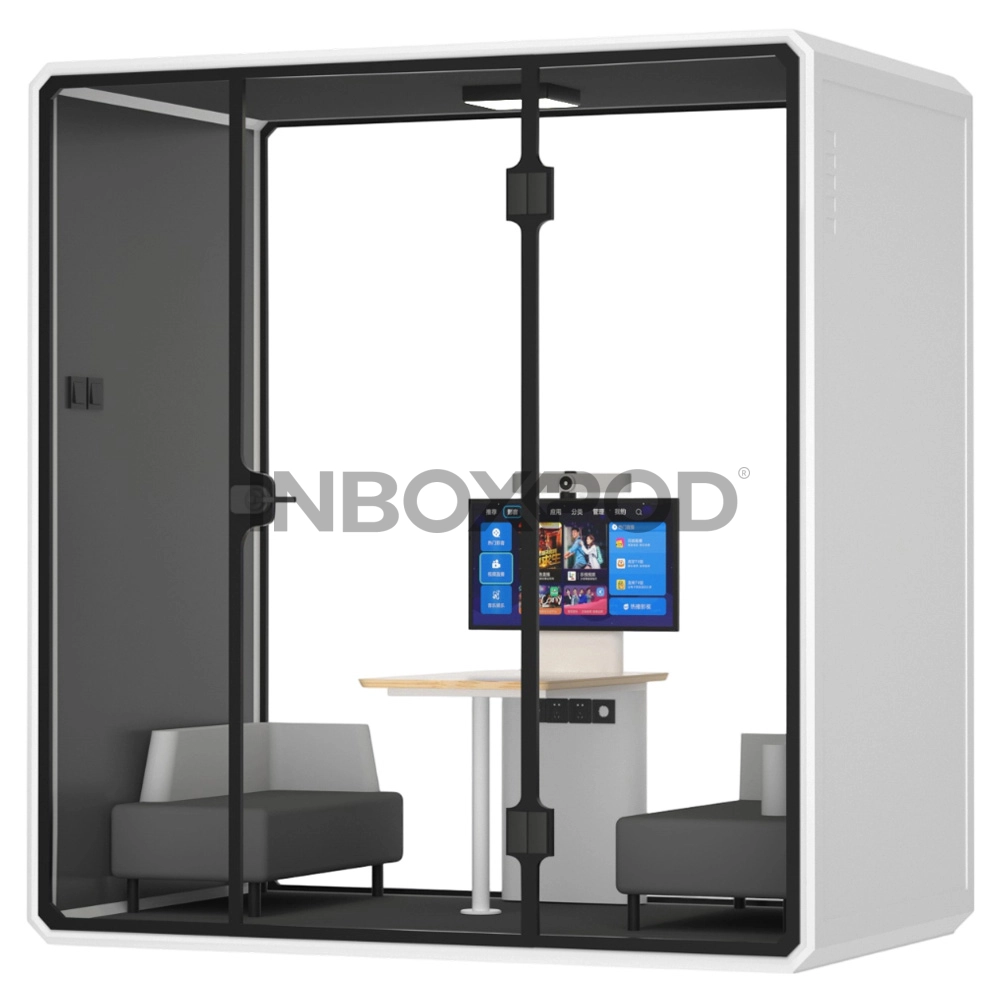
Silence Booth/Office Pod Prefabricated V series-L size
Designed for team collaboration and small meetings, the L-size booth provides a comfortable and acoustically optimized space for 4–6 people. With premium sound insulation, efficient ventilation, and integrated lighting and power systems, it ensures focus, privacy, and productivity—even in the busiest open offices.
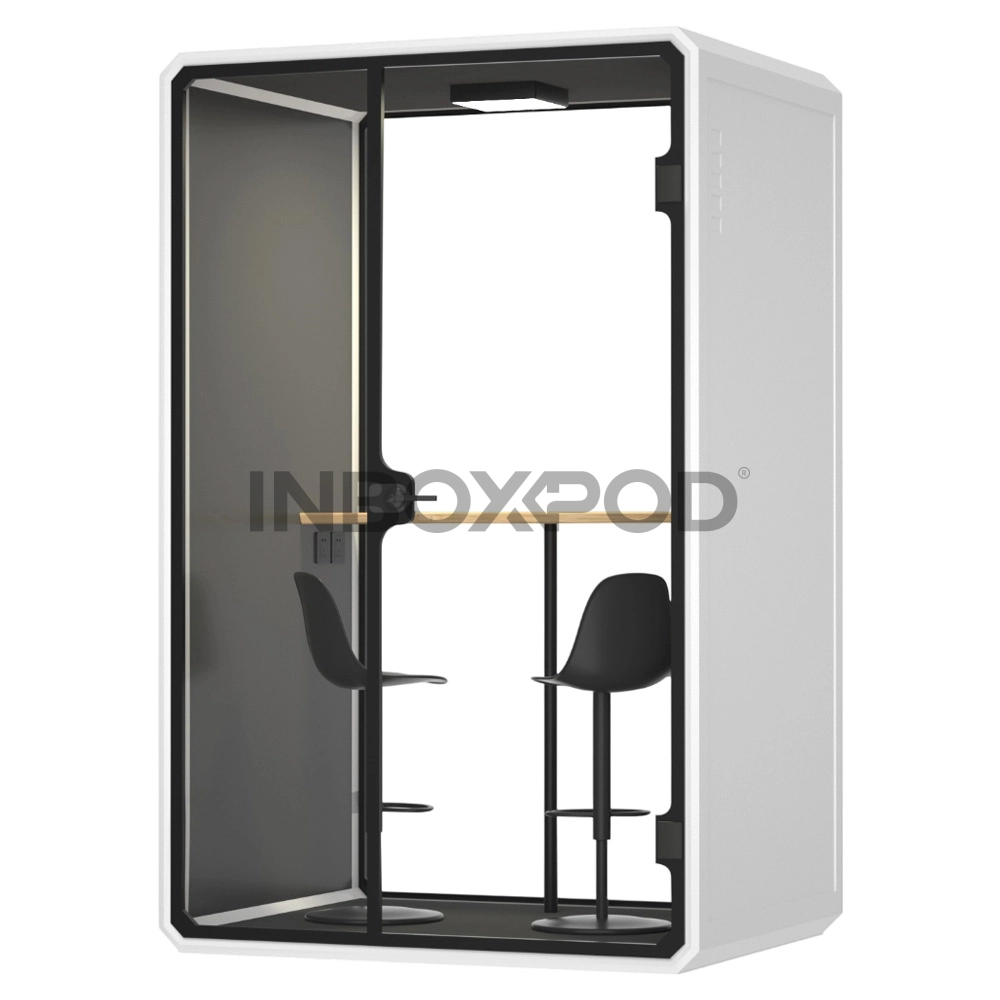
Silence Booth/Office pod Prefabricated V series - M size
Ideal for two-person discussions or focused solo work, the M-size booth offers a balanced mix of privacy and flexibility. Its advanced acoustic panels reduce external noise effectively, while the smart ventilation and lighting systems create a comfortable, quiet environment for calls, meetings, or concentrated tasks.
Whatsapp: +8613535292957