
Acoustic Specs: Choosing a Soundproof Booth for Schools
- Acoustic Specs: Choosing a Soundproof Booth for Schools
- Why acoustics and a soundproof booth matter in schools
- Key acoustic metrics every school administrator should understand
- Recommended acoustic targets for school booths and rooms
- How to interpret manufacturer claims: STC vs dB reduction
- Example calculation: What dB reduction do you need?
- Design and operational factors beyond acoustic numbers
- Comparing booth types: modular pods vs. built-in rooms
- INBOXpod Soundproof Study Pod — product profile and how it maps to school needs
- Where INBOXpod fits in a school environment
- Procurement checklist: what to ask suppliers
- Maintenance and long-term considerations
- Quick decision guide: matching a booth to common school needs
- Cost vs performance: what to expect
- FAQ
- Summary: balancing acoustics, safety, and practicality
- Why consider INBOXpod for school-related uses
- Next steps and contact
- Authoritative references
Acoustic Specs: Choosing a Soundproof Booth for Schools
Why acoustics and a soundproof booth matter in schools
Good acoustics are essential for learning. Excessive noise and poor speech intelligibility reduce concentration, increase teacher strain, and impair reading and language acquisition — especially for younger children and students with hearing or attention needs. A well-specified soundproof booth can provide a controlled space for one-on-one interventions, testing, remote lessons, speech therapy, or quiet study. When schools evaluate a soundproof booth, they should start with measurable acoustic specs rather than marketing terms.
Key acoustic metrics every school administrator should understand
Choosing the right booth requires familiarity with a few core acoustic metrics. These numbers explain how much sound is blocked, absorbed, or reflected, and they inform whether a booth will meet pedagogical needs.
- STC (Sound Transmission Class): Measures how well an assembly (wall, door, or booth shell) reduces airborne sound between adjacent spaces. Higher STC means better isolation. For speech privacy in sensitive contexts you typically want STC 45+, but for many school uses STC 30–40 is often acceptable.
- dB reduction (in-situ reduction): Practical measure of how many decibels of existing ambient noise are reduced inside the booth. This is often expressed as 30 dB noise reduction, meaning the inside level is 30 dB lower than outside under specific conditions.
- NRC (Noise Reduction Coefficient): Indicates how much sound a material absorbs (scale 0–1). Higher NRC reduces reverberation inside the booth, improving clarity.
- RT60 (Reverberation Time): Time it takes for sound to decay 60 dB in a space. Shorter RT60 supports speech clarity in small booths (target typically 0.3–0.6 s for small study spaces).
- Speech Transmission Index (STI): Objective metric of speech intelligibility; used in designs requiring high comprehension (speech therapy, assessment).
Recommended acoustic targets for school booths and rooms
While requirements vary by country and building code, the following are practical targets schools can use when evaluating booths or pods:
| Metric | Practical target for school booth | Why it matters |
|---|---|---|
| STC | 35–45+ | Provides good isolation from classroom noise; 45+ recommended where confidentiality or testing occurs |
| dB reduction (outside→inside) | 20–30 dB typical; 30+ dB preferred for quiet testing | Directly reduces intrusive ambient noise |
| NRC | 0.6–0.9 (interior surfaces) | Controls internal reverberation; improves clarity |
| RT60 | 0.3–0.6 s (for small booths) | Lower RT60 improves speech intelligibility |
These values are guidelines. Specific needs depend on the intended use (assessment, therapy, quiet study, teacher prep) and the building's ambient noise levels.
How to interpret manufacturer claims: STC vs dB reduction
Manufacturers often advertise a single number such as 30 dB noise reduction or an STC rating. It's important to know the difference:
- STC is measured under lab conditions for partitions; it does not automatically equal dB reduction in a particular building installation.
- 30 dB noise reduction may be measured in typical conditions but check test method and frequency weighting (A-weighted dB(A) is common).
- Ask suppliers for measured insertion loss data, testing reports, or on-site measurements in a similar environment.
Example calculation: What dB reduction do you need?
Simple rule: decide your target internal noise level and subtract it from the ambient noise level. Example:
- Ambient classroom noise: 60 dBA (typical busy classroom hallway)
- Desired inside level for focused testing: 35 dBA
- Required reduction: 60 - 35 = 25 dB
This means a booth with a realistic 25–30 dB reduction will meet the need. If you have higher ambient noise, you need better isolation.
Design and operational factors beyond acoustic numbers
Acoustic specs are necessary but not sufficient. Consider these practical factors before procurement:
- Ventilation and fresh air: A booth must provide adequate ventilation and thermal comfort without compromising noise isolation. Mechanical ventilation with low-noise fans and ducting or an integrated fresh air system is essential.
- Fire and building codes: Ensure the booth meets local fire egress, electrical, and access regulations. Many schools require certified fire-resistant materials and approved installations.
- Accessibility: ADA or local accessibility standards may require certain door widths and thresholds for wheelchair access.
- Power and connectivity: Provide integrated power, data, and charging points for teaching devices and monitoring equipment.
- Durability and maintenance: Choose materials that resist scuffs, are easy to clean, and have replaceable acoustic panels.
- Flexibility and mobility: Some schools prefer modular or movable pods for multi-use spaces; others need fixed installations.
Comparing booth types: modular pods vs. built-in rooms
Deciding between a modular soundproof booth (freestanding pod) and a built-in room involves trade-offs.
| Option | Pros | Cons |
|---|---|---|
| Modular pods (freestanding) | Quick install, relocatable, lower construction disruption | May have lower STC than a fully built room; floor and wall flanking can limit isolation |
| Built-in rooms | Potentially higher acoustic performance, full integration with building systems | Higher cost, longer construction time, less flexible |
INBOXpod Soundproof Study Pod — product profile and how it maps to school needs
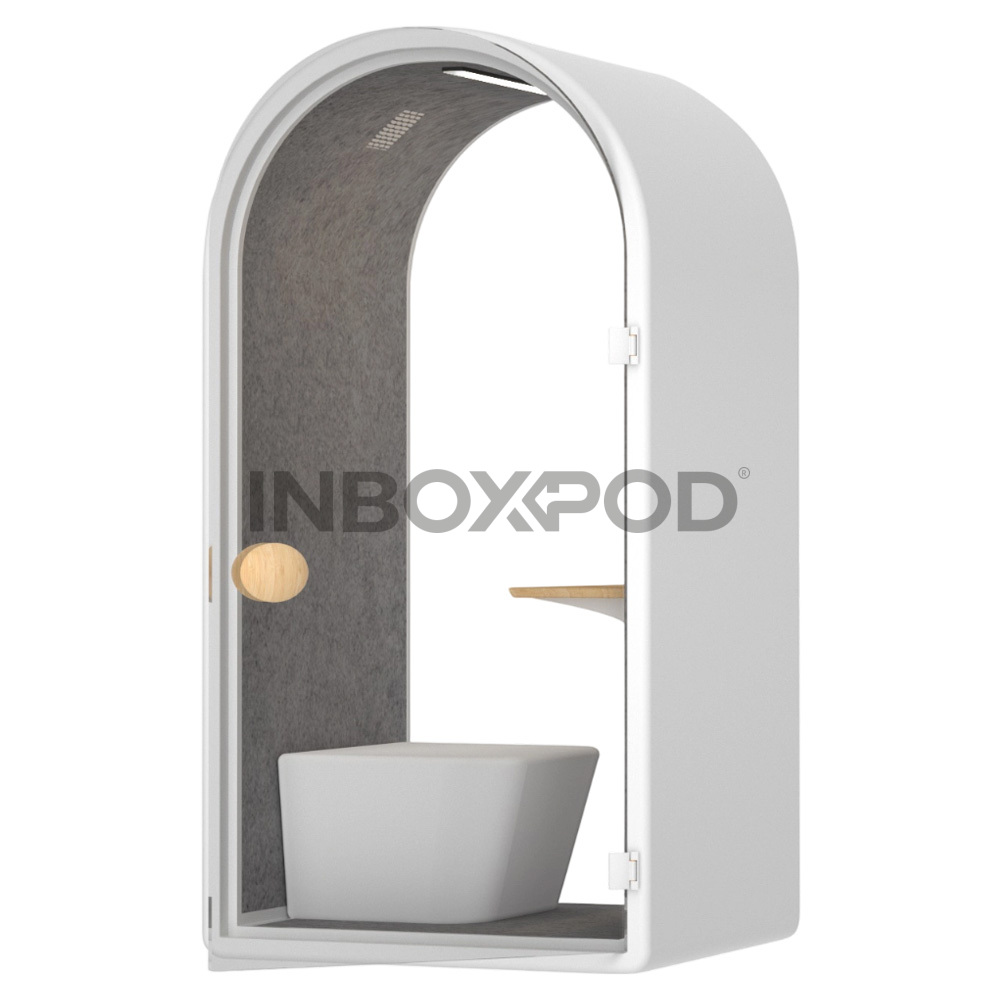
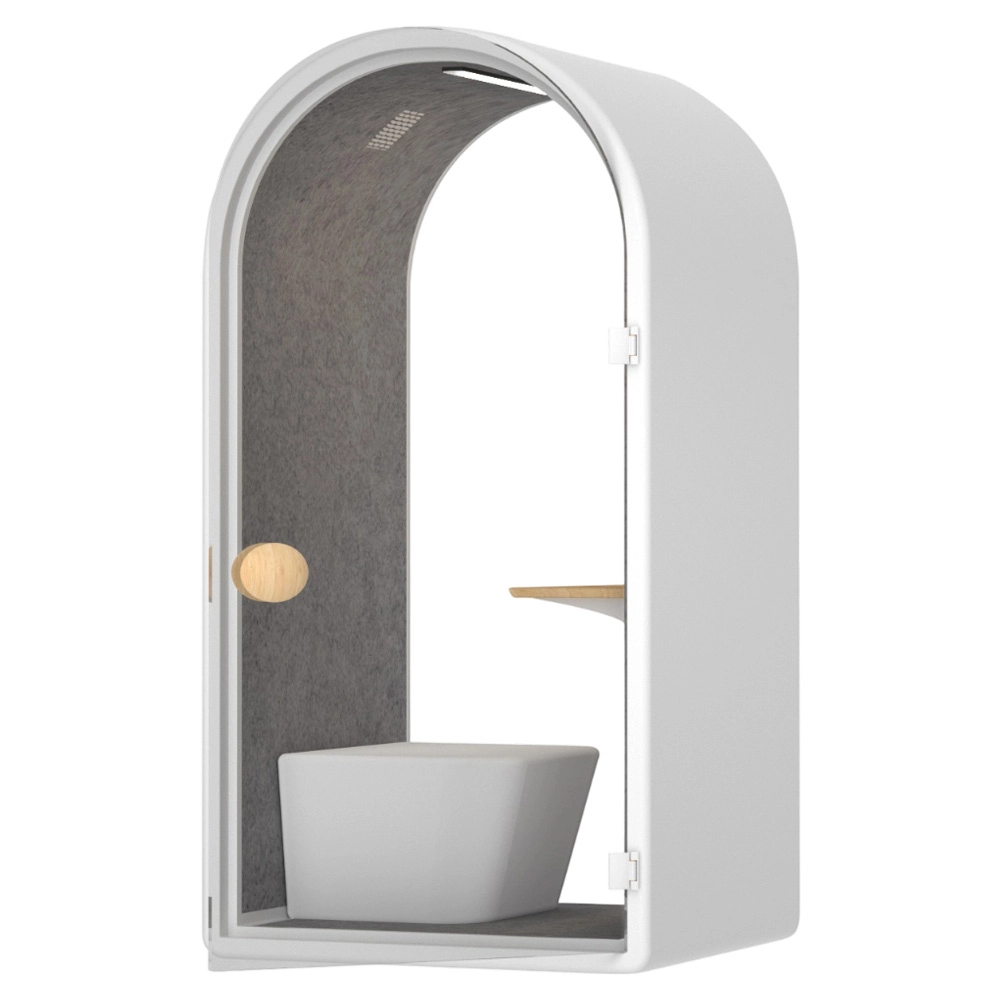
INBOXpod Soundproof Study Pod - Home Third Space for Quiet Focus, Balancing Aesthetics and Practicality
Elevate your home productivity with the INBOXpod Study Pod, a soundproof private cabin designed as the third space of your home. Boasting 30 dB noise reduction, a fresh air system, and stylish aesthetics, it seamlessly blends comfort and functionality. Whether you’re working, studying, or seeking a quiet retreat, this pod by INBOXpod balances practicality and design, making it a standout addition to any home.
Although the product is marketed for home use as a third space, several features are directly relevant to schools, staff rooms, and libraries:
- 30 dB noise reduction: Meets or exceeds the typical reduction needed for many focused learning tasks, remote calls, and one-on-one assessments in moderate ambient noise environments.
- Fresh air system: Ensures user comfort and acceptable air exchange without compromising acoustic isolation — essential for school settings.
- Compact, stylish design: Aesthetics matter in visible school spaces and can support positive uptake among students and staff.
Where INBOXpod fits in a school environment
Use cases in schools include: private teacher planning, small-group intervention, speech and language sessions, confidential meetings, or a supervised quiet study area in libraries. For formal testing or special-needs assessment that requires stricter acoustic performance, confirm test conditions and consider upgrading to pods with higher STC or purpose-built rooms.
Procurement checklist: what to ask suppliers
When evaluating booths, request the following from each supplier:
- Independent acoustic test reports (STC, insertion loss, and NRC values)
- On-site sample measurements or references at similar ambient noise levels
- Details on ventilation rates, sound level of fans (dBA), and filter specs
- Fire rating certificates and compliance with local building codes
- Accessibility options and internal dimensions for intended users
- Lead time, delivery, installation scope, and warranty terms
- Cost breakdown (unit price, installation, optional electrical/networking, maintenance)
Maintenance and long-term considerations
Plan for periodic checks of seals, door alignment, fan performance, and acoustic panels. Replace filters as recommended by the manufacturer. Keep a log of any repairs to ensure the booth continues to meet acoustic and safety specifications over time.
Quick decision guide: matching a booth to common school needs
- Speech therapy / confidential testing: Target STC 45+ or equivalent 30+ dB real-world reduction. Require verified measurements and quiet ventilation.
- One-on-one tutoring / remote conferencing: 25–30 dB reduction is often sufficient; comfortable seating, lighting, and good ventilation are priorities.
- Quiet study or library pods: NRC for interior surfaces and low RT60 for clarity; STC 30–40 acceptable.
Cost vs performance: what to expect
Higher acoustic performance usually costs more. A quality modular soundproof booth with verified 25–35 dB reduction and integrated ventilation is a mid-range option. For the highest confidentiality or clinical testing needs, consider investing in purpose-built rooms or High Quality pods with higher STC. Evaluate total cost of ownership including installation, maintenance, and lifespan.
FAQ
Q: Are modular soundproof booths suitable for school use?
A: Yes — for many applications such as remote tutoring, speech therapy, and teacher preparation — provided the booth meets required acoustic, ventilation, and safety standards for the intended use.
Q: How can I verify a booth’s claimed 30 dB noise reduction?
A: Request independent test reports or arrange on-site measurements (outside and inside with A-weighted dBA) under conditions similar to your school’s ambient noise. Check frequency ranges if speech intelligibility is critical.
Q: Do booths need HVAC connection to the building?
A: Not necessarily. Many modern pods include low-noise integrated ventilation systems. For long-term use and larger installations consult with your facilities team about connecting to building HVAC for code compliance.
Q: Can booths be moved after installation?
A: Many modular pods are relocatable, though moving may require professional handling, disconnecting/reconnecting services, and recalibration of acoustic seals.
Q: How many students fit in a typical study pod?
A: Most study pods are sized for 1–2 people. If you require small-group spaces (3–4 students), choose larger pod models or small dedicated rooms.
Summary: balancing acoustics, safety, and practicality
Selecting a soundproof booth for schools is a balance of measurable acoustic performance and practical operational needs: verified STC or dB reduction, proper ventilation, fire and accessibility compliance, and long-term maintainability. For many school applications, a high-quality modular pod with ~25–30 dB practical reduction and controlled ventilation will deliver meaningful benefits for learning and staff workspaces.
Why consider INBOXpod for school-related uses
INBOXpod Soundproof Study Pod offers 30 dB noise reduction, an integrated fresh air system, and a considered aesthetic, making it a useful option for staff rooms, libraries, and home-schooling setups used by teachers and students. Its combination of acoustic performance and user comfort helps schools provide quiet, private spaces with a relatively fast installation timeline.
Next steps and contact
Evaluate ambient noise levels in your target installation area, define the primary use cases (testing, therapy, remote lessons), and request independent acoustic measurements from suppliers. To explore whether INBOXpod fits your school’s needs, contact the vendor for technical datasheets, test reports, and site references. For assistance with specification or procurement, reach out to your school facilities team or an acoustic consultant.
Contact/See product: For detailed product information, technical files, or to request a demonstration of the INBOXpod Soundproof Study Pod, contact your INBOXpod representative or visit the product page to arrange a site demo and receive documentation.
After comparing acoustic requirements for schools, you may want to return to the broader standards and testing criteria that guide compliant product selection. Start again here:
Acoustic Testing Standards for Soundproof Booth Procurement
Authoritative references
- Acoustical Society of America — ANSI/ASA S12.60 and classroom acoustics overview: https://acousticalsociety.org/ansi-s12-60-acoustic-performance-criteria-for-classrooms/
- UK Department for Education — Building Bulletin 93: Acoustic Design of Schools: https://www.gov.uk/government/publications/building-bulletin-93-acoustic-design-of-schools
- World Health Organization — Environmental Noise Guidelines for the European Region (2018): https://www.euro.who.int/en/health-topics/environment-and-health/noise/publications/2018/environmental-noise-guidelines-for-the-european-region-2018
- Wikipedia — Sound transmission class: https://en.wikipedia.org/wiki/Sound_transmission_class
- Wikipedia — Reverberation time (RT60): https://en.wikipedia.org/wiki/RT60
- U.S. Environmental Protection Agency — Noise: https://www.epa.gov/noise
Elevate Recovery with INBOXpod Soundproof Single-Bed Oxygen Pod Therapy
Maintenance, Warranty & Lifecycle Costs of Soundproof Pods
Case Study: How an XXL Silence Booth Improved Team Focus
Top 10 soundproof booth Manufacturers and Supplier Brands in 2026
Home-demo
Do you provide after-sales support and warranty?
Yes, we provide comprehensive after-sales service and warranty to ensure long-term satisfaction with our products.
What materials are used in the construction of the booths?
Our booths are made from sustainable, high-quality materials including aluminum alloy frames and acoustic panels designed for optimal soundproofing.
How long does it take to assemble an INBOXpod booth?
Most of our booths can be assembled without tools in about 30 minutes, making installation quick and hassle-free.
Can the booths be customized to fit specific space requirements?
Yes, we offer flexible customization options including size, color, and additional features to perfectly suit your needs.
What is the typical sound insulation level of your acoustic booths?
Our booths typically achieve up to 27 dB noise reduction, meeting Class B sound insulation standards suitable for offices and study environments.
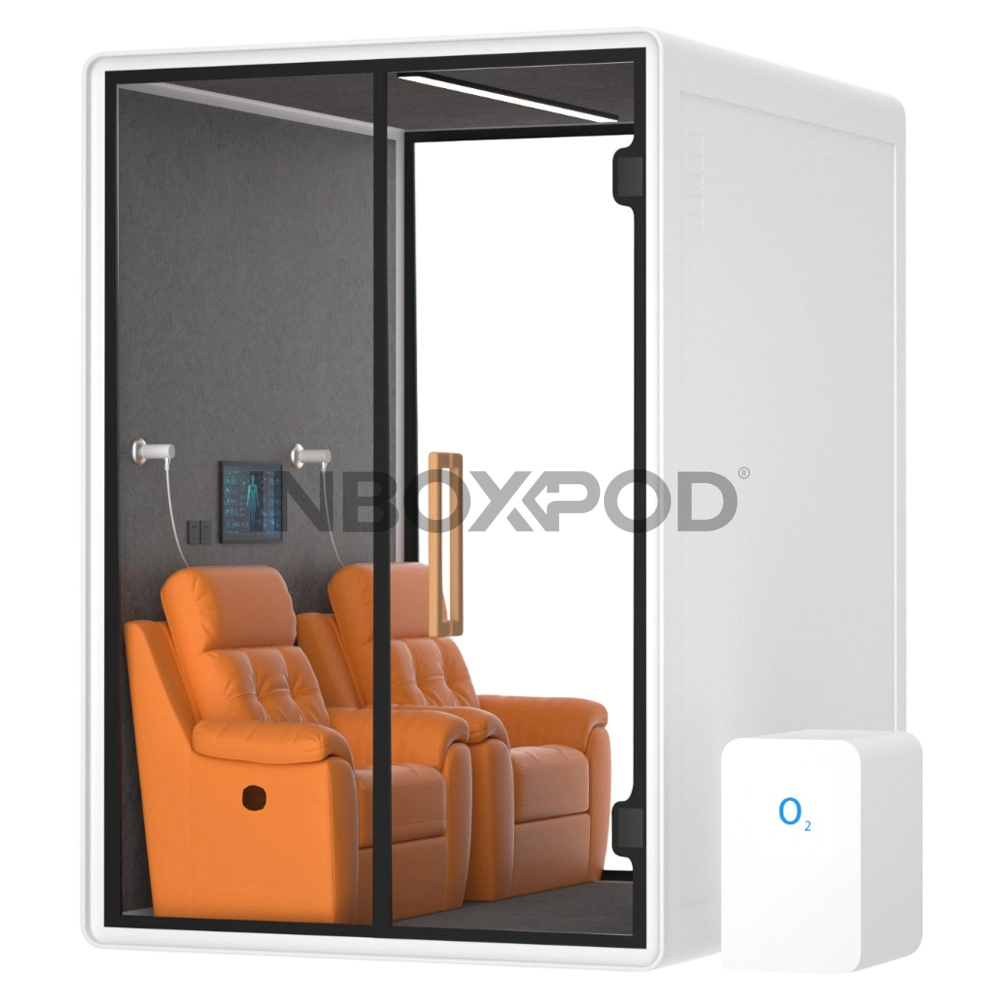
INBOXpod Double Seat Soundproof Oxygen Pod
An oxygen therapy space customized for double social interaction and health, with a double-seat design to promote a win-win situation for interaction and health. External size: W1600×D1929×H2300 mm; internal size: W1466×D1854×H2166 mm. You can improve cardiovascular function and concentration through oxygen therapy with friends and colleagues in a quiet and efficient acoustic environment, making health and social interaction complement each other.
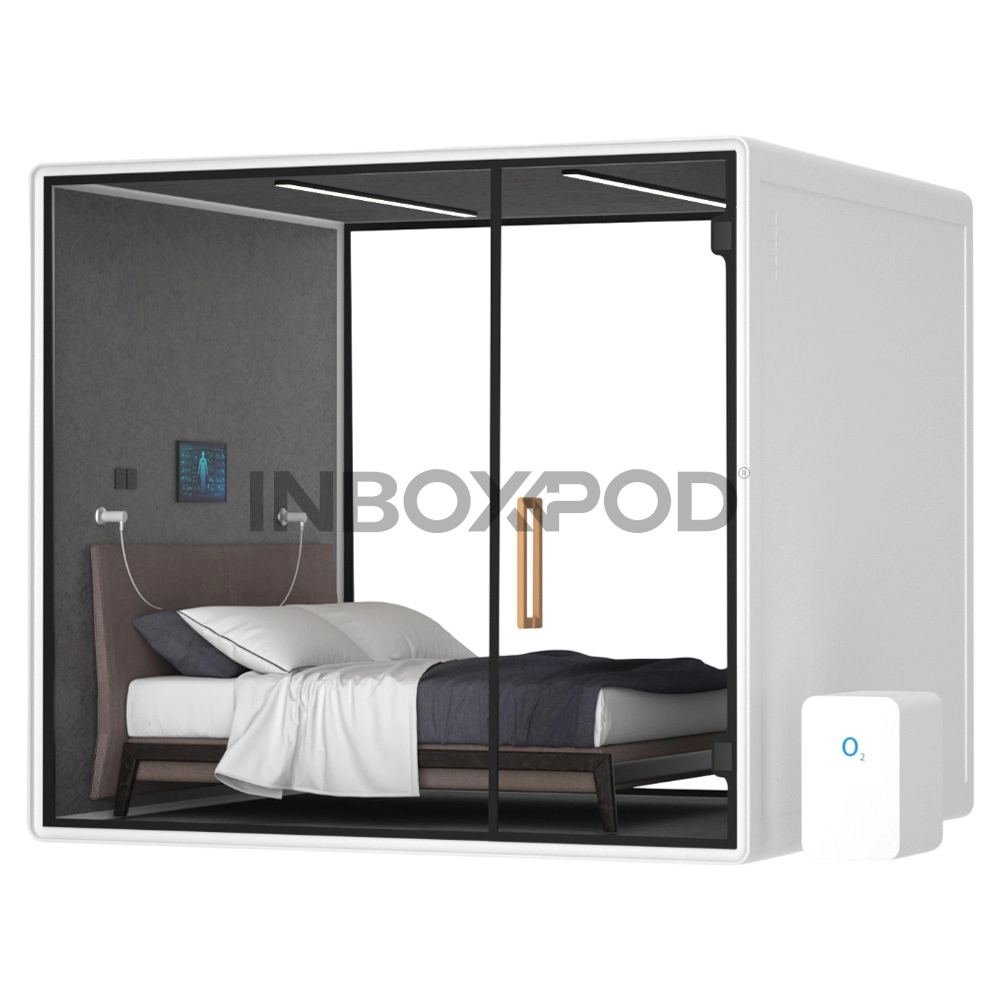
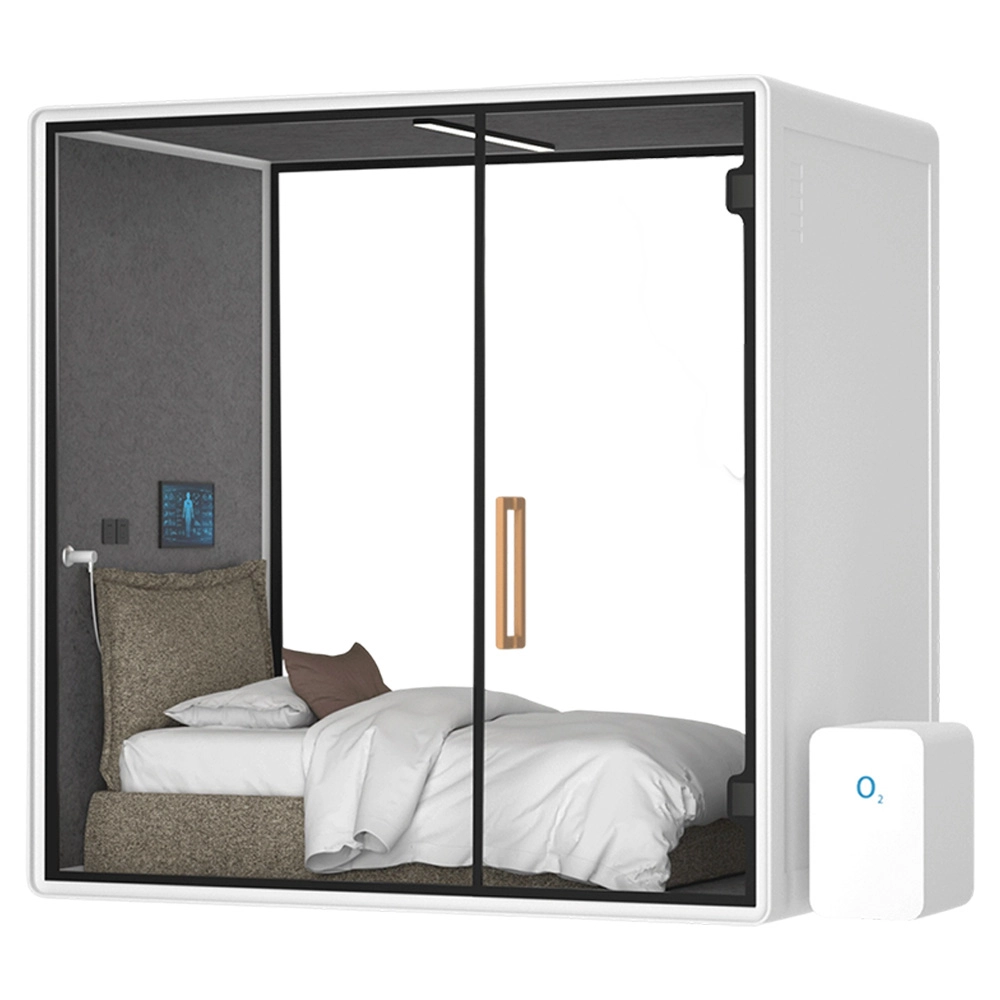
INBOXpod Soundproof Double Bed (small) Oxygen Pod
A double oxygen therapy option that balances space and experience, with a small double-bed layout suitable for various scenarios. External size: W2300×D1854×H2300 mm; internal size: W2300×D1929×H2300 mm. You can share the high-oxygen environment here with relatives and friends, relieve stress, improve physical fitness, and gain health and vitality in company.
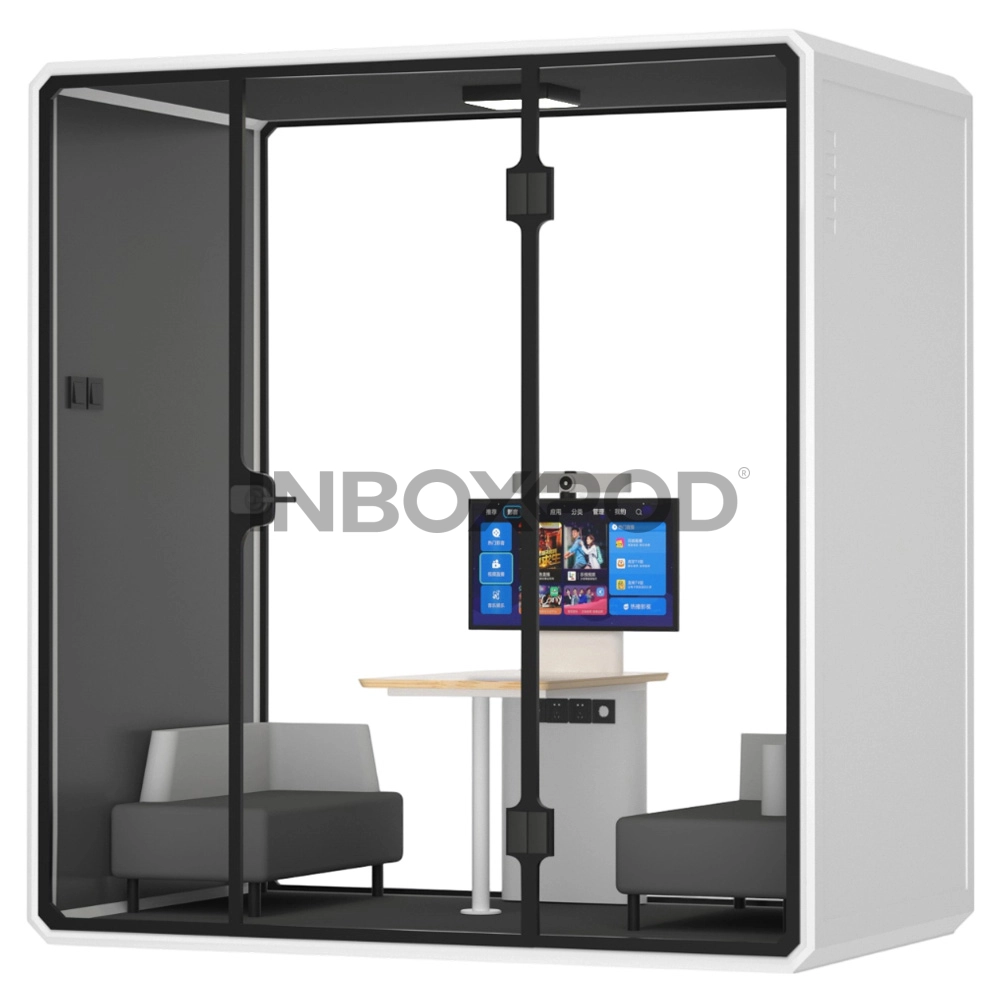
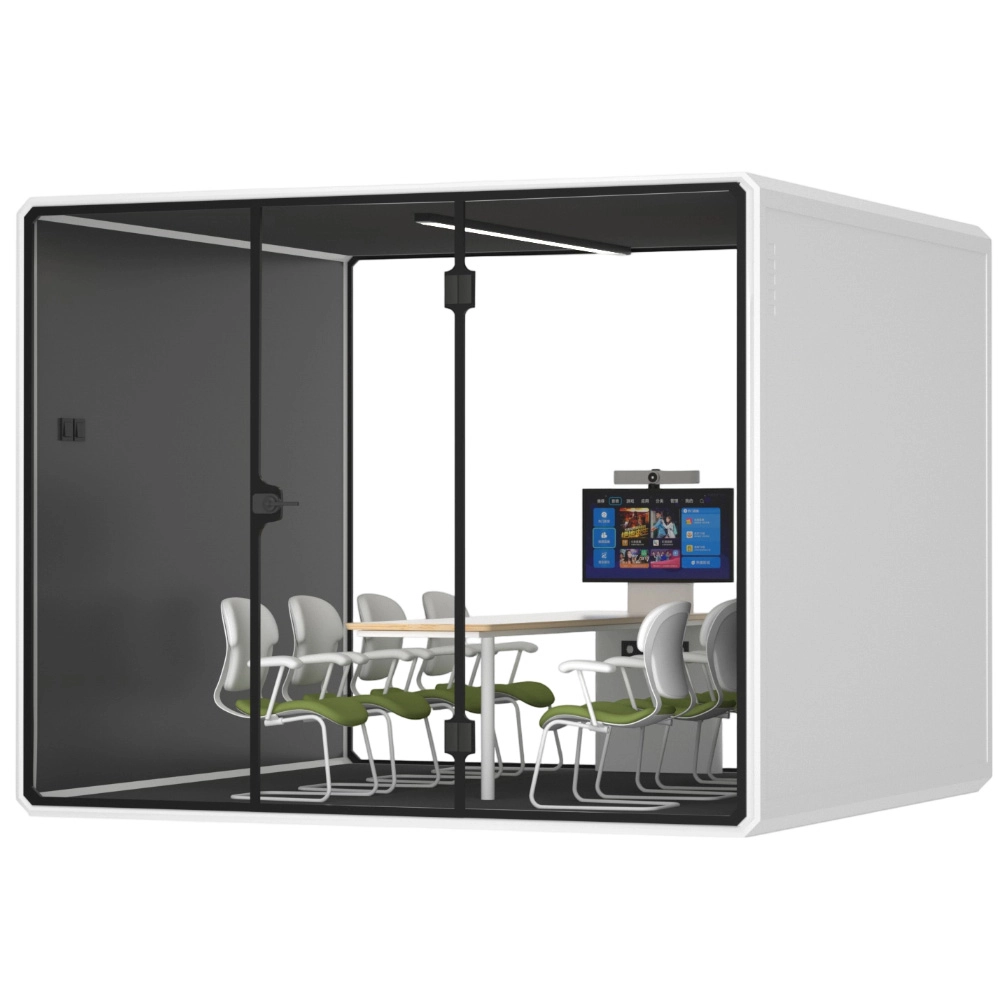
Silence Booth/Office Pod Prefabricated V series-L size
Designed for team collaboration and small meetings, the L-size booth provides a comfortable and acoustically optimized space for 4–6 people. With premium sound insulation, efficient ventilation, and integrated lighting and power systems, it ensures focus, privacy, and productivity—even in the busiest open offices.
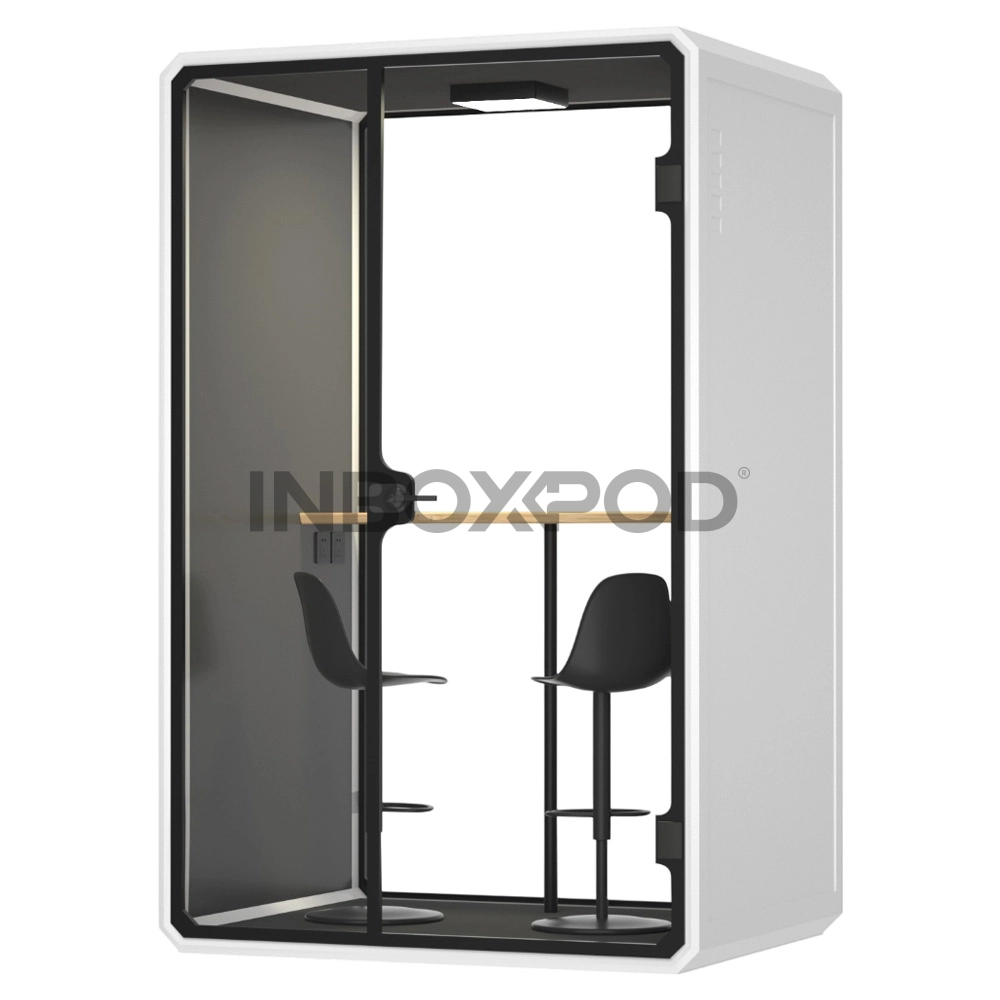
Silence Booth/Office pod Prefabricated V series - M size
Ideal for two-person discussions or focused solo work, the M-size booth offers a balanced mix of privacy and flexibility. Its advanced acoustic panels reduce external noise effectively, while the smart ventilation and lighting systems create a comfortable, quiet environment for calls, meetings, or concentrated tasks.
Whatsapp: +8613535292957