
Acoustic Testing Standards for Soundproof Booth Procurement
- Acoustic Testing Standards for Soundproof Booth Procurement
- Why acoustic standards matter when buying a soundproof booth
- Key international standards every buyer should know for soundproof booths
- How to read and interpret the most common acoustic ratings
- Test procedures buyers should request from manufacturers
- Why HVAC and ventilation must be part of acoustic testing
- Procurement checklist: specification items to include for a reliable soundproof booth purchase
- Case example: INBOXpod Soundproof Study Pod - Home Third Space for Quiet Focus, Balancing Aesthetics and Practicality
- Testing and maintenance after installation
- Common procurement pitfalls and how to avoid them
- FAQ — Frequently Asked Questions
- How INBOXpod aligns with procurement best practices
- Contact and next steps
- Authoritative references and further reading
- Final note
Acoustic Testing Standards for Soundproof Booth Procurement
Why acoustic standards matter when buying a soundproof booth
When you search for a soundproof booth for home or professional use, marketing claims like 30 dB reduction or studio-grade isolation are common. But without standardized testing and verifiable reports, those claims are hard to compare and easy to misinterpret. Acoustic standards exist to give buyers a common language and measurable expectations. For procurement teams, facilities managers, and homeowners seeking a soundproof booth, understanding which tests matter will ensure the chosen product delivers real privacy, focus, or recording quality — not just a visually attractive cube.
Key international standards every buyer should know for soundproof booths
Several internationally recognized standards describe how to measure sound insulation, airborne transmission, field performance, and internal acoustics. Below is a concise comparison to help you evaluate test reports and vendor claims.
| Standard | Region / Use | What it measures | Typical metric |
|---|---|---|---|
| ISO 10140 / ISO 140 series | International / Laboratory | Laboratory measurement of airborne sound insulation between source and receiving rooms | Sound Reduction Index (R), converted to Rw |
| ISO 16283 | International / Field | Field measurement procedures for airborne sound insulation (on-site performance) | Apparent R, field Rw |
| ISO 717-1 | International | Method for rating airborne sound insulation (weighted single-number rating) | Rw (weighted sound reduction) |
| ASTM E90 | US / Laboratory | Laboratory measurement of airborne sound transmission loss | Transmission loss (dB), STC conversions |
| ASTM E413 | US | Classification system (Sound Transmission Class - STC) | STC single-number rating |
| IEC / ANSI guidance (various) | International / US | Supplementary guidance for measurement of noise sources, HVAC, and speech privacy | SPL (dB), Speech Privacy metrics, RT60, NRC |
Note: STC and Rw are broadly used as comparable single-number metrics, but the testing method (laboratory vs. field) and test setup significantly affect results. When possible, specify both laboratory and field results.
How to read and interpret the most common acoustic ratings
Understanding what each metric represents helps you translate test reports into real-world expectations for a soundproof booth:
- Decibels (dB): A logarithmic unit for sound level. A reduction of 10 dB is perceived roughly as half as loud. Vendors often present dB noise reduction as the insertion loss between outside and inside the booth. Verify how that figure was measured.
- STC (Sound Transmission Class): A US single-number rating produced from transmission loss data; useful for speech and broadband noise comparison. Higher STC = better isolation. Common building partitions have STC 30–60.
- Rw (Weighted Sound Reduction Index): The ISO-equivalent single-number rating used internationally. Rw serves the same comparative purpose as STC but uses different reference curves.
- RT60: Reverberation time — how long sound takes to decay inside a space. For a study/meeting pod, a lower RT60 (shorter decay) improves speech clarity and reduces echo; measured in seconds.
- NRC (Noise Reduction Coefficient): Average absorption coefficient of interior surfaces; higher NRC reduces internal reflection and improves internal acoustic comfort.
Test procedures buyers should request from manufacturers
When procuring a soundproof booth, ask the manufacturer for specific test deliverables rather than vague claims. A complete, trustworthy acoustic dossier should include:
- Laboratory transmission loss report (ISO 10140 or ASTM E90) listing frequency-by-frequency TL and an Rw or STC rating.
- Field test report (ISO 16283 or equivalent) showing the booth's apparent performance in a real installation, including measurement conditions and floor/ceiling coupling notes.
- Insertion-loss or A-weighted SPL graphs showing outside vs. inside levels across relevant frequencies (125 Hz–4 kHz minimum).
- RT60 and internal SPL measurements to show internal acoustics and speech intelligibility.
- Ventilation/airflow noise report: SPL produced by the fresh-air system at typical operating conditions and distances (e.g., 1 m inside the pod), plus airflow (L/s or CFM) and temperature control data.
- Door and seal test results: measurement of leakage paths and effect on overall TL.
- Materials safety and fire performance data (e.g., flame spread ratings) if required by local building code.
Why HVAC and ventilation must be part of acoustic testing
Many buyers focus on the structural shell but neglect the ventilation system, which often creates the largest acoustic compromises. A high-performing soundproof booth with a noisy fan or poorly designed duct will fail in real use. Look specifically for:
- Measured background noise inside the booth with ventilation on at typical flow — expressed in dBA at ear position.
- Air exchange rate (ACH) and fresh-air volume (L/s or CFM) so you can confirm comfort during long sessions.
- Use of acoustic silencers, labyrinth ducts, or lined ducts to minimize noise transfer without restricting airflow.
Ideally, ask to see SPL contours at several operating modes (low/medium/high fan speeds) so you can judge trade-offs between ventilation and acoustic isolation.
Procurement checklist: specification items to include for a reliable soundproof booth purchase
Include the following in tender documents or purchase specifications to ensure apples-to-apples comparisons:
- Required single-number performance: specify both a laboratory rating (e.g., Rw ≥ X or STC ≥ Y) and a minimum field insertion loss (e.g., ≥ Z dB between typical home low-frequency noise and booth interior).
- Detailed test reports as listed above, issued by an accredited lab with an identifiable test date and test setup.
- Maximum allowable internal background noise with ventilation on (e.g., < 35 dBA at ear height on low fan).
- RT60 target for speech clarity (e.g., ≤ 0.6 s for small booths used for speech, meetings, or study).
- Specifications for door performance, seals, cable passthroughs, and electrical penetrations showing minimal flanking paths.
- Installation tolerances: whether the performance assumes floating installation or direct floor mounting; responsibilities for floor sealing.
- Maintenance requirements and service access for HVAC components; filter replacement schedule.
- Warranty terms and options for third-party verification after installation.
Case example: INBOXpod Soundproof Study Pod - Home Third Space for Quiet Focus, Balancing Aesthetics and Practicality
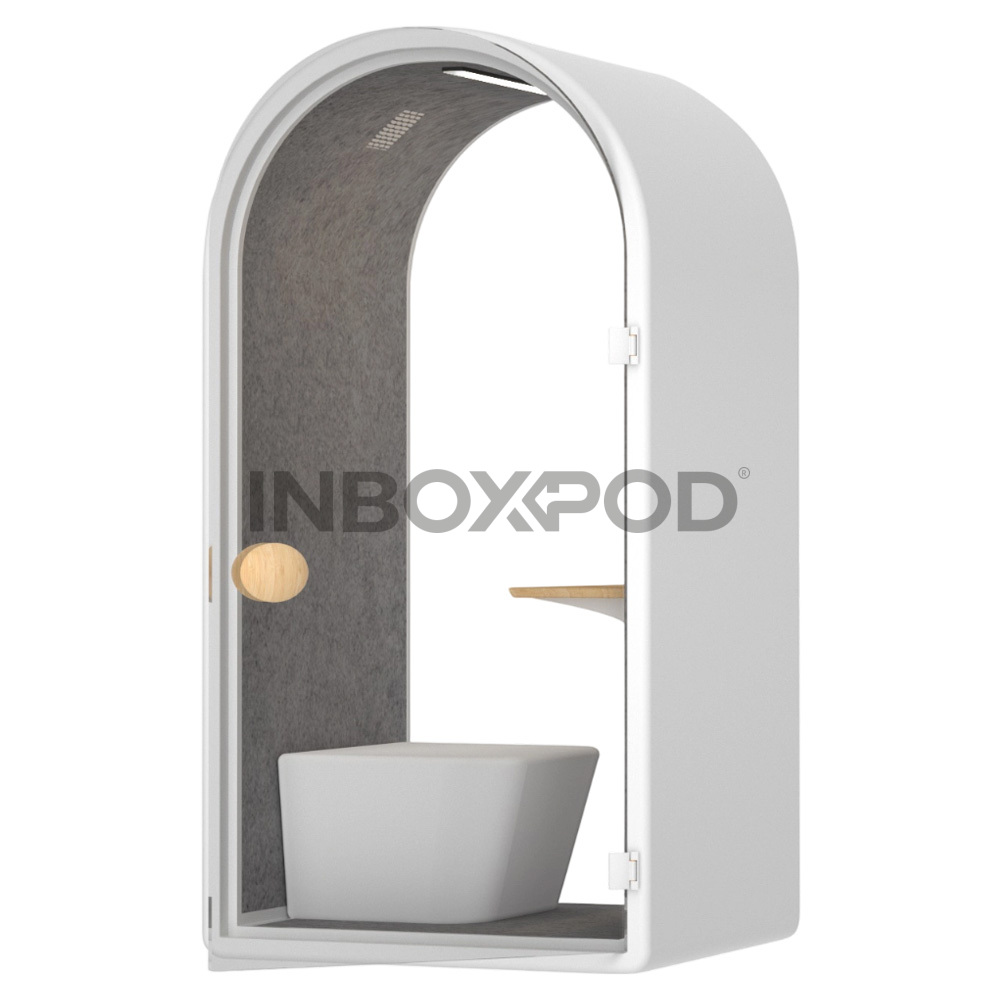
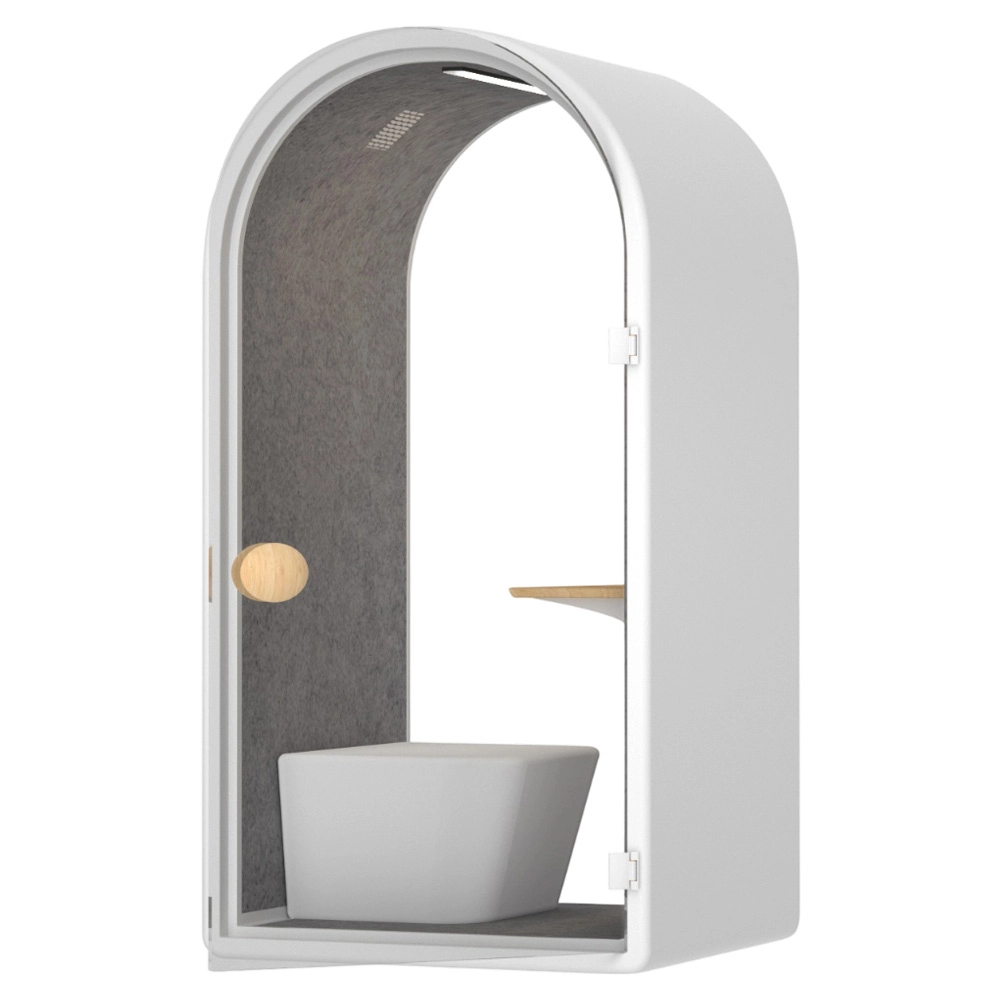
Product snapshot: Elevate your home productivity with the INBOXpod Study Pod, a soundproof private cabin designed as the third space of your home. Boasting 30 dB noise reduction, a fresh air system, and stylish aesthetics, it seamlessly blends comfort and functionality. Whether you’re working, studying, or seeking a quiet retreat, this pod by INBOXpod balances practicality and design, making it a standout addition to any home.
Practical interpretation of the 30 dB noise reduction claim: A 30 dB insertion loss is significant in home environments where typical ambient noise (conversations, kitchen noise, traffic) ranges from 40–70 dB. A 30 dB reduction can turn a moderately noisy room into a quiet interior suitable for focused work or private calls. However, this number should be qualified: is it a laboratory Rw, an average insertion loss measured in typical living rooms, or a best-case result? Always ask for the test type.
Why INBOXpod may be a good fit for home third space use:
- Balanced performance: The pod markets a solid noise reduction suitable for study and remote work while keeping a compact footprint.
- Ventilation included: The fresh air system is crucial for comfort during long sessions; ensure you receive the SPL measurements for the fan at your preferred operating speed.
- Aesthetics and functionality: For homeowners, look for measured RT60 and internal finish materials to ensure internal acoustics don’t produce distracting echoes.
Procurement tip: If you plan to use the INBOXpod for voice recording or professional audio, request lab TL data and RT60 results. For general WFH and study use, confirm field insertion loss in a typical home installation and check ventilation noise at ear level.
Testing and maintenance after installation
After installation, validate performance because field conditions (cabinetry behind the pod, proximity to windows, floor coupling) affect results. Recommended post-installation steps:
- Request a short field test: measure inside/outside SPL on a representative noise source (e.g., speech, traffic) and compare with manufacturer's field report.
- Check door seals and threshold leakage with a smoke pen or simple SPL sweep — poor seals can reduce performance sharply.
- Schedule HVAC maintenance for filters and fan alignment; verify fan noise doesn't increase over time.
- Periodically measure RT60 and background noise if the pod is used heavily for critical audio tasks.
Common procurement pitfalls and how to avoid them
Buyers often trip on a few recurring issues:
- Unspecified measurement conditions: A quoted dB reduction without test context (frequency range, source level, measurement positions) is meaningless.
- Ignoring flanking paths: Sound can bypass the booth via floor, ceiling, power outlets, wiring chases. Require details on how the booth integrates with the room floor and adjacent structures.
- Overlooking ventilation noise: A quiet booth shell with a loud fan is a practical failure. Make HVAC SPL limits contractual.
- Assuming lab results directly translate to in-situ performance: Always ask for both lab and field data or plan for a post-installation verification test.
FAQ — Frequently Asked Questions
Q: Is 30 dB noise reduction enough for recording podcasts or music?
A: For spoken-word podcasts, 30 dB insertion loss can be sufficient in many home environments if internal background noise is low and RT60 is controlled. For high-fidelity music recording, you typically need higher low-frequency isolation and a lab-tested TL curve; consider booths with higher Rw/STC or additional low-frequency treatment.
Q: Should I prioritize STC or Rw ratings?
A: Both are single-number measures serving similar roles. Use the rating that aligns with your region and always ask for the raw frequency-by-frequency transmission loss data. The test method and conditions matter more than the label.
Q: How much ventilation noise is acceptable?
A: For speech and focused work, aim for background noise inside the booth under 35–40 dBA with ventilation on at normal operation. For critical audio work, lower levels are preferred (≤30–35 dBA).
Q: Can I improve a booth's low-frequency performance?
A: Low-frequency sound is harder to stop. Increasing mass, adding decoupling, or using tuned bass traps and seals can help. For severe low-frequency sources (e.g., nearby busy roads with strong bass), consider a booth with a higher mass wall system or additional isolation plinths.
Q: Do I need a field test after installation?
A: Yes. Field tests validate real-world performance and confirm installation quality. Insist on a post-installation verification test as part of the purchase or warranty.
How INBOXpod aligns with procurement best practices
When evaluating the INBOXpod Soundproof Study Pod — Home Third Space for Quiet Focus — check that the vendor provides:
- Clear statements about how the 30 dB figure was measured.
- Field performance data or a clear plan for post-install verification.
- Ventilation noise data and airflow rates so you can balance comfort and isolation.
- Service and maintenance documentation ensuring sustained performance.
INBOXpod's combination of noise reduction, fresh-air system, and attention to visual design makes it a strong candidate for home third-space applications. For procurement driven by specific acoustic requirements, pair the product literature with lab/field test reports before final selection.
Contact and next steps
If you want to evaluate the INBOXpod Soundproof Study Pod for your home or small office, request the full acoustic dossier and a site-specific consultation. Contact INBOXpod sales or view the product page to arrange a test or demo. Verifying acoustic performance with documented tests will ensure the pod meets your needs for quiet focus, privacy, and comfort.
After reviewing the essential testing and certification standards for soundproof booth procurement, you may want to see how acoustic performance plays out in real work environments. For a practical example, continue with:
Case Study: INBOXpod Improves Focus in Co-working Spaces
Authoritative references and further reading
- International Organization for Standardization (ISO) - https://www.iso.org/
- ASTM International standards overview (including E90 and E413) - https://www.astm.org/
- Acoustical Society of America - https://acousticalsociety.org/
- Wikipedia — Soundproofing: https://en.wikipedia.org/wiki/Soundproofing
- Wikipedia — Sound transmission class: https://en.wikipedia.org/wiki/Sound_transmission_class
Final note
Procurement of a soundproof booth is both a technical and practical exercise. Use standardized test reports, insist on field verification, and include ventilation noise and internal acoustics in your decision criteria. The INBOXpod Soundproof Study Pod presents an approachable balance of design and acoustic performance for home third-space use; confirming its documented performance against the standards and checklist above will deliver the quiet, focused environment you expect.
Contact INBOXpod to request full test reports, schedule a demo, or speak to an acoustic specialist about specifying the right pod for your needs.
![The 2026 Office Phone Booth Buyer’s Guide: 10 Features You Can’t Ignore [Checklist Included] - INBOXpod](https://static.gooecloud.com/upload/img/GY894533694281/d2a0ad2d1daeb259faa85e923837f142.png?x-oss-process=image/format,webp/quality,Q_100 "The-2026-Office-Phone-Booth-Buyer’s-Guide:-10-Features-You-Can’t-Ignore-[Checklist-Included] - INBOXpod")
The 2026 Office Phone Booth Buyer’s Guide: 10 Features You Can’t Ignore [Checklist Included]
Installation & Site Planning for INBOXpod Small Oxygen Pod
Comparing INBOXpod vs Modular Booths: What Buyers Need
Top 10 Questions Buyers Ask About Office Phone Booths
Home-demo
Can the booths be customized to fit specific space requirements?
Yes, we offer flexible customization options including size, color, and additional features to perfectly suit your needs.
How long does it take to assemble an INBOXpod booth?
Most of our booths can be assembled without tools in about 30 minutes, making installation quick and hassle-free.
Do you provide after-sales support and warranty?
Yes, we provide comprehensive after-sales service and warranty to ensure long-term satisfaction with our products.
What is the typical sound insulation level of your acoustic booths?
Our booths typically achieve up to 27 dB noise reduction, meeting Class B sound insulation standards suitable for offices and study environments.
What materials are used in the construction of the booths?
Our booths are made from sustainable, high-quality materials including aluminum alloy frames and acoustic panels designed for optimal soundproofing.
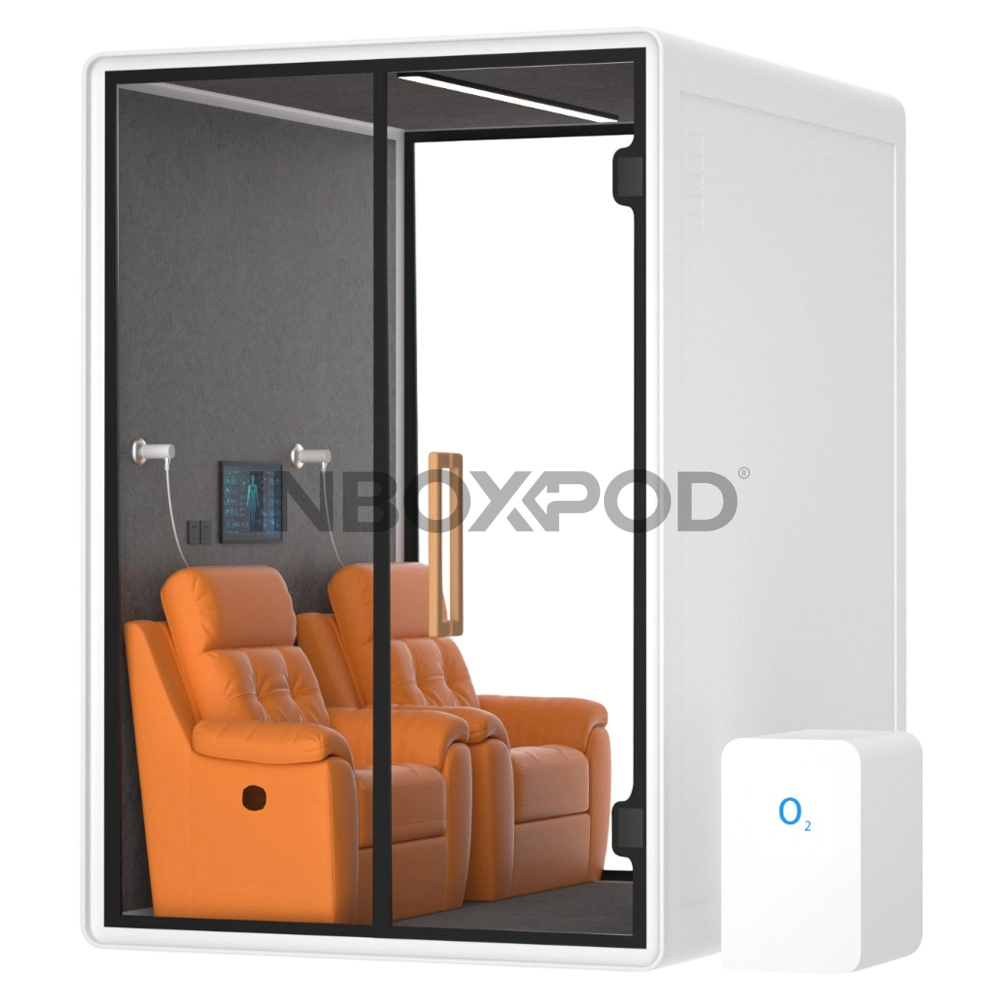
INBOXpod Double Seat Soundproof Oxygen Pod
An oxygen therapy space customized for double social interaction and health, with a double-seat design to promote a win-win situation for interaction and health. External size: W1600×D1929×H2300 mm; internal size: W1466×D1854×H2166 mm. You can improve cardiovascular function and concentration through oxygen therapy with friends and colleagues in a quiet and efficient acoustic environment, making health and social interaction complement each other.
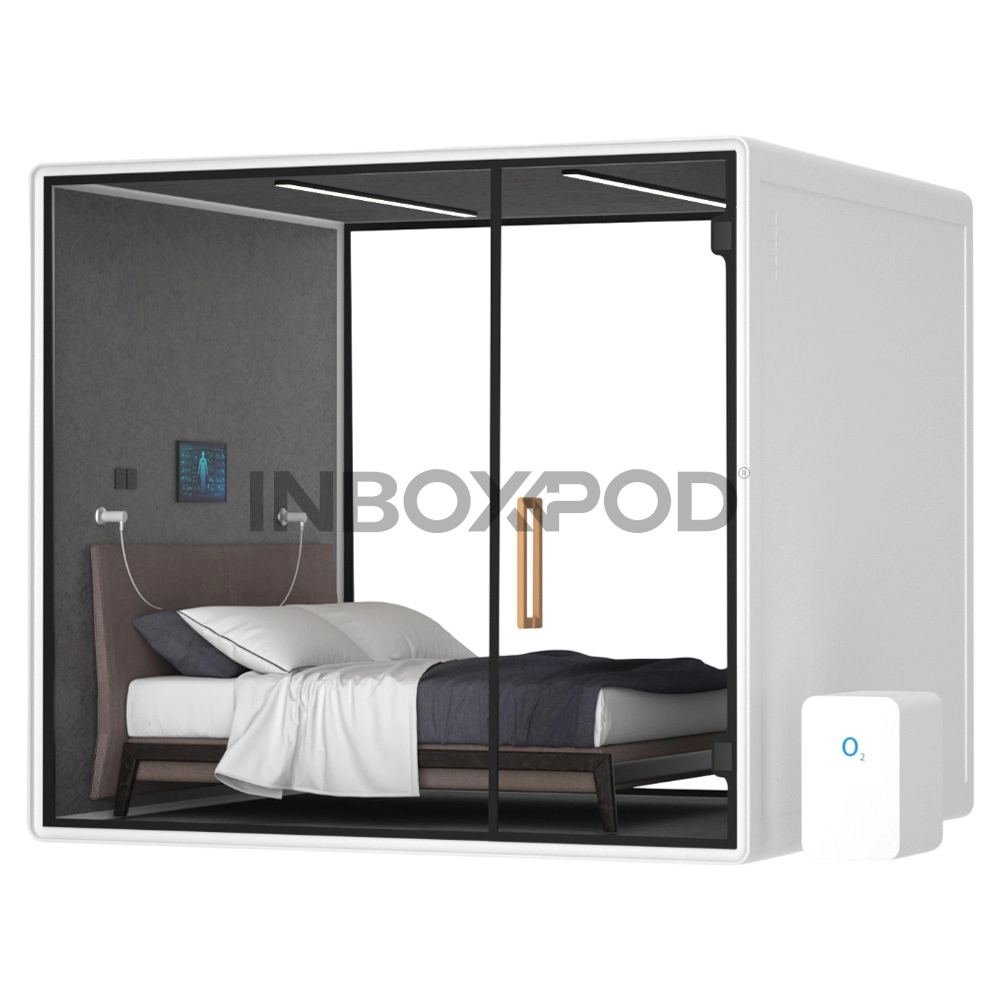
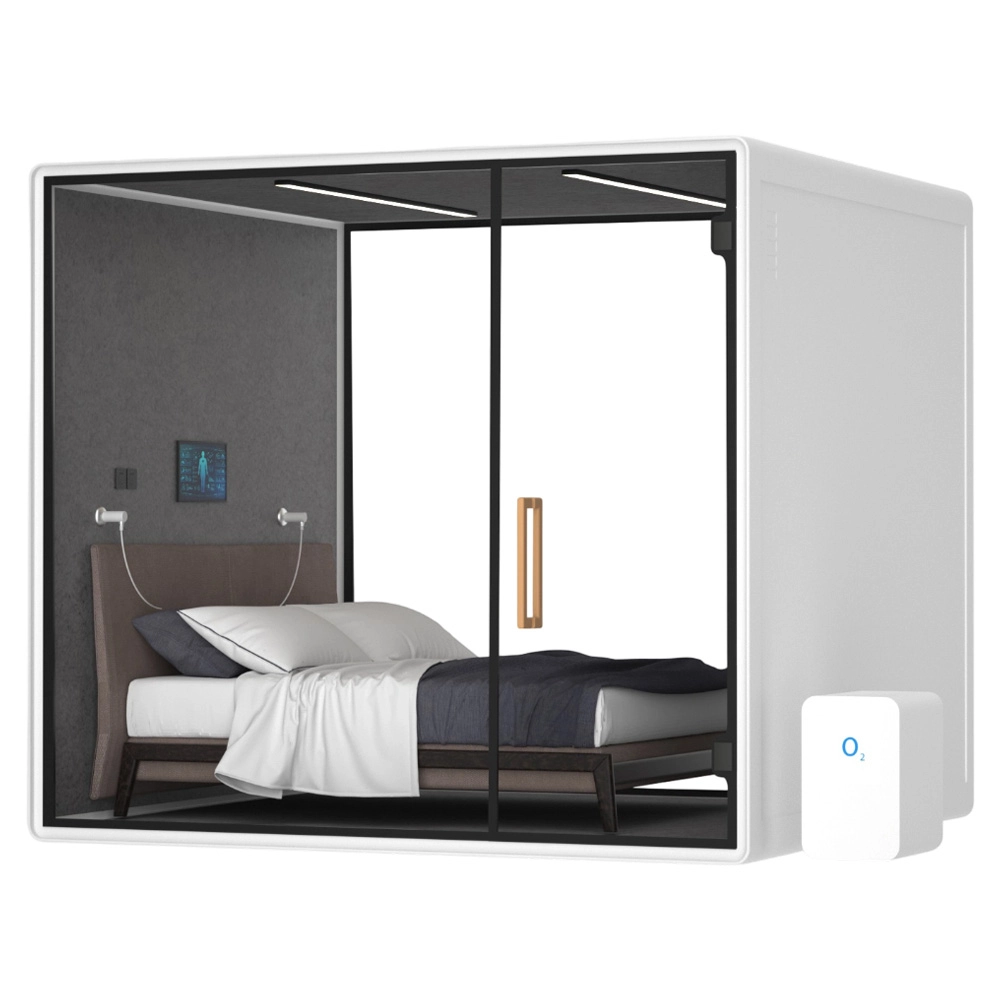
INBOXpod Soundproof Double Bed (small) Oxygen Pod
A double oxygen therapy option that balances space and experience, with a small double-bed layout suitable for various scenarios. External size: W2300×D1854×H2300 mm; internal size: W2300×D1929×H2300 mm. You can share the high-oxygen environment here with relatives and friends, relieve stress, improve physical fitness, and gain health and vitality in company.
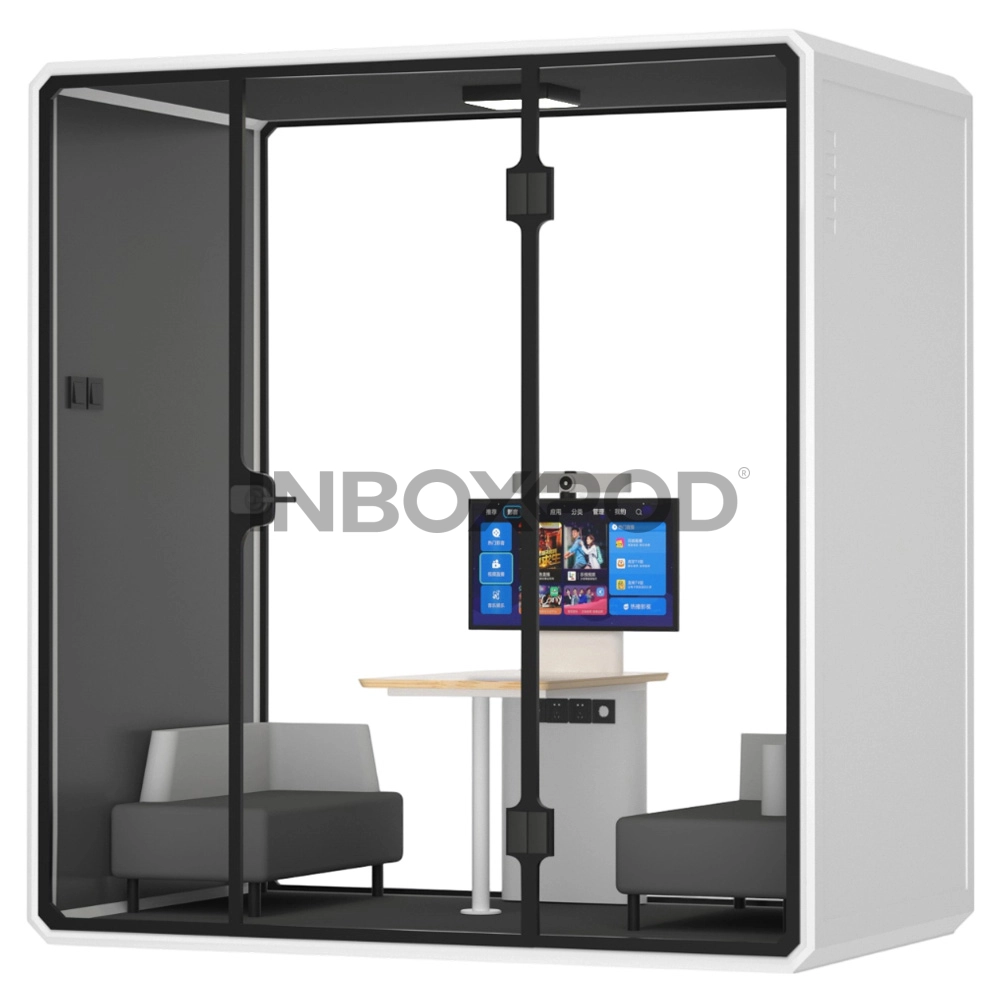
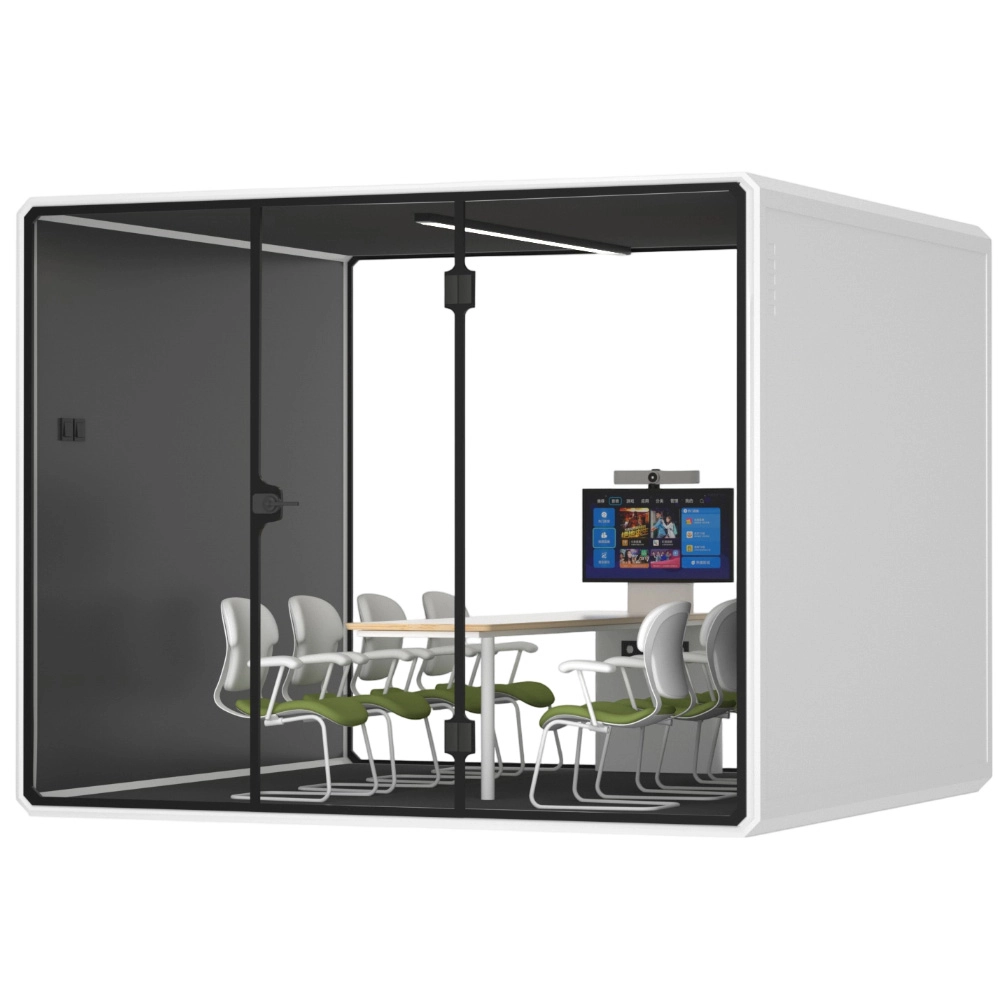
Silence Booth/Office Pod Prefabricated V series-L size
Designed for team collaboration and small meetings, the L-size booth provides a comfortable and acoustically optimized space for 4–6 people. With premium sound insulation, efficient ventilation, and integrated lighting and power systems, it ensures focus, privacy, and productivity—even in the busiest open offices.
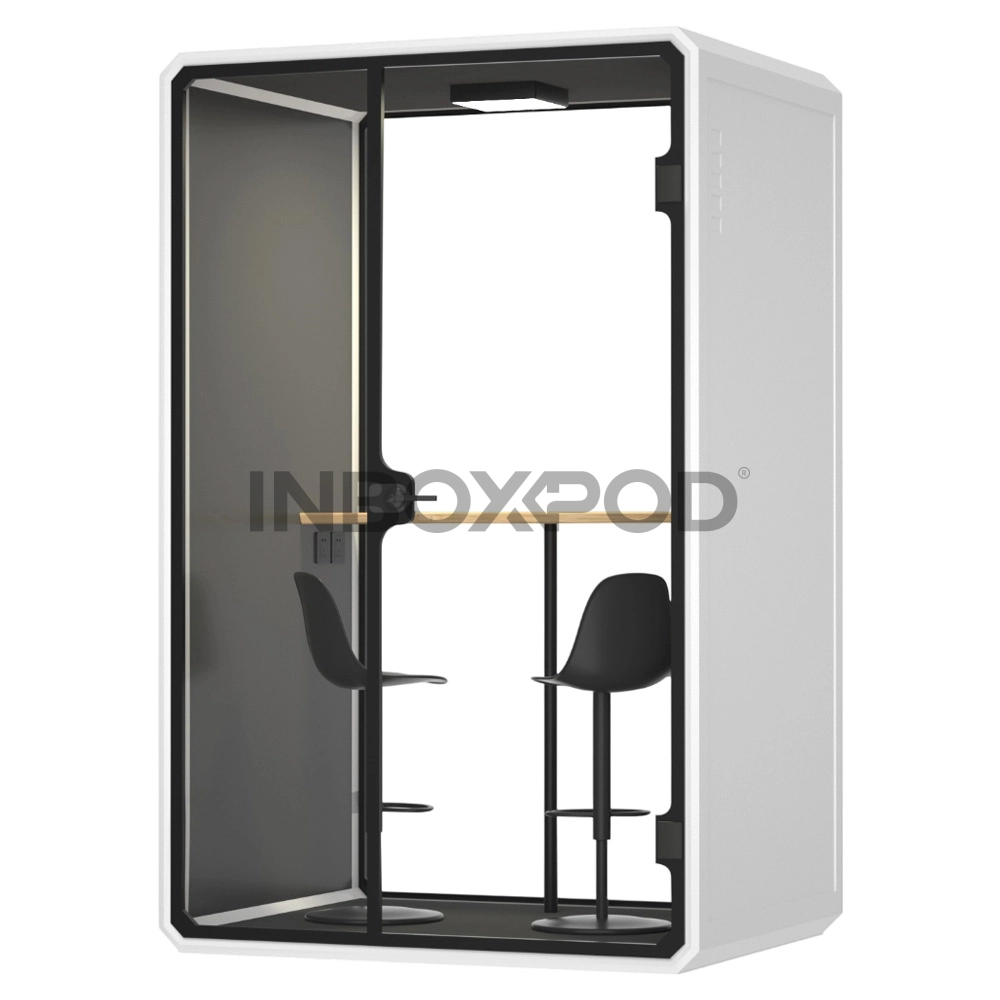
Silence Booth/Office pod Prefabricated V series - M size
Ideal for two-person discussions or focused solo work, the M-size booth offers a balanced mix of privacy and flexibility. Its advanced acoustic panels reduce external noise effectively, while the smart ventilation and lighting systems create a comfortable, quiet environment for calls, meetings, or concentrated tasks.
Whatsapp: +8613535292957