
How to Assess Soundproofing for Oxygen Therapy Pods
- Why Soundproofing Matters in Oxygen Therapy Spaces
- Clinical benefits of a quiet therapy environment
- Privacy, interactions and social therapy in double-seat pods
- Key Metrics to Measure Soundproofing Performance
- STC, NRC, Rw and RT60 explained
- How to measure in operational settings
- Assessing the INBOXpod Double Seat Soundproof Oxygen Pod
- Product overview and design features
- On-site testing protocol specific to the INBOXpod
- Practical Upgrades and Maintenance for Long-term Acoustic Performance
- Material choices and seal optimization
- HVAC, equipment noise control and maintenance
- Validation, Compliance and Safety Considerations
- Standards and best-practice references
- Documentation and acceptance testing
- Frequently Asked Questions (FAQ)
- What ambient noise level should I expect inside a well-insulated oxygen pod?
- How can I quickly test if my pod’s seals are effective?
- Do hyperbaric or oxygen-rich systems change acoustic requirements?
- Can I improve soundproofing without altering the pod structure?
- How often should acoustic performance be re-checked?
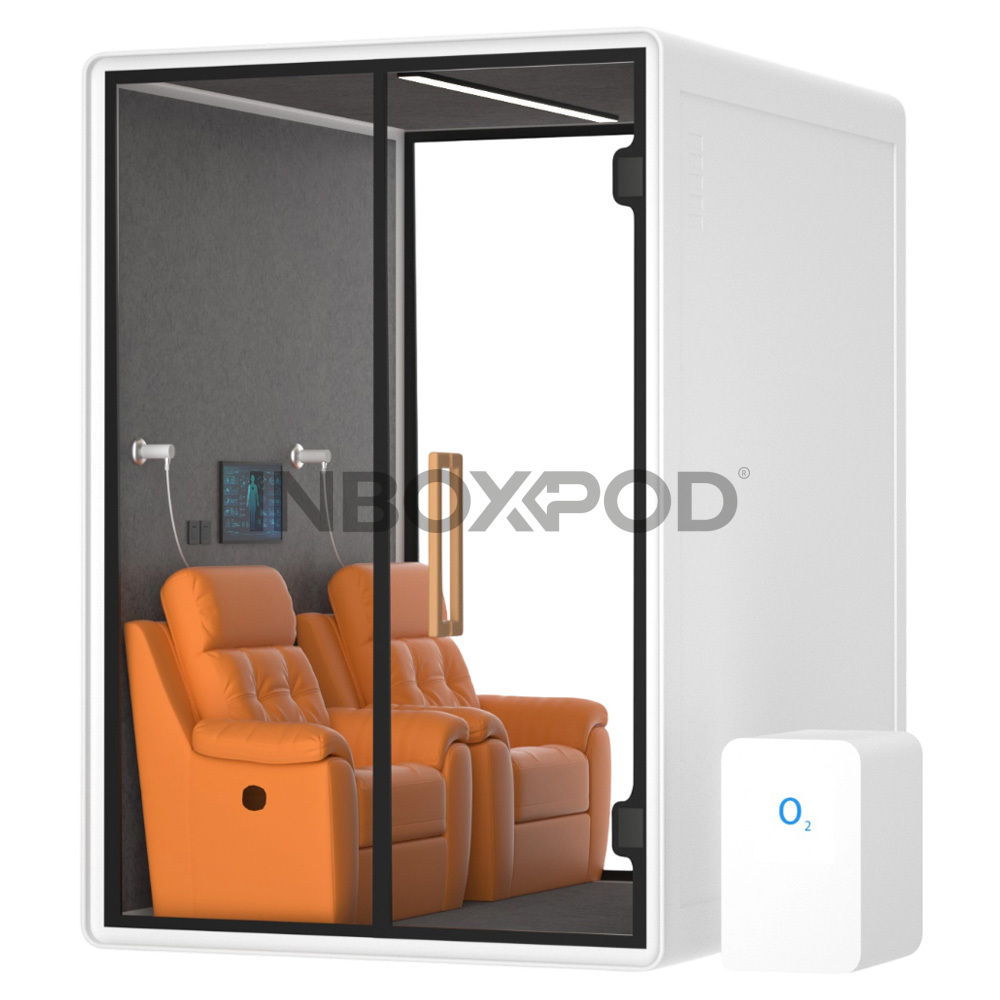
Ensuring effective soundproofing for oxygen therapy pods is critical for patient comfort, therapeutic efficacy and privacy. This guide covers measurable acoustic metrics, real-world assessment steps, and practical upgrades you can apply to single- and double-seat pods — including hyperbaric or integrated oxygen health systems hyperbaric chamber contexts — with a focused case application to the INBOXpod Double Seat Soundproof Oxygen Pod.
Why Soundproofing Matters in Oxygen Therapy Spaces
Clinical benefits of a quiet therapy environment
Quiet environments reduce stress, improve cardiovascular response, and support cognitive outcomes during oxygen therapy sessions. Multiple clinical and environmental-health sources link lower ambient noise to better sleep, reduced sympathetic activation, and improved cognitive focus — all relevant for patients and wellness users undergoing oxygen therapy. For enclosed systems and restorative sessions, a noise floor below 35–40 dBA is commonly targeted to preserve the therapeutic benefits and patient comfort, consistent with broader environmental noise guidance from public health organizations (WHO Environmental Noise Guidelines).
Privacy, interactions and social therapy in double-seat pods
Double-seat oxygen pods (like the INBOXpod Double Seat Soundproof Oxygen Pod) combine social interaction with therapy. Soundproofing must balance internal acoustic comfort (speech clarity and reverberation control) and external privacy (minimizing sound leakage). Poor sound isolation can compromise confidentiality and interrupt adjacent therapy sessions or workspace areas. When planning or assessing such installations, keep in mind the dual goals: internal acoustic quality and external isolation.
Key Metrics to Measure Soundproofing Performance
STC, NRC, Rw and RT60 explained
To evaluate soundproofing you should be familiar with several standard metrics:
- STC (Sound Transmission Class) — quantifies how well a partition (wall, pod shell) reduces airborne sound transmission between two spaces. Higher STC = better isolation. See background: Wikipedia: Sound transmission class.
- NRC (Noise Reduction Coefficient) — indicates how much sound is absorbed within a space (0.0 to 1.0). Useful for selecting interior absorptive materials to reduce reverberation.
- Rw — an ISO-weighted single-number rating comparable to STC used internationally (refer to ISO literature for measurement protocols: ISO 3382 / related standards).
- RT60 (Reverberation Time) — the time it takes sound to decay by 60 dB in a room. Shorter RT60 improves speech clarity and comfort; typical target for small therapy pods is 0.4–0.8 s depending on interior finishes (see Reverberation (Wikipedia)).
How to measure in operational settings
Use a calibrated sound level meter (Class 1 or Class 2) and, when possible, simple test signals for reproducible results. Key steps:
- Measure background SPL outside the pod at multiple positions (dBA weighting, slow response).
- Measure inside the pod with the door/seal conditions used in normal operation (occupied/unoccupied states).
- Perform a transmission test if possible: generate a broadband signal (noise or pink noise) inside and measure outside, or vice versa, to estimate insertion loss and approximate STC-like performance.
- Measure RT60 with an impulsive source (starter pistol alternative or electronic impulsive noise) or using swept-sine/pink noise methods with analysis software.
Assessing the INBOXpod Double Seat Soundproof Oxygen Pod
Product overview and design features
INBOXpod Double Seat Soundproof Oxygen Pod
An oxygen therapy space customized for double social interaction and health, with a double-seat design to promote a win-win situation for interaction and health. External size: W1600×D1929×H2300 mm; internal size: W1466×D1854×H2166 mm. You can improve cardiovascular function and concentration through oxygen therapy with friends and colleagues in a quiet and efficient acoustic environment, making health and social interaction complement each other.
This pod’s double-seat layout encourages social therapies while its compact internal volume, decoupled structure and dedicated seals are intended to support both internal acoustic quality and external isolation. When assessing the INBOXpod (or comparable oxygen therapy enclosures), focus on three acoustic domains: airborne transmission control (pod shell and door), internal absorption/reverberation, and system noise (HVAC, oxygen concentrator, control electronics).
On-site testing protocol specific to the INBOXpod
Follow this structured validation protocol to generate comparable, actionable results:
- Baseline ambient survey: Measure and log background noise in the intended installation area (before pod placement) during typical operating hours — record sources (foot traffic, HVAC, adjacent rooms).
- Pod closed measurement: With the pod installed and all services (fans, oxygen concentrator) operating as they will in use, measure inside vs outside SPL at the same time of day. Capture A-weighted dB levels and RT60.
- Speech privacy test: Have a speaker inside the pod talk at conversational level (approx. 60 dBA @ 1 m) while you measure outside to assess leakage. Walk the perimeter to find weak points.
- Equipment noise audit: Identify the pod’s internal mechanical noise sources (air supply lines, fans). Use a frequency analyzer to spot tonal components that are more disturbing though lower in dB.
| Metric | What it measures | Practical target for therapy pods |
|---|---|---|
| Background SPL (dBA) | Ambient loudness inside the pod | < 35–40 dBA (quiet session); < 45 dBA acceptable for social therapy) |
| STC / Rw | Airborne sound isolation of shell/door | STC 30–45 (higher if adjacent spaces require privacy) |
| RT60 (s) | Reverberation time — speech clarity | 0.4–0.8 s (smaller volume favors shorter RT60) |
| NRC | Average absorptivity of interior surfaces | 0.6–0.9 (higher for better reverberation control) |
Practical Upgrades and Maintenance for Long-term Acoustic Performance
Material choices and seal optimization
Key interventions to improve pod acoustics:
- Door and frame seals: Use high-quality, compression gasketing and perimeter seals to close flanking paths. Check for leaks at door thresholds and cable penetrations.
- Mass and damping: Increasing the surface mass or adding constrained-layer damping treatments on the pod shell reduces structure-borne transmission at problematic frequencies.
- Interior absorption: Add discreet absorptive panels (high NRC) at early reflection points and behind seating to shorten RT60 without increasing fire/oxygen risks.
When selecting materials for an oxygen-enriched environment, prioritize low-flammability and non-off-gassing materials compatible with oxygen safety standards; consult authoritative guidance for hyperbaric or oxygen-rich spaces to avoid ignition hazards.
HVAC, equipment noise control and maintenance
Mechanical systems commonly dominate in-use noise. Recommendations:
- Acoustic isolation mounts: Vibration-isolate air delivery systems and fans from the pod frame using resilient mounts and flexible connectors.
- Silenced air paths: Use lined ducts or acoustic attenuators on intake and exhaust to reduce broadband fan noise without starving ventilation.
- Routine checks: Schedule quarterly inspections for seals, fans, and connector integrity. Small leakage increases substantially degrade overall insertion loss.
Validation, Compliance and Safety Considerations
Standards and best-practice references
Follow established standards for measurement and safety. Use ISO acoustic measurement procedures (see ISO standards) for RT60 and room acoustics, and refer to public health guidelines for acceptable ambient noise levels (WHO). For installations that interface with medical systems like oxygen health systems hyperbaric chamber units, incorporate medical-device and facility guidance from official regulators (FDA: Hyperbaric Oxygen Therapy).
Documentation and acceptance testing
Produce an acceptance test report that includes:
- Baseline and post-installation SPL maps;
- Measured RT60 and estimated STC/Rw or insertion loss;
- Equipment noise spectra and corrective actions taken;
- Signed verification from the installer and facilities manager.
- World Health Organization. Environmental Noise Guidelines for the European Region. WHO.
- ISO — Acoustics. Relevant standards for room acoustic measurements and ratings. ISO.
- FDA. Hyperbaric Oxygen Therapy resources for medical devices and facility considerations. FDA.
- Wikipedia — Sound transmission class. Background on STC measurement and interpretation. Wikipedia: STC.
- Wikipedia — Reverberation. Background on RT60 and room acoustics. Wikipedia: Reverberation.
Documented testing supports clinical compliance, user confidence and assists future troubleshooting.
Frequently Asked Questions (FAQ)
What ambient noise level should I expect inside a well-insulated oxygen pod?
Aim for an internal background SPL below 35–40 dBA during therapy sessions for optimal restorative effects. If the pod is used primarily for social therapy, up to 45 dBA may be acceptable, provided speech clarity and comfort are preserved.
How can I quickly test if my pod’s seals are effective?
Perform a simple speaker-inside test: play broadband pink noise or speech at conversational level inside, walk around the exterior and listen for leakage. Measure outside SPL with a sound level meter to quantify leakage. Mark and reinforce locations where sound escape is highest (door perimeter, cable penetrations).
Do hyperbaric or oxygen-rich systems change acoustic requirements?
Yes. Oxygen-rich or hyperbaric environments impose stricter material and flammability requirements. Acoustic treatments and seal materials must be compatible with oxygen safety guidance; coordinate acoustic upgrades with clinical engineering and adhere to applicable medical-device and facility codes. Refer to regulators like the FDA and applicable local codes when integrating with oxygen health systems hyperbaric chamber installations.
Can I improve soundproofing without altering the pod structure?
Yes. Improvements such as high-NRC interior panels, door gasket upgrades, flexible duct connectors, and external absorptive treatments near the pod (room-level acoustic baffles) can produce measurable gains without major structural changes. For high-privacy needs, consider adding an external acoustic screen or increasing shell mass if modifications are permitted.
How often should acoustic performance be re-checked?
Re-check acoustic performance after installation, after any mechanical changes, and as part of routine maintenance every 6–12 months. Seal wear and mechanical vibration sources can degrade performance over time.
If you’d like assistance assessing the INBOXpod Double Seat Soundproof Oxygen Pod in your facility, or to request on-site acoustic validation and a custom specification for integration with oxygen health systems hyperbaric chamber setups, please contact our team or view product details to schedule a consultation.
References and additional reading:
Installation & Site Planning for INBOXpod Small Oxygen Pod
Buying Guide for Silence Booth Prefab V-Series M Size
The Definitive 2026 Guide to Portable Soundproof Booths: Performance, Pricing & Future Trends
Cost Breakdown: Silence Booth Prefabricated V-Series M
Home-demo
Can the booths be customized to fit specific space requirements?
Yes, we offer flexible customization options including size, color, and additional features to perfectly suit your needs.
What materials are used in the construction of the booths?
Our booths are made from sustainable, high-quality materials including aluminum alloy frames and acoustic panels designed for optimal soundproofing.
How long does it take to assemble an INBOXpod booth?
Most of our booths can be assembled without tools in about 30 minutes, making installation quick and hassle-free.
Do you provide after-sales support and warranty?
Yes, we provide comprehensive after-sales service and warranty to ensure long-term satisfaction with our products.
What is the typical sound insulation level of your acoustic booths?
Our booths typically achieve up to 27 dB noise reduction, meeting Class B sound insulation standards suitable for offices and study environments.
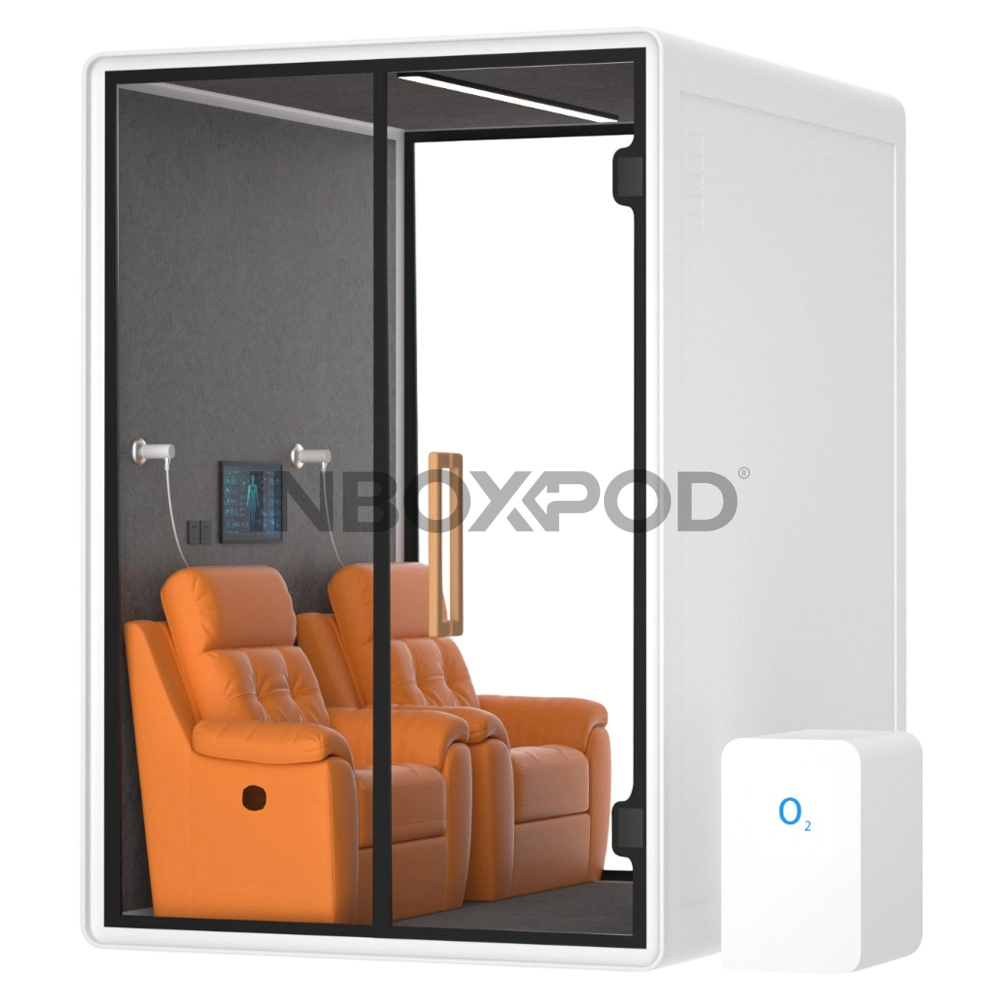
INBOXpod Double Seat Soundproof Oxygen Pod
An oxygen therapy space customized for double social interaction and health, with a double-seat design to promote a win-win situation for interaction and health. External size: W1600×D1929×H2300 mm; internal size: W1466×D1854×H2166 mm. You can improve cardiovascular function and concentration through oxygen therapy with friends and colleagues in a quiet and efficient acoustic environment, making health and social interaction complement each other.
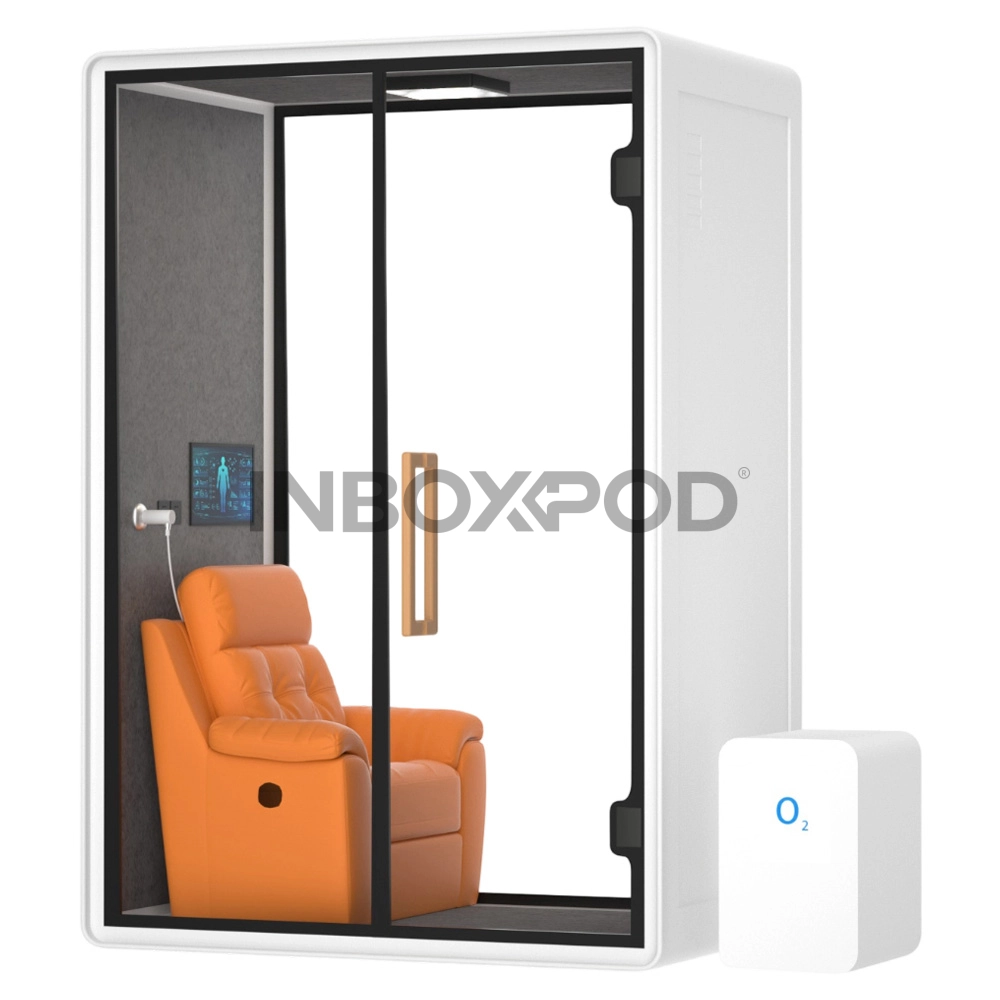
INBOXpod Soundproof Single seat Oxygen Pod
A delicate and compact personal oxygen therapy secret, with a single-seat layout that is flexible and convenient. External size: W1600×D1028×H2300 mm; internal size: W1466×D953×H2166 mm. Create a quiet, private domain for you, where you can inhale high-purity oxygen efficiently during daily relaxation or postoperative recovery, helping to improve cardiopulmonary function and mental state.
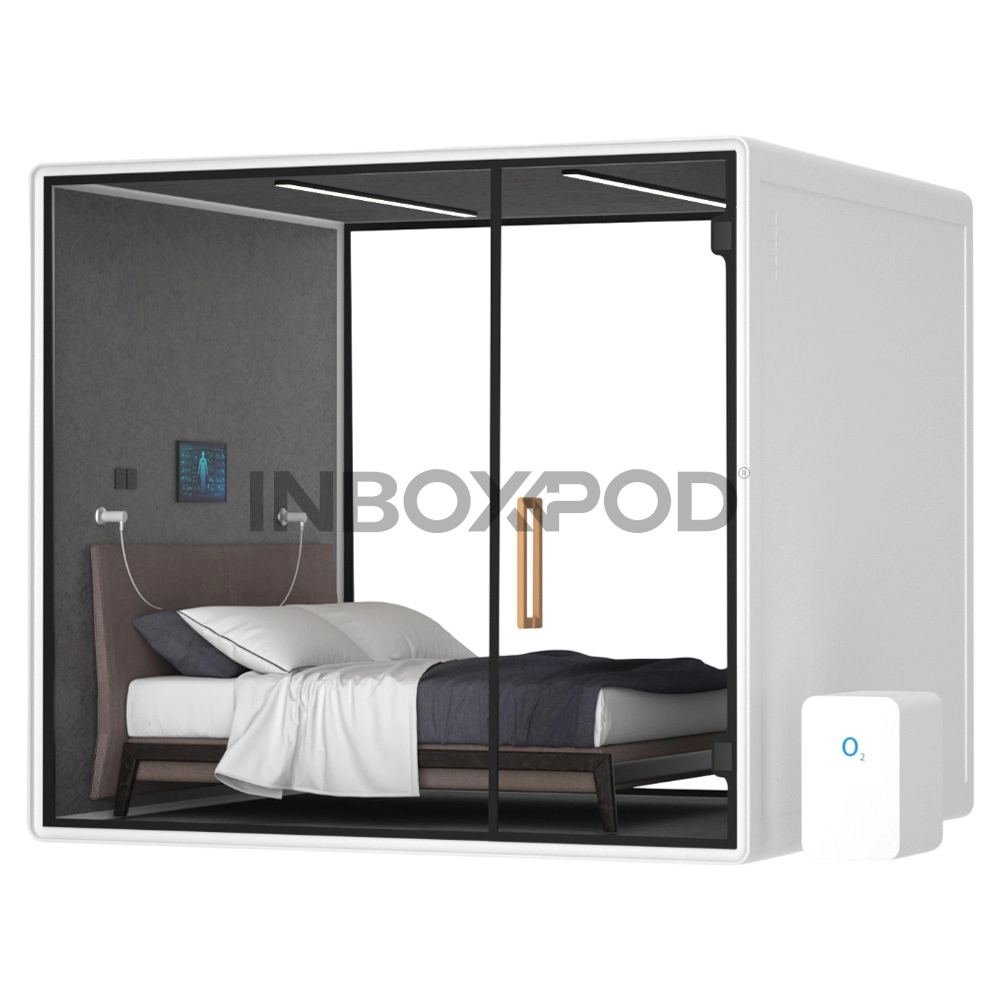
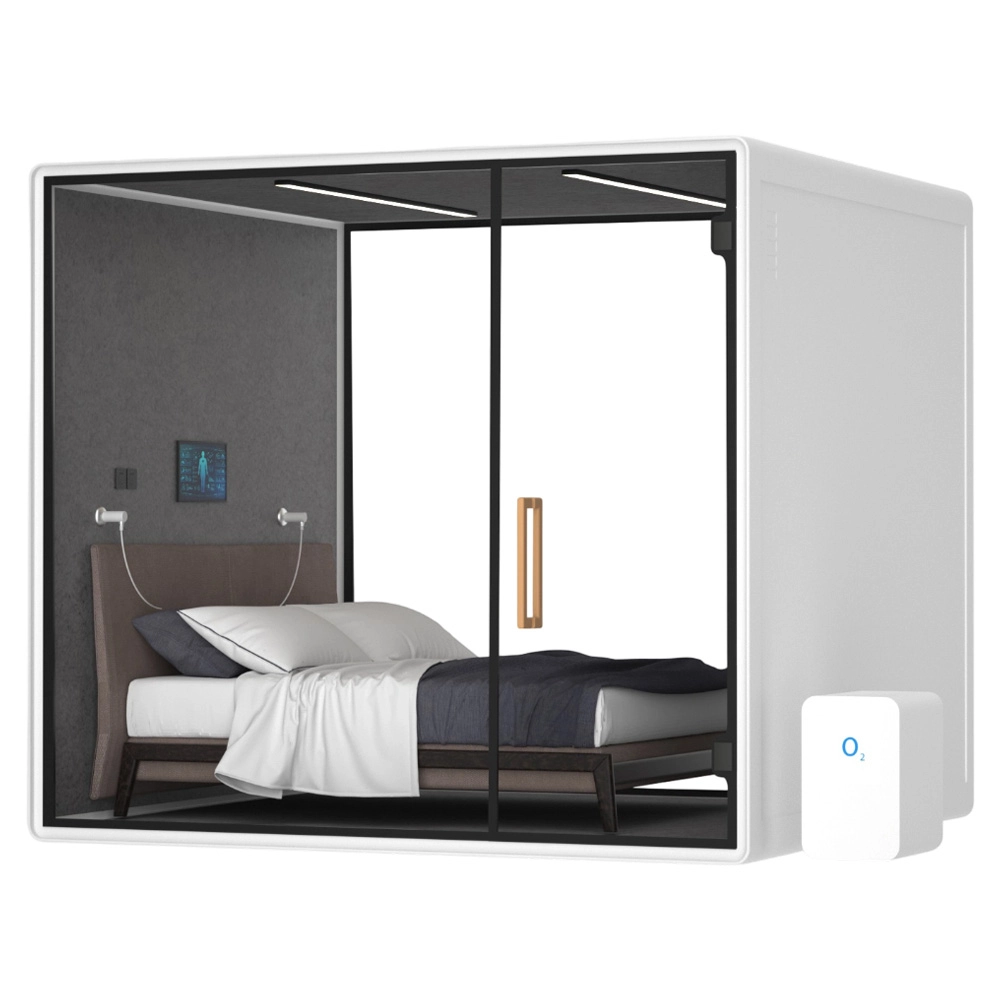
INBOXpod Soundproof Double Bed (small) Oxygen Pod
A double oxygen therapy option that balances space and experience, with a small double-bed layout suitable for various scenarios. External size: W2300×D1854×H2300 mm; internal size: W2300×D1929×H2300 mm. You can share the high-oxygen environment here with relatives and friends, relieve stress, improve physical fitness, and gain health and vitality in company.
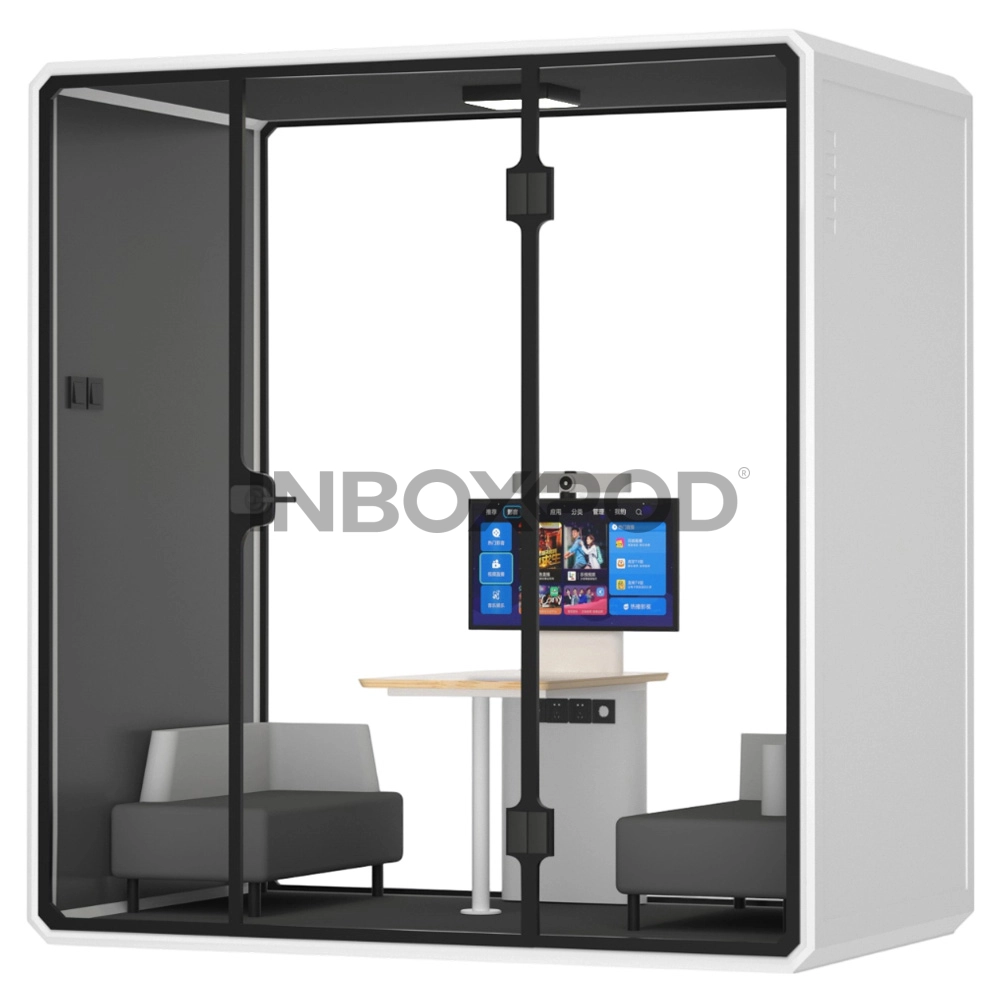
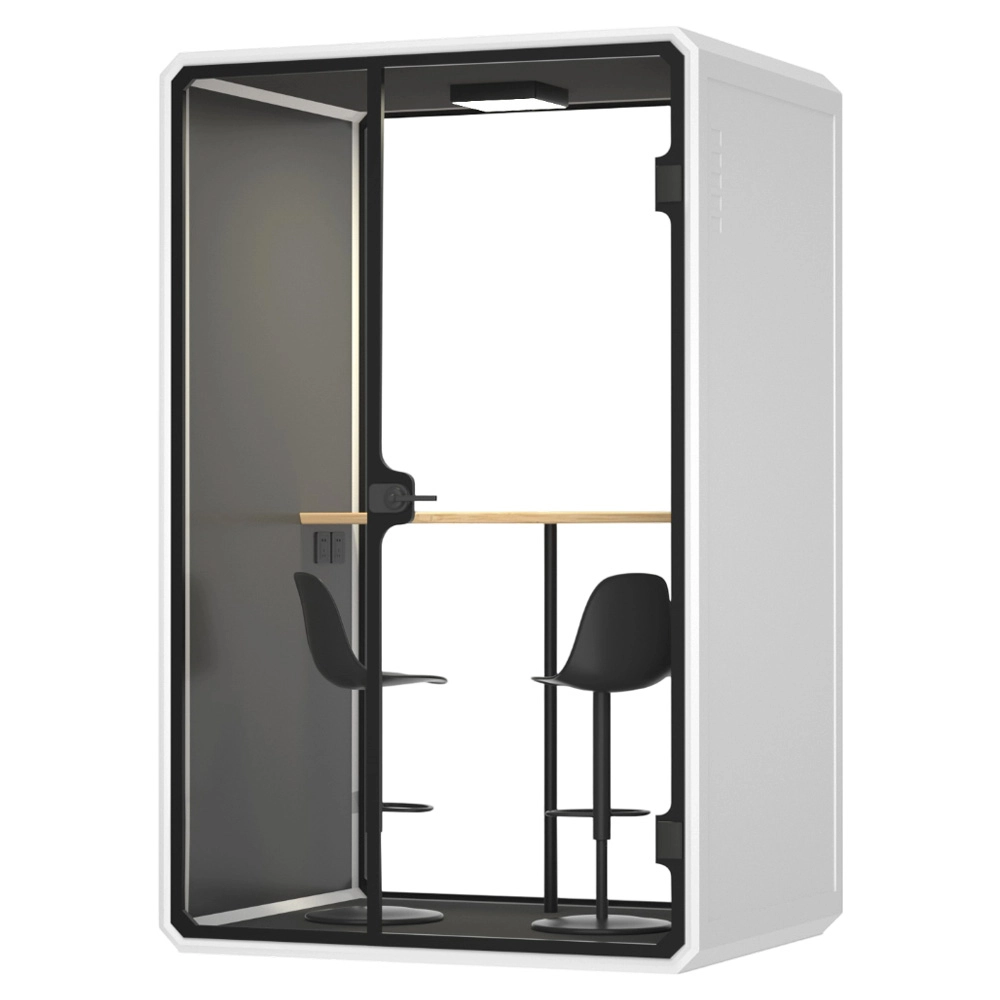
Silence Booth/Office Pod Prefabricated V series-L size
Designed for team collaboration and small meetings, the L-size booth provides a comfortable and acoustically optimized space for 4–6 people. With premium sound insulation, efficient ventilation, and integrated lighting and power systems, it ensures focus, privacy, and productivity—even in the busiest open offices.
Whatsapp: +8613535292957