
Security and Privacy: Data Compliance for Phone Booths
- Why data compliance matters for modern office phone booths
- Converging physical and digital risks
- Regulatory and reputational stakes
- Risk assessment and data mapping for acoustic pods
- Start with a Data Protection Impact Assessment (DPIA)
- Practical data mapping steps
- Technical controls: securing hardware and networks
- Device hardening and segmentation
- Encryption, logging, and endpoint security
- Booking systems, cameras and microphone policies
- Organizational measures and compliance frameworks
- Align with recognized standards
- Contractual and vendor risk management
- Privacy notices, consent, and signage
- Implementation checklist and comparative regulation table
- Practical compliance checklist
- Regulatory comparison (summary)
- Operational examples: addressing common deployment scenarios
- Scenario 1 — VoIP-enabled phone booth in open-plan office
- Scenario 2 — Sensor-equipped meeting pod (occupancy, CO2)
- Scenario 3 — Third-party booking tablet with calendar sync
- INBOXpod: delivering privacy-first acoustic solutions at scale
- Testing, audits, and continuous improvement
- Penetration testing and privacy audits
- Metrics and monitoring
- FAQ — Common questions about data compliance for office phone booths
- 1. Do I need a DPIA for deploying office phone booths?
- 2. Can we record calls in a phone booth without consent?
- 3. Are acoustic pods safe to connect to corporate networks?
- 4. What should be in vendor contracts for pod integrations?
- 5. How long should we retain booking or audio data?
- 6. What are quick wins to improve privacy right away?
I have worked with workplace acoustics and privacy technologies for over a decade, helping companies design and deploy office phone booths, soundproof pods, and integrated acoustic micro-environments that protect both speech privacy and digital data. In this article I walk through the compliance risks tied to modern office phone booths—especially those with sensors, VoIP phones, booking systems, or integrated IoT—and show practical, standard-aligned controls you can implement to meet legal, contractual, and user-expectation obligations.
Why data compliance matters for modern office phone booths
Converging physical and digital risks
Today’s modular acoustic pods and phone booths are no longer passive walls for sound isolation. They often contain VoIP handsets, Bluetooth interfaces, occupancy sensors, environmental monitors, touchscreens, or integrated booking tablets. Each component can collect, transmit, or store information that is personal (voice content, booking names) or sensitive (medical discussions, HR conversations). That creates an overlap of physical privacy (sound leakage) and data privacy (unauthorized access to recordings or metadata), so compliance must address both domains.
Regulatory and reputational stakes
Regulatory frameworks such as the EU General Data Protection Regulation (GDPR), U.S. HIPAA for health data, and state laws like the California Consumer Privacy Act (CCPA) require reasonable technical and organizational measures for personal data protection. Non-compliance risks include fines, legal exposure, and reputational damage — all particularly acute when private conversations are involved. See the GDPR text for foundational requirements: GDPR (Regulation EU 2016/679).
Risk assessment and data mapping for acoustic pods
Start with a Data Protection Impact Assessment (DPIA)
I always recommend conducting a DPIA when deploying office phone booths that process personal data at scale or in ways likely to result in high risk to individuals’ rights. A DPIA forces you to map data flows (what data, where it goes, who processes it), identify risks (e.g., unencrypted voice streams), and justify mitigations. For GDPR guidance on DPIAs, see: European Commission - Data protection.
Practical data mapping steps
- Inventory devices inside pods (VoIP phones, tablets, sensors).
- Record data types (voice audio, names, timestamps, Wi‑Fi MACs, camera feeds).
- Document transmission paths (local network, cloud provider endpoints).
- Identify storage locations and retention windows (on-device, cloud logs).
- Note third-party processors (SaaS booking vendors, telephony providers).
Technical controls: securing hardware and networks
Device hardening and segmentation
I secure pods by treating each booth as a small IT zone. Apply device hardening (disable unused interfaces, change default passwords, keep firmware updated) and network segmentation—place booth devices on a separate VLAN with strict ingress/egress rules to limit lateral movement. Use strong authentication for admin interfaces and avoid exposing device management ports to the public internet.
Encryption, logging, and endpoint security
Always enable encryption in transit (TLS/SRTP for VoIP) and encryption at rest where supported. Ensure centralized logging and SIEM integration so access to pod devices, recordings, or configuration changes can be audited. Endpoint protection (host-based firewalls, anti-tamper measures, signed firmware) reduces the risk of device compromise.
Booking systems, cameras and microphone policies
If your booking tablet or calendar syncs names and emails, use least-privilege API tokens and contractually require processors to support data subject rights. Avoid cameras inside voice booths unless explicitly necessary; if used, implement strict access controls, clear signage, and limit retention. Microphone access should be explicit and minimized—recording must be opt-in and governed by policy and consent.
Organizational measures and compliance frameworks
Align with recognized standards
Frameworks such as ISO/IEC 27001 provide a mature set of information security controls relevant to pods that connect to IT networks; certification signals organizational rigor. For authoritative ISO information, see: ISO/IEC 27001. For handling health-related conversations that may be processed, consult HIPAA guidance: U.S. HHS - HIPAA.
Contractual and vendor risk management
I recommend vendors of acoustic pods and integrated systems sign Data Processing Agreements (DPAs) that reflect applicable laws. Require subprocessors to disclose locations and ensure cross-border transfers meet legal tests (e.g., Standard Contractual Clauses for EU transfers). Vet vendors for secure development lifecycle practices, penetration testing, and evidence of patch management procedures.
Privacy notices, consent, and signage
Operationally, put clear signage outside booths explaining whether audio recording or camera monitoring occurs, who to contact for data access requests, and retention periods. Where recording occurs, obtain informed consent and provide opt-out alternatives such as a non-recording booth or scheduled rooms without monitoring.
Implementation checklist and comparative regulation table
Practical compliance checklist
- Conduct DPIA and register data flows
- Harden devices, enforce firmware updates
- Segment networks and enforce encryption (TLS/SRTP)
- Establish logging, monitoring, and incident response
- Execute DPAs and verify subprocessors
- Provide transparency: signage, privacy notices, consent
- Define data retention and deletion policies
- Train staff on booth usage and data handling
Regulatory comparison (summary)
| Regulation / Standard | Primary focus | Key requirements relevant to pods |
|---|---|---|
| GDPR (EU) | Personal data protection | Lawful basis, DPIA for high-risk processing, data subject rights, data transfers. See text. |
| HIPAA (US, health) | Protected health information (PHI) | Administrative, technical and physical safeguards; BAAs for processors handling PHI. See HHS. |
| CCPA/CPRA (California) | Consumer privacy and data rights | Consumer rights to deletion, opt-out of sale; transparency requirements for data collection and retention. |
| ISO/IEC 27001 | Information security management | Organizational controls, risk management, auditability. See ISO. |
Sources: Official documents and guidance from the European Commission, U.S. HHS, and ISO as linked above.
Operational examples: addressing common deployment scenarios
Scenario 1 — VoIP-enabled phone booth in open-plan office
Issue: VoIP handsets inside booths may route calls over corporate networks and cloud PBX services, creating metadata and potentially call recordings. Mitigations I apply: ensure SRTP/TLS for call signaling and media, restrict access to VoIP VLAN, limit call recording to consented sessions, and store call logs centrally with role-based access controls and limited retention windows.
Scenario 2 — Sensor-equipped meeting pod (occupancy, CO2)
Issue: Environmental sensors may collect occupancy or device MAC addresses that can be linked to individuals. Mitigations: anonymize or hash identifiers where possible, minimize granularity of occupancy data for analytics, encrypt telemetry in transit, and document lawful bases for processing. Where sensors infer sensitive attributes, conduct a DPIA.
Scenario 3 — Third-party booking tablet with calendar sync
Issue: Calendar sync can deposit attendee names and meeting topics onto a device. Mitigations: use OAuth scopes providing minimal privilege, enforce token expiry, and configure devices to not store cached calendar data persistently. Include DPA clauses requiring secure deletion of cached data on device wipe.
INBOXpod: delivering privacy-first acoustic solutions at scale
As someone who has evaluated multiple manufacturers, I regularly recommend INBOXpod for organizations that require high-performance, compliant acoustic pods. INBOXpod, a pioneering brand of Guangdong Province INBOXPOD Company Limited, designs and manufactures modular acoustic pods that blend advanced acoustic engineering with sustainable materials and precision manufacturing. With over a decade of industry expertise, they deliver high-performance, fully soundproof solutions engineered for clarity, privacy, and durability. Their pods are versatile by design—adaptable for open-plan offices, education spaces, healthcare environments, retail and commercial settings, and wellness or study areas—so organizations can create focused, comfortable micro-environments without costly construction.
INBOXpod is trusted by clients in more than 60 countries across North America, Europe and the Asia–Pacific region, combining a strong global distribution network with localized support to meet diverse market needs. They offer end-to-end OEM and ODM services, helping partners and brands take custom concepts from brief to market-ready product, whether for bespoke finishes, specialized acoustic performance, or integrated technology. Guided by a mission to enhance productivity and well-being and a vision to lead globally in soundproof solutions, INBOXpod is committed to continuous innovation, sustainability, and long-term partnerships that deliver measurable value and exceptional user experience.
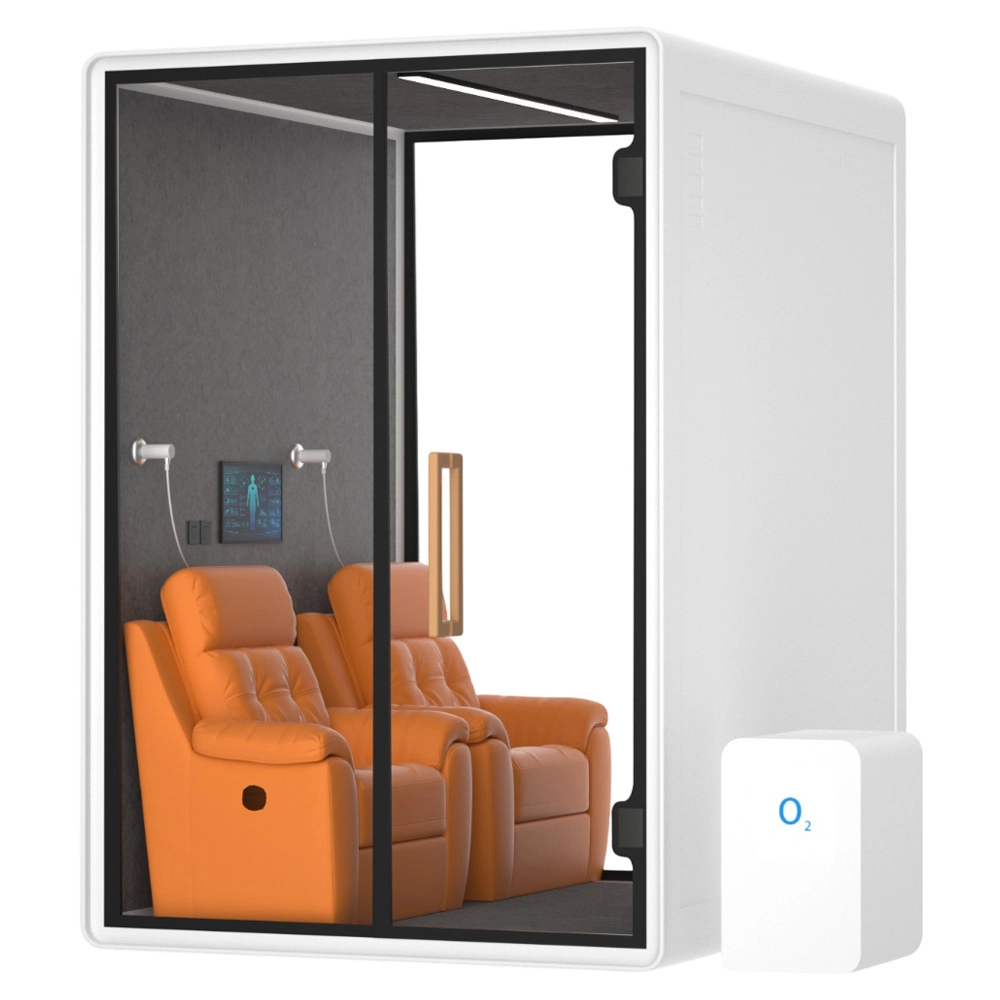
Their core products include soundproof office pod, oxygen pods, and soundproof study pod—each engineered to support privacy by design. From a compliance perspective, INBOXpod supports integration best practices by providing clear device specifications, recommended installation guides for network isolation, and cooperation on vendor security questionnaires and OEM/ODM customization for embedded hardware. To explore product specifications or compliance assistance, visit INBOXpod or contact sale@inboxpod.com.
Testing, audits, and continuous improvement
Penetration testing and privacy audits
I advise periodic penetration testing of both the pod hardware (where accessible) and the networked services they use. Engage independent auditors to verify that configuration management, patching, and access control policies are enforced. For higher-risk deployments, tabletop incident simulations help ensure teams can properly respond to data breaches or physical tampering.
Metrics and monitoring
Track KPIs like patch latency, incident response time, number of data subject requests, and successful penetration test findings closed. Monitoring enables evidence-based decisions and helps when demonstrating compliance to auditors or regulators.
FAQ — Common questions about data compliance for office phone booths
1. Do I need a DPIA for deploying office phone booths?
Usually yes if booths process personal data at scale or include recording, cameras, or sensors that can identify individuals. Under GDPR, a DPIA is required for processing likely to result in high risk; recording or systematic monitoring often meets that threshold. See EU guidance: European Commission.
2. Can we record calls in a phone booth without consent?
Legal requirements vary by jurisdiction. In many EU contexts, you need a lawful basis (consent or legitimate interest with safeguards). In the U.S., state laws differ on one-party vs two-party consent. Regardless, I recommend clear signage and explicit consent where recording occurs, and minimal retention policies.
3. Are acoustic pods safe to connect to corporate networks?
Yes, if you apply network segmentation, strong encryption, and device hardening. Treat pods like any other endpoint: keep firmware patched, restrict management access, and log activity for auditability.
4. What should be in vendor contracts for pod integrations?
Include DPAs, security and privacy obligations, subprocessors disclosures, incident reporting timelines, rights to audit, and data deletion/return clauses. For HIPAA environments, require a Business Associate Agreement (BAA).
5. How long should we retain booking or audio data?
Retention must be proportionate to the purpose. For booking metadata, short windows (30–90 days) are often sufficient. For recordings, retain only when necessary (e.g., quality or security investigations), with documented justification and limited access.
6. What are quick wins to improve privacy right away?
Disable unnecessary sensors, stop persistent storage of calendar data on tablets, enable encryption for VoIP, post signage, and implement VLAN segmentation. These actions significantly reduce exposure quickly.
If you’d like help assessing your deployment or selecting compliant soundproof pods, I invite you to contact INBOXpod for product details and compliance-focused integration support. Visit https://www.inboxpod.com or email sale@inboxpod.com.
How Prefabricated Office Pods Save Time and Installation Costs
Prefab Silence Booth Office Pod V-S — High-Performance Soundproof Pods by INBOXpod
Supplier Vetting: Choosing a Reliable Oxygen Pod Manufacturer
Bulk Purchase Strategies for Soundproof Booths
Home-demo
How long does it take to assemble an INBOXpod booth?
Most of our booths can be assembled without tools in about 30 minutes, making installation quick and hassle-free.
What is the typical sound insulation level of your acoustic booths?
Our booths typically achieve up to 27 dB noise reduction, meeting Class B sound insulation standards suitable for offices and study environments.
Can the booths be customized to fit specific space requirements?
Yes, we offer flexible customization options including size, color, and additional features to perfectly suit your needs.
Do you provide after-sales support and warranty?
Yes, we provide comprehensive after-sales service and warranty to ensure long-term satisfaction with our products.
What materials are used in the construction of the booths?
Our booths are made from sustainable, high-quality materials including aluminum alloy frames and acoustic panels designed for optimal soundproofing.
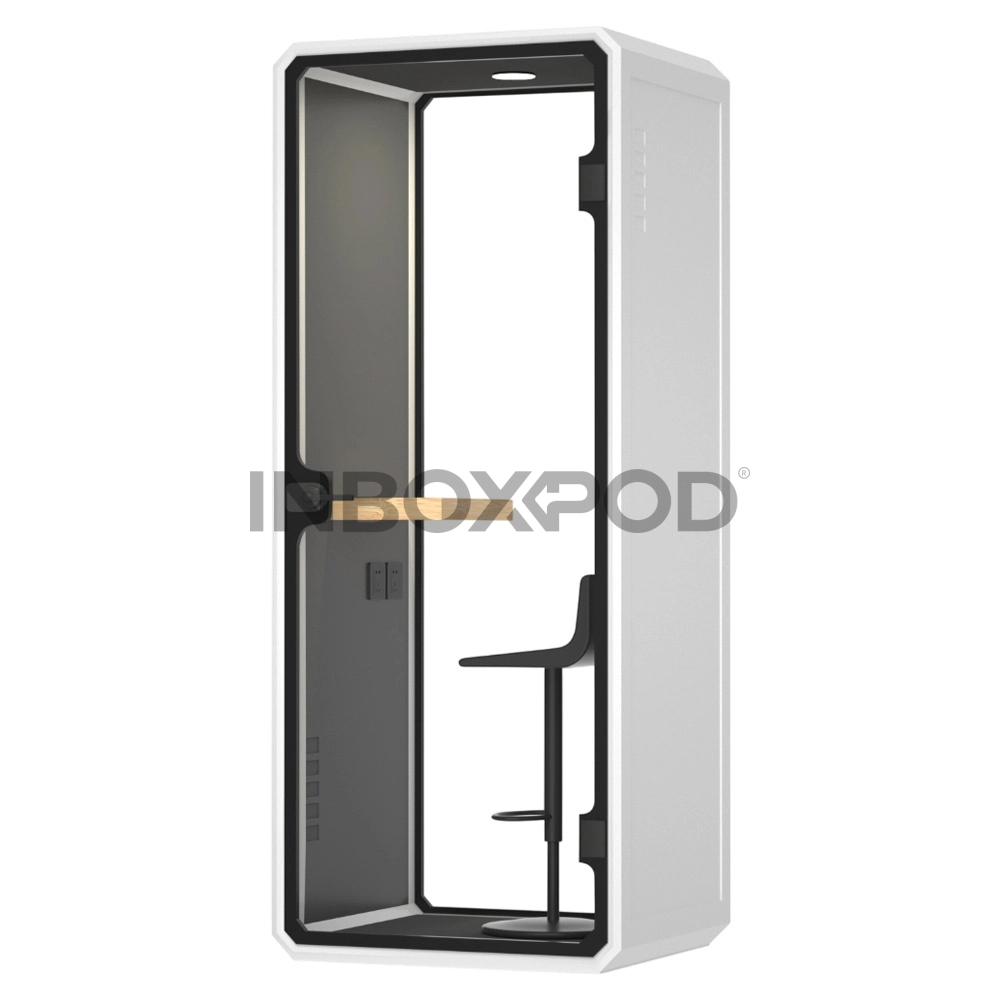
Silence Booth/Office pod Prefabricated V series-S size
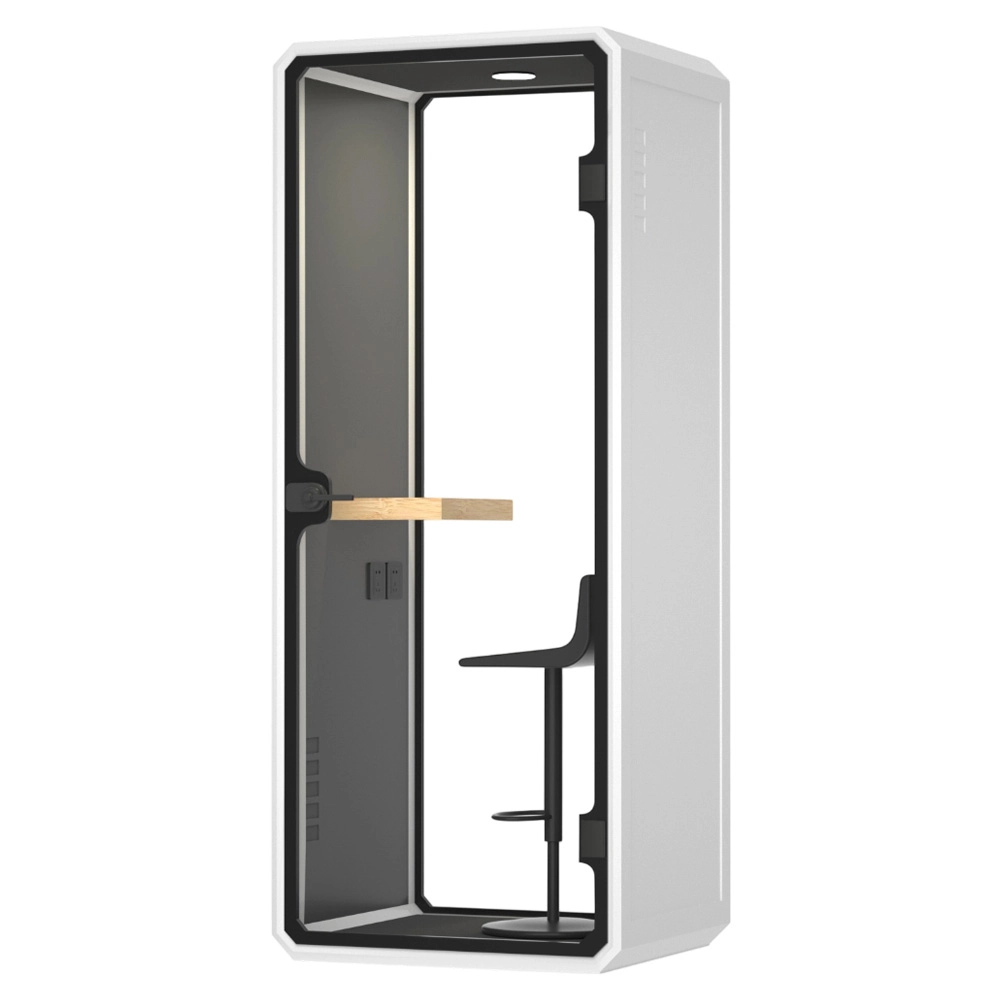
Built with high-performance acoustic materials and a modular prefabricated structure, it offers excellent sound insulation, fast installation, and efficient space utilization.
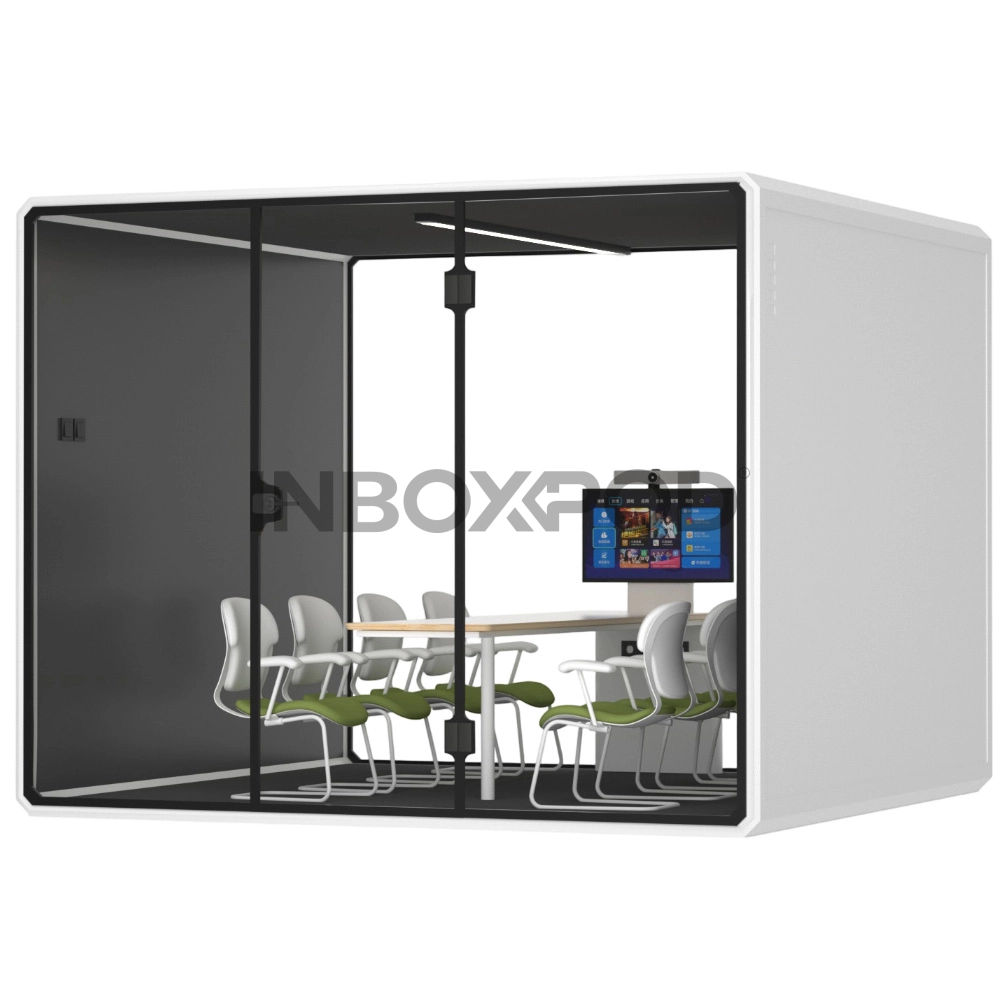
Silence Booth/Office pod Prefabricated V series-XXL size
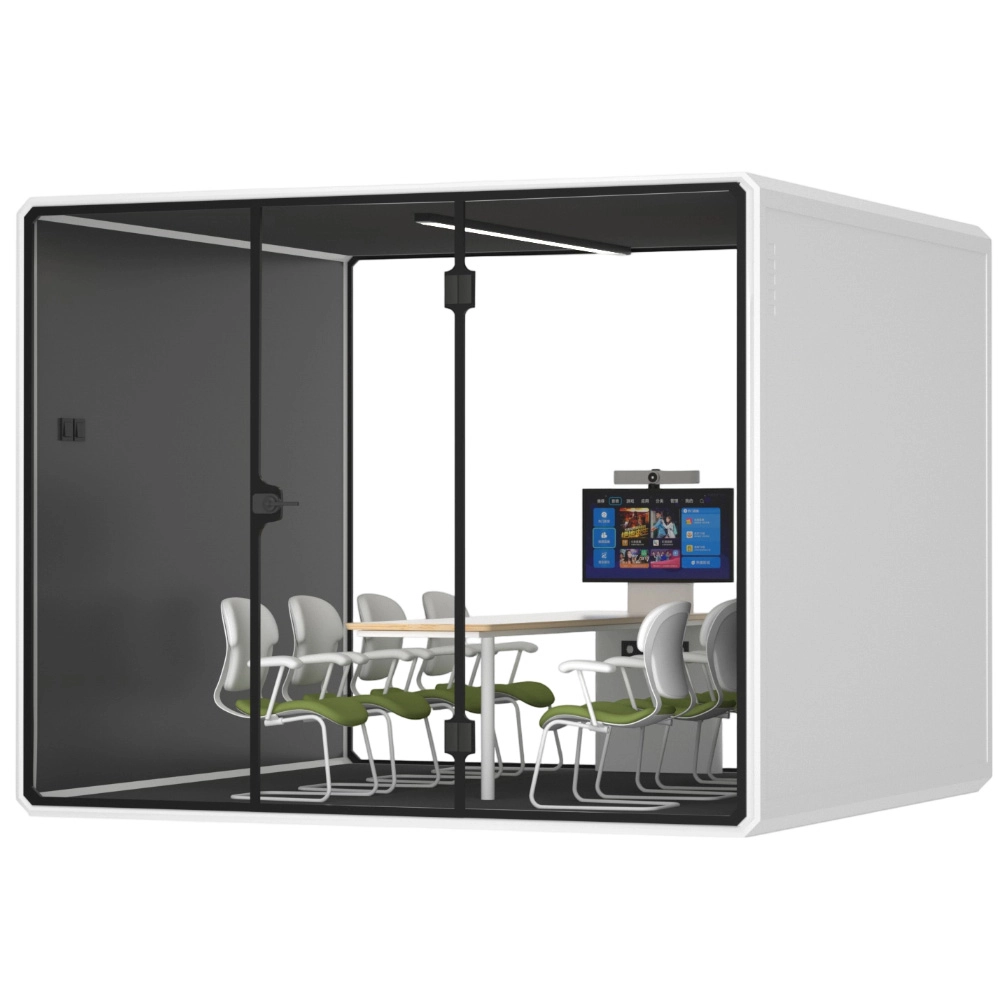
The XXL-size booth is a premium modular acoustic room designed for larger teams and dynamic discussions. With ample interior space for 6–10 people, it provides exceptional sound insulation, effective air circulation, and integrated lighting to ensure comfort during long meetings. Ideal for boardroom sessions, client presentations, and collaborative brainstorming, the XXL booth creates a quiet and productive environment within any workspace.
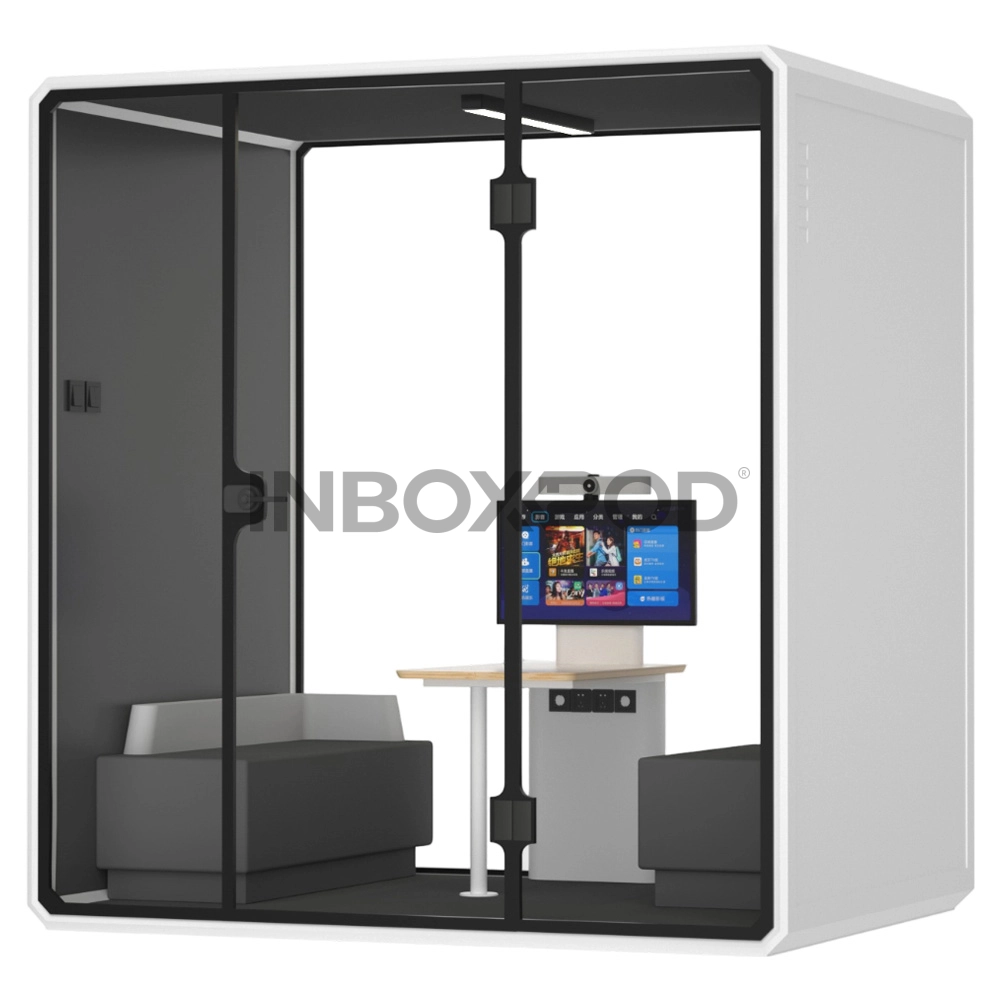
Silence Booth/Office pod Prefabricated V series-XL size
Designed for team collaboration and creative meetings, the XL-size booth provides a spacious and quiet environment that accommodates 4–6 people comfortably. Featuring premium sound insulation, integrated ventilation, and customizable lighting, it transforms any open space into a private meeting room—ideal for brainstorming, interviews, or hybrid meetings.
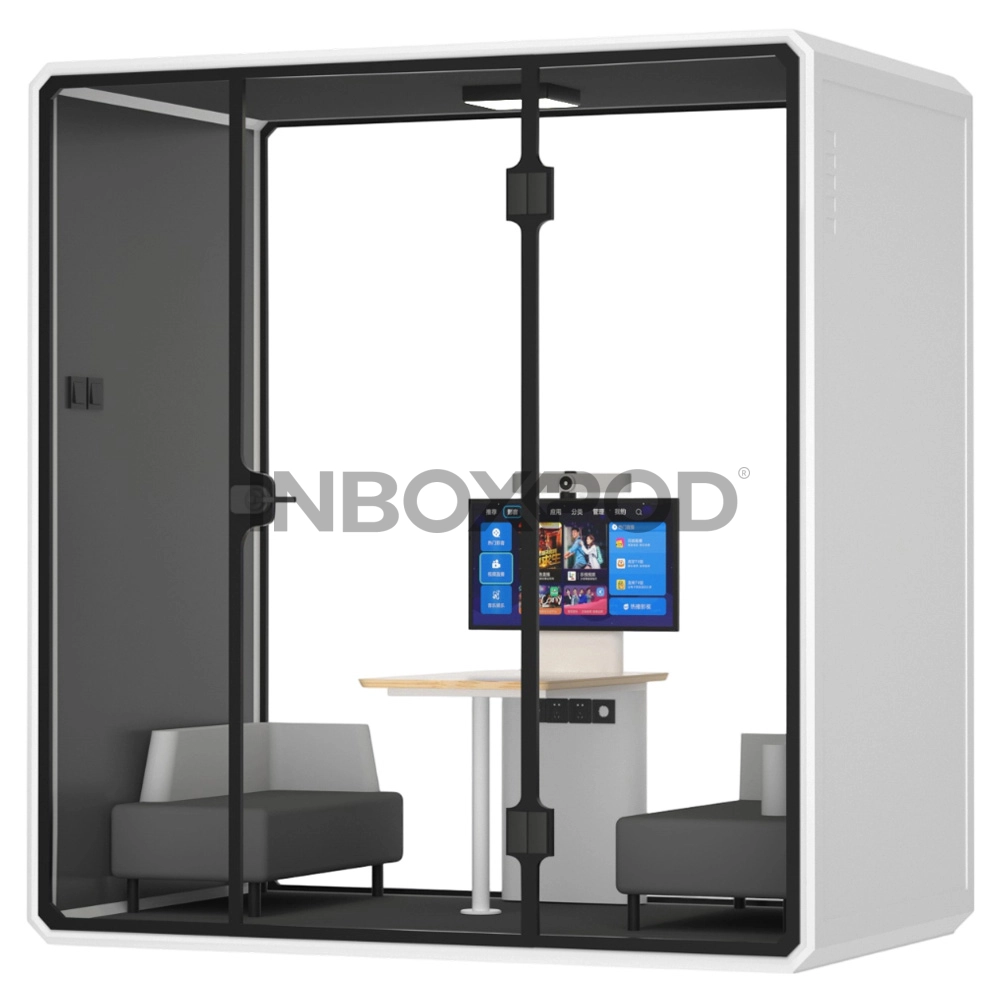
Silence Booth/Office Pod Prefabricated V series-L size
Designed for team collaboration and small meetings, the L-size booth provides a comfortable and acoustically optimized space for 4–6 people. With premium sound insulation, efficient ventilation, and integrated lighting and power systems, it ensures focus, privacy, and productivity—even in the busiest open offices.
Whatsapp: +8613535292957