
Energy Efficiency Comparison: Oxygen Pods and Hyperbaric Units
- Energy Use and Operating Profiles of Oxygen Pods vs Hyperbaric Units
- Primary energy consumers in oxygen therapy equipment
- Relative operating power and duty cycles
- Clinical Functionality and Efficiency: When Energy Use Equals Outcomes
- Therapeutic differences and what they mean for energy efficiency
- Session length, throughput and energy per patient
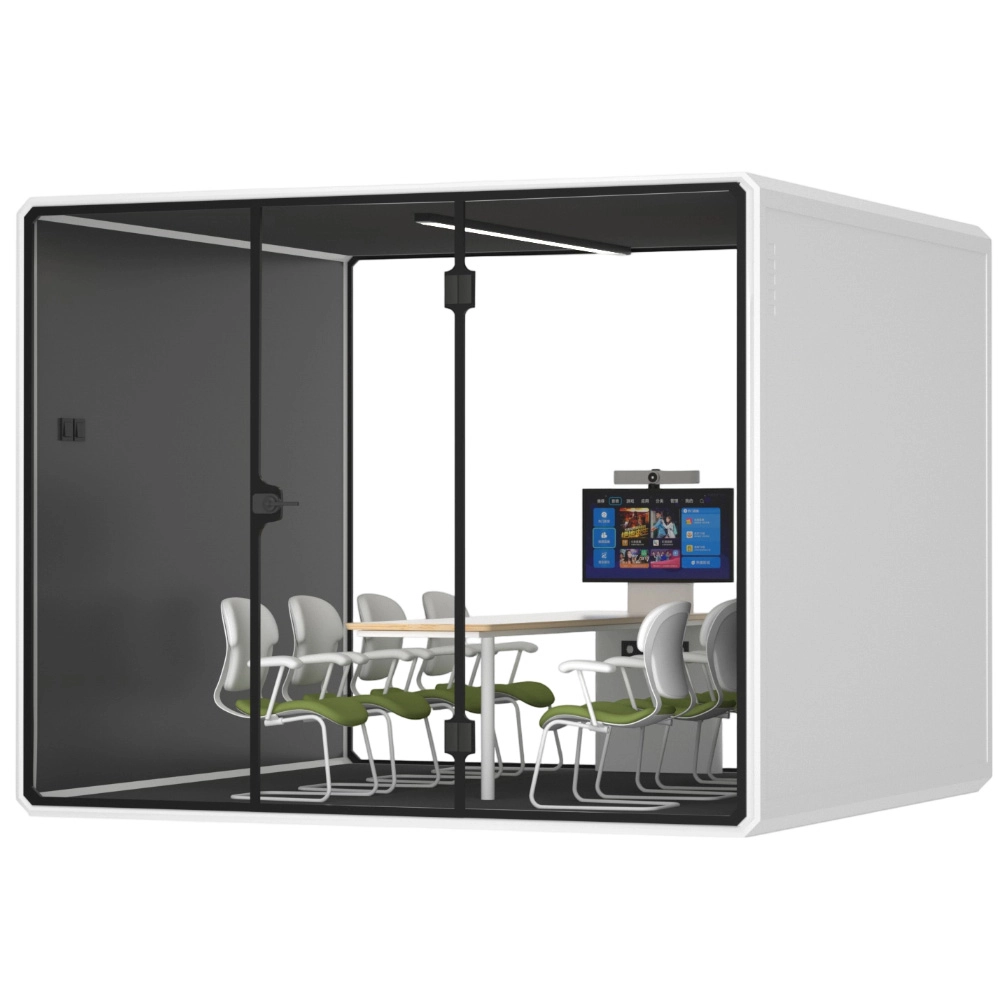
- Acoustic Design, Space Efficiency, and the INBOXpod Example
- How soundproofing influences HVAC and energy
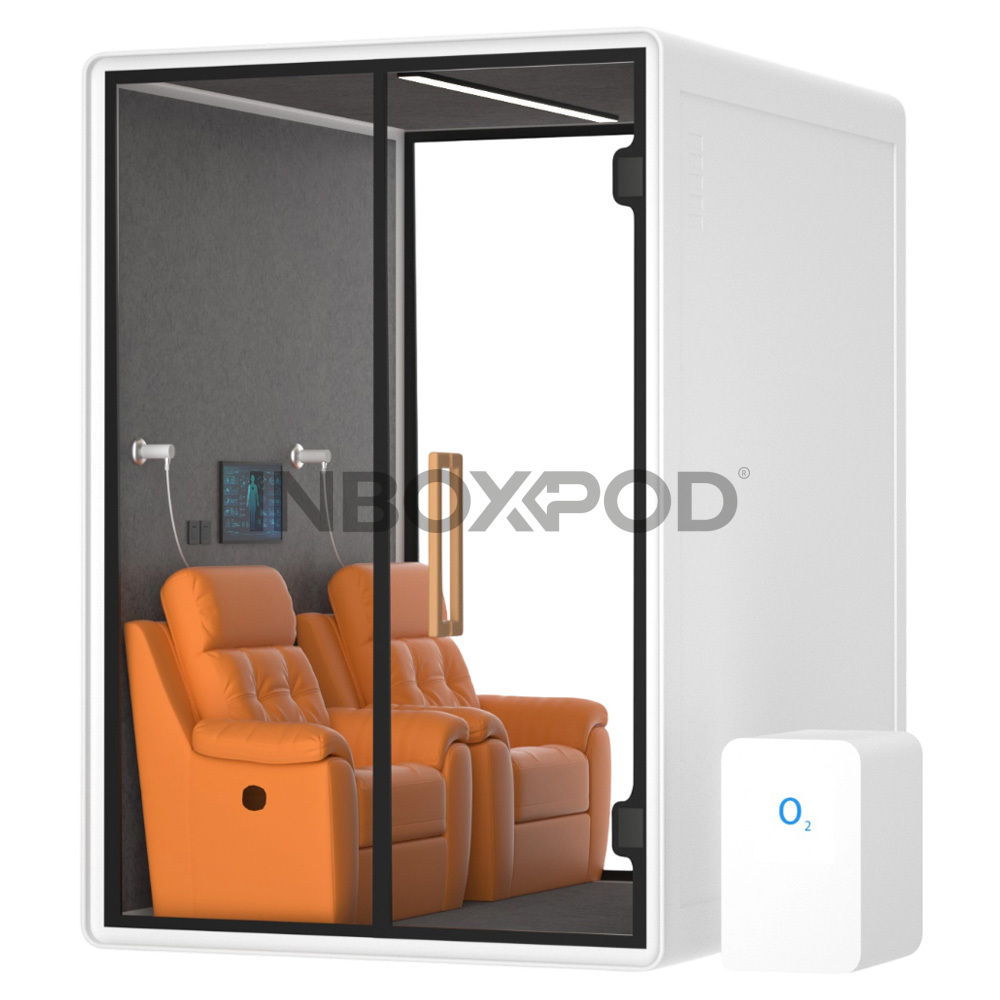
- Product spotlight: INBOXpod Double Seat Soundproof Oxygen Pod
- Choosing the Right System: Cost, Sustainability, and Facility Considerations
- Installation, maintenance and regulatory factors
- Comparative table: energy, function and practical considerations
- Operational Strategies to Improve Energy Efficiency
- Optimizing ventilation and oxygen delivery
- Scheduling, session design, and throughput
- Evidence, Safety, and Standards: Making an Informed Choice
- Clinical evidence and indications
- Standards and safety
- Frequently Asked Questions (FAQ)
- 1. Which system is more energy efficient: an oxygen pod or a hyperbaric chamber?
- 2. Can ambient-pressure oxygen pods replace hyperbaric therapy?
- 3. How much energy does an INBOXpod typically use?
- 4. What are the main facility requirements to install an INBOXpod?
- 5. Where can I find authoritative guidance on hyperbaric therapy safety and standards?
Energy efficiency is an increasingly important factor when selecting oxygen therapy solutions. Whether you are evaluating a dedicated hyperbaric chamber or a modern soundproof oxygen pod, understanding how oxygen health systems hyperbaric chamber designs, HVAC and oxygen supply, acoustic isolation, and session throughput affect energy consumption will help you choose the most cost-effective and sustainable option. This article compares typical energy profiles, clinical use-cases, and operational costs of hyperbaric units and oxygen pods—focusing on the INBOXpod Double Seat Soundproof Oxygen Pod as a practical example of a low-footprint, socially oriented oxygen therapy system.
Energy Use and Operating Profiles of Oxygen Pods vs Hyperbaric Units
Primary energy consumers in oxygen therapy equipment
Most energy use in oxygen therapy systems arises from a few shared sources: oxygen generation or supply, compressors and pumps (for pressurization in hyperbaric units), environmental control (HVAC, dehumidification, and temperature control), and electronics/controls. Modular soundproof pods add acoustic treatments and may include active noise-control electronics and dedicated ventilation systems. Hyperbaric units add high-energy compressors and pressurization equipment because they operate at elevated atmospheric pressures to dissolve oxygen into tissues more effectively; that mechanical pressurization is a major energy driver.
Relative operating power and duty cycles
Typical hyperbaric chamber installations (multi-place medical chambers) require continuous support systems: high-pressure air compressors, oxygen concentrators or bulk oxygen supply, and room HVAC adapted for pressurized use and safety. These components can draw significant energy during pressurization and while maintaining environmental controls during long therapeutic sessions (usually 60–90 minutes per session). By contrast, low-pressure oxygen therapy pods like the INBOXpod focus on high-concentration oxygen delivery at ambient pressure; therefore, they generally avoid the large compressors required by hyperbaric therapy and exhibit lower continuous energy draw.
Clinical Functionality and Efficiency: When Energy Use Equals Outcomes
Therapeutic differences and what they mean for energy efficiency
Hyperbaric oxygen therapy (HBOT) elevates both the partial pressure of oxygen and total oxygen content in blood and tissues by increasing ambient pressure inside the chamber. This requires energy to create and maintain pressurization and specialized safety systems. The FDA documents clinical indications and device requirements for HBOT; it emphasizes the complexity and hospital-level infrastructure often associated with hyperbaric units (FDA: Hyperbaric Oxygen Therapy).
By contrast, oxygen pods (also called oxygen therapy pods or chambers at ambient pressure) deliver enriched oxygen while maintaining normal atmospheric pressure. They are primarily used for wellness, fatigue recovery, cognitive focus, and some adjunctive health benefits. For many corporate wellness programs or clinics targeting improved concentration, stress reduction, and mild cardiovascular support, ambient-pressure oxygen pods offer clinically meaningful benefits with much lower infrastructure and energy requirements.
Session length, throughput and energy per patient
Efficiency should be measured as energy per effective therapeutic session. A hyperbaric facility running multiple 90-minute sessions may achieve economies of scale but still incurs high energy use for pressurization and safety systems. An oxygen pod like the INBOXpod (designed for double seats) enables shorter, socially oriented sessions (e.g., 20–40 minutes) with lower per-session energy consumption. Higher throughput in a multi-seat pod can reduce per-person energy cost compared with single-patient hyperbaric sessions when the therapeutic goal aligns with ambient-pressure oxygen benefits.
Acoustic Design, Space Efficiency, and the INBOXpod Example
How soundproofing influences HVAC and energy
Soundproof pods combine acoustic insulation materials and controlled ventilation to create a quiet, low-noise environment. Good acoustic seals reduce the need for high-volume air exchange to isolate ambient noise, but they also require thoughtfully designed ventilation to maintain air quality and comfort without wasting energy. The INBOXpod Double Seat Soundproof Oxygen Pod integrates efficient ventilation and sound attenuation to deliver a quiet environment that minimizes unnecessary HVAC load while ensuring safe oxygen levels and fresh air circulation.
Product spotlight: INBOXpod Double Seat Soundproof Oxygen Pod
INBOXpod Double Seat Soundproof Oxygen Pod
An oxygen therapy space customized for double social interaction and health, with a double-seat design to promote a win-win situation for interaction and health. External size: W1600×D1929×H2300 mm; internal size: W1466×D1854×H2166 mm. You can improve cardiovascular function and concentration through oxygen therapy with friends and colleagues in a quiet and efficient acoustic environment, making health and social interaction complement each other.
This double-seat layout increases throughput (two simultaneous users) which reduces total energy per user compared with single-seat systems, especially when sessions are short and repeated throughout a day. The pod’s soundproofing lowers ambient noise, enabling restorative sessions without increasing HVAC setpoints for the surrounding room.
Choosing the Right System: Cost, Sustainability, and Facility Considerations
Installation, maintenance and regulatory factors
Hyperbaric systems often require specialized room retrofits, permits, and routine maintenance of pressurization equipment and safety systems. They typically need clinical oversight and trained operators. Ambient-pressure oxygen pods are usually easier to install, require less structural modification, and can be placed in corporate wellness areas, spas, or clinics with lower upfront and ongoing facility demands. Regulatory guidance like ISO 13485 for medical devices (ISO 13485) and FDA documentation can help determine where your organization must meet medical device quality and safety standards.
Comparative table: energy, function and practical considerations
| Feature | INBOXpod Double Seat Soundproof Oxygen Pod | Typical Hyperbaric Unit (Multi-place) |
|---|---|---|
| Primary therapy mode | Ambient-pressure high-concentration oxygen (social/wellness) | Pressurized oxygen (HBOT) for clinical indications |
| Typical session duration | 20–40 minutes | 60–120 minutes |
| Throughput (simultaneous users) | 2 | Variable (1+ in multi-place chambers) |
| Estimated average continuous energy draw | Low — ventilation, oxygen concentrator(s), lighting, controls (typically tens to low hundreds of watts per pod depending on oxygen source) | High — compressors, pressure-control systems, large HVAC demands (typically hundreds to multiple kilowatts during pressurization/operation) |
| Installation complexity | Low to moderate — plug-and-play with site power and oxygen supply plan | High — structural, safety, and medical oversight requirements |
| Typical use cases | Wellness, cognitive focus, corporate health programs | Wound care, decompression illness, specific clinical indications |
Notes: Energy draw depends heavily on oxygen supply method. If an oxygen pod uses bottled oxygen or a large concentrator shared among pods, the energy profile changes. For hyperbaric units, compressor size and session frequency are dominant energy drivers. For clinical indications and device claims, consult regulatory guidance such as the FDA and clinical literature summarized in resources like Hyperbaric medicine (Wikipedia).
Operational Strategies to Improve Energy Efficiency
Optimizing ventilation and oxygen delivery
To improve efficiency, focus on matching ventilation rates to the number of occupants and session protocols. Demand-controlled ventilation and efficient oxygen concentrators (with timed runs or shared systems) can reduce unnecessary energy use. For soundproof pods, integrating heat-recovery ventilation helps preserve thermal energy while maintaining air quality.
Scheduling, session design, and throughput
Operational changes can yield large energy savings: scheduling back-to-back sessions during peak hours, using multi-seat pods to serve groups or couples, and designing shorter, targeted sessions for wellness benefits can reduce energy per participant. For facilities that require clinical HBOT, grouping patients and optimizing pressurization cycles can improve energy efficiency but will still typically have higher absolute energy use than ambient-pressure pods.
Evidence, Safety, and Standards: Making an Informed Choice
Clinical evidence and indications
For medical conditions requiring HBOT (e.g., certain wound healing scenarios, carbon monoxide poisoning, decompression sickness), hyperbaric units remain the clinically indicated option. Authoritative sources like the FDA provide guidance on appropriate uses and device requirements (FDA: Hyperbaric Oxygen Therapy). For wellness and cognitive-enhancement claims, ambient-pressure oxygen therapy has a different evidence base and is often used in non-clinical settings; practitioners should avoid conflating general wellness benefits with clinical indications of HBOT.
Standards and safety
Whether deploying a hyperbaric chamber or a commercial oxygen pod, follow applicable safety and quality standards. ISO 13485 outlines quality management systems for medical devices (ISO 13485). For general oxygen supply design and health oxygen systems guidance, organizations such as the World Health Organization publish technical standards and supply guidance that can inform facility planning (WHO: Oxygen).
Frequently Asked Questions (FAQ)
1. Which system is more energy efficient: an oxygen pod or a hyperbaric chamber?
For most wellness and non-clinical applications, an ambient-pressure oxygen pod like the INBOXpod Double Seat Soundproof Oxygen Pod will be considerably more energy-efficient than a hyperbaric chamber because it does not require high-energy compressors for pressurization. Energy per session is typically lower for pods, particularly when sessions are shorter and multiple users share the pod.
2. Can ambient-pressure oxygen pods replace hyperbaric therapy?
No. Hyperbaric oxygen therapy (HBOT) treats specific clinical conditions that require therapeutic pressurization and is governed by medical guidelines and oversight. Ambient-pressure pods support wellness goals (stress reduction, improved concentration) but are not substitutes for HBOT indications described by regulatory bodies such as the FDA.
3. How much energy does an INBOXpod typically use?
Energy consumption depends on oxygen supply method and local ventilation choices. A pod’s on-board systems—ventilation fans, lighting, control electronics, and concentrators—are generally in the tens to low hundreds of watts range during steady-state operation, meaning per-session energy use is low relative to hyperbaric units. Exact consumption should be confirmed with product specifications and your site’s oxygen supply arrangement.
4. What are the main facility requirements to install an INBOXpod?
INBOXpod units require adequate floor space (external dimensions: W1600×D1929×H2300 mm), electrical supply for pod systems and any oxygen concentrators, and a plan for oxygen supply (on-site concentrator or cylinder delivery). Installation is simpler than a hyperbaric chamber and typically does not require structural pressurization measures.
5. Where can I find authoritative guidance on hyperbaric therapy safety and standards?
Authoritative resources include the FDA (therapy indications and device guidance), ISO standards for medical device quality like ISO 13485, and clinical summaries such as the Hyperbaric medicine overview which links to peer-reviewed literature.
Contact us / View product: To learn more about the INBOXpod Double Seat Soundproof Oxygen Pod, request energy use details for your site, or arrange a demo, please contact our sales team or view the product page.
How to Choose a Portable Soundproof Booth for Recording
Double Bed Large Oxygen Pod — Soundproof, Spacious Wellness Pod for Shared Rest and Recovery
Maintenance, Warranty & Lifecycle Costs of Soundproof Pods
How Prefabricated Office Pods Save Time and Installation Costs
Home-demo
Can the booths be customized to fit specific space requirements?
Yes, we offer flexible customization options including size, color, and additional features to perfectly suit your needs.
Do you provide after-sales support and warranty?
Yes, we provide comprehensive after-sales service and warranty to ensure long-term satisfaction with our products.
How long does it take to assemble an INBOXpod booth?
Most of our booths can be assembled without tools in about 30 minutes, making installation quick and hassle-free.
What is the typical sound insulation level of your acoustic booths?
Our booths typically achieve up to 27 dB noise reduction, meeting Class B sound insulation standards suitable for offices and study environments.
What materials are used in the construction of the booths?
Our booths are made from sustainable, high-quality materials including aluminum alloy frames and acoustic panels designed for optimal soundproofing.
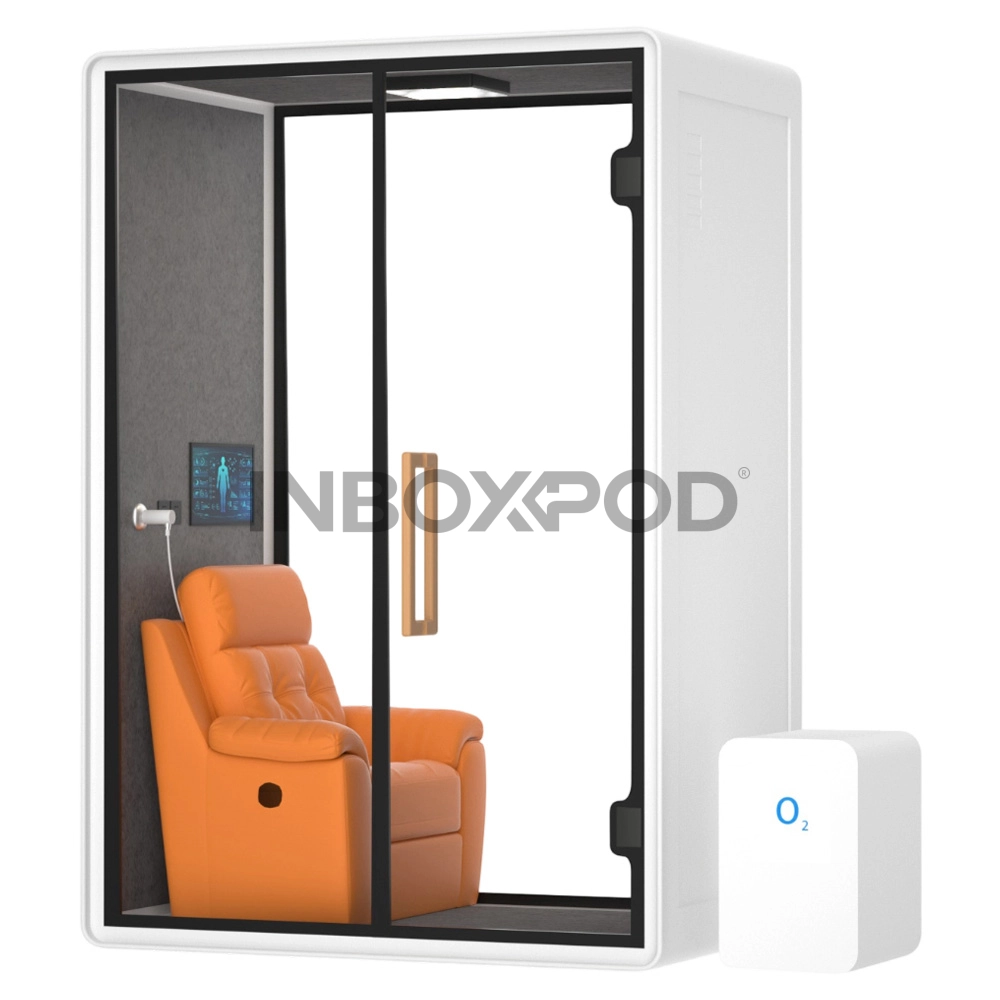
INBOXpod Soundproof Single seat Oxygen Pod
A delicate and compact personal oxygen therapy secret, with a single-seat layout that is flexible and convenient. External size: W1600×D1028×H2300 mm; internal size: W1466×D953×H2166 mm. Create a quiet, private domain for you, where you can inhale high-purity oxygen efficiently during daily relaxation or postoperative recovery, helping to improve cardiopulmonary function and mental state.
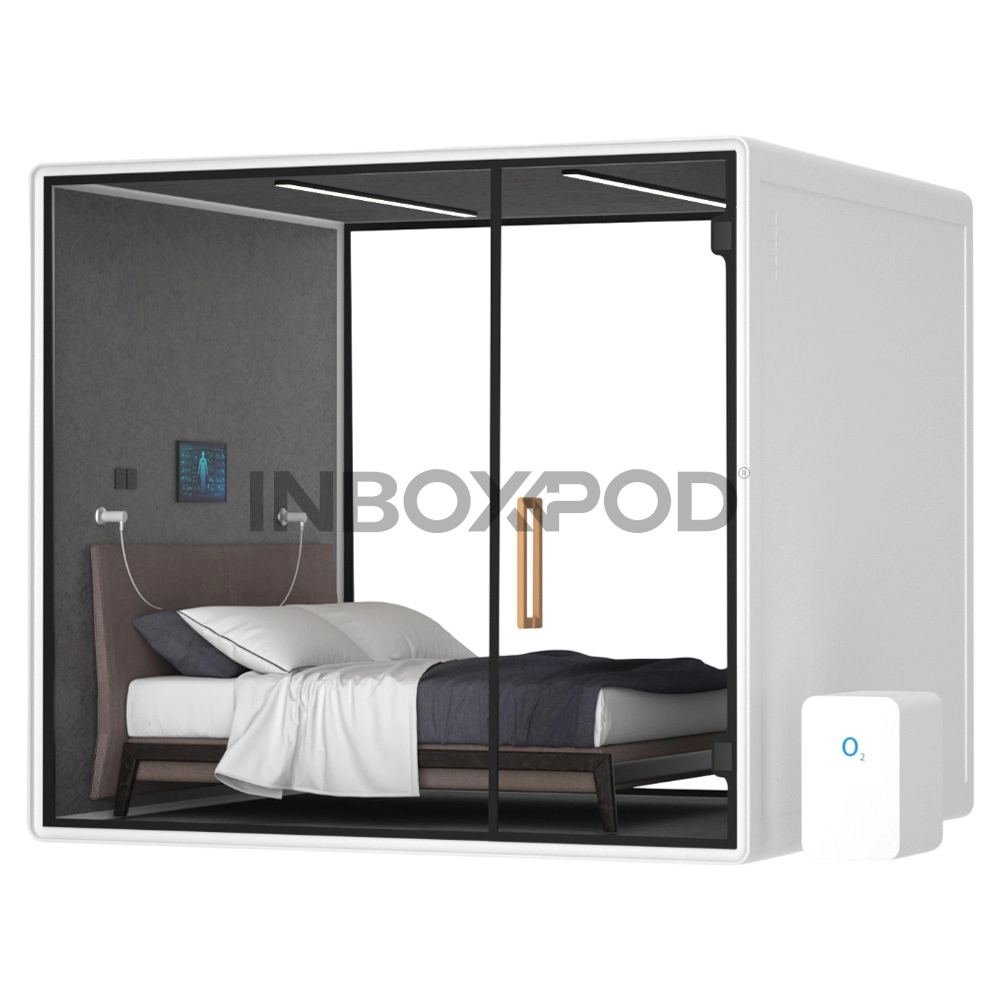
INBOXpod Soundproof Double Bed (small) Oxygen Pod
A double oxygen therapy option that balances space and experience, with a small double-bed layout suitable for various scenarios. External size: W2300×D1854×H2300 mm; internal size: W2300×D1929×H2300 mm. You can share the high-oxygen environment here with relatives and friends, relieve stress, improve physical fitness, and gain health and vitality in company.
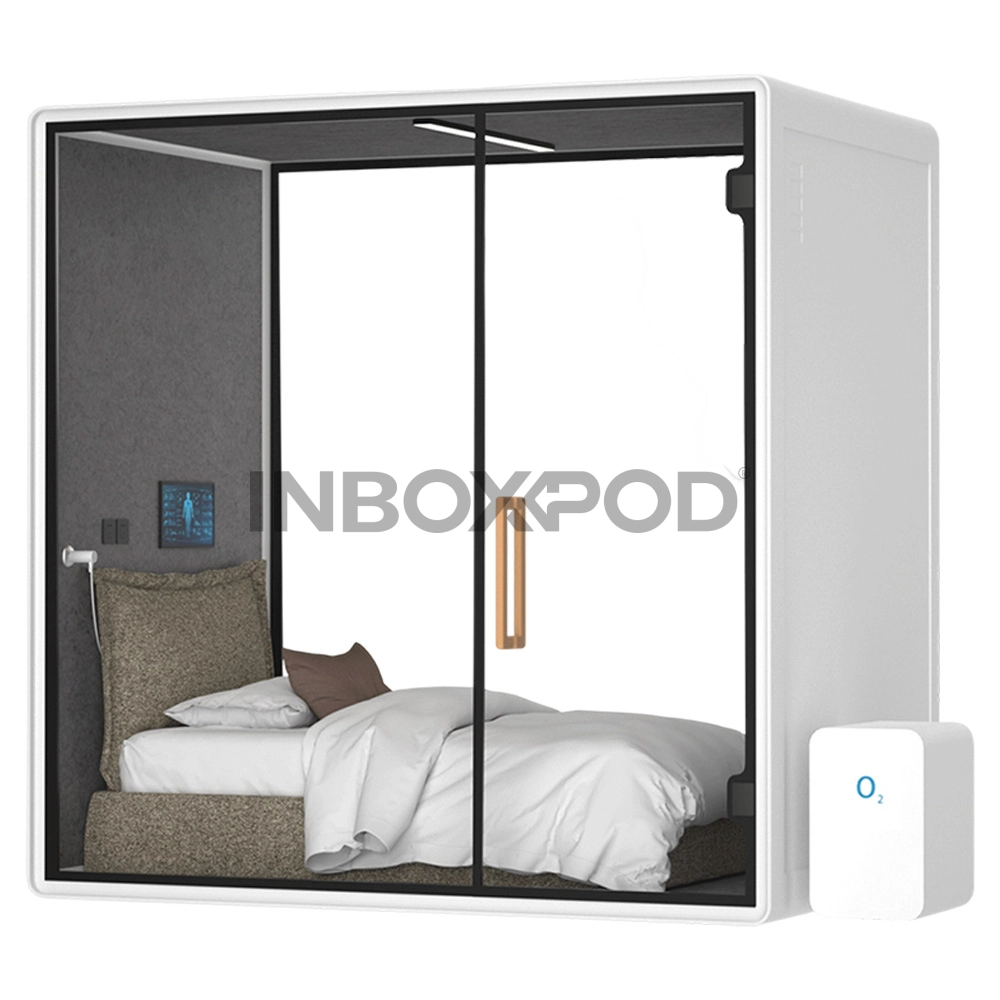
Soundproof Single Bed Oxygen Pod Therapy
Create an immersive deep health oxygen therapy space for you, with a single bed design for ultimate comfort. External size: W2300×D1478×H2300 mm; internal size: W2166×D1403×H2166 mm. Enjoy the nourishment of high-concentration oxygen while lying down, improve sleep, relieve fatigue, enhance immunity, and start a journey of health renewal.
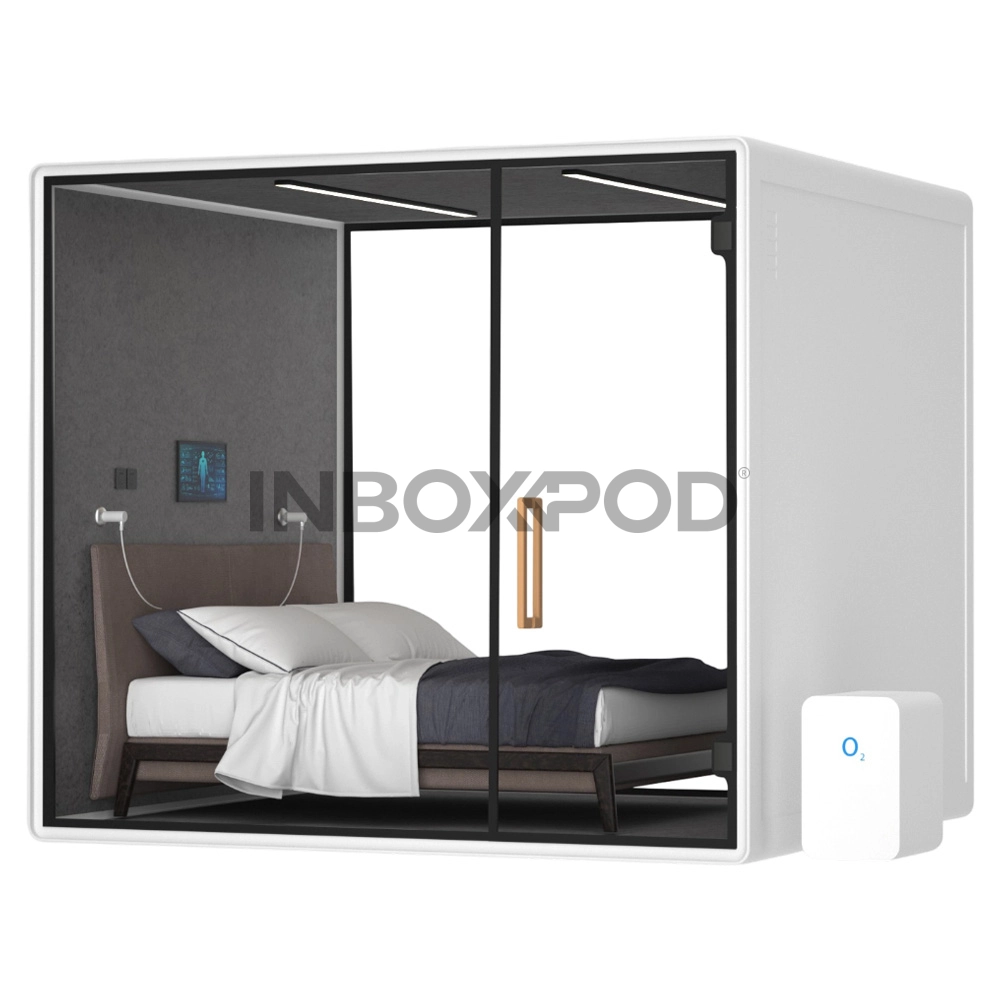
Double bed (large) Soundproof Oxygen Pod
A shared health oxygen therapy world for families, with a large double-bed design to meet the comfort needs of two people. External size: W2300×D2379×H2300 mm; internal size: W2166×D2304×H2166 mm. Let you and your family or partner enjoy high-oxygen nourishment together, improve body functions, delay aging, and embrace a healthy life with intimate company.
Whatsapp: +8613535292957