
Buyer's Guide: INBOXpod Double Seat Soundproof Oxygen Pod
- Why choose a double-seat soundproof oxygen pod?
- Comfort and social therapy combined
- Acoustic isolation for concentration and privacy
- Practical footprint and siting flexibility
- How the INBOXpod compares to traditional hyperbaric chambers
- Key technical differences
- Comparison table: INBOXpod vs single-seat pod vs hyperbaric chamber
- Implications for buyers
- Key features, specifications and what to evaluate before purchase
- Dimensions, ergonomics and accessibility
- Acoustic performance metrics to request
- Oxygen delivery, safety systems and maintenance
- Operational considerations: installation, staffing, and regulatory compliance
- Site planning and electrical/ventilation needs
- Staff training and user protocols
- Legal and compliance checklist
- Business value and ROI considerations
- Use cases that drive revenue
- Pricing, cost of ownership, and throughput
- Marketing and customer experience
- Installation, testing and performance verification
- Acceptance testing and commissioning
- Ongoing performance checks
- Reference standards and evidence
- Frequently Asked Questions (FAQ)
- Is the INBOXpod a hyperbaric chamber?
- How safe is it to use higher oxygen concentrations in a pod?
- What certifications should I ask for?
- How long should a typical session last?
- Can two strangers use the pod together?
- Where can I get independent evidence of benefits?
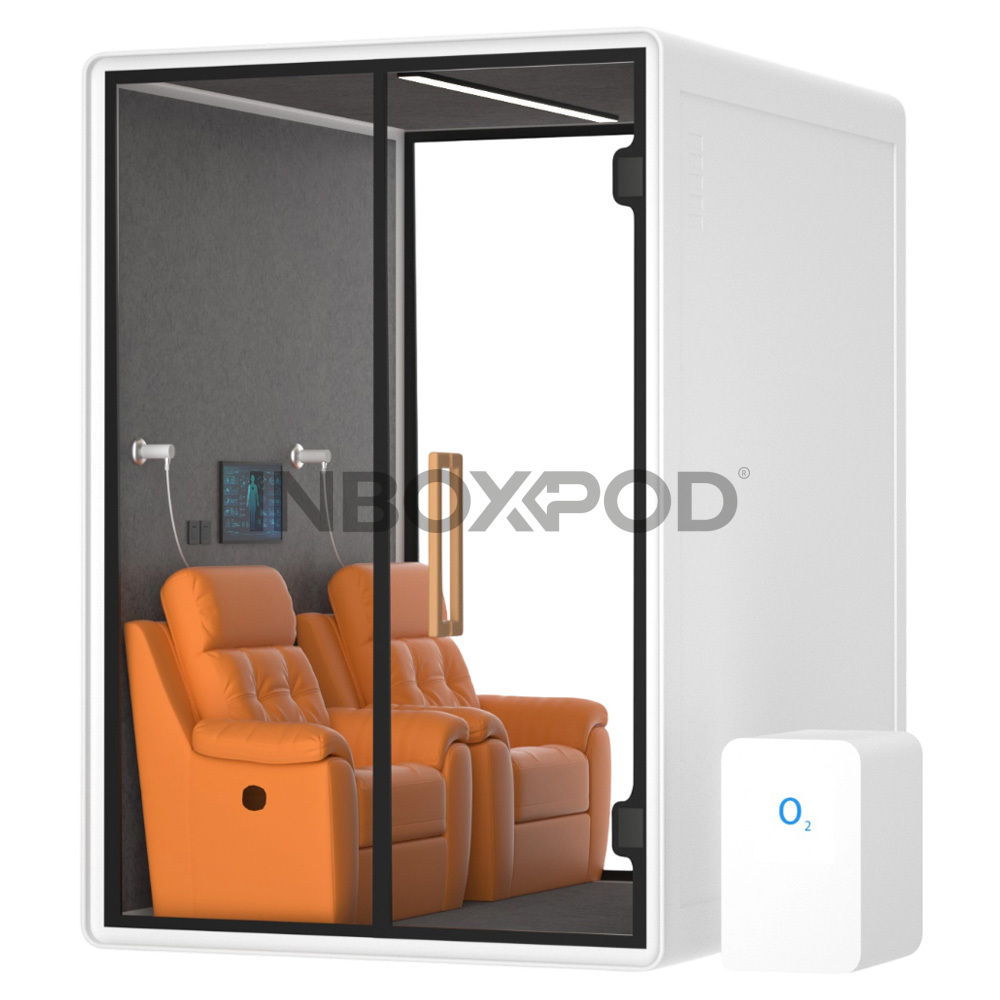
The INBOXpod Double Seat Soundproof Oxygen Pod is a purpose-built oxygen therapy environment designed to support two people simultaneously in a quiet, comfortable cabin that encourages both therapeutic benefit and social interaction. Combining a double-seat layout with sound-isolation engineering and controlled oxygen delivery, the INBOXpod offers an approachable alternative to larger oxygen health systems hyperbaric chamber installations for locations that prioritize accessibility, user experience, and lower space requirements.
Why choose a double-seat soundproof oxygen pod?
Comfort and social therapy combined
The INBOXpod Double Seat Soundproof Oxygen Pod's two-seat layout is intentionally designed to enable shared sessions — whether friends, colleagues, or a practitioner and client. This social element can enhance adherence and enjoyment of therapy. While hyperbaric chambers and more technical oxygen health systems hyperbaric chamber facilities often require individual sessions and medical supervision, a double-seat pod is optimized for wellness centers, corporate programs, and resort spa experiences where interaction and relaxation are priorities.
Acoustic isolation for concentration and privacy
Soundproofing is central to the INBOXpod's value. The pod's shell and interior materials reduce external noise, creating a low ambient sound environment beneficial for relaxation, meditation, focused recovery, and confidential conversations. Acoustic performance should be evaluated using standard metrics (see 'What to measure' below) and in compliance with commonly referenced acoustics guidelines like those from the ISO acoustics committee and World Health Organization environmental noise guidance (WHO Environmental Noise Guidelines).
Practical footprint and siting flexibility
The INBOXpod's external dimensions (W1600×D1929×H2300 mm) and internal usable space (W1466×D1854×H2166 mm) make it possible to integrate into many commercial or corporate spaces without the extensive building modifications required by pressurized hyperbaric facilities. This compact footprint lowers installation complexity and enables placement in wellness centers, lobbies, staff rooms, or dedicated therapy suites.
How the INBOXpod compares to traditional hyperbaric chambers
Key technical differences
It is important to distinguish oxygen therapy pods from standard hyperbaric oxygen therapy (HBOT) chambers. HBOT involves pressurized environments where patients breathe pure oxygen at pressures greater than atmospheric pressure, typically administered under medical supervision. Resources such as the Hyperbaric oxygen therapy - Wikipedia entry and regulator guidance (e.g., FDA: Hyperbaric Oxygen Therapy Devices) explain the clinical scope and safety considerations for HBOT.
Comparison table: INBOXpod vs single-seat pod vs hyperbaric chamber
| Feature | INBOXpod Double Seat | Typical Single-Seat Pod | Hyperbaric Chamber (HBOT) |
|---|---|---|---|
| Primary method | Elevated oxygen concentration in ambient-pressure, soundproofed cabin | Same as double-seat but single occupancy | Pressurized oxygen environment (medical HBOT) |
| Occupancy | 2 users | 1 user | 1 or multiple depending on chamber |
| Typical use cases | Wellness, corporate, social therapy sessions | Individual wellness, recovery | Medical indications (wounds, decompression sickness, certain infections) |
| Installation complexity | Low–moderate | Low | High (construction, medical protocols) |
| Regulatory oversight | Consumer wellness device regulations; oxygen safety standards | Same as INBOXpod | Medical device regulations (FDA, CE for medical use) |
| Acoustic control | Designed for advanced soundproofing | Varies | Depends on room; typically not optimized for social privacy |
Implications for buyers
If your goal is clinical HBOT for approved medical conditions, a certified hyperbaric chamber under medical supervision is required. For wellness, productivity, or recovery programs where elevated oxygen in a quiet, comfortable setting is the goal, a purpose-built solution like the INBOXpod will often be the more practical, cost-effective choice. Use the authoritative sources above to inform medical vs wellness distinctions.
Key features, specifications and what to evaluate before purchase
Dimensions, ergonomics and accessibility
The INBOXpod external dimensions (W1600×D1929×H2300 mm) and internal dimensions (W1466×D1854×H2166 mm) provide ample space for two seated users plus in-pod controls. Evaluate whether these sizes fit your intended placement, door/transport access, and any on-site clearance or building code limitations.
Acoustic performance metrics to request
Ask the manufacturer for measured acoustic metrics such as sound reduction index (Rw) and reverberation time (RT60) in the pod. These are internationally recognized ways to quantify sound isolation and internal echo control; they align with acoustic standards and ISO testing approaches. Verifiable test data helps ensure the pod meets privacy and comfort requirements in busy environments.
Oxygen delivery, safety systems and maintenance
Confirm the oxygen concentration delivery range, flow control, and whether the system uses concentrators or bottled oxygen. Safety warrants inspection: oxygen-enriched atmospheres increase combustion risk. Ensure the pod includes oxygen sensors, automatic ventilation interlocks, flame-retardant materials, and clear emergency ventilation procedures. Seek information about routine maintenance, filter replacement schedules, and consumables costs.
Operational considerations: installation, staffing, and regulatory compliance
Site planning and electrical/ventilation needs
Plan for power, HVAC interactions, and clearances. The INBOXpod's compact size reduces construction but you must still ensure adequate electrical capacity and ventilation pathways. Coordinate with facilities personnel to verify that the pod's operation won't interfere with building HVAC or fire safety systems.
Staff training and user protocols
Develop straightforward user protocols covering session duration, contraindications (e.g., certain respiratory or cardiac conditions), and emergency procedures. Even in wellness contexts, staff should be trained in oxygen safety and routine troubleshooting. For clinical environments, align with hospital policies and local medical device regulations.
Legal and compliance checklist
Understand whether your local regulatory environment treats the pod as a medical device or a wellness product. For clinical claims or treatment of medical conditions you will need appropriate certifications and medical oversight. For general wellness applications, ensure you follow consumer safety standards and have documentation for product materials, fire resistance, and electrical safety testing.
Business value and ROI considerations
Use cases that drive revenue
Operators commonly deploy double-seat pods for: corporate employee wellness, hotel/resort guest amenities, sports team recovery, spa packages for couples/friends, and clinic add-on services for recovery and concentration sessions. The double-seat format enables tandem bookings and higher throughput for social bookings (two users per session), increasing utilization and revenue potential.
Pricing, cost of ownership, and throughput
When calculating ROI, consider initial purchase price, installation, oxygen supply (if using bottled oxygen), consumable filters, energy costs, cleaning and maintenance labor, and average session length. A simple throughput model: if average session is 30–45 minutes, consider turnover time for cleaning and scheduling to estimate daily utilization and revenue per pod.
Marketing and customer experience
Differentiate your offering with a clear description of benefits (relaxation, concentration, cardiovascular function support) and safe, non-medical claims where appropriate. Use high-quality imagery of the double-seat experience, testimonials, and transparent session pricing. Emphasize the pod's soundproofing as a unique selling point for privacy and a High Quality experience.
Installation, testing and performance verification
Acceptance testing and commissioning
Upon delivery, perform an acceptance test checklist covering: physical damage, acoustic verification (Rw/RT60), oxygen flow and safety interlocks, lighting and control functionality, and emergency ventilation. Record the results in a commissioning report for future audits and warranty claims.
Ongoing performance checks
Schedule regular inspections for oxygen sensors, electrical safety tests, and acoustic seals. Maintain a log of maintenance events. These records support safety, customer trust, and longevity of the system.
Reference standards and evidence
Consult established guidance for medical devices, hyperbaric therapy differentiation, and acoustic measurement techniques. Useful resources include the Wikipedia overview of hyperbaric oxygen therapy, the FDA guidance on hyperbaric devices, and acoustics standards information from the ISO acoustics committee. For environmental noise and health links, the WHO environmental noise guidelines provide context for noise reduction benefits.
Frequently Asked Questions (FAQ)
Is the INBOXpod a hyperbaric chamber?
No. The INBOXpod is an ambient-pressure oxygen therapy pod designed for wellness and recovery. It increases the concentration of breathable oxygen in a soundproof environment but does not operate as a pressurized hyperbaric oxygen chamber used for clinical HBOT under medical supervision.
How safe is it to use higher oxygen concentrations in a pod?
Oxygen-enriched atmospheres require careful design to minimize fire risk. The INBOXpod should be equipped with oxygen sensors, flame-retardant interior materials, ventilation interlocks, and clear user protocols. Verify the manufacturer's safety certifications and maintenance requirements before operation.
What certifications should I ask for?
Request documentation for electrical safety (e.g., CE, ETL, or equivalent), materials fire rating, oxygen-safety design documents, and any third-party acoustic test results (Rw/RT60). If you intend to make medical claims, ask about medical device certifications and clinical evidence; otherwise, keep claims within general wellness language.
How long should a typical session last?
Session length varies by operator but commonly ranges from 20 to 60 minutes. Start with conservative durations during pilot programs and gather client feedback. Always follow the manufacturer's recommended session parameters.
Can two strangers use the pod together?
Yes, the double-seat arrangement supports two users. For privacy and comfort, operators should adopt booking policies that match user preferences (e.g., friends only, couples, or allow paired bookings with consent).
Where can I get independent evidence of benefits?
Peer-reviewed studies on oxygen therapies and their physiological effects are available in medical literature and PubMed. For clinical-level evidence on HBOT, see summaries and reviews in medical sources and regulatory information such as the FDA guidance and related clinical reviews (Wikipedia overview).
If you have further questions, want technical specifications, pricing, or to schedule an on-site demo of the INBOXpod Double Seat Soundproof Oxygen Pod, contact our sales team or view the full product page. Experience the combined benefits of privacy, social interaction, and oxygen-enhanced wellness — talk to a specialist today to determine the right configuration for your facility.
Contact us: Contact Sales / View Product
Procurement Checklist: Soundproof Booths for Libraries
Case Studies: Boosting Productivity with INBOXpod Deployments
INBOXpod Soundproof Study Pod — Create a Private, Focused Micro‑Environment for Home and Work
Hyperbaric Oxygen Chamber for Home: B2B Procurement Checklist
Home-demo
What materials are used in the construction of the booths?
Our booths are made from sustainable, high-quality materials including aluminum alloy frames and acoustic panels designed for optimal soundproofing.
How long does it take to assemble an INBOXpod booth?
Most of our booths can be assembled without tools in about 30 minutes, making installation quick and hassle-free.
Do you provide after-sales support and warranty?
Yes, we provide comprehensive after-sales service and warranty to ensure long-term satisfaction with our products.
Can the booths be customized to fit specific space requirements?
Yes, we offer flexible customization options including size, color, and additional features to perfectly suit your needs.
What is the typical sound insulation level of your acoustic booths?
Our booths typically achieve up to 27 dB noise reduction, meeting Class B sound insulation standards suitable for offices and study environments.
INBOXpod Double Seat Soundproof Oxygen Pod
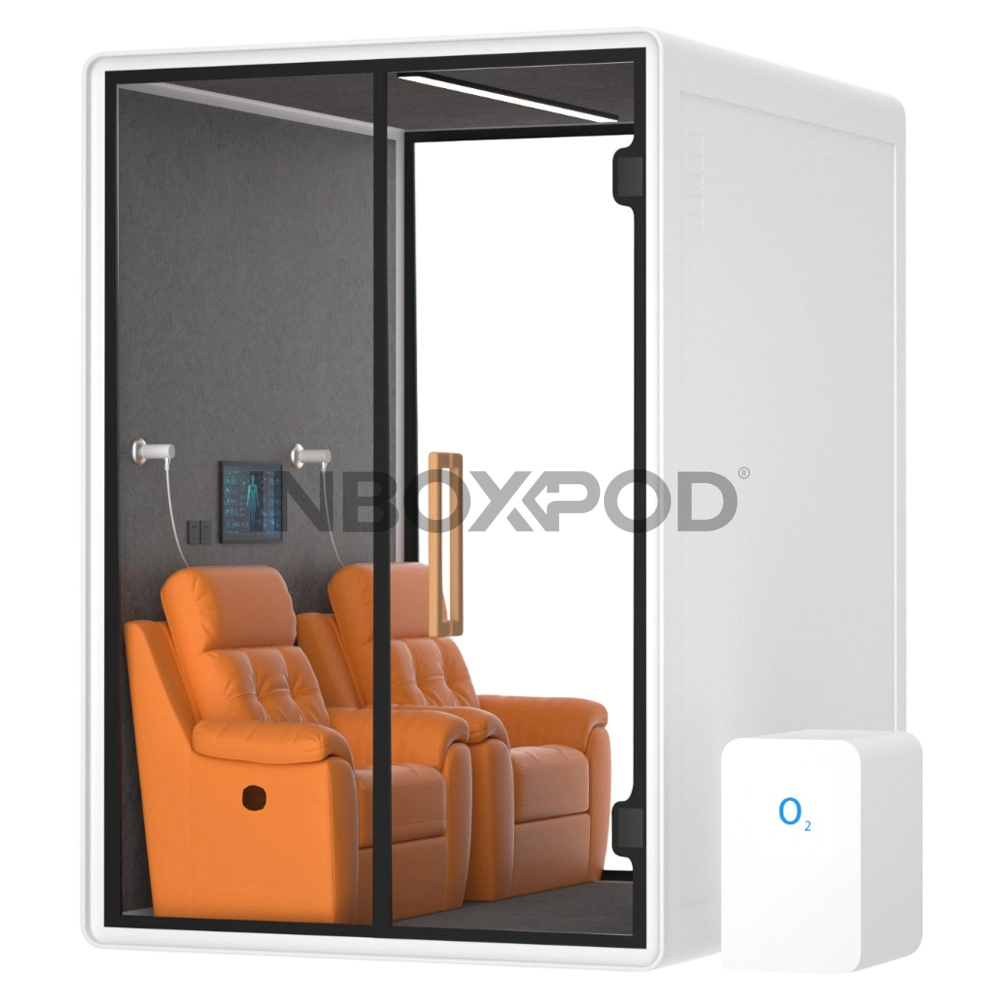
An oxygen therapy space customized for double social interaction and health, with a double-seat design to promote a win-win situation for interaction and health. External size: W1600×D1929×H2300 mm; internal size: W1466×D1854×H2166 mm. You can improve cardiovascular function and concentration through oxygen therapy with friends and colleagues in a quiet and efficient acoustic environment, making health and social interaction complement each other.
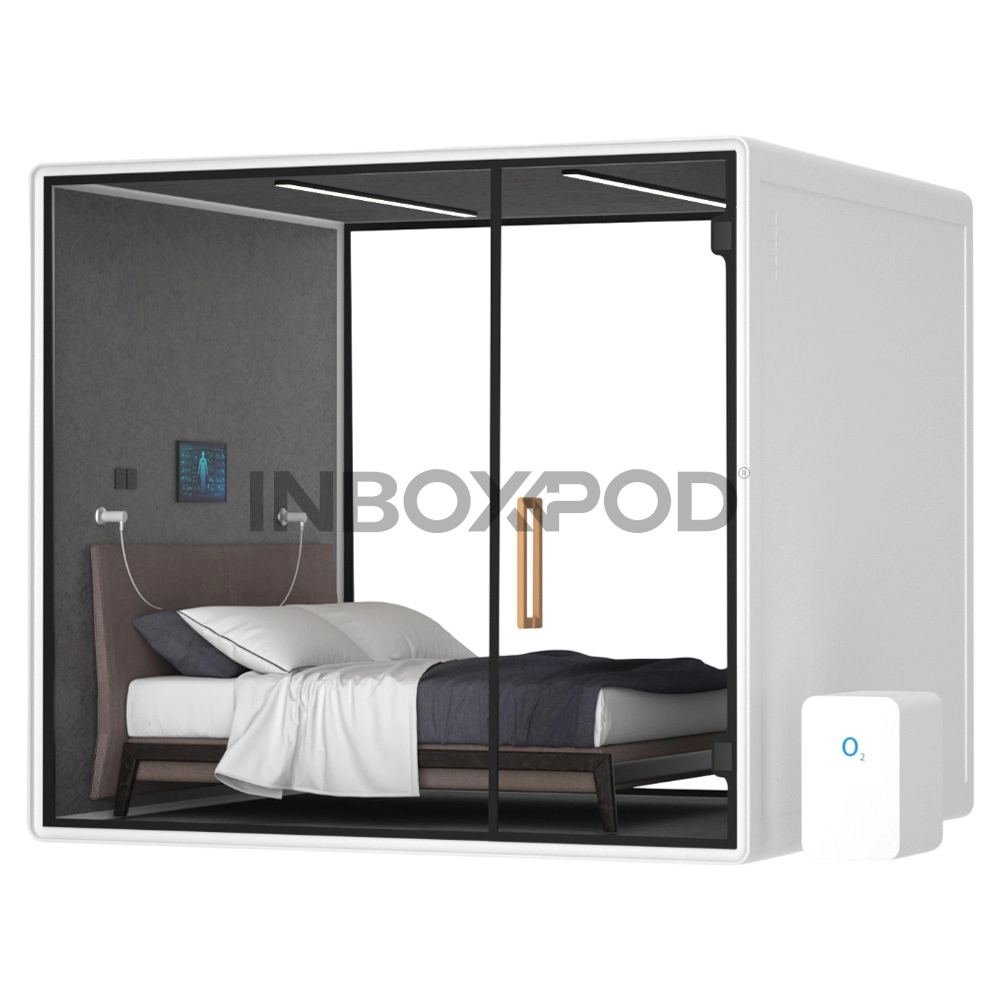
INBOXpod Soundproof Double Bed (small) Oxygen Pod
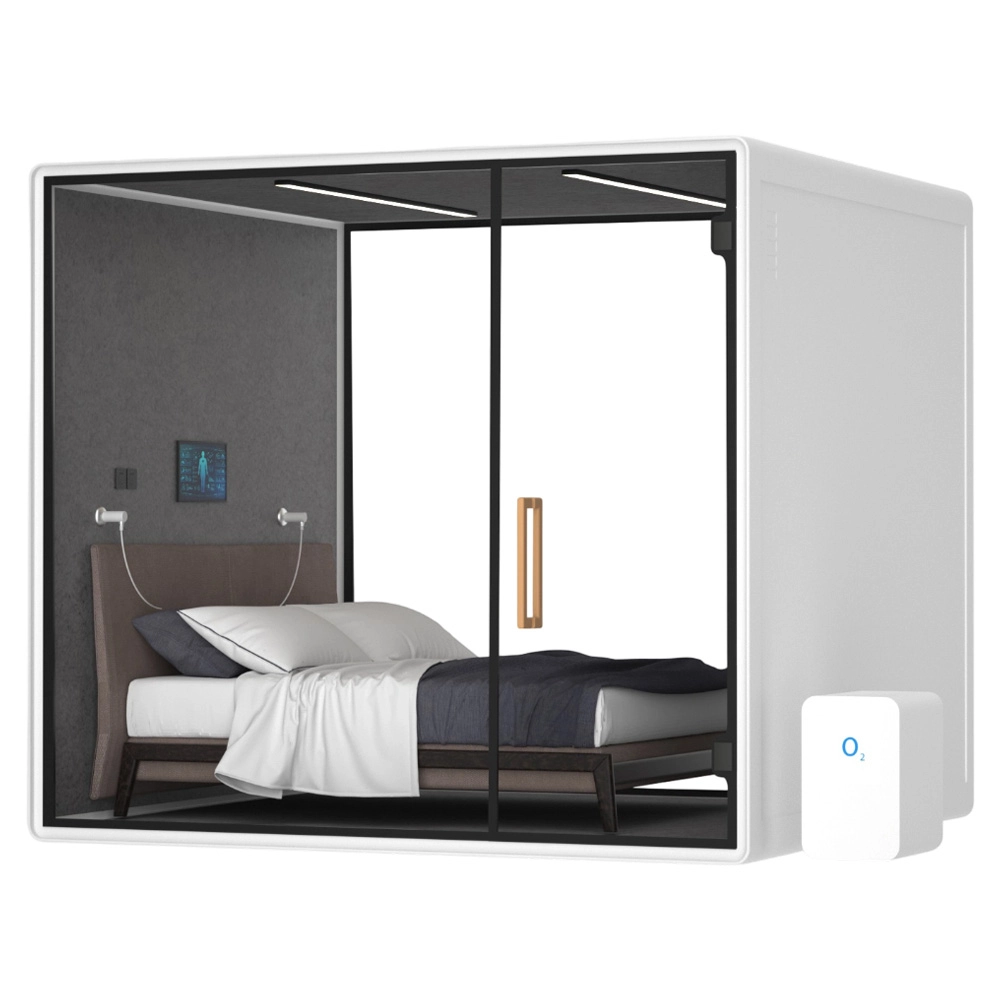
A double oxygen therapy option that balances space and experience, with a small double-bed layout suitable for various scenarios. External size: W2300×D1854×H2300 mm; internal size: W2300×D1929×H2300 mm. You can share the high-oxygen environment here with relatives and friends, relieve stress, improve physical fitness, and gain health and vitality in company.
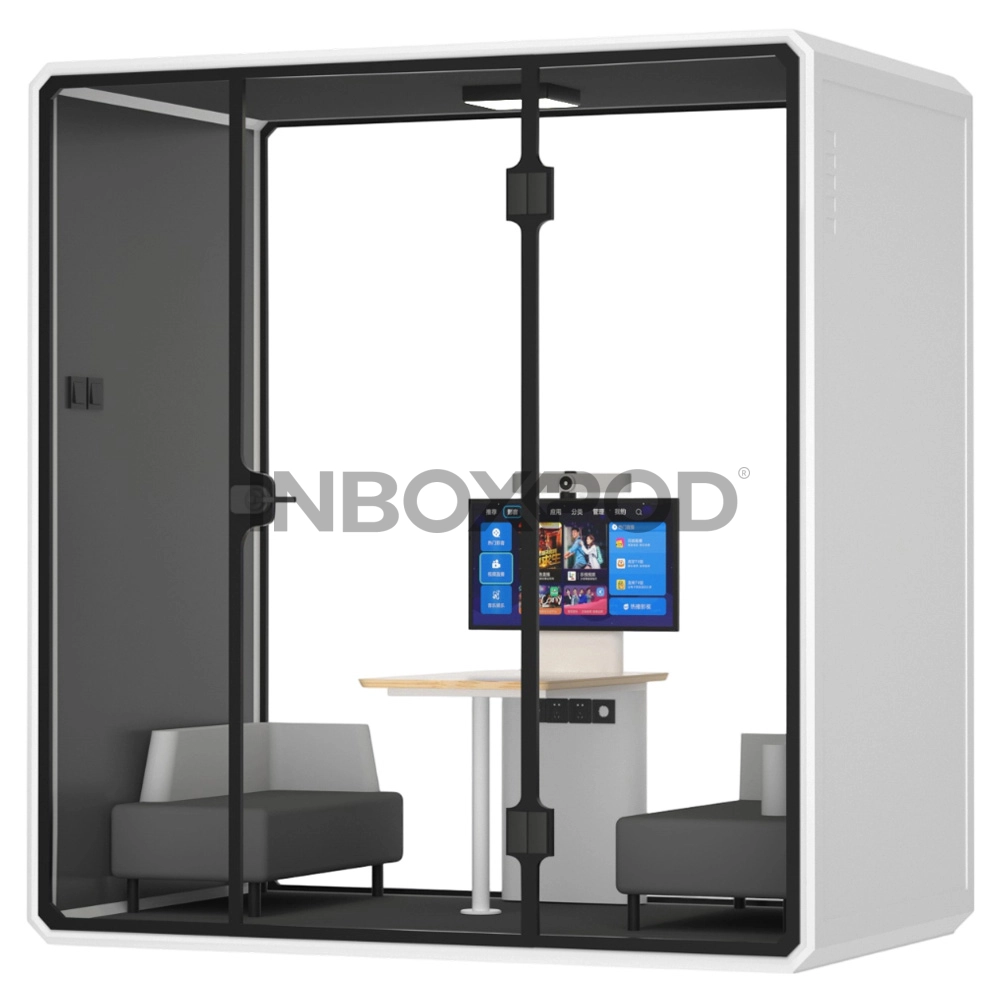
Silence Booth/Office Pod Prefabricated V series-L size
Designed for team collaboration and small meetings, the L-size booth provides a comfortable and acoustically optimized space for 4–6 people. With premium sound insulation, efficient ventilation, and integrated lighting and power systems, it ensures focus, privacy, and productivity—even in the busiest open offices.
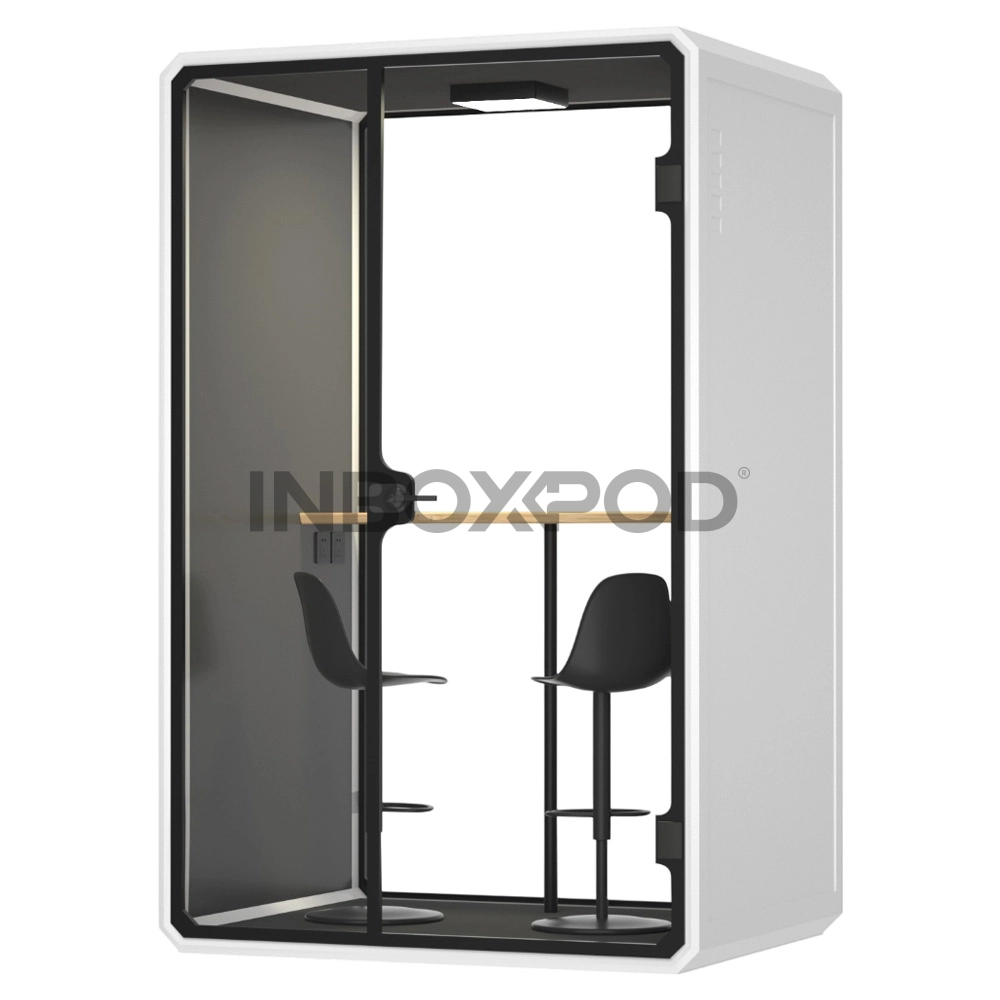
Silence Booth/Office pod Prefabricated V series - M size
Ideal for two-person discussions or focused solo work, the M-size booth offers a balanced mix of privacy and flexibility. Its advanced acoustic panels reduce external noise effectively, while the smart ventilation and lighting systems create a comfortable, quiet environment for calls, meetings, or concentrated tasks.
Whatsapp: +8613535292957