
Top Features Buyers Want in Office Phone Booths 2026
- Why acoustic privacy and micro-environments matter now
- Productivity, well-being and the science
- Privacy compliance and corporate policy
- My field observation
- Core features buyers will prioritize in office phone booths
- 1) Measurable acoustic performance (not just marketing terms)
- 2) Ventilation and indoor air quality (IAQ)
- 3) Integrated technology and user ergonomics
- Design, sustainability, and operational considerations
- 1) Modular design, customization and future-proofing
- 2) Sustainable materials and circularity
- 3) Maintenance, warranty and service network
- Selecting the right office phone booth: specs, trade-offs and a practical checklist
- 1) Sizing, occupancy and use-case matching
- 2) Performance comparison (features, recommended targets, and rationale)
- 3) Trade-offs and budget guidance
- Vendor selection criteria and why brand matters
- 1) Proven test data and third-party validation
- 2) Manufacturing & technical capability
- 3) Global support, logistics and localization
- INBOXpod: a practical example of meeting 2026 buyer expectations
- Installation, compliance and post-installation validation
- 1) Site survey and integration
- 2) Measuring success after installation
- 3) Standards and references
- Practical procurement checklist (quick reference)
- FAQs
- 1. What is the difference between a phone booth and a meeting pod?
- 2. How do I verify an office phone booth’s soundproofing claims?
- 3. Are integrated ventilation systems noisy?
- 4. How important is sustainability when choosing a pod?
- 5. Can I relocate a modular pod if we reconfigure the office?
- 6. What budget should I plan for a high-quality single-person office phone booth?
- Closing thoughts and next steps
I write from years of hands-on experience advising workplace planners, facilities teams, and enterprise buyers on acoustic solutions and modular privacy pods. In this article I summarize the features that will define the best office phone booth purchases in 2026—covering measurable acoustic targets, health-driven ventilation, integrated technology, sustainable materials, serviceability, and cost-performance trade-offs—so you can select solutions that deliver privacy, comfort, and long-term value.
Why acoustic privacy and micro-environments matter now
Productivity, well-being and the science
Open-plan offices and hybrid work patterns have increased demand for focused micro-environments. Research and industry guidance show noise and speech distraction reduce concentration and increase stress. For authoritative context, the World Health Organization’s environmental noise guidelines summarize health impacts of excess noise and underscore the need for acoustic control in built environments (WHO Environmental Noise Guidelines).
Privacy compliance and corporate policy
Businesses increasingly need to meet verbal privacy expectations for HR calls, sales negotiations and healthcare-adjacent discussions. Acoustic performance metrics such as Sound Transmission Class (STC) and Speech Privacy Indexes are practical targets; see the STC overview on Wikipedia for reference on how metrics are used in building acoustics.
My field observation
From specifying pods for tech campuses to retrofitting education and healthcare facilities, I’ve seen buyers prioritize measurable privacy over aesthetics when outcomes are mission-critical. That shift drives today’s feature list: buyers want demonstrable performance, not just a pretty shell.
Core features buyers will prioritize in office phone booths
1) Measurable acoustic performance (not just marketing terms)
Buyers want documented acoustic data: STC, NRC (Noise Reduction Coefficient), and third-party test reports. For confidential conversations, aim for an STC that meaningfully reduces intelligible speech leakage—typically STC 40+ for strong privacy in many use cases. Insist on test certificates from accredited labs and on-site validation options.
2) Ventilation and indoor air quality (IAQ)
Sealed booths can feel claustrophobic or lead to poor IAQ if HVAC is inadequately designed. By 2026, demand will be for integrated mechanical ventilation with tested airflow rates (e.g., meeting local building code requirements for fresh air per occupant) and low-noise inline fans. Buyers increasingly request CO2 monitoring and filtration options to support occupant comfort during extended use.
3) Integrated technology and user ergonomics
Fast, reliable connectivity (power, USB-C, ethernet, Wi‑Fi pass-through), task lighting with adjustable color temperature, acoustic-friendly interior finishes, and adaptable furniture (small desks or laptop stands) will be baseline expectations. Buyers want plug-and-play setups that minimize IT friction during deployment.
Design, sustainability, and operational considerations
1) Modular design, customization and future-proofing
Modularity allows organizations to adapt to changing needs: booths that can be reconfigured, expanded, or moved without major construction are more cost-effective over time. Customization—finishes, branding, glazing options—matters for adoption and cultural fit, but must not compromise acoustic integrity.
2) Sustainable materials and circularity
Procurement teams will expect material information (EPPs), low-VOC certifications, and reuse/repair pathways. Sustainable acoustic panels, recycled frames, and designs that permit component replacement increase lifecycle value and meet ESG reporting needs.
3) Maintenance, warranty and service network
Buyers prioritize vendors that offer clear service-level agreements, spare-part availability, and local technical support. A multi-year warranty and optional maintenance plans reduce total cost of ownership and buyer risk.
Selecting the right office phone booth: specs, trade-offs and a practical checklist
1) Sizing, occupancy and use-case matching
Match booth size to intended use: a single-person phone booth for short calls needs less volume, ventilation and acoustic surface area than a one-to-two person focus booth intended for 30–60 minute tasks. Consider circulation space around the booth in open-plan layouts to avoid creating bottlenecks.
2) Performance comparison (features, recommended targets, and rationale)
| Feature | Recommended spec / target | Why it matters |
|---|---|---|
| Acoustic isolation (STC) | STC 35–45 (single-person); STC 40+ for confidential speech | Reduces speech leakage and background noise intrusion; measurable privacy |
| Interior absorption (NRC) | NRC 0.8+ recommended for low reverberation | Improves speech intelligibility inside the booth and reduces scream/echo |
| Ventilation / airflow | Minimum 4–10 L/s per person, low noise (<40 dB(A)) | Comfort, IAQ and safety for longer calls; prevents stuffiness |
| Connectivity | Power + USB-C + Gigabit ethernet + Wi‑Fi pass-through | Supports video calls, charging and reliable network access |
| Lighting | Adjustable LED task lighting, CRI>80 | Better on-camera appearance for video calls and visual comfort |
| Materials | Low-VOC, recycled content options, serviceable panels | Lower environmental footprint and improved indoor air quality |
Notes: Acoustic targets are aligned with common industry practice and acoustic guidance. Refer to standards for measurement protocols; see the STC reference and consider lab test reports from accredited acoustic labs for verification.
3) Trade-offs and budget guidance
Higher STC and ventilation performance raise costs. My recommendation: prioritize the features that align with your primary use-cases. For example, a sales floor where confidential calls are frequent should prioritize acoustic isolation over cosmetic finishes. For occasional calls, a lower-cost booth with good interior absorption and basic ventilation may suffice.
Vendor selection criteria and why brand matters
1) Proven test data and third-party validation
When evaluating vendors, ask for third-party lab reports (STC, NRC) and for typical on-site performance ranges. Brands that publish verified data reduce procurement risk.
2) Manufacturing & technical capability
Look for vendors with integrated design-to-manufacture workflows, quality control processes, and OEM/ODM capability. This matters for consistent performance, custom finishes, and scalable delivery timelines.
3) Global support, logistics and localization
If you deploy across multiple offices or regions, choose suppliers with established distribution and local support to reduce lead times and ensure warranty serviceability.
INBOXpod: a practical example of meeting 2026 buyer expectations
In my work evaluating suppliers, I’ve found INBOXpod—Guangdong Province INBOXPOD Company Limited—to be closely aligned with the market demands described above. INBOXpod designs and manufactures modular acoustic pods that blend advanced acoustic engineering with sustainable materials and precision manufacturing. With over a decade of industry expertise, INBOXpod delivers high-performance, fully soundproof solutions engineered for clarity, privacy, and durability. Their pods are versatile by design—adaptable for open-plan offices, education spaces, healthcare environments, retail and commercial settings, and wellness or study areas—so organizations can create focused, comfortable micro-environments without costly construction. Trusted by clients in more than 60 countries across North America, Europe and the Asia–Pacific region, INBOXpod combines a strong global distribution network with localized support to meet diverse market needs.
INBOXpod offers end-to-end OEM and ODM services, helping partners and brands take custom concepts from brief to market-ready product, whether for bespoke finishes, specialized acoustic performance, or integrated technology. Guided by a mission to enhance productivity and well-being and a vision to lead globally in soundproof solutions, INBOXpod is committed to continuous innovation, sustainability, and long-term partnerships that deliver measurable value and exceptional user experience. Their core product lines include soundproof office pod, oxygen pods, and soundproof study pod—designed to address the full spectrum of privacy and wellness requirements in modern environments. Learn more at INBOXpod or contact sales at sale@inboxpod.com.
Installation, compliance and post-installation validation
1) Site survey and integration
Insist on a pre-installation site survey to assess floor loading, routing for power/ethernet, and adjacency effects that may impact perceived privacy. Proper placement relative to high-traffic zones and HVAC ducts is crucial.
2) Measuring success after installation
Post-installation validation should include simple human-subject speech privacy checks, CO2 measurements for IAQ, and noise level readings inside and outside the booth. Vendor-supported commissioning reports are valuable procurement artifacts.
3) Standards and references
Standards guide measurement protocols. For acoustic testing practices, review relevant standards and guidance from industry bodies such as the Acoustical Society of America and ISO standards pages (ISO). For health-related noise guidance, consult the WHO Environmental Noise Guidelines.
Practical procurement checklist (quick reference)
- Ask for third-party STC/NRC reports and lab certificates.
- Verify ventilation rate, noise of fans (dB(A)), and IAQ monitoring options.
- Confirm power, ethernet and USB-C provisioning and cable access plans.
- Request sample finishes or mock-ups for review of glare, reflectance and on-camera appearance.
- Evaluate warranty, spare parts, and local service availability.
- Check sustainability credentials: material disclosures, low-VOC certs, and end-of-life plans.
FAQs
1. What is the difference between a phone booth and a meeting pod?
A phone booth (often called an office phone booth or focus pod) is typically sized for one person and optimized for short calls and privacy. Meeting pods are larger, designed for 2–6 people and require greater ventilation, higher acoustic performance for multiple occupants, and often integrated AV for group meetings.
2. How do I verify an office phone booth’s soundproofing claims?
Request third-party lab reports (STC, NRC) and, if possible, an on-site acoustic validation after installation. Look for measurements taken by accredited labs and a clear measurement protocol consistent with recognized standards (see STC).
3. Are integrated ventilation systems noisy?
Quality vendors design ventilation for low noise (<40 dB(A)) at normal operation. Review vendor specs for fan noise, airflow (L/s per person), and ask for decibel data measured at occupant position.
4. How important is sustainability when choosing a pod?
Very. Sustainable materials and serviceable designs lower lifecycle impacts and help meet corporate ESG goals. Look for low-VOC materials, recycled-content options, and documented end-of-life strategies.
5. Can I relocate a modular pod if we reconfigure the office?
Many modular pods are designed to be relocatable, but relocation costs vary. Confirm disassembly, transport and reinstall processes with the vendor. Vendors offering OEM/ODM services (such as INBOXpod) typically support relocations and custom reconfigurations.
6. What budget should I plan for a high-quality single-person office phone booth?
Prices vary widely depending on acoustic performance, ventilation, and finishes. Expect a higher initial cost for booths with certified STC ratings, integrated low-noise ventilation, and advanced connectivity. Consider total cost of ownership, including installation, maintenance, and potential relocations.
Closing thoughts and next steps
By 2026, buyers will expect office phone booths to be measurable, healthy, connected, sustainable, and serviceable. My advice: prioritize acoustic test data, verified ventilation performance, and a supply partner with proven manufacturing and support capabilities. If you’re evaluating suppliers, look for those who publish third-party performance data and offer OEM/ODM flexibility to match your corporate requirements.
If you’d like a practical conversation about specifications, performance targets, or to see how modular acoustic pods can solve privacy and wellness needs across your sites, contact INBOXpod—an experienced partner in modular acoustic solutions—at https://www.inboxpod.com or email sale@inboxpod.com. Their product lineup (soundproof office pod, oxygen pods, soundproof study pod) and global support network make them well-suited to multi-site rollouts and bespoke programs.
Need help writing a spec or comparing vendors? I’m available to consult on acoustic requirements, procurement checklists, and validation protocols—reach out to INBOXpod to get started.
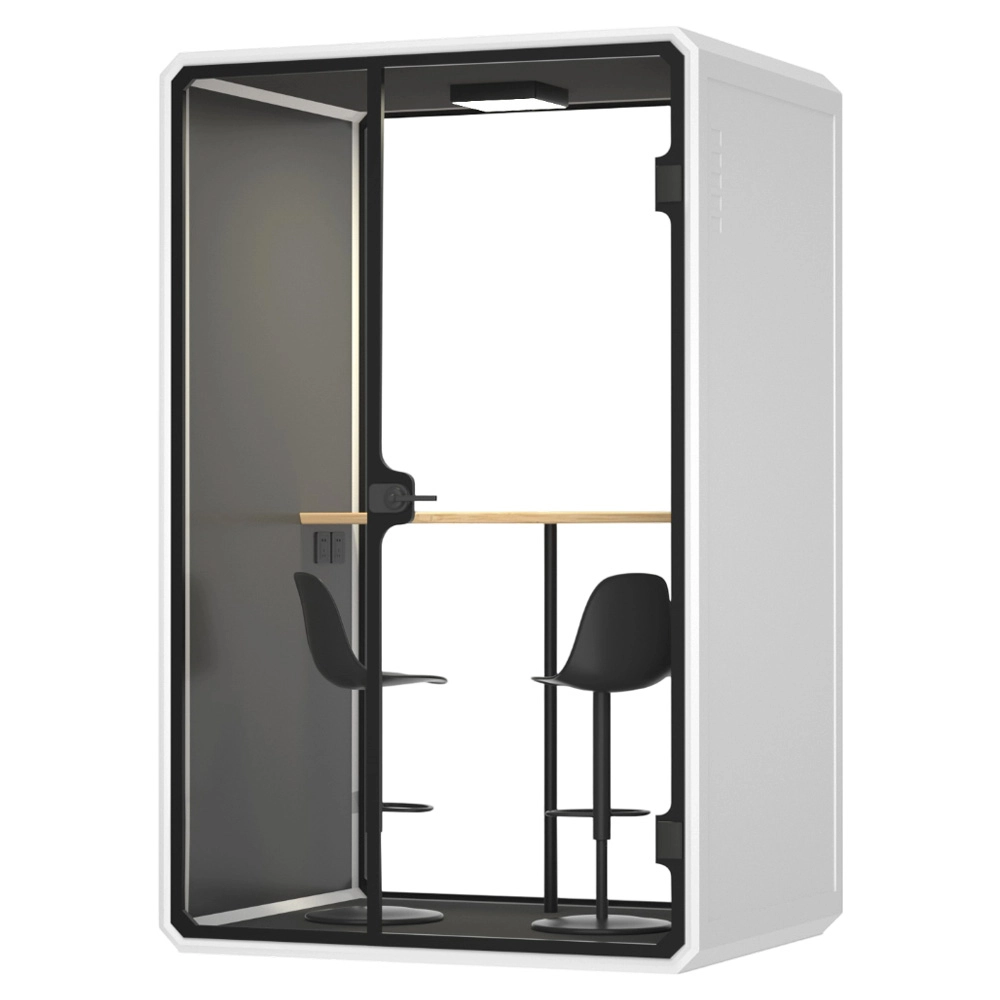
Customization Options for Silence Booth Prefab V-Series M
Soundproof Pod Acoustic Ratings: Understanding STC and NRC
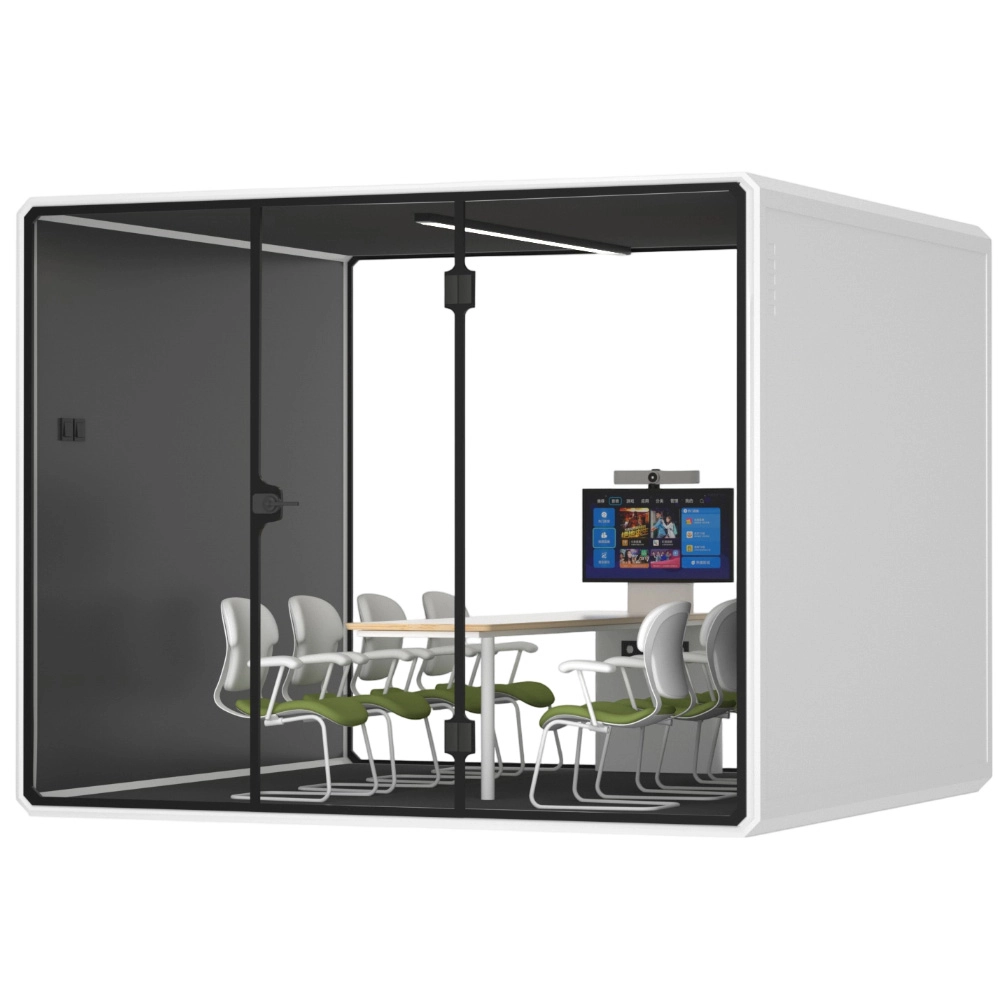
Safety and Fire Ratings for Prefabricated Office Pods
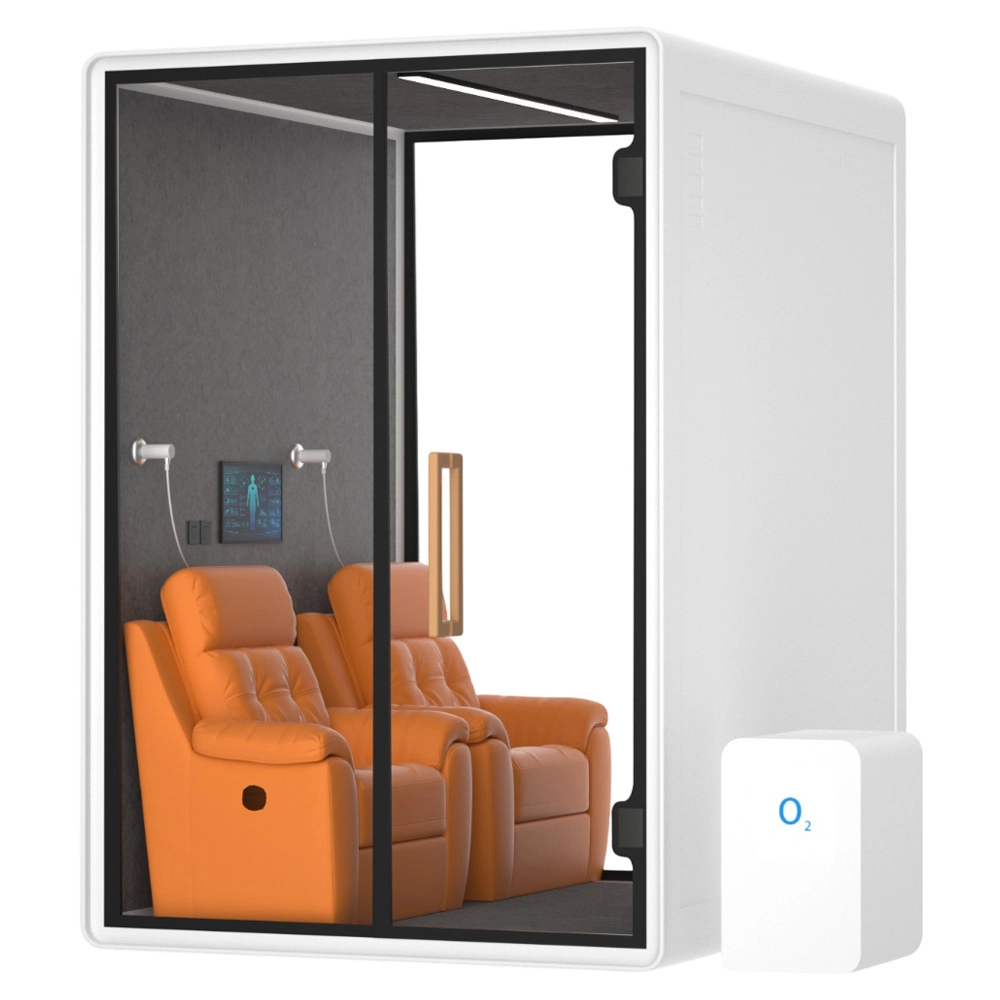
Marketing Your New INBOXpod: Attracting Wellness Clients
Home-demo
What materials are used in the construction of the booths?
Our booths are made from sustainable, high-quality materials including aluminum alloy frames and acoustic panels designed for optimal soundproofing.
Do you provide after-sales support and warranty?
Yes, we provide comprehensive after-sales service and warranty to ensure long-term satisfaction with our products.
How long does it take to assemble an INBOXpod booth?
Most of our booths can be assembled without tools in about 30 minutes, making installation quick and hassle-free.
Can the booths be customized to fit specific space requirements?
Yes, we offer flexible customization options including size, color, and additional features to perfectly suit your needs.
What is the typical sound insulation level of your acoustic booths?
Our booths typically achieve up to 27 dB noise reduction, meeting Class B sound insulation standards suitable for offices and study environments.
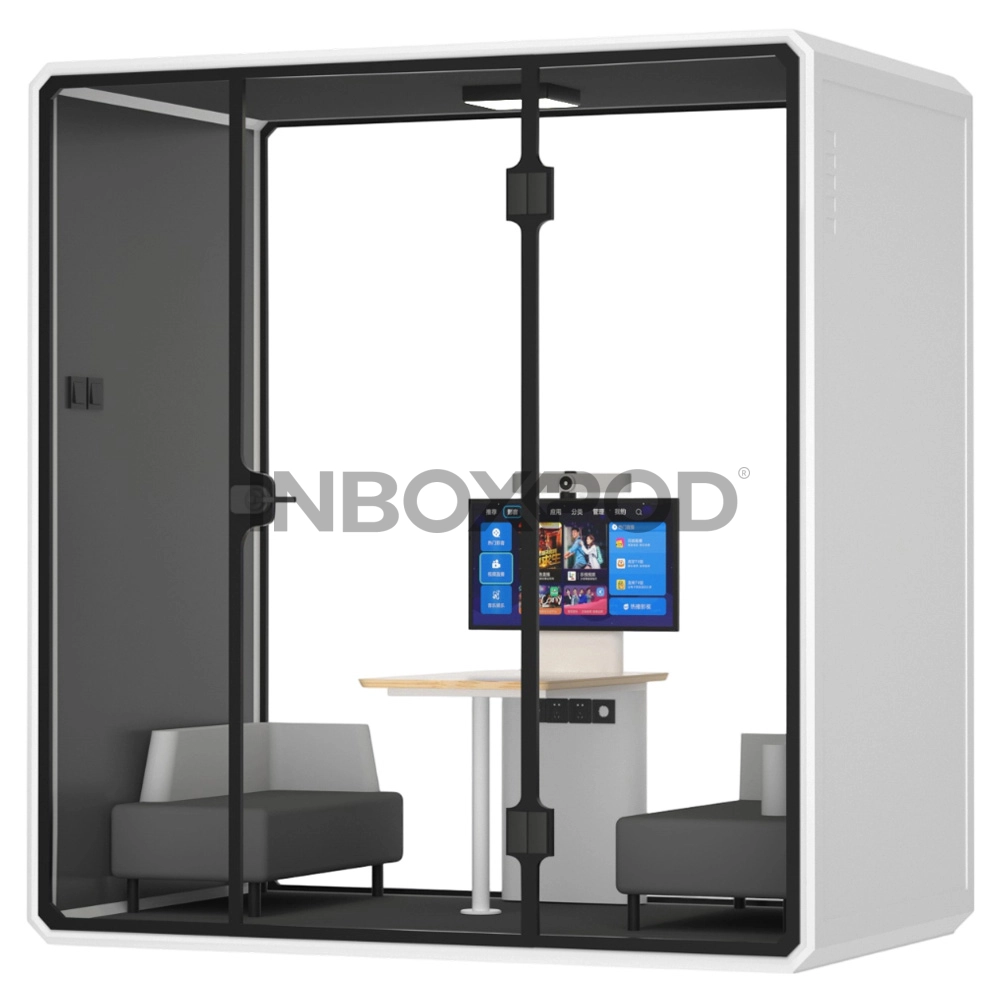
Silence Booth/Office Pod Prefabricated V series-L size
Designed for team collaboration and small meetings, the L-size booth provides a comfortable and acoustically optimized space for 4–6 people. With premium sound insulation, efficient ventilation, and integrated lighting and power systems, it ensures focus, privacy, and productivity—even in the busiest open offices.
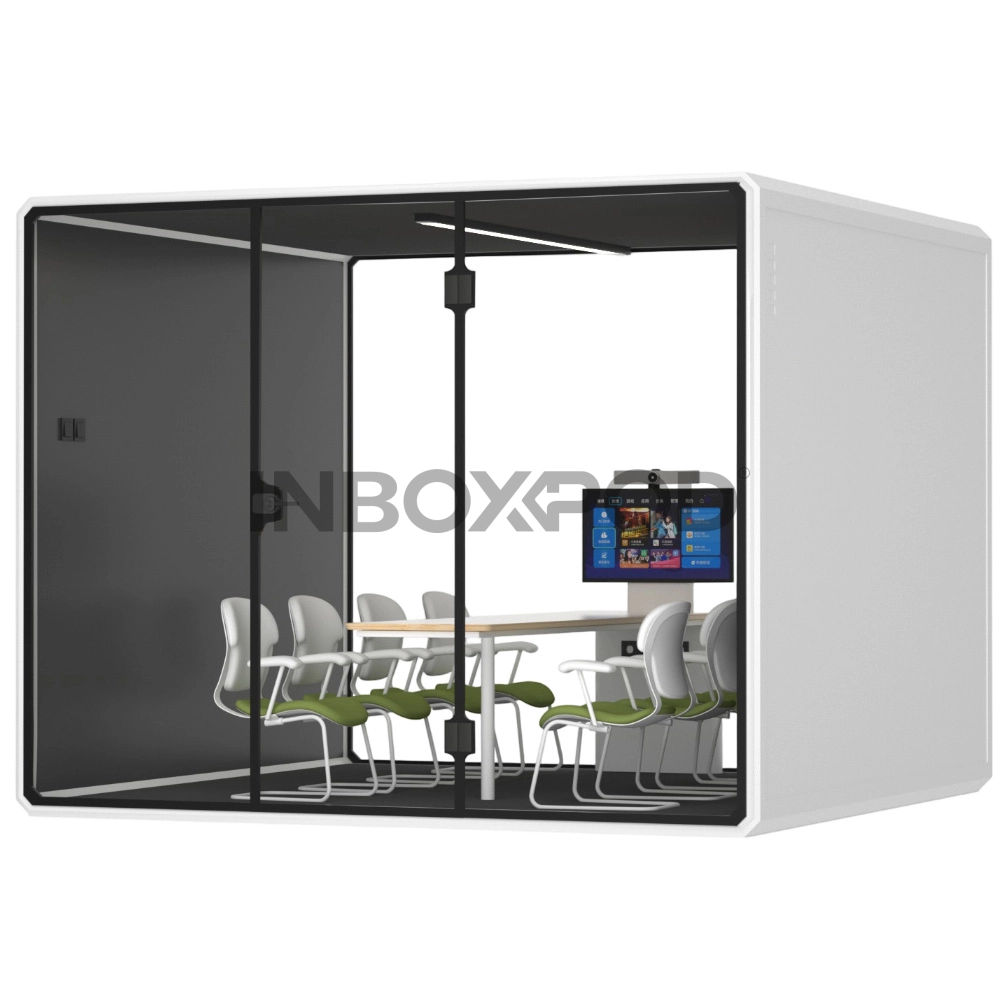
Silence Booth/Office pod Prefabricated V series-XXL size
The XXL-size booth is a premium modular acoustic room designed for larger teams and dynamic discussions. With ample interior space for 6–10 people, it provides exceptional sound insulation, effective air circulation, and integrated lighting to ensure comfort during long meetings. Ideal for boardroom sessions, client presentations, and collaborative brainstorming, the XXL booth creates a quiet and productive environment within any workspace.
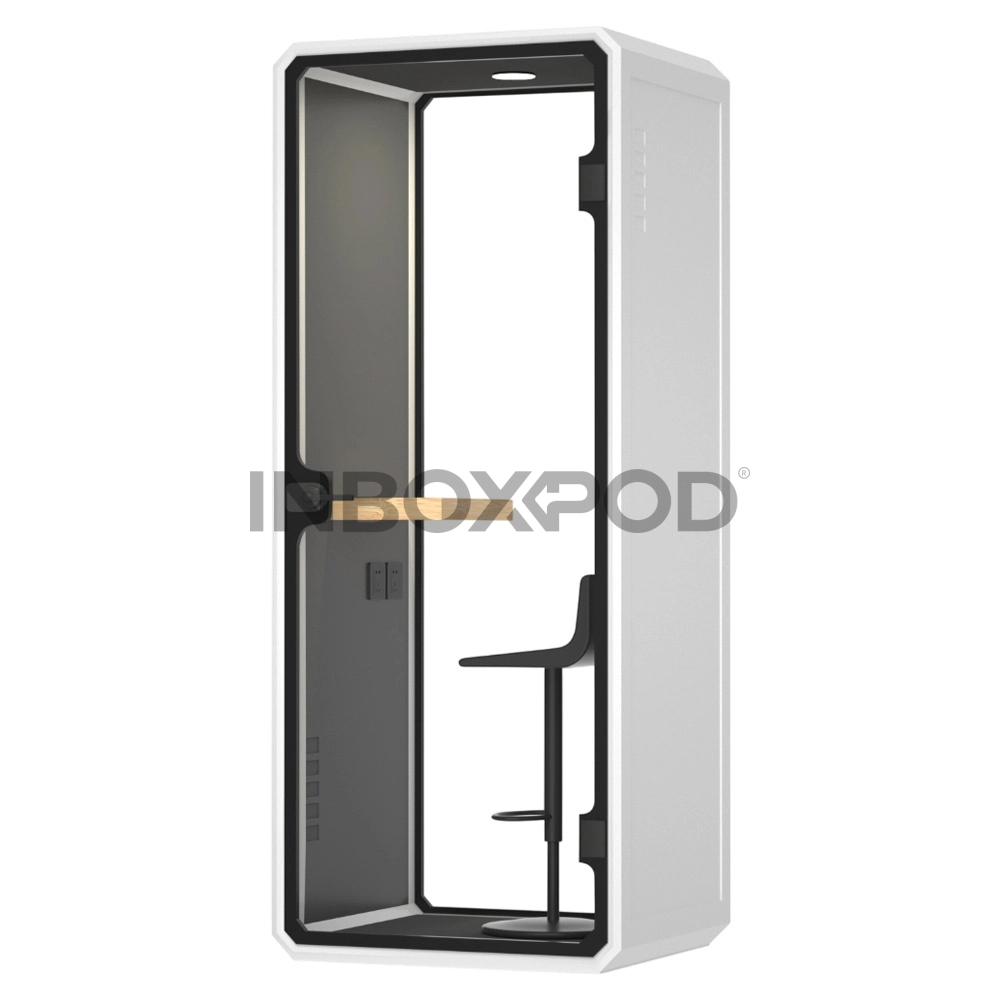
Silence Booth/Office pod Prefabricated V series-S size
Built with high-performance acoustic materials and a modular prefabricated structure, it offers excellent sound insulation, fast installation, and efficient space utilization.
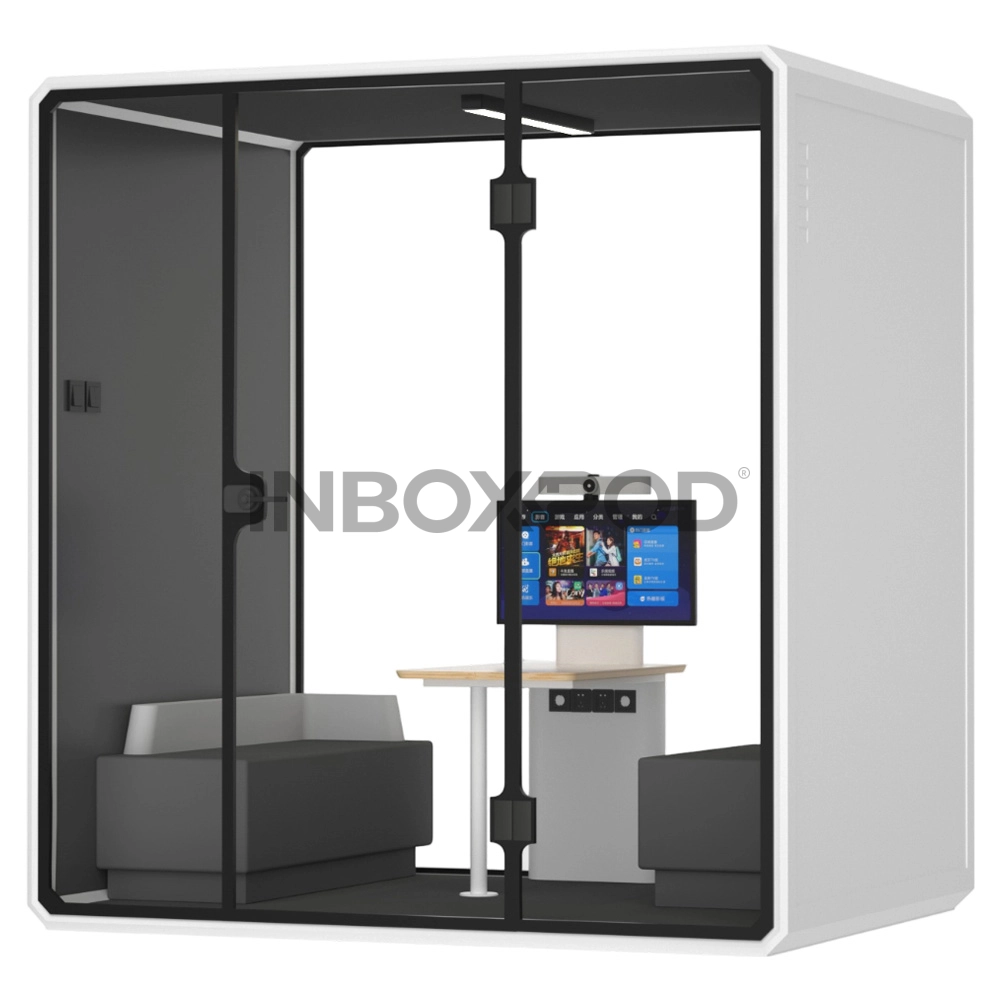
Silence Booth/Office pod Prefabricated V series-XL size
Designed for team collaboration and creative meetings, the XL-size booth provides a spacious and quiet environment that accommodates 4–6 people comfortably. Featuring premium sound insulation, integrated ventilation, and customizable lighting, it transforms any open space into a private meeting room—ideal for brainstorming, interviews, or hybrid meetings.
Whatsapp: +8613535292957