
Office Phone Booth Size Guide: Which Booth Fits Your Space
- Why booth sizing matters for workplace performance
- Privacy, speech intelligibility and measurable sound isolation
- Human factors: comfort, ventilation and usable volume
- Regulatory context and standards
- How to choose the right office phone booth size
- Match function to footprint: phone booth vs. meeting pod
- Practical dimension guidelines
- Accounting for circulation and clearance
- Space planning: site survey, layout and installation considerations
- Conduct a targeted site survey
- Acoustic adjacency and placement strategies
- Installation type and modular benefits
- Comparing common booth sizes and performance
- Side-by-side comparison table
- Estimating capacity and ROI
- Verifying acoustic claims
- INBOXpod solutions and how they map to space requirements
- Why I recommend modular, engineered pods
- INBOXpod product fit for purpose
- Technical strengths and OEM/ODM services
- Installation checklist and post-install steps
- Pre-install checklist
- Post-install verification
- Maintenance and lifecycle
- FAQ
- 1. What is the smallest practical size for a phone booth?
- 2. How much noise reduction should I expect from a quality office phone booth?
- 3. Do booths require HVAC integration?
- 4. Can I move a modular pod after installation?
- 5. How do I verify a supplier’s acoustic claims?
- Contact and next steps
As someone who has specified hundreds of acoustic enclosures for offices, education and healthcare environments, I approach the question of “Which office phone booth fits my space?” from both a practical and a technical perspective. In this guide I summarize the key sizing principles, measurable performance benchmarks, and layout strategies that make a booth useful rather than just decorative. I also show how modular, soundproof pods can be integrated into existing open-plan areas without costly renovation—helping you balance privacy, occupancy, and cost per square meter.
Why booth sizing matters for workplace performance
Privacy, speech intelligibility and measurable sound isolation
Phone booths are intended to provide speech privacy and reduce distraction. Effective booths are characterized by sound reduction metrics such as Sound Transmission Class (STC) and insertion loss in dB. Typical high-quality single-person phone booths deliver between 28–38 dB of noise reduction under realistic conditions—values you can verify with on-site testing or supplier data. For background on acoustic measurement concepts, refer to the general discussion of soundproofing on Wikipedia.
Human factors: comfort, ventilation and usable volume
Booth size is about more than footprint: interior volume determines perceived comfort, air quality, and cognitive load during calls. Smaller booths can feel claustrophobic, so ventilation (often via quiet fans) and interior height are just as important as floor area. I evaluate booths by seat clearance, headroom (minimum 2.0 m recommended for comfort), and ventilation flow rates to avoid CO2 buildup during multi-minute calls.
Regulatory context and standards
Design decisions should consider workplace guidelines and acoustic standards. While there is no single mandatory global code for office pods, international standards such as ISO acoustics publications and WHO noise guidelines provide useful benchmarks for acceptable indoor noise levels. See the WHO Environmental Noise Guidelines for Europe for broader context on health impacts of noise: WHO. For formal acoustical measurement methods, ISO resources provide testing protocols (see ISO standards).
How to choose the right office phone booth size
Match function to footprint: phone booth vs. meeting pod
Decide first whether the space is for short private calls, extended concentrated work, or small meetings. I classify pods into three practical categories:
- Phone booths (single-person): Optimized for 1 person, brief calls, minimal footprint.
- Work/Focus pods (1–2 people): Longer-duration calls or focused work with seating and small desk.
- Meeting pods (2–4 people): Small team huddles requiring larger floor area and greater ventilation.
Choosing the wrong category forces trade-offs—too small and the user is uncomfortable; too large and you waste valuable office real estate.
Practical dimension guidelines
Based on my experience and market-available modular designs, these are reliable starting dimensions:
| Type | Typical external footprint (m) | Internal use | Typical acoustic performance (dB) |
|---|---|---|---|
| Single-person phone booth | 0.9 × 0.9 – 1.1 × 1.1 | 1 seat, small shelf, quick calls | 28–35 dB insertion loss |
| 1–2 person focus pod | 1.2 × 1.2 – 1.5 × 1.2 | Seating for 2, table, longer calls | 30–38 dB insertion loss |
| 2–4 person meeting pod | 1.8 × 1.2 – 2.2 × 1.8 | Small meetings, integrated screens | 32–40 dB insertion loss |
These figures are typical for modular acoustic pods marketed by established manufacturers; always check the supplier’s tested insertion loss or STC data and request test reports if your project requires certifiable performance.
Accounting for circulation and clearance
When planning a bank of booths, allow a minimum of 1.0–1.2 m circulation clearance in front of the door for comfortable access. For pods with outward-opening doors ensure door swing does not conflict with corridors or fire egress; consider sliding doors to reduce the required clearance.
Space planning: site survey, layout and installation considerations
Conduct a targeted site survey
A practical survey includes: measuring ceiling height, mapping HVAC registers, checking power and data access points, and noting floor loading constraints. I use a simple checklist: clear height, available footprint, adjacent furniture, electrical access, and emergency egress. For example, standard pods need 220–240V power and sometimes dedicated circuits for silent fans and lighting.
Acoustic adjacency and placement strategies
Position booths near natural barriers (walls) when possible: adjacency to existing partitions can improve perceived privacy. Avoid placing booths directly under loud HVAC diffusers or next to collaboration hubs. If booths are arrayed in rows, stagger them to reduce direct sound paths.
Installation type and modular benefits
Modular pods are freestanding and removable, which reduces renovation costs and preserves building finishes. I recommend modular, factory-built pods when you need rapid deployment and consistent acoustic performance. They also simplify lifecycle updates—panels can be replaced without major construction.
Comparing common booth sizes and performance
Side-by-side comparison table
| Model category | Footprint (m) | Recommended occupancy | Typical ventilation | Use case |
|---|---|---|---|---|
| Compact Phone Booth | 0.9 × 0.9 | 1 | Silent fan (~20–25 m3/h) | Short private calls, reception areas |
| Standard Phone Booth | 1.1 × 1.1 | 1 | Ventilation 30–50 m3/h | Frequent calls, longer duration |
| Focus Pod | 1.5 × 1.2 | 1–2 | Ventilation 50–80 m3/h | Deep work, conferencing, dual users |
| Meeting Pod | 2.2 × 1.8 | 2–4 | Higher flow ventilation or HVAC integration | Small huddles, client meetings |
Estimating capacity and ROI
Assess the number of private conversations or meetings per day to justify the investment. For example, if a single-person booth allows employees to remain in the office rather than commuting home for quiet calls, the productivity gains and headcount retention can offset the pod cost within months in high-use environments. I calculate ROI using utilization rates (hours/day) × estimated productivity uplift—a simple model that facilities managers can adapt to their organization.
Verifying acoustic claims
Always request objective test data: supplier-supplied STC or insertion loss tests measured according to recognized methods (ISO or ASTM). If possible, conduct on-site verification after installation using a calibrated sound level meter. The Acoustical Society of America provides resources on measurement practice: ASA.
INBOXpod solutions and how they map to space requirements
Why I recommend modular, engineered pods
From my experience, high-quality modular pods deliver predictable acoustic performance, faster deployment, and better lifecycle sustainability than ad-hoc builds. INBOXpod, a pioneering brand of Guangdong Province INBOXPOD Company Limited, designs and manufactures modular acoustic pods that blend advanced acoustic engineering with sustainable materials and precision manufacturing. With over a decade of industry expertise, they deliver high-performance, fully soundproof solutions engineered for clarity, privacy, and durability.
INBOXpod product fit for purpose
INBOXpod’s portfolio covers soundproof office pod, oxygen pods, and soundproof study pod—each configurable in multiple footprints suitable for single users up to small teams. Their pods are adaptable for open-plan offices, education spaces, healthcare environments, retail and commercial settings, and wellness or study areas—allowing organizations to create focused micro-environments without heavy construction. For product details and configurations, see the INBOXpod website: https://www.inboxpod.com.
Technical strengths and OEM/ODM services
INBOXpod pairs modular acoustic design with sustainable materials and precision manufacturing, and offers end-to-end OEM and ODM services—useful when you need bespoke finishes, specialized acoustic performance, or integrated technology like video conferencing kits. They support projects globally, with clients across North America, Europe and the Asia–Pacific region, and provide localized support through a strong distribution network. For inquiries, contact them at sale@inboxpod.com.
Installation checklist and post-install steps
Pre-install checklist
- Confirm electrical/data locations and supply ratings.
- Measure clear height and footprint—verify door swing or sliding door clearance.
- Check floor loading if pods are large or have heavy acoustic cores.
- Obtain supplier test reports for acoustic performance and ventilation specs.
Post-install verification
After installation, perform a brief verification: measure background SPL inside and outside the pod during typical office activity, test ventilation for nuisance noise, and confirm door seals operate smoothly. If the installation will be used for recorded conversations or sensitive client calls, consider commissioning a professional acoustic consultant for an independent test (STC/insertion loss).
Maintenance and lifecycle
Plan regular maintenance for mechanical ventilation (filter replacement, fan service) and routine checks of seals and doors. Modular panels can be refreshed or upgraded—this is an advantage over fixed construction where ongoing retrofit costs are higher.
FAQ
1. What is the smallest practical size for a phone booth?
A practical minimum internal footprint is roughly 0.9 × 0.9 m for a compact single-person booth. This provides a standing user space or a compact seat and shelf for short calls. For longer calls or seated comfort, 1.1 × 1.1 m is more comfortable.
2. How much noise reduction should I expect from a quality office phone booth?
Good single-person phone booths typically provide an insertion loss in the range of 28–35 dB under realistic conditions. Larger focus or meeting pods can reach 32–40 dB depending on construction and seals. Verify with supplier test reports measured according to recognized standards.
3. Do booths require HVAC integration?
Not necessarily. Many modular booths include integrated quiet ventilation systems rated for the intended occupancy. For multi-person meeting pods or long-duration use, integration to building HVAC or higher-capacity ventilation is recommended.
4. Can I move a modular pod after installation?
Yes. One of the main benefits of modular pods is relocatability. They are typically freestanding and can be disassembled or moved, reducing renovation downtime and keeping options flexible as your workplace evolves.
5. How do I verify a supplier’s acoustic claims?
Ask for third-party test reports or measurement data showing insertion loss or STC ratings measured per ISO/ASTM standards. After installation, perform on-site verification with a calibrated sound level meter or hire an acoustic consultant for formal testing.
Contact and next steps
If you’re planning a rollout or pilot of office phone booths, I recommend starting with a two-week pilot of different footprints (compact and standard) to measure utilization and user feedback before a full deployment. For tailored solutions, INBOXpod offers configurable soundproof office pod, oxygen pods, and soundproof study pod solutions with OEM/ODM support and global distribution. Learn more at INBOXpod or contact sales directly at sale@inboxpod.com. I’m also available to consult on space planning and acoustic verification if you’d like a technical review of your floorplate and proposed pod layouts.
References and further reading: WHO Environmental Noise Guidelines: https://www.who.int/publications/i/item/9789241550536; Soundproofing overview (Wikipedia): https://en.wikipedia.org/wiki/Soundproofing; Acoustical Society of America: https://acousticalsociety.org.
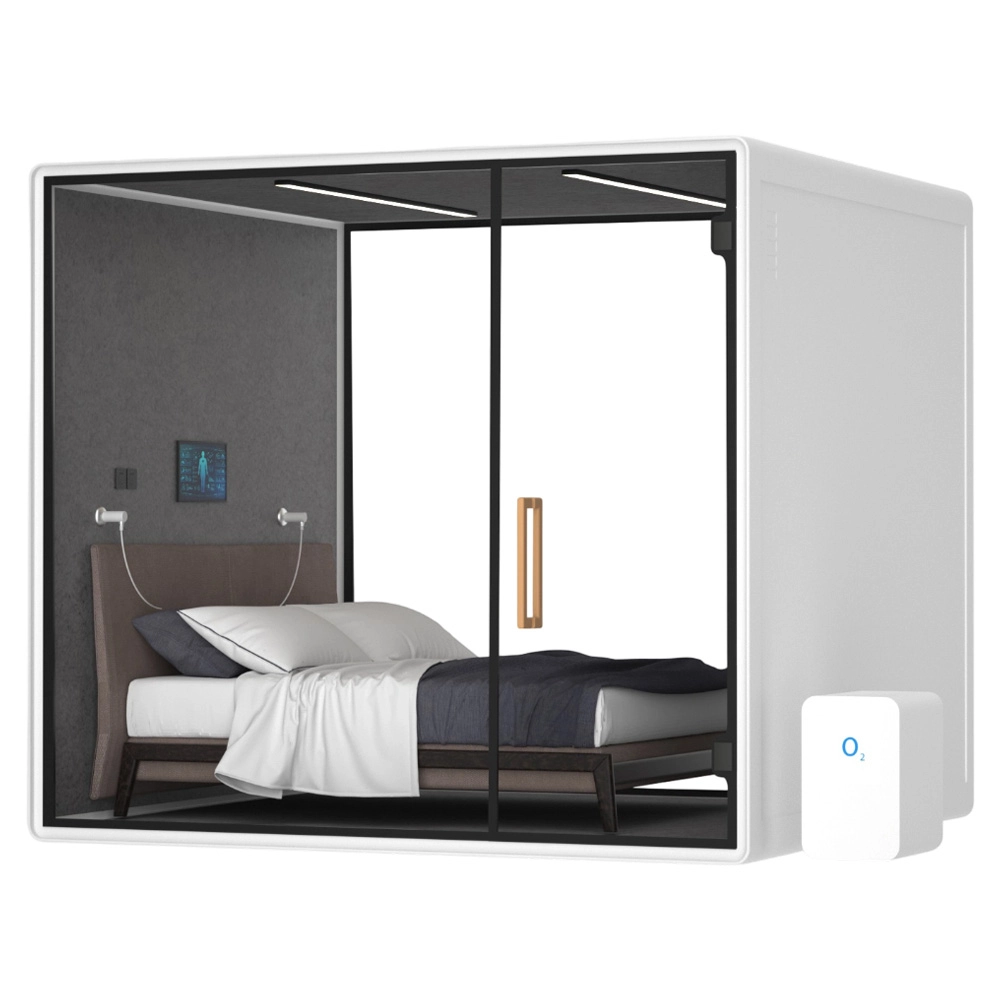
How to Evaluate Soundproofing in Hyperbaric Oxygen Chambers
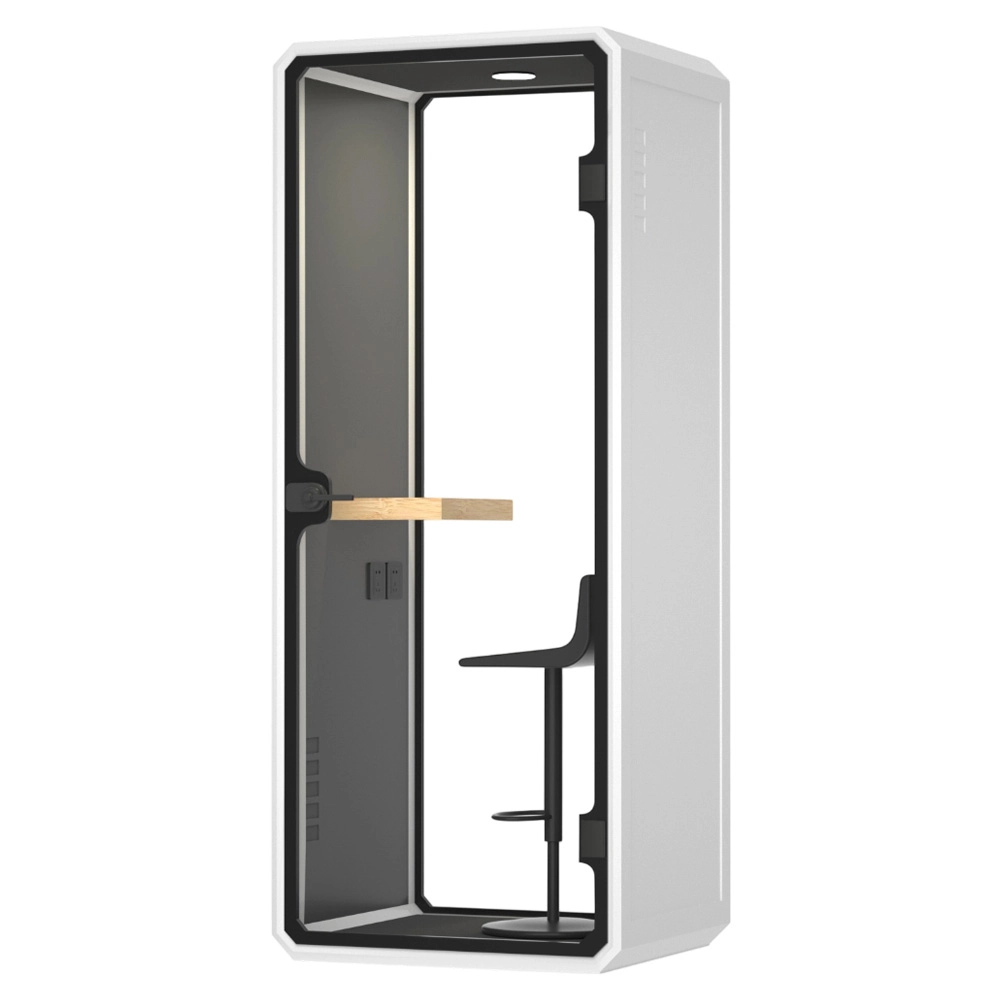
Shipping, Warranty and Maintenance for Portable Booths
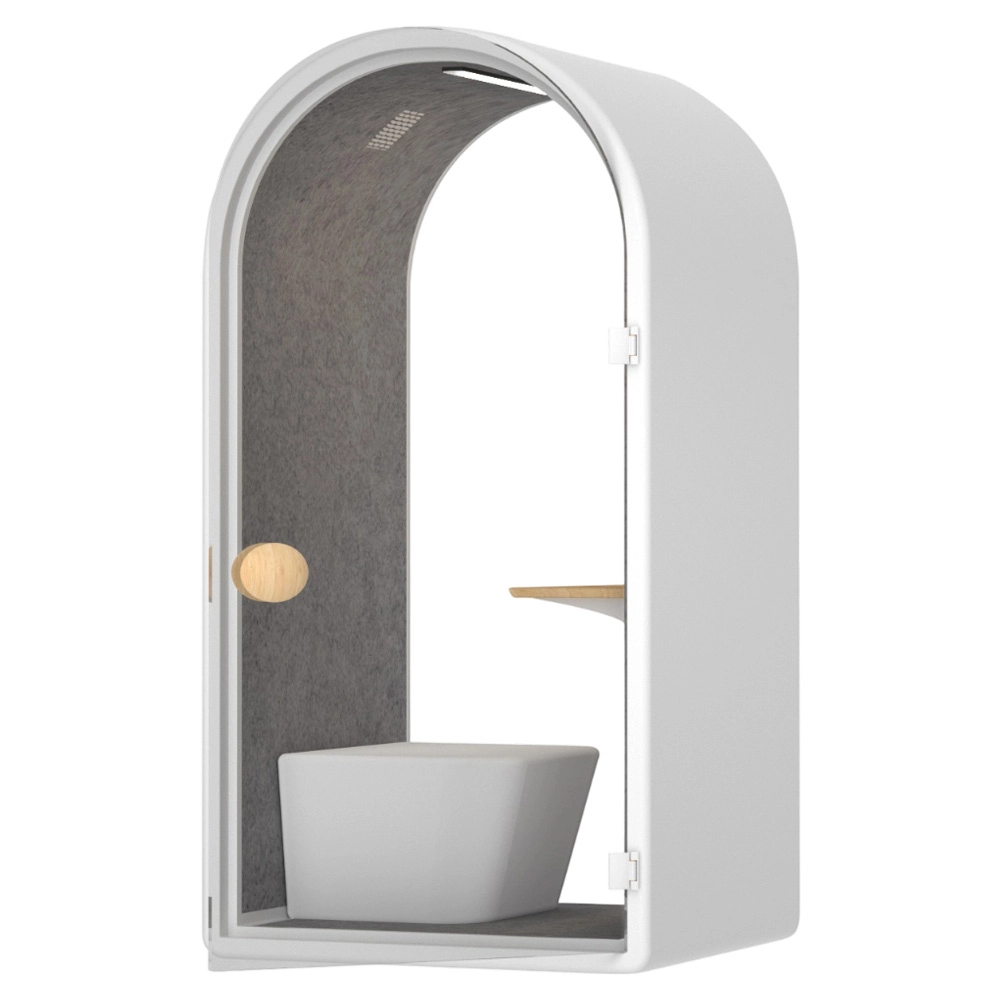
Acoustic Specs: Choosing a Soundproof Booth for Schools
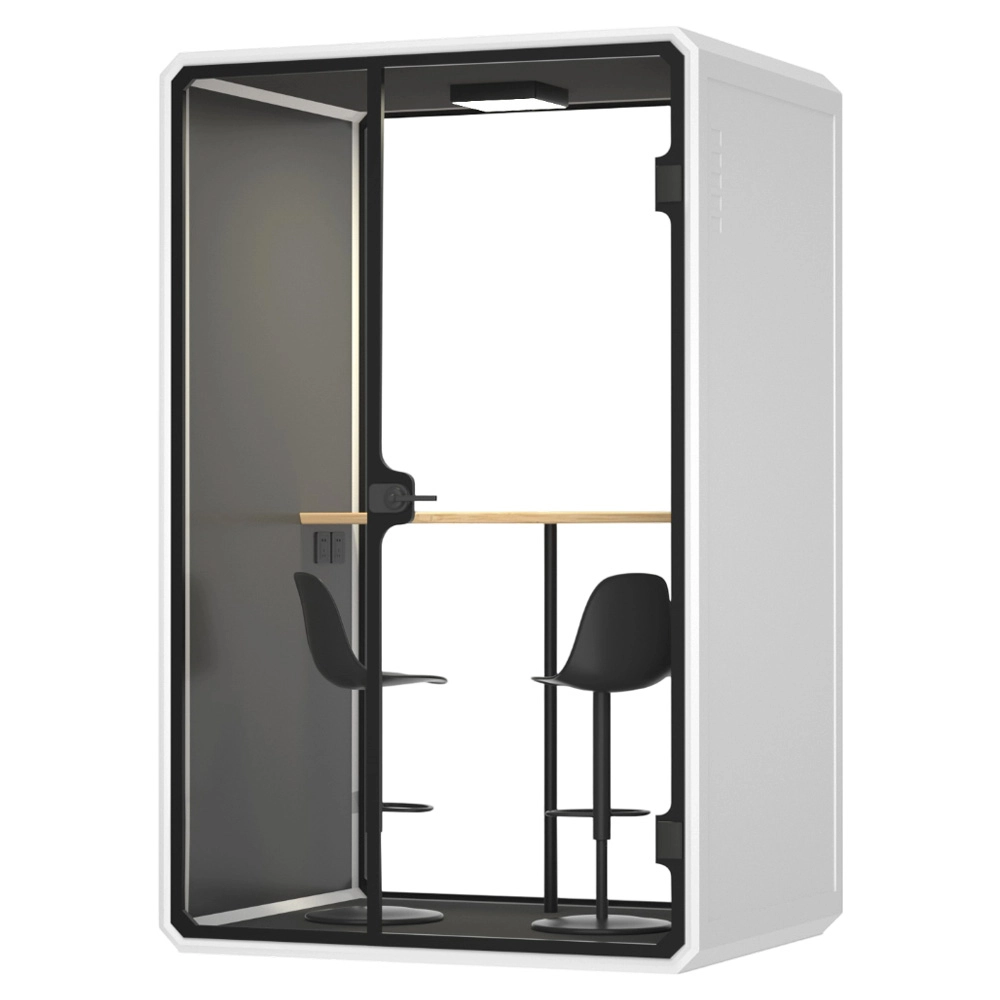
Acoustic Performance Metrics Procurement Teams Need
Home-demo
Do you provide after-sales support and warranty?
Yes, we provide comprehensive after-sales service and warranty to ensure long-term satisfaction with our products.
Can the booths be customized to fit specific space requirements?
Yes, we offer flexible customization options including size, color, and additional features to perfectly suit your needs.
How long does it take to assemble an INBOXpod booth?
Most of our booths can be assembled without tools in about 30 minutes, making installation quick and hassle-free.
What materials are used in the construction of the booths?
Our booths are made from sustainable, high-quality materials including aluminum alloy frames and acoustic panels designed for optimal soundproofing.
What is the typical sound insulation level of your acoustic booths?
Our booths typically achieve up to 27 dB noise reduction, meeting Class B sound insulation standards suitable for offices and study environments.
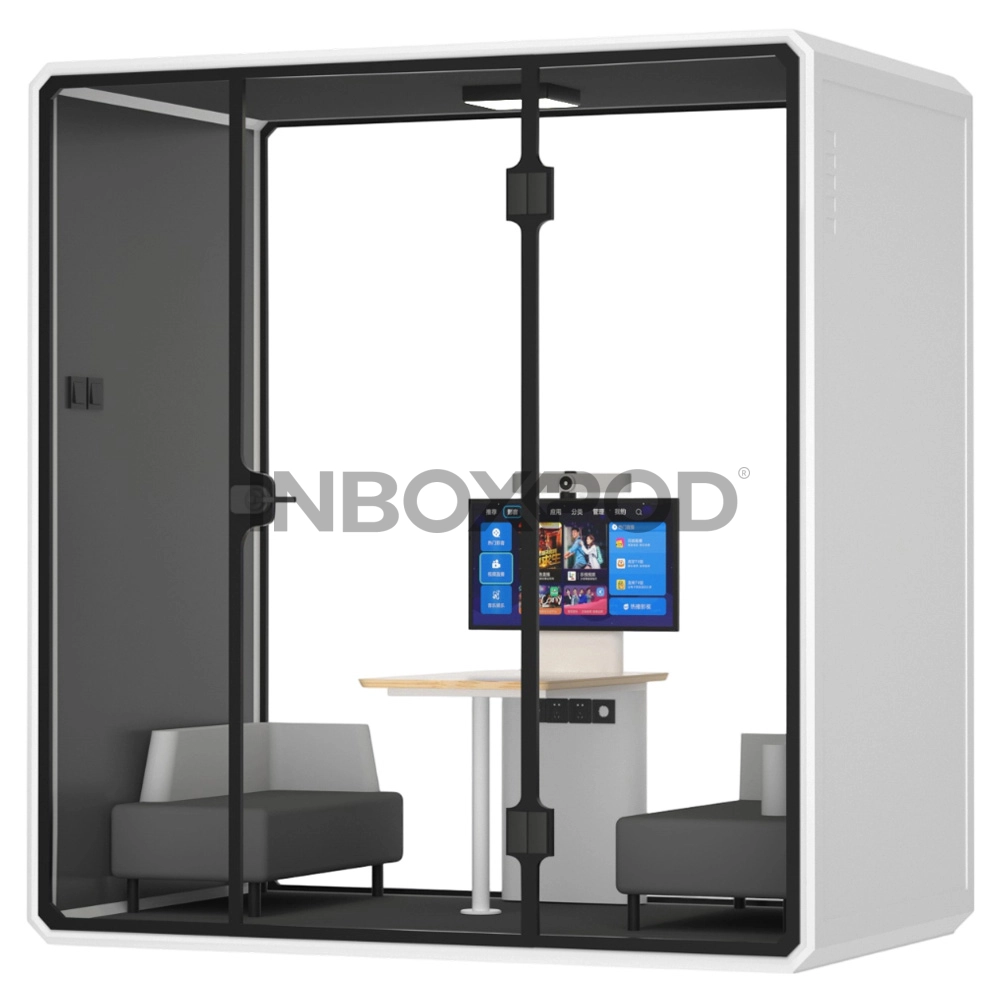
Silence Booth/Office Pod Prefabricated V series-L size
Designed for team collaboration and small meetings, the L-size booth provides a comfortable and acoustically optimized space for 4–6 people. With premium sound insulation, efficient ventilation, and integrated lighting and power systems, it ensures focus, privacy, and productivity—even in the busiest open offices.
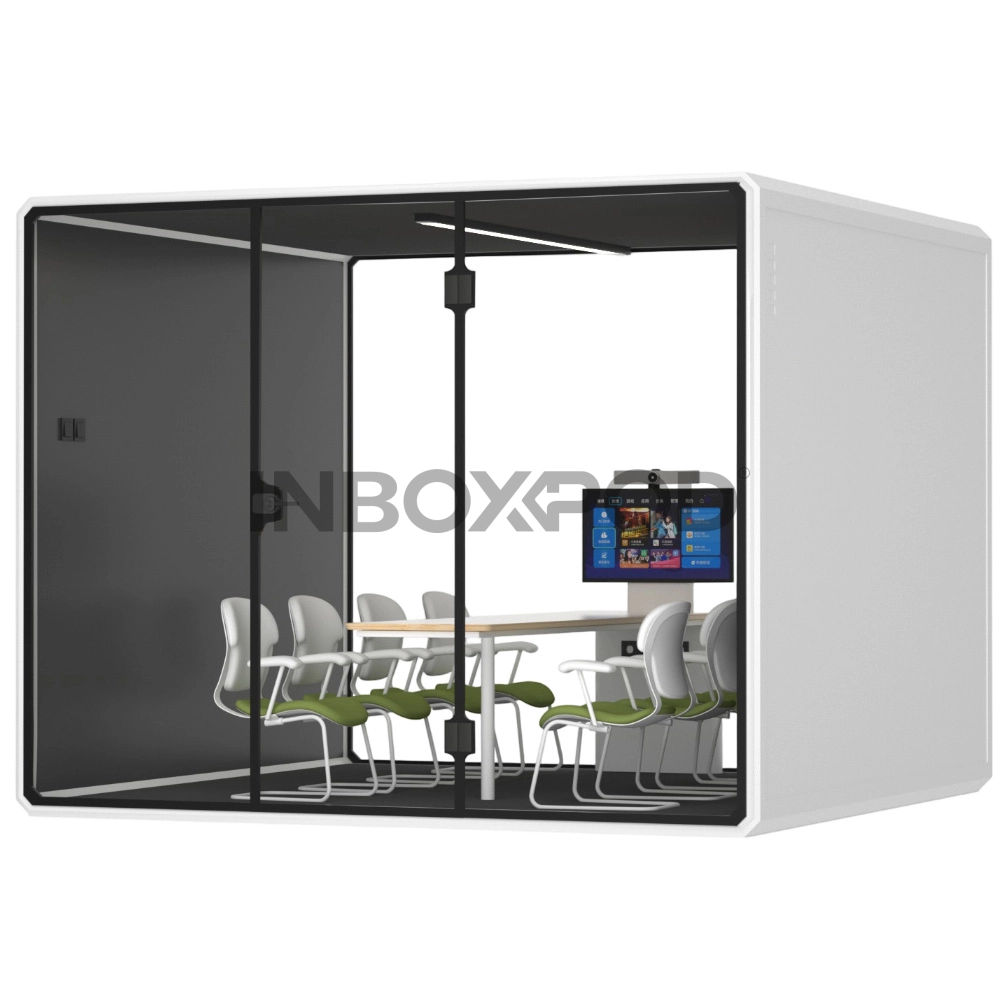
Silence Booth/Office pod Prefabricated V series-XXL size
The XXL-size booth is a premium modular acoustic room designed for larger teams and dynamic discussions. With ample interior space for 6–10 people, it provides exceptional sound insulation, effective air circulation, and integrated lighting to ensure comfort during long meetings. Ideal for boardroom sessions, client presentations, and collaborative brainstorming, the XXL booth creates a quiet and productive environment within any workspace.
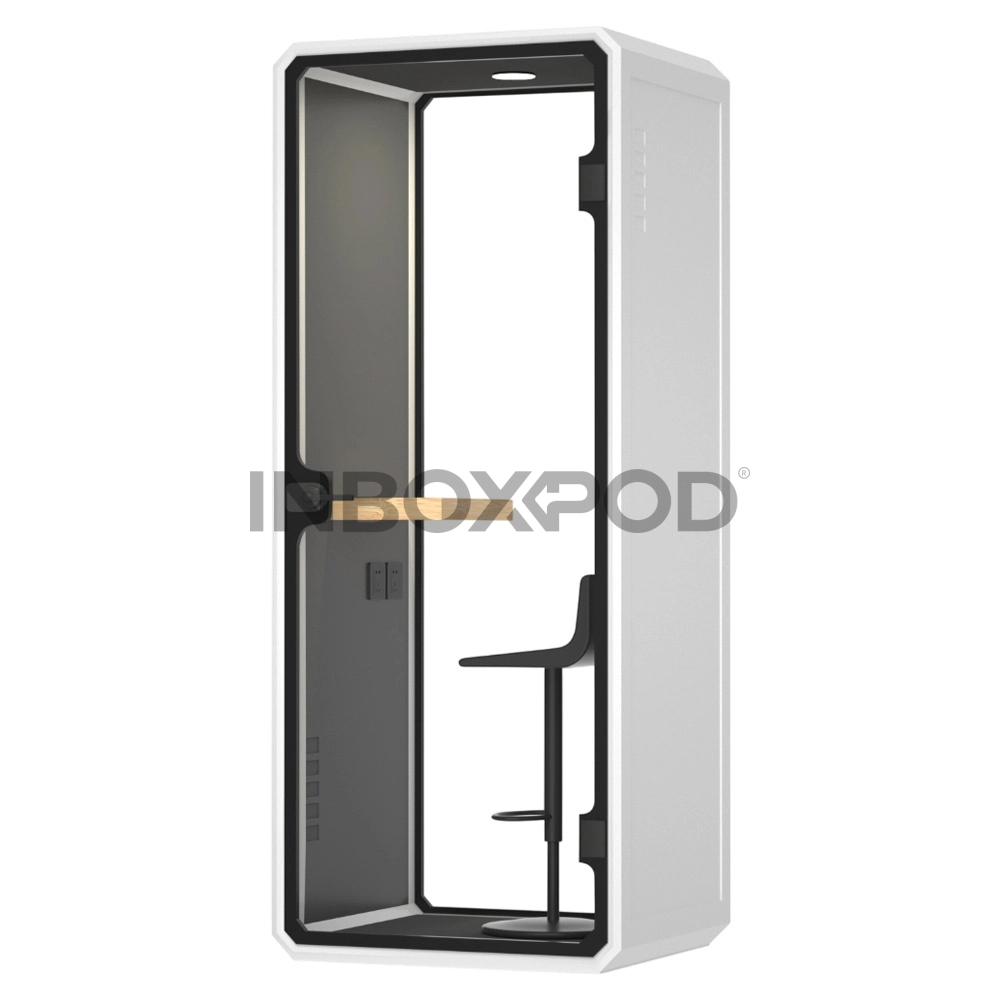
Silence Booth/Office pod Prefabricated V series-S size
Built with high-performance acoustic materials and a modular prefabricated structure, it offers excellent sound insulation, fast installation, and efficient space utilization.
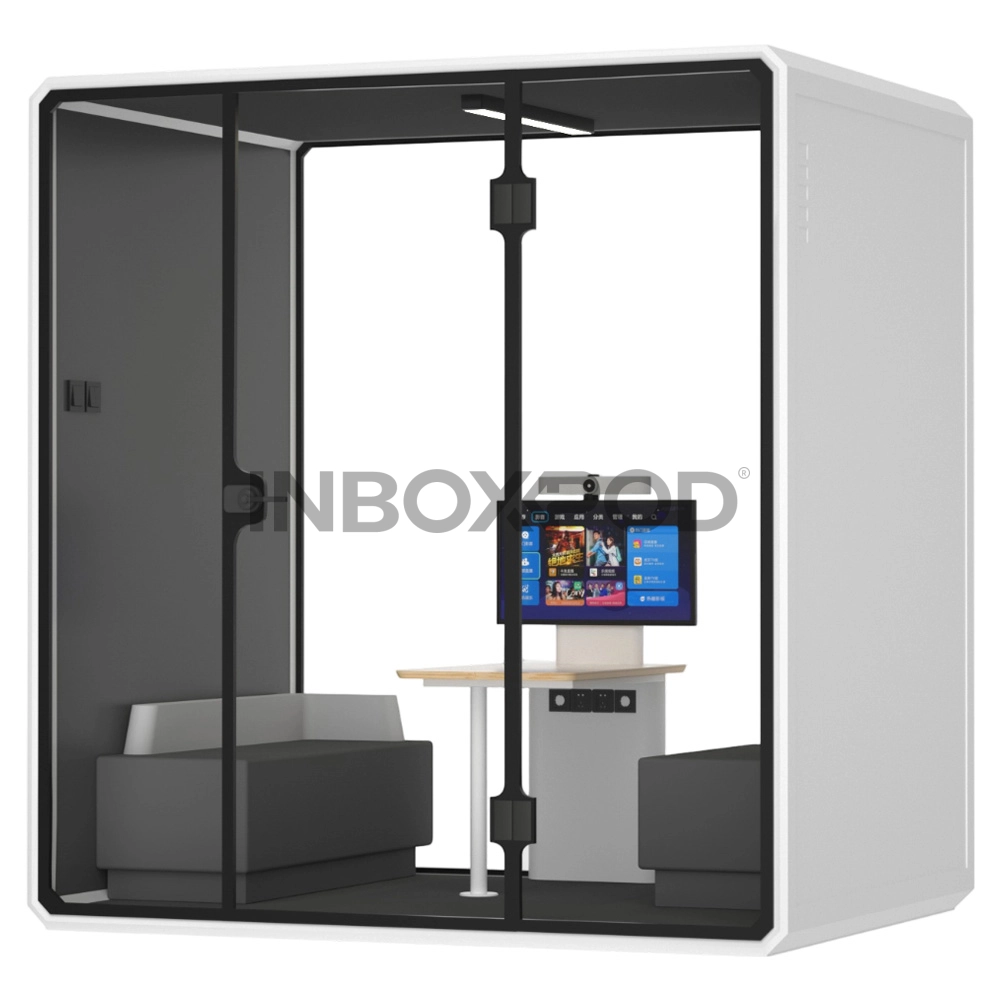
Silence Booth/Office pod Prefabricated V series-XL size
Designed for team collaboration and creative meetings, the XL-size booth provides a spacious and quiet environment that accommodates 4–6 people comfortably. Featuring premium sound insulation, integrated ventilation, and customizable lighting, it transforms any open space into a private meeting room—ideal for brainstorming, interviews, or hybrid meetings.
Whatsapp: +8613535292957