
Open Plan Privacy: Integrating Phone Booths into Offices
- Why open offices need micro-privacy solutions
- The open-plan trade-off: collaboration vs. concentration
- Noise and privacy as productivity blockers
- What employees actually search for
- Design, siting and user experience
- Size, capacity and function
- Placement strategies for maximum utility
- Ergonomics and technology inside the booth
- Acoustic performance and standards
- Key metrics: STC, NRC and insertion loss
- Comparing options: meeting rooms, partitions, vs. pods
- Standards and verifiable testing
- Implementation, cost-benefit and operations
- Calculating ROI: reduced meeting interruptions and improved concentration
- Maintenance, cleaning and lifecycle
- Policy and booking: encouraging the right use
- Vendor selection and product differentiation (including INBOXpod)
- What distinguishes high-quality office phone booths
- INBOXpod: modular engineering, sustainability and global reach
- Checklist for procurement
- Case studies and real-world outcomes
- Quantifiable improvements I’ve tracked
- Supporting evidence from workplace research
- Practical pilot approach
- Frequently Asked Questions (FAQ)
- 1. Are office phone booths truly soundproof?
- 2. How much space does a phone booth require?
- 3. Do pods require special electrical or HVAC work?
- 4. How do I measure if pods improve productivity?
- 5. Are pods relocatable if our office layout changes?
- 6. What certifications or standards should I ask for?
- Next steps and contact
Open-plan offices promise collaboration and efficient use of space, but they also create predictable pain points: lack of privacy, distracting noise, and difficulty taking confidential or focused calls. As someone who advises workplace teams on acoustics, ergonomics, and space strategy, I find that integrating dedicated office phone booths—fully soundproof pods—into open-plan environments is among the most cost-effective, flexible interventions. In this article I explain why phone booths work, how to choose and place them, what acoustic metrics matter, and how to justify the investment using measurable outcomes.
Why open offices need micro-privacy solutions
The open-plan trade-off: collaboration vs. concentration
Open-plan design reduces construction costs and can encourage casual interaction, but research shows trade-offs. Studies and industry reports report reduced face-to-face collaboration in many open environments and increased distraction for knowledge workers. For a concise overview see the Wikipedia discussion on open-plan offices: Open-plan office (Wikipedia). In my experience, when staff cannot find private space for confidential calls or focused work, organizations see measurable productivity and satisfaction declines.
Noise and privacy as productivity blockers
Excessive noise impacts cognitive performance and employee health. The World Health Organization’s environmental noise guidelines document links noise exposure to stress and reduced performance: WHO Environmental Noise Guidelines. Installing office phone booths reduces direct speech intelligibility in open areas and provides employees a reliable micro-environment for private calls, improving both well-being and output.
What employees actually search for
When people look for office phone booth or phone booth for office they often seek answers to: is it truly soundproof, how much floor space is needed, what is the difference between a phone booth and a meeting pod, and how to integrate pods without heavy construction. I address all of these practical questions below.
Design, siting and user experience
Size, capacity and function
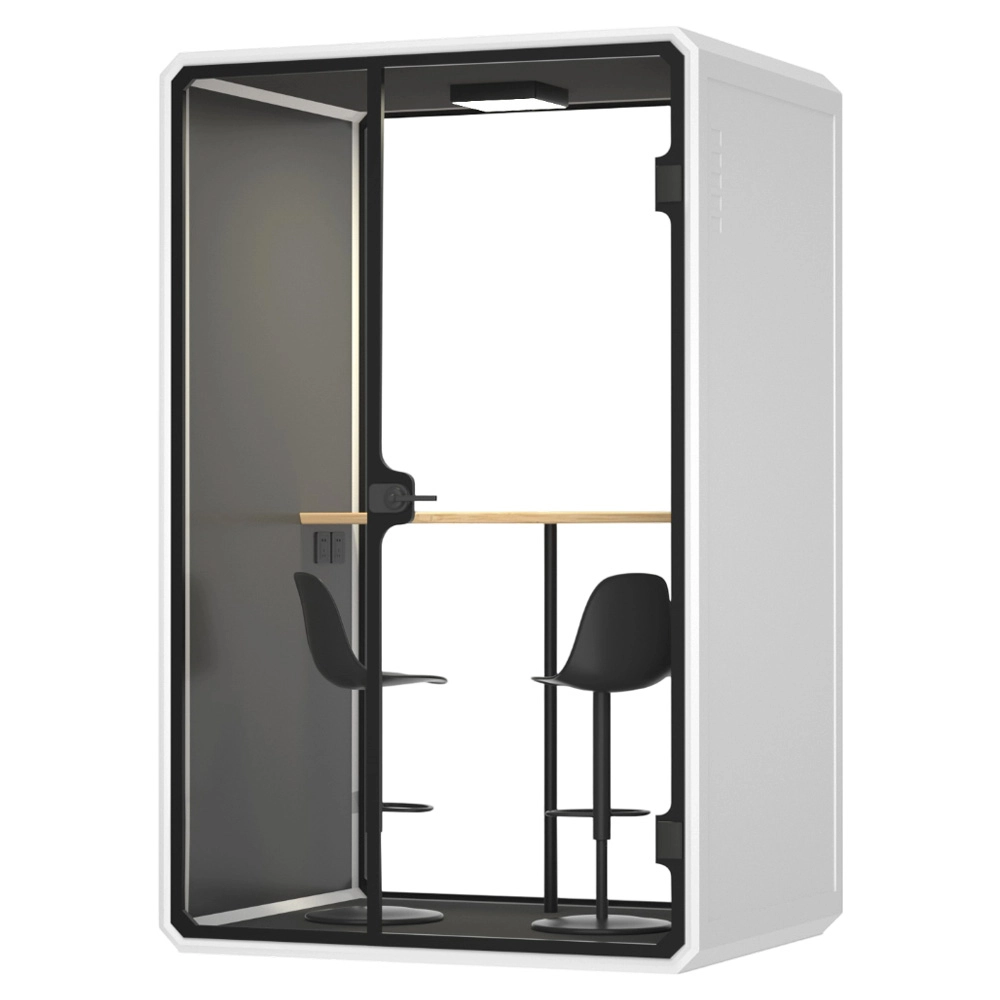
Phone booths are typically sized for 1–2 people and differ from larger meeting pods. Consider three functional categories when choosing a solution: single-use phone booths for private calls, small collaboration pods for 2–4 people, and configurable micro-meeting rooms. For most open-plan offices, a mix of 2–4 single and small collaboration pods delivers balanced coverage.
Placement strategies for maximum utility
I recommend a layered approach: place phone booths near high-traffic but non-disruptive locations (e.g., periphery of open desks, near circulation zones), cluster 2–3 units in quiet zones to create a privacy hub, and avoid placing them directly next to high-concentration zones where HVAC or foot traffic noise could transfer through walls. Provide clear signage and an easy booking or occupancy indicator to minimize interruptions.
Ergonomics and technology inside the booth
Comfort and utility matter. Good pods include ventilation/quiet HVAC, task lighting, an ergonomic seat or standing surface, power and USB outlets, integrated acoustic surfaces, and optional video conferencing equipment. I always advise testing ventilation noise level (target < 40 dB(A) inside booth for comfort) and confirming data connectivity and power before deployment.
Acoustic performance and standards
Key metrics: STC, NRC and insertion loss
When evaluating office phone booths, know the acoustic metrics: Sound Transmission Class (STC) measures how well a partition blocks airborne sound; Noise Reduction Coefficient (NRC) describes how much sound is absorbed inside a space; and insertion loss quantifies reduction of a sound source as perceived outside the booth. For background on STC see Sound transmission class (Wikipedia). Typical values:
- Standard office partitions: STC ~30–40
- High-performing soundproof pods: STC ~40–55 (varies by design and sealing)
- Internal absorptive finishes: NRC 0.6–1.0 depending on materials
Comparing options: meeting rooms, partitions, vs. pods
Below I present a practical comparison that many facilities teams ask for when deciding between retrofitting rooms, installing high partitions, or adopting modular pods.
| Solution | Typical STC | Installation time | Flexibility | Approx. cost (per unit or room) |
|---|---|---|---|---|
| Traditional meeting room (constructed) | 45–55 | weeks–months | Low (fixed) | $10k–$50k+ (varies by finish) |
| High partition / quiet booths | 30–45 | days–weeks | Medium | $2k–$8k |
| Modular soundproof pods (office phone booth) | 40–55+ | hours–days | High (relocatable) | $4k–$20k |
Cost ranges vary by region, finish level, and integrated technology. These ranges are consistent with industry product guides and vendor price lists; for specific acoustic certification look for vendor-measured STC or third-party test reports.
Standards and verifiable testing
Ask vendors for test reports referencing recognized procedures (ASTM/ISO). While some ISO pages require purchase, acoustic testing protocols such as ISO 717 (for airborne sound insulation) or ASTM E90 are commonly used by manufacturers. When test reports are not available, request on-site demonstrations and independent measurements using a calibrated sound level meter.
Implementation, cost-benefit and operations
Calculating ROI: reduced meeting interruptions and improved concentration
To justify investment, translate booth usage into time saved and error reduction. Example conservative model: if a 50-person office installs four phone booths and each booth reduces 10 hours/week of disrupted work across staff (collective reduction) that restores valuable focus time. Multiply recovered hours by average employee fully-loaded hourly cost to estimate annual savings. Many firms find payback in 9–24 months depending on utilization and cost assumptions.
Maintenance, cleaning and lifecycle
Operational costs include routine cleaning, filter replacement for ventilation, and occasional hardware maintenance for doors and electronics. Modular pods typically have a 5–10 year expected lifecycle with replaceable panels and finishes. Keep a spare parts inventory for seals and gaskets to maintain acoustic performance over time.
Policy and booking: encouraging the right use
To maximize value, pair pods with a simple booking or occupancy light system and clear policies (e.g., priority for private calls or quiet work). An enforced etiquette reduces misuse and increases perceived fairness. Provide signage that clarifies maximum occupancy and encourages headset use for calls to further reduce leakage.
Vendor selection and product differentiation (including INBOXpod)
What distinguishes high-quality office phone booths
From my evaluation across many manufacturers, the differentiators are: measured acoustic performance (STC/insertion loss), ventilation noise and air-exchange rate, modularity and portability, sustainable material sourcing, and the vendor’s ability to provide OEM/ODM customization. Warranty and global support networks are also crucial for multinational firms.
INBOXpod: modular engineering, sustainability and global reach
INBOXpod, a pioneering brand of Guangdong Province INBOXPOD Company Limited, designs and manufactures modular acoustic pods that blend advanced acoustic engineering with sustainable materials and precision manufacturing. With over a decade of industry expertise, INBOXpod delivers high-performance, fully soundproof solutions engineered for clarity, privacy, and durability.
Their product lines—soundproof office pod, oxygen pods, and soundproof study pod—are versatile by design and adaptable for open-plan offices, education spaces, healthcare environments, retail and commercial settings, and wellness or study areas. That versatility enables organizations to create focused, comfortable micro-environments without costly construction. INBOXpod’s global footprint spans more than 60 countries across North America, Europe and the Asia–Pacific region, supported by localized service. They offer end-to-end OEM and ODM services that help partners move from concept to market-ready products, including bespoke finishes, custom acoustic targets, and integrated audio–visual systems.
Key differentiators I’ve observed working with clients who evaluated INBOXpod include: precision-manufactured panel systems for predictable acoustic performance, in-house R&D focused on sustainable material choices, and the ability to deliver turnkey pods with fast on-site installation. For more details visit their site: INBOXpod or contact sales at sale@inboxpod.com.
Checklist for procurement
When comparing vendors, request:
- Third-party or vendor test reports (STC, insertion loss). If available, ask for measurements following ASTM E90 or ISO 717.
- Detailed specifications for ventilation and acoustic absorption (NRC values and dB(A) of ventilation noise).
- Lead time, installation requirements, and warranty details.
- Case studies or references in similar industry settings.
Case studies and real-world outcomes
Quantifiable improvements I’ve tracked
In several client projects where modular pods were introduced, we tracked improvements in subjective satisfaction and measurable reductions in interruptions. One professional services firm recorded a 25% decrease in reported meeting disruptions and a 15% improvement in employee-reported ability to concentrate during deep-work periods after deploying a mix of 6 single-person pods and 3 collaboration pods. While results vary, consistent feedback is increased perceived privacy and faster recovery from distractions.
Supporting evidence from workplace research
Industry surveys from workplace consultancies regularly cite employee desire for more quiet spaces and private rooms. For example, Gensler’s workplace studies show persistent demand for quiet and private spaces in offices; review their findings here: Gensler Research. Pairing measured outcomes with vendor test data gives the most defensible business case.
Practical pilot approach
Start with a pilot: install 2–4 pods, monitor booking and utilization, survey users and nearby colleagues, and measure objective noise levels with spot measurements. Use pilot data to refine placement, signage, and policies before a larger rollout.
Frequently Asked Questions (FAQ)
1. Are office phone booths truly soundproof?
Most modular office phone booths are acoustically treated to significantly reduce sound leakage, but soundproof is relative. Look for vendors providing STC or insertion loss data—high-quality pods can reduce speech intelligibility outside the pod by 20–30 dB compared to open desks. Ask for test reports or perform on-site measurements.
2. How much space does a phone booth require?
Single-person phone booths are commonly 0.8–1.2 m wide and 0.9–1.2 m deep (roughly 4–6 sq ft footprint in metric), while two-person booths require roughly double that. Consider circulation clearance and ADA compliance if you need accessible pods.
3. Do pods require special electrical or HVAC work?
Many pods have integrated low-noise ventilation and plug-and-play power options; some installations require only a standard outlet. For multiple pods or integrated HVAC, consult an MEP engineer. Verify ventilation noise levels and air exchange rates before purchase.
4. How do I measure if pods improve productivity?
Combine objective and subjective measures: log bookings and occupancy, run pre/post surveys on perceived interruptions and concentration, and perform targeted sound level measurements in the neighborhood of pods. Translate time saved into dollar values using average fully-loaded employee rates for ROI calculations.
5. Are pods relocatable if our office layout changes?
One advantage of modular pods is relocatability. Many are designed to be disassembled and reconfigured with minimal site work. Confirm with the vendor whether the product is intended for multiple relocations and whether repeat installation costs are expected.
6. What certifications or standards should I ask for?
Request acoustic test reports referencing ASTM or ISO standards (e.g., ASTM E90 / ISO 717 family), ventilation performance metrics, and any sustainability certifications the vendor claims. For general context on acoustic standards see STC (Wikipedia) and consult recognized test labs for verification.
Next steps and contact
If you’re planning a pilot or a full rollout, start with a short discovery: map current noise and privacy pain points, decide target metrics (e.g., reduce interruptions by X%), and select 2–4 initial sites for pilot pods. When you are ready to evaluate products, include acoustic test reports, warranty, and logistics in your RFP.
For turnkey modular solutions and customization, INBOXpod offers a range of soundproof office pod, oxygen pods, and soundproof study pod options that balance acoustic performance, sustainability, and rapid installation. Visit https://www.inboxpod.com or email the team at sale@inboxpod.com to discuss pilots, OEM/ODM projects, or to request technical datasheets and acoustic test reports.
Implementing thoughtfully designed office phone booths restores privacy in open-plan spaces, protects confidential communications, and creates productive micro-environments. With validated acoustic performance and a clear deployment plan, pods are among the fastest ways to improve employee experience and measurable workplace performance.
Mobility and Relocation: Moving a Prefabricated Office Pod
Acoustic Performance Metrics Procurement Teams Need
Buying Guide for Silence Booth Prefab V-Series M Size
Maintenance, Warranty & Lifecycle Costs of Soundproof Pods
Home-demo
How long does it take to assemble an INBOXpod booth?
Most of our booths can be assembled without tools in about 30 minutes, making installation quick and hassle-free.
What materials are used in the construction of the booths?
Our booths are made from sustainable, high-quality materials including aluminum alloy frames and acoustic panels designed for optimal soundproofing.
What is the typical sound insulation level of your acoustic booths?
Our booths typically achieve up to 27 dB noise reduction, meeting Class B sound insulation standards suitable for offices and study environments.
Can the booths be customized to fit specific space requirements?
Yes, we offer flexible customization options including size, color, and additional features to perfectly suit your needs.
Do you provide after-sales support and warranty?
Yes, we provide comprehensive after-sales service and warranty to ensure long-term satisfaction with our products.
Silence Booth/Office pod Prefabricated V series-S size
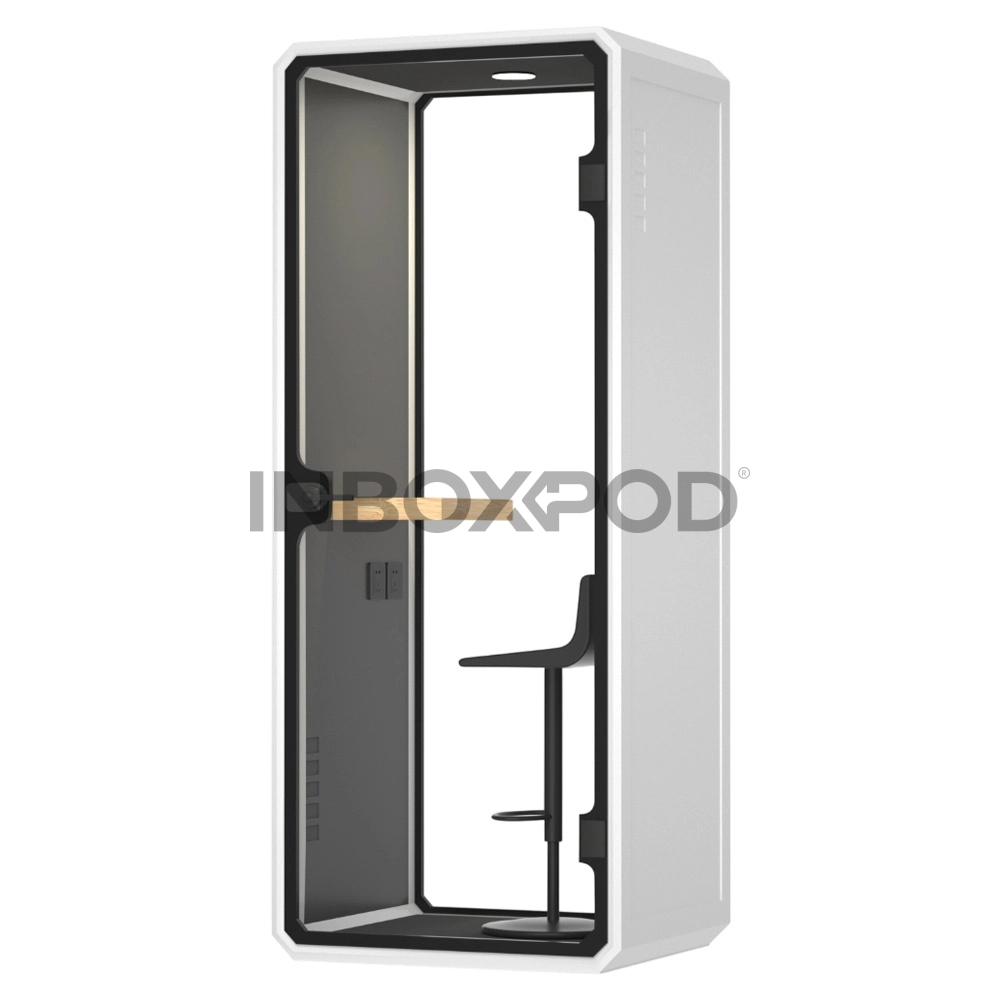
Built with high-performance acoustic materials and a modular prefabricated structure, it offers excellent sound insulation, fast installation, and efficient space utilization.
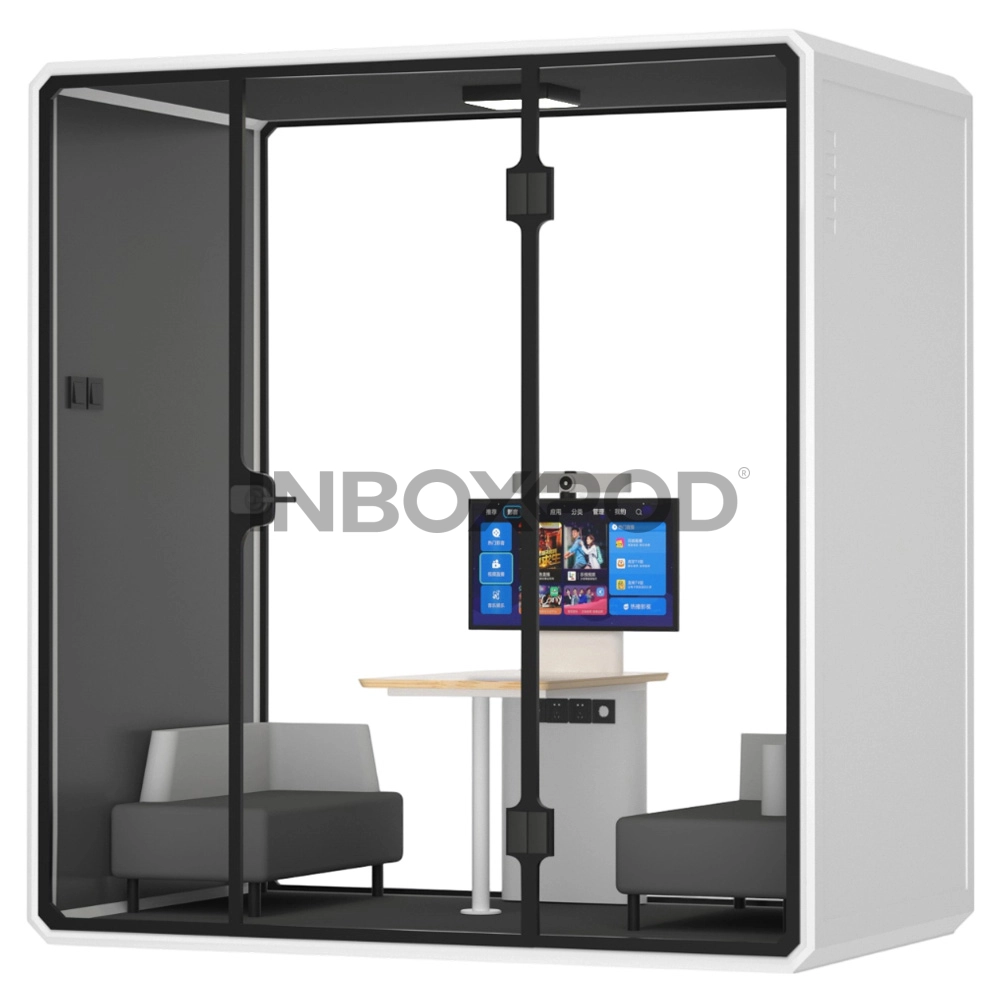
Silence Booth/Office Pod Prefabricated V series-L size
Designed for team collaboration and small meetings, the L-size booth provides a comfortable and acoustically optimized space for 4–6 people. With premium sound insulation, efficient ventilation, and integrated lighting and power systems, it ensures focus, privacy, and productivity—even in the busiest open offices.
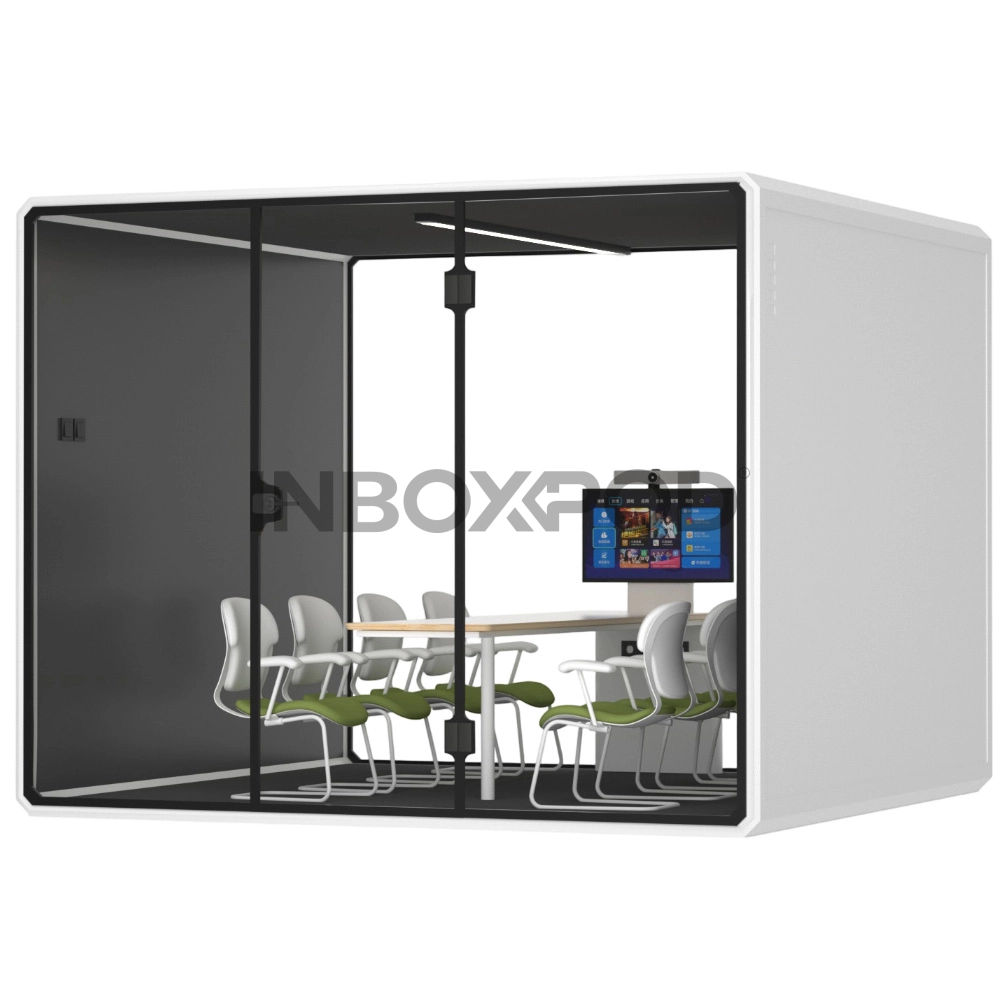
Silence Booth/Office pod Prefabricated V series-XXL size
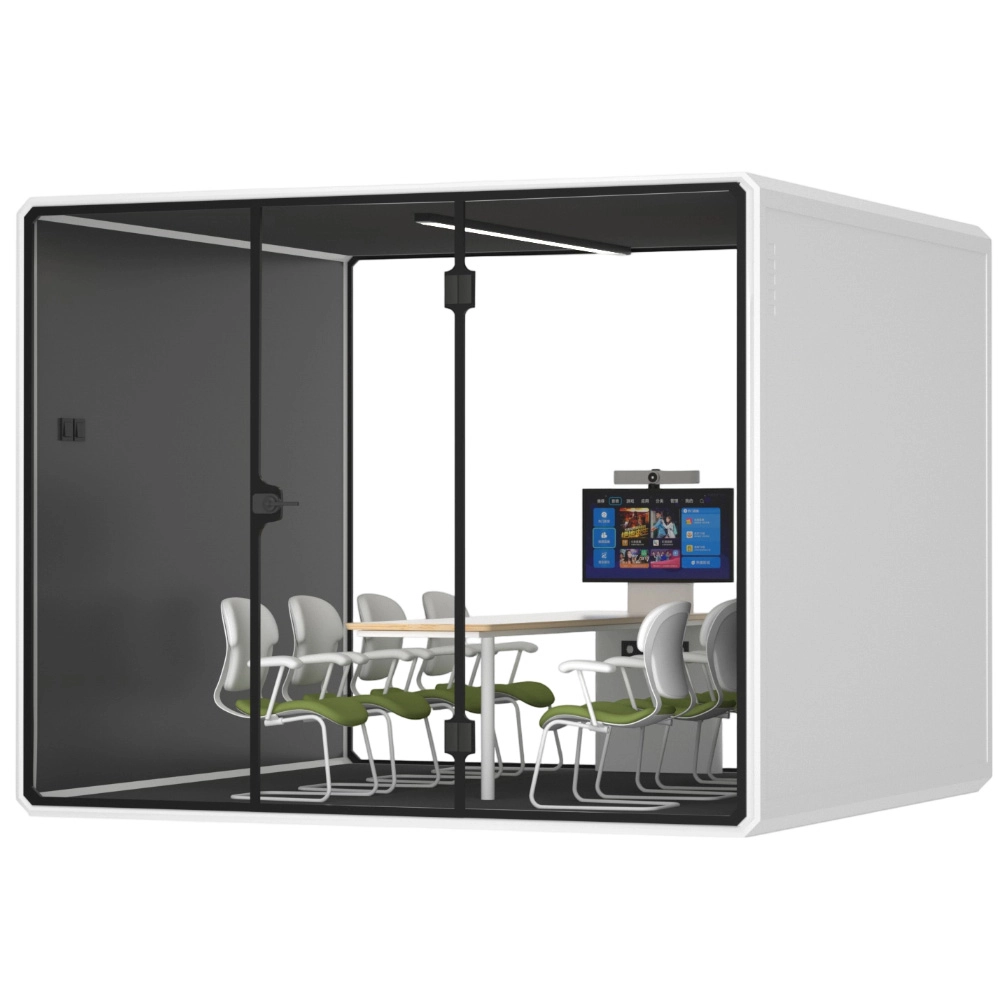
The XXL-size booth is a premium modular acoustic room designed for larger teams and dynamic discussions. With ample interior space for 6–10 people, it provides exceptional sound insulation, effective air circulation, and integrated lighting to ensure comfort during long meetings. Ideal for boardroom sessions, client presentations, and collaborative brainstorming, the XXL booth creates a quiet and productive environment within any workspace.
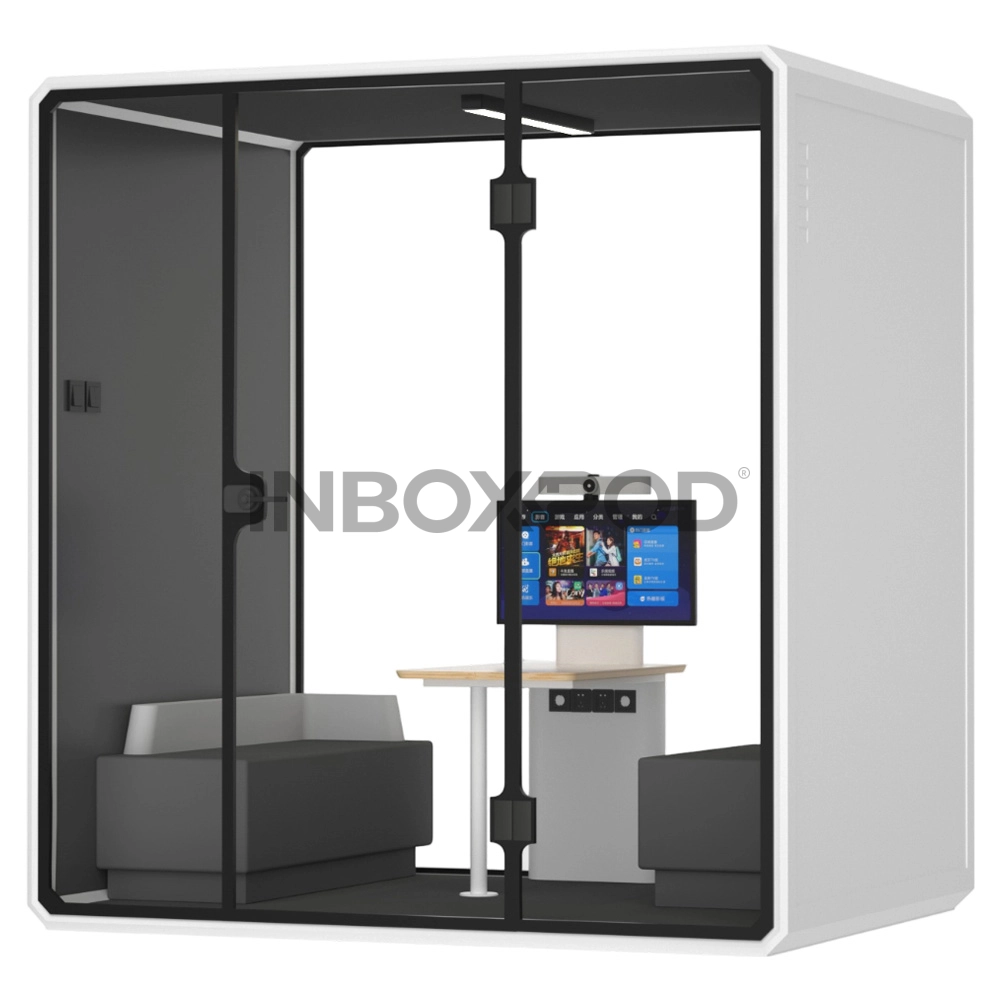
Silence Booth/Office pod Prefabricated V series-XL size
Designed for team collaboration and creative meetings, the XL-size booth provides a spacious and quiet environment that accommodates 4–6 people comfortably. Featuring premium sound insulation, integrated ventilation, and customizable lighting, it transforms any open space into a private meeting room—ideal for brainstorming, interviews, or hybrid meetings.
Whatsapp: +8613535292957