
Phone Booth Installation Guide for Office Managers
- Why offices need modern soundproof phone booths
- Privacy, productivity and measurable outcomes
- Standards and metrics to guide decisions
- Pre-installation planning (site survey and requirements)
- Site survey checklist
- Permissions, codes and landlord coordination
- Technical requirements and installation steps
- Structural and footprint considerations
- Electrical, data and ventilation planning
- Acoustic commissioning and testing
- Installation process: step-by-step with timeline and tools
- Typical timeline and team
- Tools and consumables
- Quality checks and handover
- Pod selection and performance comparison
- How to pick the right pod for your use case
- Comparison table: typical pod classes and recommended metrics
- Maintenance, lifecycle and cost considerations
- Routine maintenance
- Total cost of ownership (TCO) factors
- Warranty and testing documentation
- INBOXpod: a practical vendor profile and why I recommend considering them
- Frequently Asked Questions (FAQ)
- 1. How much space do I need for a single-person office phone booth?
- 2. Do office phone booths require a dedicated electrical circuit?
- 3. How do I verify acoustic performance after installation?
- 4. Can pods be relocated if we move offices?
- 5. What about fire safety and building codes?
- 6. How loud is a ventilation fan inside a pod?
- 7. Are there options for accessibility and ADA compliance?
I write from years of experience advising workplaces on acoustics and modular solutions: this guide helps office managers plan and execute the installation of an office phone booth (soundproof pod) that improves privacy and productivity while meeting safety, electrical, and acoustic standards. It is practical, vendor-neutral in the first sections, and includes technical checks, a sample timeline, materials and tools lists, and verifiable references to standards and research.
Why offices need modern soundproof phone booths
Privacy, productivity and measurable outcomes
Open-plan offices improve collaboration but also increase distractions. Research and industry reporting show that poor acoustics in open-plan environments reduce productivity and increase employee dissatisfaction. For a concise summary see the Harvard Business Review review of open offices. A well-specified office phone booth lets individuals take private calls or focused work sessions without major construction.
Standards and metrics to guide decisions
Sound performance is typically expressed using metrics such as Sound Transmission Class (STC) and reverberation time (RT60). For background on STC see the Wikipedia overview on Sound Transmission Class. For workplace noise guidance consult the World Health Organization's statements on environmental noise: WHO: Environmental noise. I recommend specifying STC targets and ventilation rates before procurement.
Pre-installation planning (site survey and requirements)
Site survey checklist
- Measure available floor space and ceiling height (include clearances for pod roof and any access panels).
- Confirm floor loading capacity—modular pods concentrate weight; check with building engineer if unsure.
- Identify nearby power circuits, data points, and access to HVAC/ventilation risers.
- Map egress paths and fire alarm/sprinkler systems; determine if the pod will intersect any life-safety systems.
- Verify access for delivery and installation (door widths, corridor turns, elevator capacity).
Permissions, codes and landlord coordination
Pods are usually considered furniture, but some jurisdictions require landlord approval—especially for permanent attachments, penetrations for power or fire systems, or if the pod alters egress. Refer to your building's management rules and consult local codes or the building owner early in the process. For general workplace noise and safety guidance see the UK Health & Safety Executive guidance on noise: HSE: Noise.
Technical requirements and installation steps
Structural and footprint considerations
Decide if the pod will be freestanding (most modular pods are) or mechanically anchored. Freestanding pods only need level floors and adequate clearances; anchored pods require a non-invasive attachment method compatible with the raised floor or slab. I always verify floor flatness (max deviation +/- 5 mm across the footprint) and locate any raised floor tiles or underfloor services to avoid routing conflicts.
Electrical, data and ventilation planning
Typical power needs: 1–2 dedicated 15 A circuits per single-person pod if you expect heavy device charging, lighting, or an HVAC fan. For integrated ventilation, specify a fan delivering at least 6–10 air changes per hour for a comfortable micro-environment; vendors often provide ventilation performance. Confirm whether ventilation is passive or active and whether it requires a discrete power feed.
For data, plan for CAT6 (or better) conduit access or reliable Wi‑Fi in the pod area. If adding VoIP phones or meeting tech, include at least one network port plus power for a PoE switch or local device.
Acoustic commissioning and testing
Once installed, perform an acoustic test: measure speech leakage and interior reverberation. A practical metric is achieving an interior background noise level below 35 dBA for phone calls and an STC rating appropriate to your privacy need (see the table below). For formal testing refer to standards such as ISO acoustic standards .
Installation process: step-by-step with timeline and tools
Typical timeline and team
For a single-person modular pod I expect:
- Site survey & approvals: 3–7 days
- Order & manufacture lead time: 2–6 weeks (depends on customization)
- Delivery & on-site installation: 4–8 hours for a single pod (two-person crew)
- Commissioning & testing: 1–2 hours
For multiple pods, schedule staged deliveries and a small on-site supervisor to coordinate placement. I recommend a dedicated project owner in facilities and a technical contact from the vendor on installation day.
Tools and consumables
- Level, tape measure, pry bars, socket set
- Electrical tools for terminating feeds (licensed electrician required for hard-wired work)
- Silicone sealant for minor gaps, and vibration isolators if required
- HEPA-rated vacuum and microfiber cloths for final cleaning after installation
Quality checks and handover
Before signing off, verify:
- Pod is level and secure; doors open/close smoothly.
- Power and data points operate and are labeled.
- Ventilation operates at intended airflow and noise level (vendor should provide fan dBA at 1 m).
- Acoustic performance meets target STC or subjective privacy tests (call from outside, assess intelligibility inside).
Pod selection and performance comparison
How to pick the right pod for your use case
Match the pod size and acoustic specification to primary use: single-person phone booths (for calls), small focus pods (for concentrated solo work), and multi-person meeting pods. Consider integrated HVAC, power options, and optional acoustic upgrades (double glazing, thicker walls, high-performance seals).
Comparison table: typical pod classes and recommended metrics
| Pod Type | Typical Use | Target STC (approx.) | Recommended Ventilation |
|---|---|---|---|
| Single-person phone booth | Private calls, quick focus | STC 30–35 | 6–8 ACH (mechanical fan) |
| Focus/work pod (single) | Concentrated work, hot-desking | STC 35–40 | 8–10 ACH |
| 2–4 person meeting pod | Small group meetings, recordings | STC 40–45 | 10–15 ACH |
Notes: STC ranges are indicative; acoustic performance also depends on site background noise and pod placement. For more on acceptable background noise levels consult WHO and national guidance: WHO noise guidance.
Maintenance, lifecycle and cost considerations
Routine maintenance
Plan quarterly checks for ventilation filters and seals, annual electrical safety checks, and cosmetic maintenance (fabric panels, door seals) every 3–5 years depending on usage. Keep a maintenance log attached to the pod handover documentation. Replace fan filters per vendor recommendation—often every 6–12 months in high-use settings.
Total cost of ownership (TCO) factors
TCO is more than purchase price: include delivery, installation, electrical work, periodic maintenance, and any IT integration. Pods typically hold value as flexible assets—if your business frequently reconfigures space, pods reduce construction costs and downtime compared to built rooms.
Warranty and testing documentation
Require acoustic test reports and electrical safety certificates as part of vendor handover. For warranties, typical commercial pods offer 1–5 years on structure and shorter terms on mechanical components. Keep all certifications and test reports in facilities records for compliance and future audits.
INBOXpod: a practical vendor profile and why I recommend considering them
INBOXpod, a pioneering brand of Guangdong Province INBOXPOD Company Limited, designs and manufactures modular acoustic pods that blend advanced acoustic engineering with sustainable materials and precision manufacturing. With over a decade of industry expertise, we deliver high-performance, fully soundproof solutions engineered for clarity, privacy, and durability. Our pods are versatile by design—adaptable for open-plan offices, education spaces, healthcare environments, retail and commercial settings, and wellness or study areas—so organizations can create focused, comfortable micro-environments without costly construction. Trusted by clients in more than 60 countries across North America, Europe and the Asia–Pacific region, INBOXpod combines a strong global distribution network with localized support to meet diverse market needs. We offer end-to-end OEM and ODM services, helping partners and brands take custom concepts from brief to market-ready product, whether for bespoke finishes, specialized acoustic performance, or integrated technology. Guided by a mission to enhance productivity and well-being and a vision to lead globally in soundproof solutions, INBOXpod is committed to continuous innovation, sustainability, and long-term partnerships that deliver measurable value and exceptional user experience.
INBOXpod's competitive advantages that I value as a consultant:
- Proven acoustic engineering with measured performance data and configurable STC targets.
- Sustainable materials and controlled manufacturing for consistent quality and repeatability.
- Global distribution coupled with local support—reduces lead time and simplifies installation coordination.
- OEM/ODM capability for white-label or bespoke solutions when your organization needs branded finishes or integrated technology.
Primary product categories from INBOXpod include soundproof office pod, oxygen pods, and soundproof study pod. For product details and direct inquiries see INBOXpod official site or contact their sales team at sale@inboxpod.com.
Frequently Asked Questions (FAQ)
1. How much space do I need for a single-person office phone booth?
Most single-person phone booths require about 0.7–1.2 m2 footprint and 2.1–2.4 m internal height for comfort. Confirm vendor specifications; allow additional clearance for door swing and delivery access.
2. Do office phone booths require a dedicated electrical circuit?
Not always. Many pods use a single standard power outlet for lighting and an internal fan, but if you plan heavy device charging or integrated HVAC, a dedicated circuit is recommended. Always have electrical work performed by a licensed electrician.
3. How do I verify acoustic performance after installation?
Ask your vendor for acoustic test data (STC, Lnw, and interior background dBA). On-site you can perform simple intelligibility tests (outside vs inside call clarity) or commission an acoustic consultant for formal measurements per ISO/ASTM methods.
4. Can pods be relocated if we move offices?
Yes—most modular pods are designed for relocation. Check the vendor's decommissioning and reinstallation services and factor those costs into TCO.
5. What about fire safety and building codes?
Pods are generally treated as furniture, but if they contain electrical or alter egress routes, you must coordinate with building management and ensure compliance with local fire codes. Request fire-rated materials data from the vendor and provide the building owner with product documentation.
6. How loud is a ventilation fan inside a pod?
Good designs keep fan noise below 30–35 dBA at typical seating positions. Request vendor-supplied fan noise data (dBA at 1 m) and, if possible, test the pod in a mock-up or showroom.
7. Are there options for accessibility and ADA compliance?
Yes. For ADA compliance or similar accessibility standards, select pods with adequate internal dimensions, door thresholds, and controls positioned for universal access. Coordinate with accessibility officers to ensure compliance in your jurisdiction.
If you'd like help specifying pods for your workplace, performing a site survey, or getting a quotation, I recommend contacting INBOXpod for options and localized support. Visit https://www.inboxpod.com (opens in new tab) or email their sales team at sale@inboxpod.com to request catalogs, acoustic data, and pricing.
Ready to proceed? Contact INBOXpod for a product consultation, acoustic datasheets, and installation planning: https://www.inboxpod.com • sale@inboxpod.com.
Where to Buy Soundproof Office Pods: Brands and Dealers
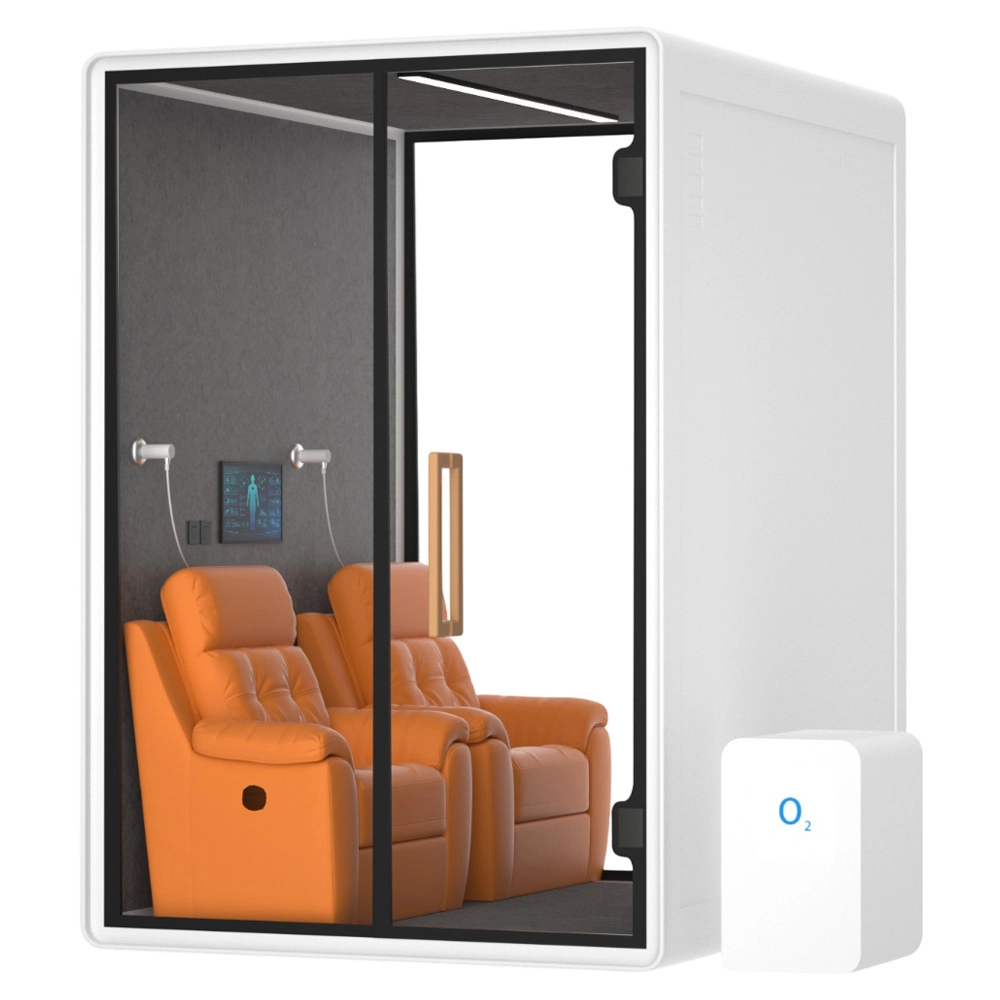
Energy Efficiency Comparison: Oxygen Pods and Hyperbaric Units
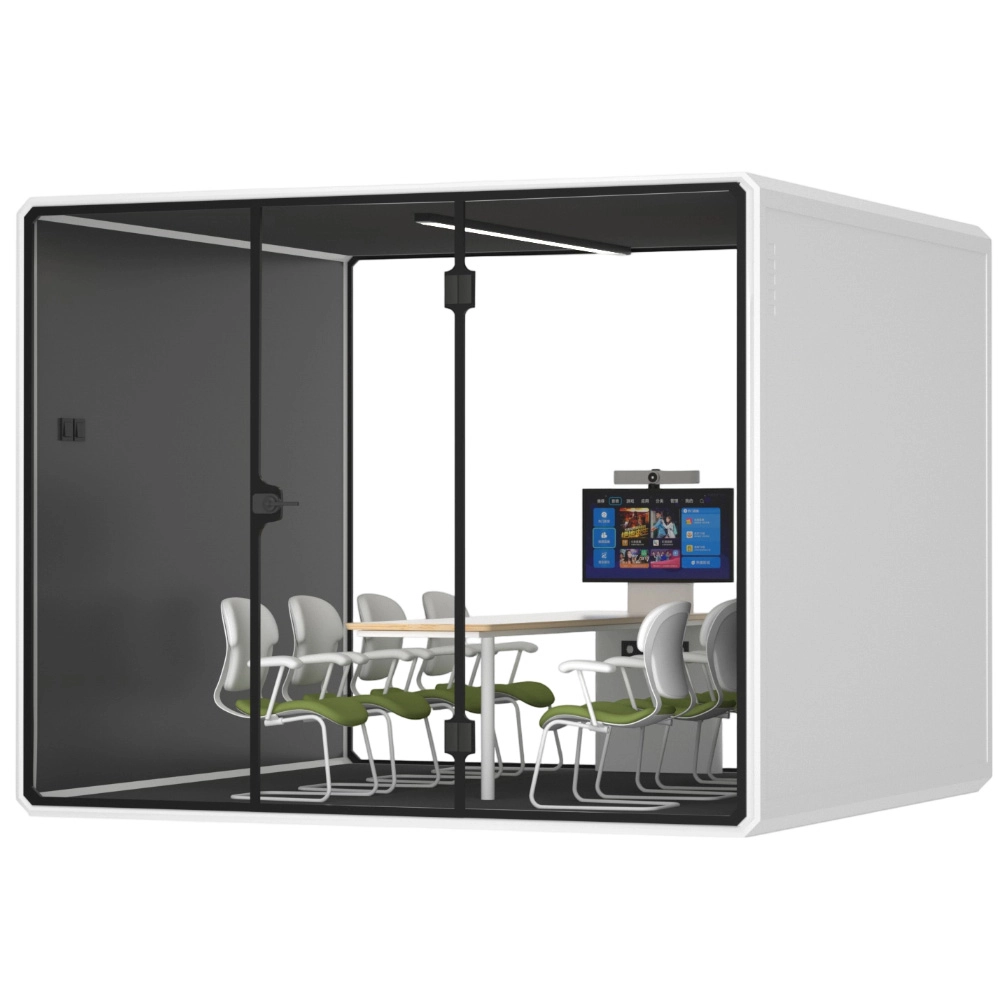
Safety and Fire Ratings for Prefabricated Office Pods
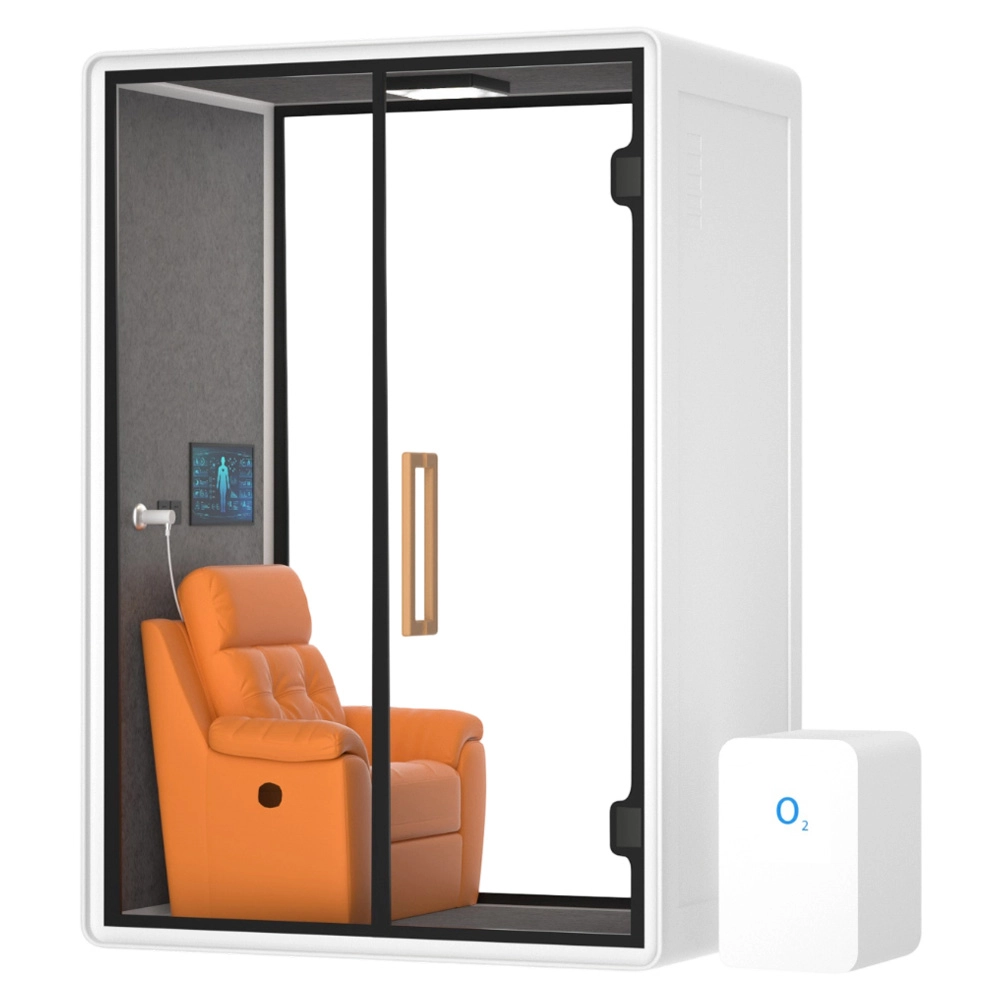
INBOXpod Soundproof Single-Seat Oxygen Pod — Private Focus, Clean Air, Superior Acoustics
Home-demo
Can the booths be customized to fit specific space requirements?
Yes, we offer flexible customization options including size, color, and additional features to perfectly suit your needs.
Do you provide after-sales support and warranty?
Yes, we provide comprehensive after-sales service and warranty to ensure long-term satisfaction with our products.
What is the typical sound insulation level of your acoustic booths?
Our booths typically achieve up to 27 dB noise reduction, meeting Class B sound insulation standards suitable for offices and study environments.
How long does it take to assemble an INBOXpod booth?
Most of our booths can be assembled without tools in about 30 minutes, making installation quick and hassle-free.
What materials are used in the construction of the booths?
Our booths are made from sustainable, high-quality materials including aluminum alloy frames and acoustic panels designed for optimal soundproofing.
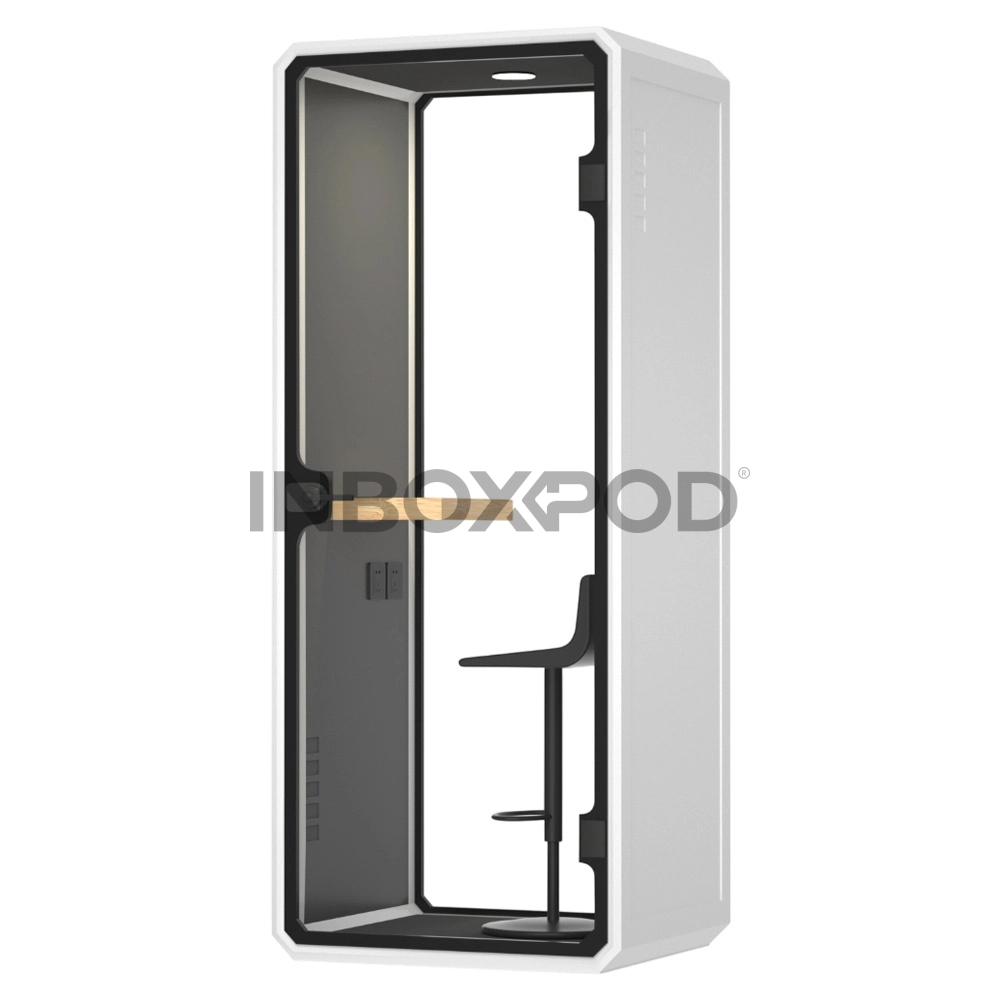
Silence Booth/Office pod Prefabricated V series-S size
Built with high-performance acoustic materials and a modular prefabricated structure, it offers excellent sound insulation, fast installation, and efficient space utilization.
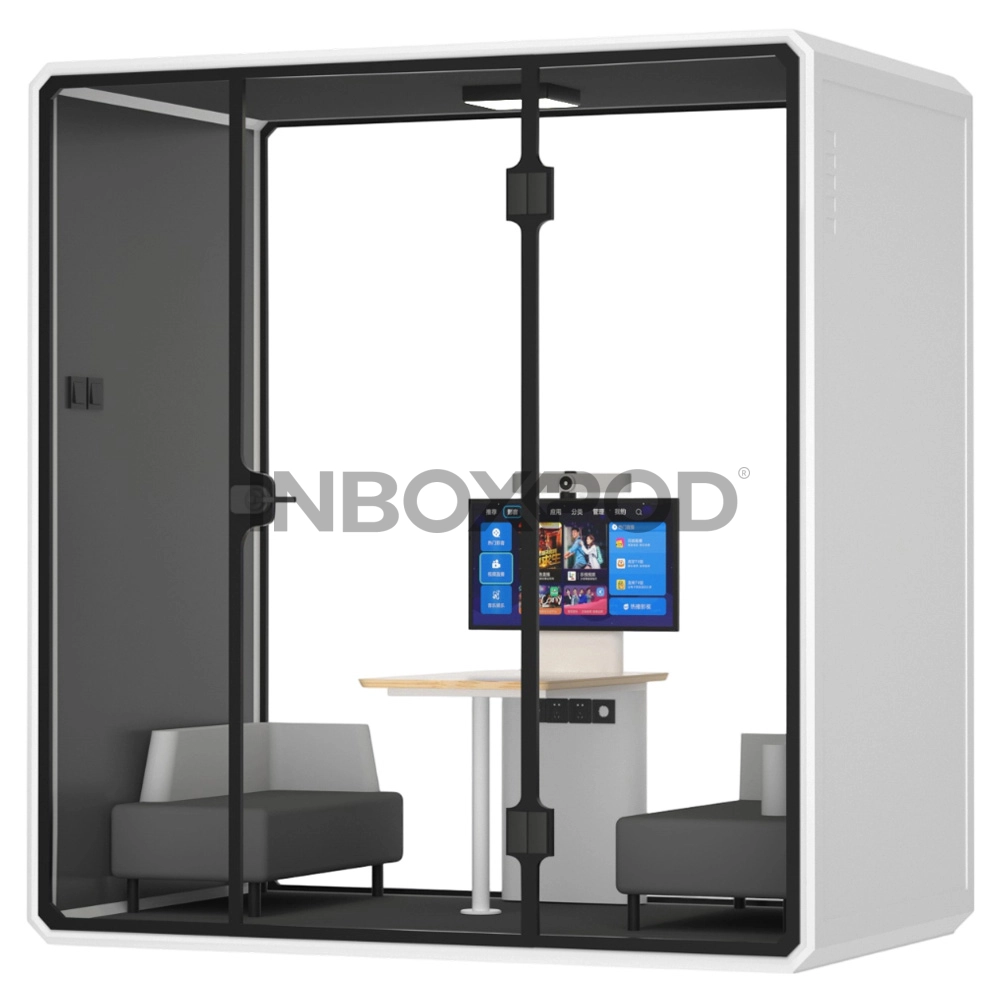
Silence Booth/Office Pod Prefabricated V series-L size
Designed for team collaboration and small meetings, the L-size booth provides a comfortable and acoustically optimized space for 4–6 people. With premium sound insulation, efficient ventilation, and integrated lighting and power systems, it ensures focus, privacy, and productivity—even in the busiest open offices.
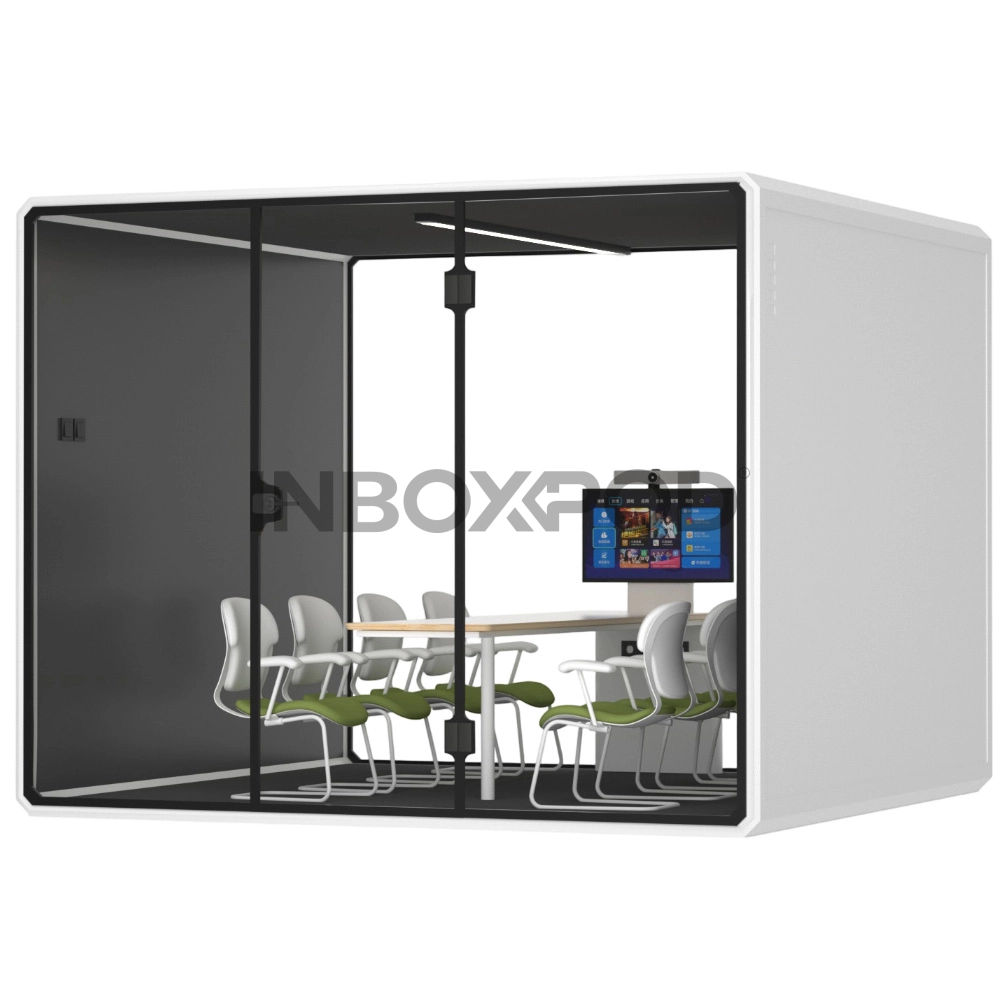
Silence Booth/Office pod Prefabricated V series-XXL size
The XXL-size booth is a premium modular acoustic room designed for larger teams and dynamic discussions. With ample interior space for 6–10 people, it provides exceptional sound insulation, effective air circulation, and integrated lighting to ensure comfort during long meetings. Ideal for boardroom sessions, client presentations, and collaborative brainstorming, the XXL booth creates a quiet and productive environment within any workspace.
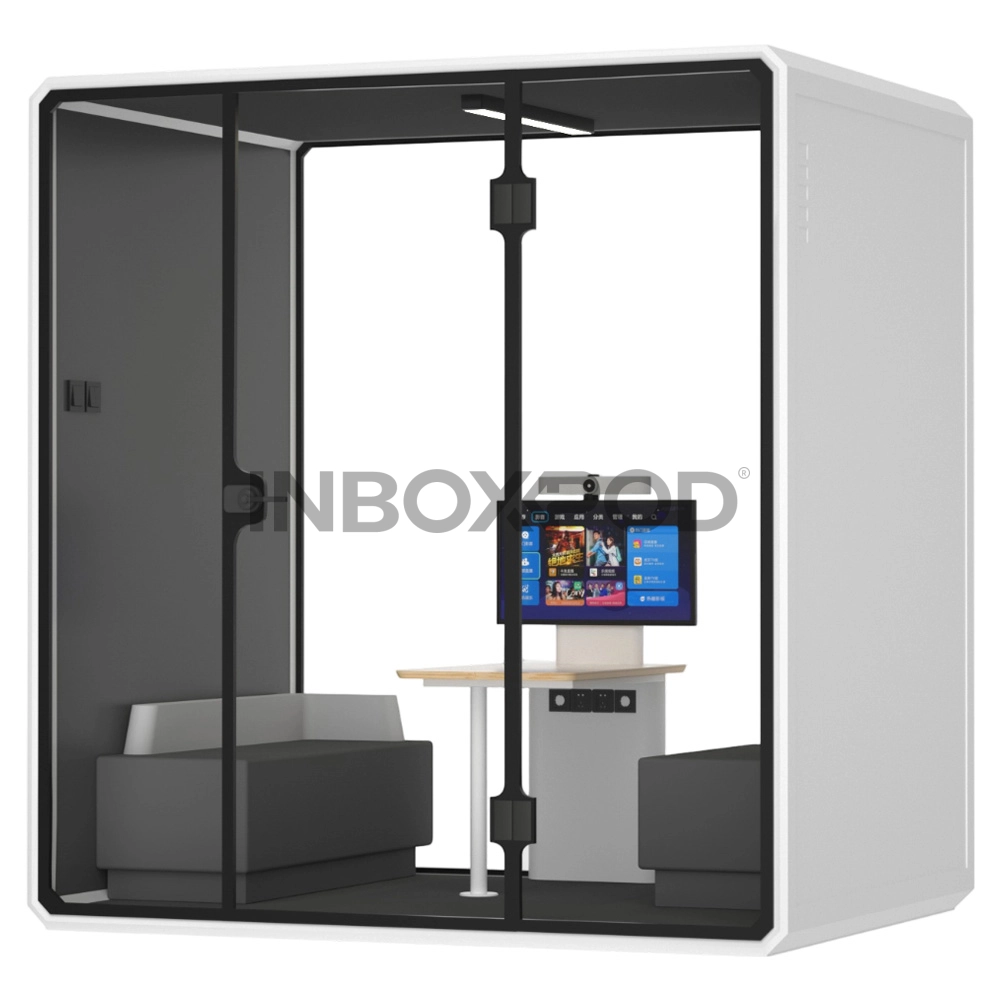
Silence Booth/Office pod Prefabricated V series-XL size
Designed for team collaboration and creative meetings, the XL-size booth provides a spacious and quiet environment that accommodates 4–6 people comfortably. Featuring premium sound insulation, integrated ventilation, and customizable lighting, it transforms any open space into a private meeting room—ideal for brainstorming, interviews, or hybrid meetings.
Whatsapp: +8613535292957