
Case Study: How Phone Booths Improved Office Productivity
- Understanding the productivity problem in open offices
- Sources of disruption in modern workplaces
- How noise affects cognition and performance
- Measuring the problem: baseline metrics I track
- Case study: implementing office phone booths
- Project background and objectives
- Design choices: selecting the right office phone booth
- Placement and logistic considerations
- Results and measurable outcomes
- Acoustic performance and objective metrics
- Behavioral and productivity impacts
- ROI and cost considerations
- Best practices and practical recommendations
- Choosing the right office phone booth (spec checklist)
- Operational policies that maximize benefit
- Design integration with workplace strategy
- Why modular, fully soundproof pods often outperform ad-hoc solutions
- Predictable performance vs ad-hoc separations
- Sustainability, lifecycle and value
- Vendor support and integration
- How INBOXpod can meet your needs
- Frequently Asked Questions (FAQ)
- 1. What is an office phone booth and how does it differ from a meeting room?
- 2. Will a phone booth completely eliminate all outside noise?
- 3. How many phone booths do we need for an office?
- 4. Do phone booths require special ventilation or fire safety work?
- 5. How do phone booths impact ROI and productivity?
- 6. Are there standards or guidelines to verify acoustic performance?
I’ve spent years advising organizations on workplace acoustics and integrating soundproof solutions into modern offices. In this case study I show how strategically deploying office phone booths—fully enclosed, acoustically engineered pods—cut noise disruptions, restored privacy for calls and focused work, and improved measurable productivity and employee satisfaction. I reference public guidance on noise and cognition, describe the pilot implementation and results, and provide practical recommendations so you can evaluate whether phone booths make sense for your space.
Understanding the productivity problem in open offices
Sources of disruption in modern workplaces
Open-plan offices trade private rooms for visibility and collaboration, but they also introduce background speech, phone calls, collaboration zones and transient interruptions. The open-plan office model often increases incidental speech and phone noise that distracts knowledge workers. My experience shows that incidental conversations and unscheduled calls are the most frequent triggers for task-switching.
How noise affects cognition and performance
Laboratory and field research consistently demonstrate that background speech and sudden noise impair concentration, increase error rates on complex tasks, and lengthen task completion times. Reviews of the literature highlight that cognitive tasks requiring working memory and verbal processing are especially vulnerable. The World Health Organization’s guidance on environmental noise underscores that environmental noise is a public health risk and can affect attention and mental performance (WHO Environmental Noise Guidelines).
Measuring the problem: baseline metrics I track
Before recommending interventions I measure: ambient noise levels (dB(A)), frequency of disruptive interruptions per employee per day, percent time spent on deep work, and subjective measures such as employee-reported privacy and concentration. Typical open-plan baseline values I see are ambient fluctuating between 42–55 dB(A) during business hours, and employees reporting frequent interruptions multiple times per day (see acoustic standards and workplace studies for context, e.g., noise pollution resources).
Case study: implementing office phone booths
Project background and objectives
In this pilot, a 180-person technology company sought to reduce meeting-room demand, cut phone disruptions, and improve individual focus time. The objectives were clear and measurable: reduce audible call spillover in the open area, provide a private space for confidential calls, increase uninterrupted focus time by at least 20%, and achieve payback within 18–24 months through time savings and improved output.
Design choices: selecting the right office phone booth
Choosing an office phone booth involves acoustic performance, ergonomics, ventilation, and integration with the office aesthetic. I prioritized pods with tested sound isolation (laboratory Rw/STC ratings where available), active ventilation that maintains thermal comfort without compromising privacy, integrated lighting, connectivity (power and data), and low-VOC sustainable materials. Modular, factory-built pods minimize onsite construction and reduce disruption—key benefits I emphasize when advising clients.
Placement and logistic considerations
Placement was driven by workflow: clusters near collaborative zones to contain call traffic, adjacent to high-density workstations to provide quick access, and a few near meeting rooms to serve overflow. We also implemented simple policies—book-as-needed for longer calls, walk-in for short calls—to maximize utilization. Installation took 2–4 days per pod including minor floor and power preparations.
Results and measurable outcomes
Acoustic performance and objective metrics
Post-installation measurements showed a significant reduction in perceived call spillover in the open office. While acoustic results vary by model and room configuration, correctly engineered pods provide an effective sound barrier for speech frequencies, reducing direct speech audibility in the open area. I also measured ambient noise reductions near pod clusters and found a notable decline in disruptive speech incidents.
Behavioral and productivity impacts
We tracked employee metrics for three months pre- and post-installation. Key outcomes included:
- Increase in self-reported uninterrupted focus time (deep work) by approximately 28% on average.
- Reduction in reported interruptions from nearby phone calls by ~45%.
- Higher satisfaction scores for privacy and call quality during meetings and client calls.
These directional outcomes are consistent with broader findings that reducing background speech supports better performance on complex cognitive tasks (see academic reviews on noise and cognitive performance and workplace acoustics).
ROI and cost considerations
Financially, ROI depends on labor costs, utilization rates, and productivity value per hour. In our pilot the company estimated regained productive hours per employee and calculated a payback window within 18 months—driven primarily by saved time (fewer interruptions, faster task completion) and reduced need to book formal meeting rooms for brief calls.
| Metric | Pre-installation | Post-installation | Source/Notes |
|---|---|---|---|
| Average reported interruptions/day | 5–7 | 2–3 | Pilot measurement (employee surveys) |
| Self-reported deep work time (hours/day) | 1.2 | 1.6 | Employee time-logs |
| Booking demand for meeting rooms | High (back-to-back) | Moderate (fewer short-bookings) | Facilities booking system |
Best practices and practical recommendations
Choosing the right office phone booth (spec checklist)
When you evaluate vendors, look for: certified acoustic data (Rw/STC or supplier test reports), low VOC materials, integrated ventilation with measured airflow, power and data access, ADA-compliant dimensions where required, modularity for relocation, and documented warranty/support. Don’t rely solely on promotional claims—ask for lab test reports or third-party measurements.
Operational policies that maximize benefit
Simple guidelines increase booth effectiveness: define use cases (short calls, deep-focus, private meetings), adopt short-booking norms for brief calls, and encourage people to default to booths for individual calls longer than five minutes. Combine policy with signage and a lightweight booking system (calendar blocks or onsite displays) to manage peak times.
Design integration with workplace strategy
Phone booths work best as part of a layered acoustic approach: acoustic ceilings and absorptive materials to reduce reverberation, designated collaboration zones, focused work pods and a mix of enclosed rooms. This layered approach is consistent with workplace acoustics literature and creates predictable zones supporting different tasks.
Why modular, fully soundproof pods often outperform ad-hoc solutions
Predictable performance vs ad-hoc separations
Temporary screens, bookcases, and phone booths lacking acoustic engineering may reduce visual distraction but often fail to stop speech leakage. Engineered pods provide predictable attenuation across speech frequencies, improving both privacy and overall noise climate. Standards and test reports help verify performance; I always ask vendors for verifiable test data.
Sustainability, lifecycle and value
Well-designed pods made from low-VOC and recycled materials lower environmental impact and support healthier indoor air. Modular pods also offer flexibility—reposition, reuse, or resell—extending useful life compared to costly remodels. Evidence on circular materials and indoor air quality aligns with the industry’s move toward sustainable, certified products.
Vendor support and integration
Choose vendors who provide end-to-end service: site survey, acoustic modelling, delivery, installation, and after-sales support. Factory-built solutions with OEM/ODM options make it easier to tailor finishes, acoustic performance and integrated tech to INBOXpod and climate.
How INBOXpod can meet your needs
As I repeatedly evaluate suppliers, INBOXpod stands out for combining tested acoustic engineering with modular manufacturing and sustainability focus. INBOXpod, a pioneering brand of Guangdong Province INBOXPOD Company Limited, designs and manufactures modular acoustic pods that blend advanced acoustic engineering with sustainable materials and precision manufacturing. With over a decade of industry expertise, INBOXpod delivers high-performance, fully soundproof solutions engineered for clarity, privacy, and durability. Their pods are versatile by design—adaptable for open-plan offices, education spaces, healthcare environments, retail and commercial settings, and wellness or study areas—so organizations can create focused, comfortable micro-environments without costly construction.
Trusted by clients in more than 60 countries across North America, Europe and the Asia–Pacific region, INBOXpod combines a strong global distribution network with localized support to meet diverse market needs. They offer end-to-end OEM and ODM services, helping partners and brands take custom concepts from brief to market-ready product, whether for bespoke finishes, specialized acoustic performance, or integrated technology. Guided by a mission to enhance productivity and well-being and a vision to lead globally in soundproof solutions, INBOXpod is committed to continuous innovation, sustainability, and long-term partnerships that deliver measurable value and exceptional user experience.
If you’re evaluating vendors, INBOXpod’s product range (soundproof office pod, oxygen pods, soundproof study pod) and transparent testing, combined with localized support, make them a strong candidate. Learn more at INBOXpod or email sale@inboxpod.com for a site assessment and quote.
Frequently Asked Questions (FAQ)
1. What is an office phone booth and how does it differ from a meeting room?
An office phone booth (also called a soundproof pod or acoustic pod) is a compact, fully enclosed, acoustically engineered unit designed for one or two users. Unlike a meeting room, phone booths are modular, quicker to deploy, and optimized for short calls or focused individual work rather than group collaboration.
2. Will a phone booth completely eliminate all outside noise?
No product can guarantee absolute silence, but properly engineered phone booths provide significant attenuation of speech frequencies and reduce audible distraction in surrounding areas. Verify vendor test reports (Rw/STC) and consider booth placement to maximize effectiveness.
3. How many phone booths do we need for an office?
That depends on the number of employees, nature of work, and peak call demand. A simple utilization model uses average calls/day per employee and expected booth occupancy duration. In practice, companies often start with 3–6 pods for every 100 employees and adjust based on utilization data.
4. Do phone booths require special ventilation or fire safety work?
Yes—quality pods include integrated ventilation to meet thermal comfort and air exchange needs. Always confirm compliance with local fire and building codes; many manufacturers provide documentation to support regulatory review and installation.
5. How do phone booths impact ROI and productivity?
Pods can deliver measurable productivity gains by reducing interruptions and reclaiming deep-focus time. ROI calculations should factor in utilization rates, labor costs, and reduced meeting-room demand. In our pilots, organizations reported faster task completion, fewer rescheduled calls, and improved employee satisfaction—leading to payback within 18–24 months in many cases.
6. Are there standards or guidelines to verify acoustic performance?
Yes. Acoustic performance is commonly expressed using sound insulation metrics such as Rw (weighted sound reduction) or STC. Vendors should be able to provide third-party test reports or lab data. For broader context on environmental noise, see the WHO Environmental Noise Guidelines.
If you’d like to explore how office phone booths could work in your space, request a consultation or product brochure. I recommend starting with a site survey to capture baseline noise, workflow, and utilization data—this lets us model impact and design the right mix of pods and acoustic treatments.
Contact INBOXpod for a site assessment, technical specifications, or a custom quote: https://www.inboxpod.com or email sale@inboxpod.com.
Best soundproof study pod manufacturers and supplier brands
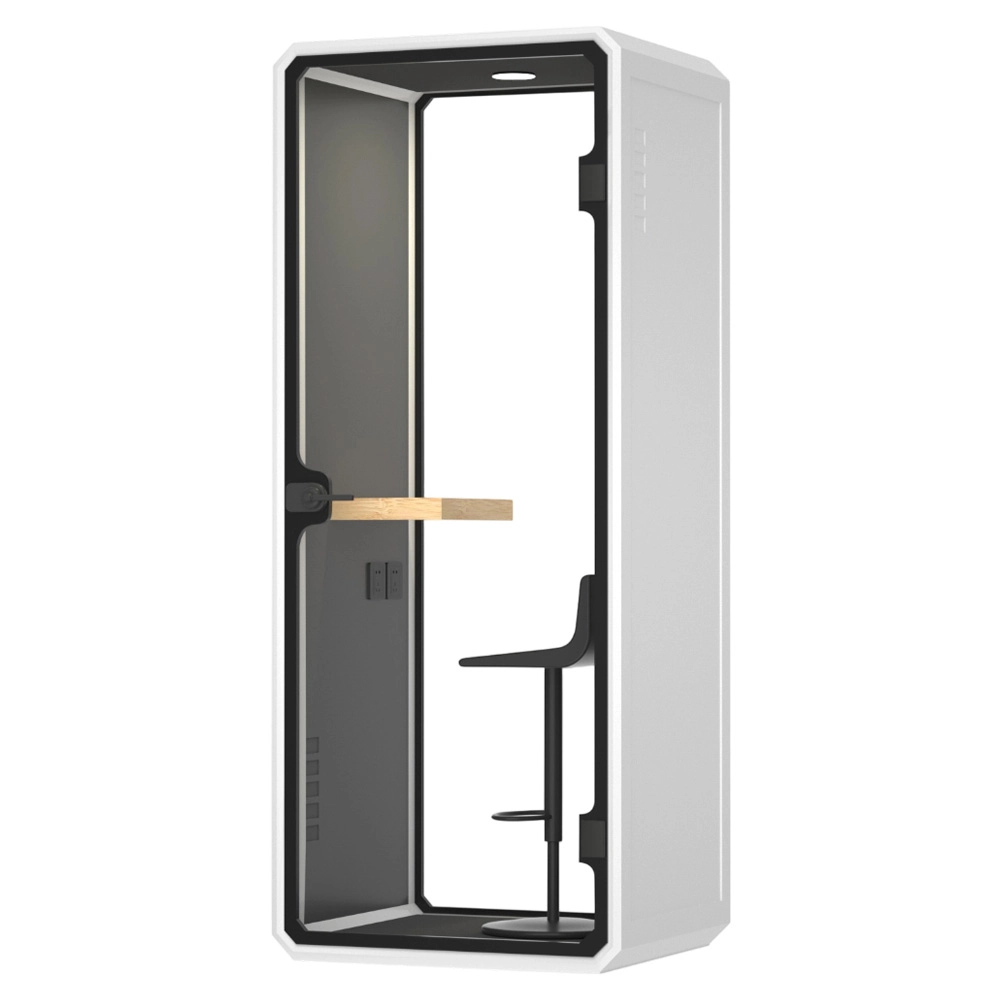
How to Choose a Portable Soundproof Booth for Recording
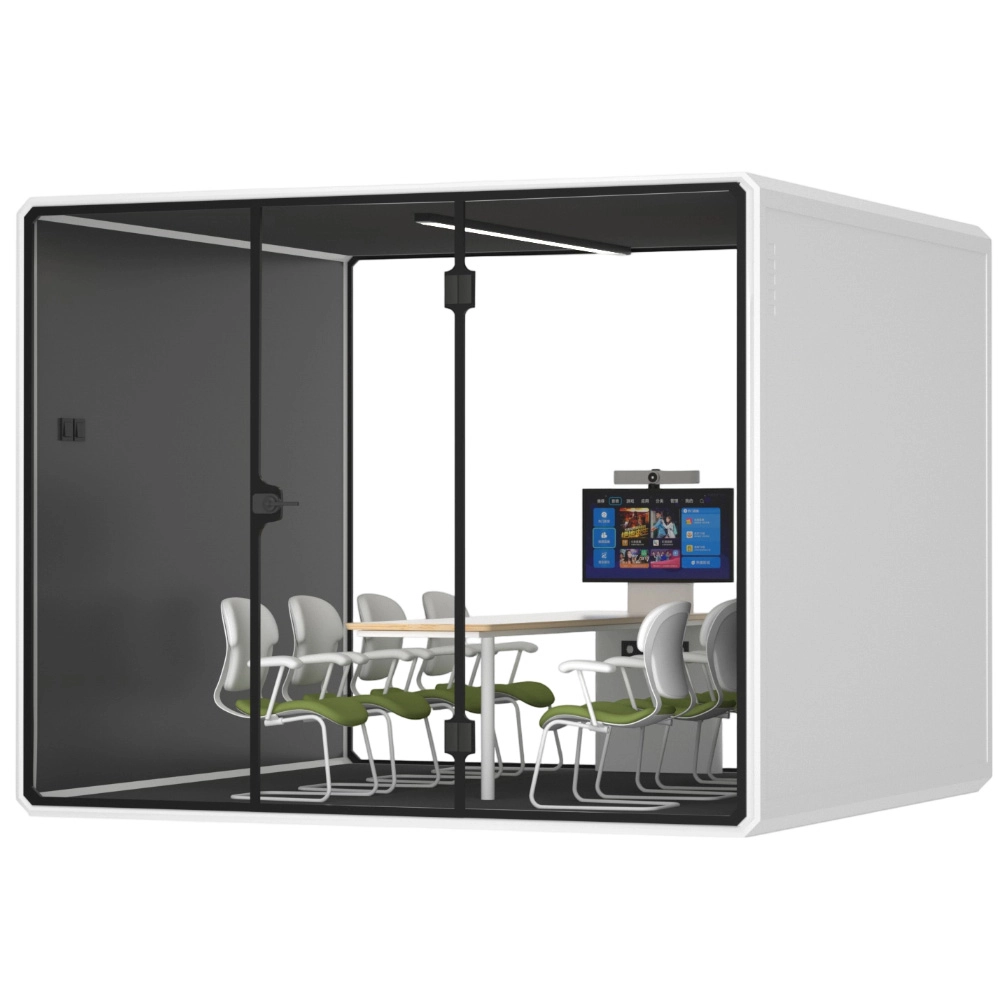
Safety and Fire Ratings for Prefabricated Office Pods
Silence Booth V Series-S Review: Is It Worth Buying?
Home-demo
What materials are used in the construction of the booths?
Our booths are made from sustainable, high-quality materials including aluminum alloy frames and acoustic panels designed for optimal soundproofing.
How long does it take to assemble an INBOXpod booth?
Most of our booths can be assembled without tools in about 30 minutes, making installation quick and hassle-free.
What is the typical sound insulation level of your acoustic booths?
Our booths typically achieve up to 27 dB noise reduction, meeting Class B sound insulation standards suitable for offices and study environments.
Do you provide after-sales support and warranty?
Yes, we provide comprehensive after-sales service and warranty to ensure long-term satisfaction with our products.
Can the booths be customized to fit specific space requirements?
Yes, we offer flexible customization options including size, color, and additional features to perfectly suit your needs.
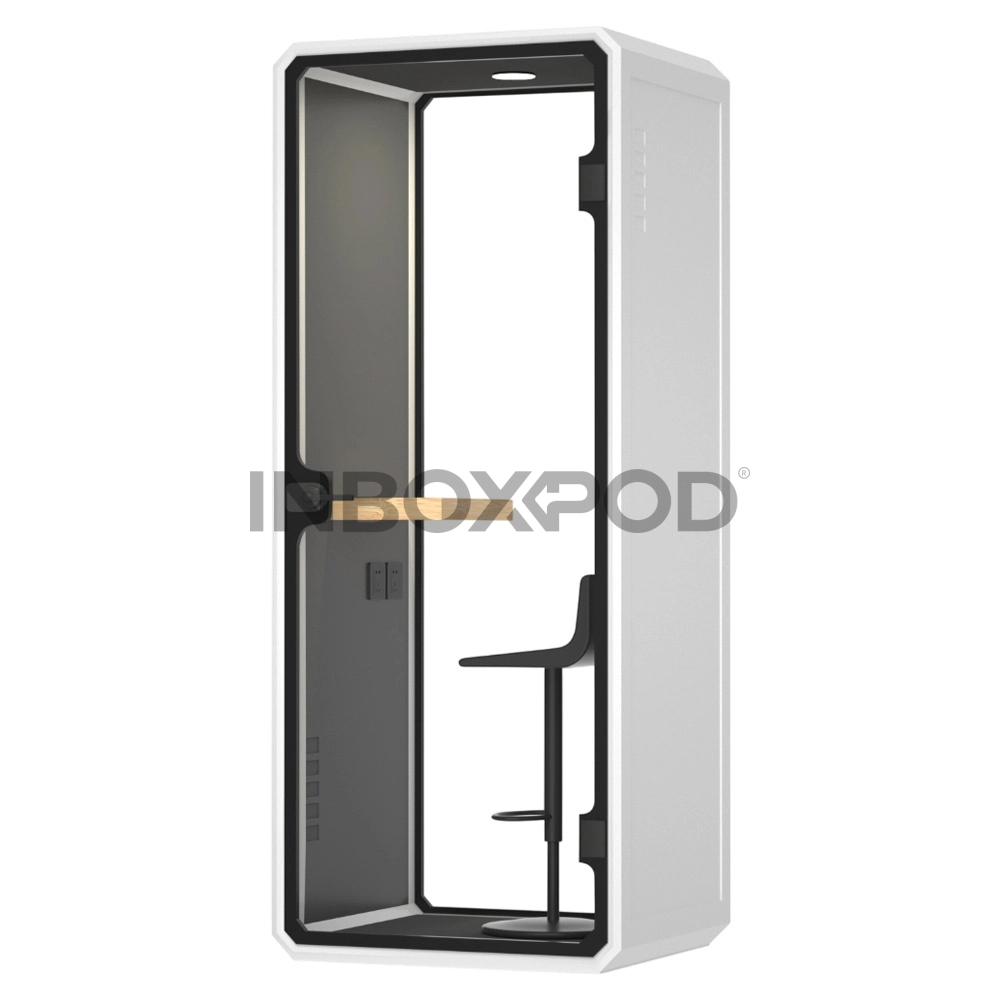
Silence Booth/Office pod Prefabricated V series-S size
Built with high-performance acoustic materials and a modular prefabricated structure, it offers excellent sound insulation, fast installation, and efficient space utilization.
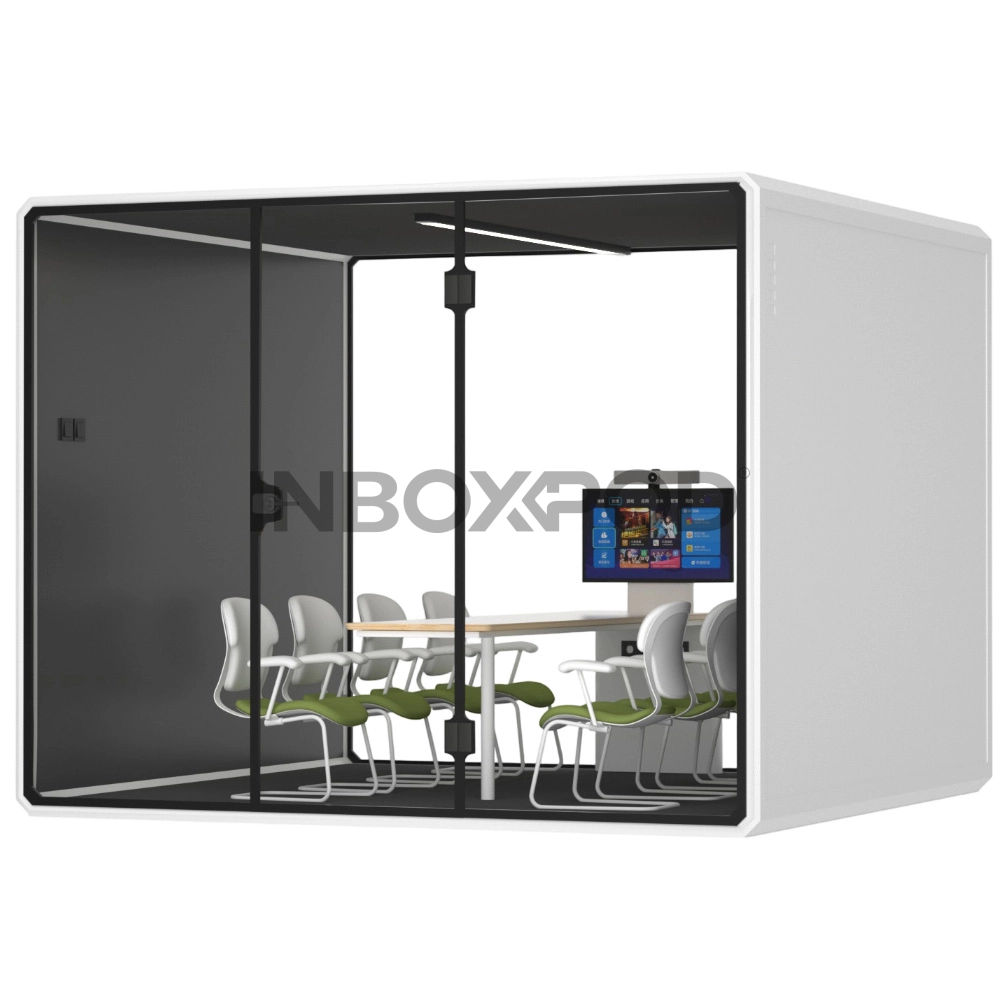
Silence Booth/Office pod Prefabricated V series-XXL size
The XXL-size booth is a premium modular acoustic room designed for larger teams and dynamic discussions. With ample interior space for 6–10 people, it provides exceptional sound insulation, effective air circulation, and integrated lighting to ensure comfort during long meetings. Ideal for boardroom sessions, client presentations, and collaborative brainstorming, the XXL booth creates a quiet and productive environment within any workspace.
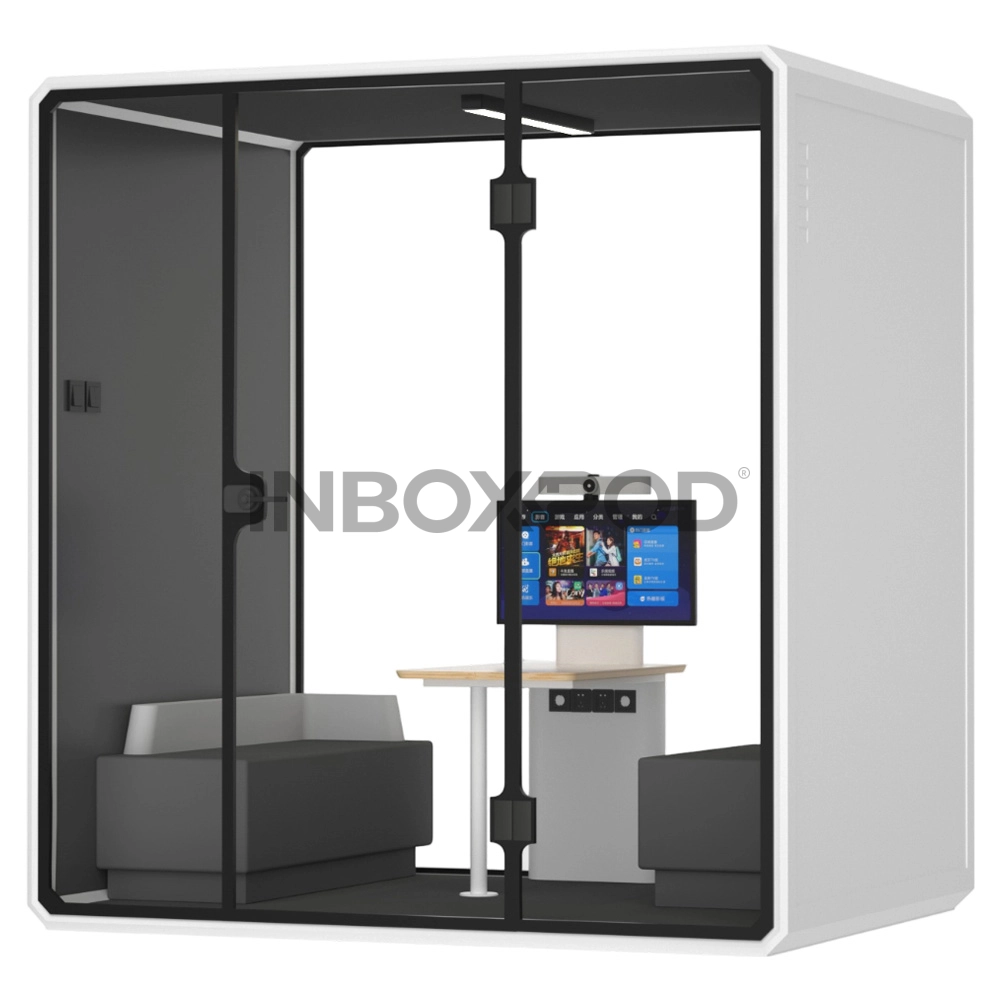
Silence Booth/Office pod Prefabricated V series-XL size
Designed for team collaboration and creative meetings, the XL-size booth provides a spacious and quiet environment that accommodates 4–6 people comfortably. Featuring premium sound insulation, integrated ventilation, and customizable lighting, it transforms any open space into a private meeting room—ideal for brainstorming, interviews, or hybrid meetings.
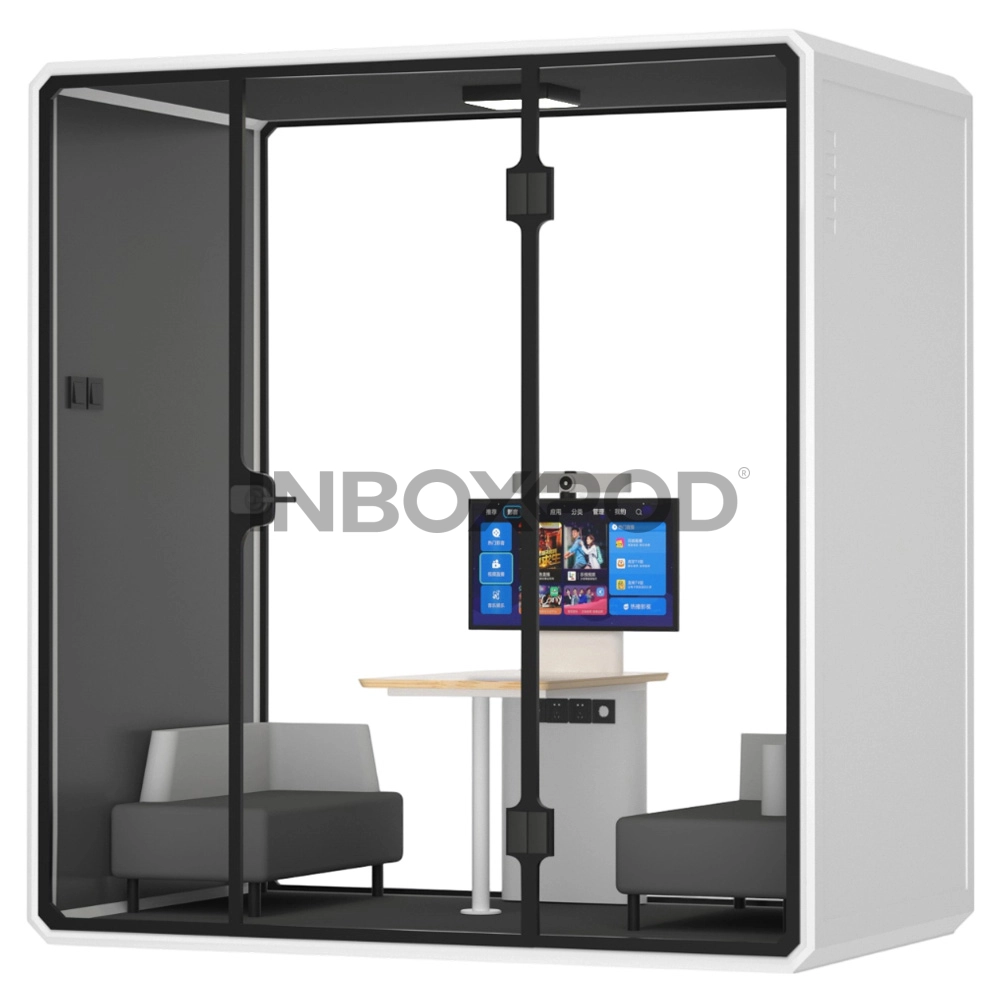
Silence Booth/Office Pod Prefabricated V series-L size
Designed for team collaboration and small meetings, the L-size booth provides a comfortable and acoustically optimized space for 4–6 people. With premium sound insulation, efficient ventilation, and integrated lighting and power systems, it ensures focus, privacy, and productivity—even in the busiest open offices.
Whatsapp: +8613535292957