
The Ultimate Guide to Portable Soundproof Booths: 2026 Professional Selection & Tech Trends
- What is a Portable Soundproof Booth?
- Quick Summary: Key Takeaways for 2026 Buyers
- Isolation vs. Treatment: The Science of Soundproof Booths
- Industry-Leading Solutions: Choosing Your Tiers
- 1. Entry-Level: Desktop Shields
- 2. Mid-Range: Soft-Sided Enclosures
- 3. Premium: Rigid Mobile Pods
- Expert Tips: 5 Common Mistakes to Avoid
- The DIY Path: Building Your Own Mobile Studio
- The Future of Portable Acoustics (2026+)
- Frequently Asked Questions (FAQ)
- References
With the global soundproof office booth market projected to reach $512 million by 2025 and growing at a CAGR of 8.9%, the demand for private, acoustically controlled environments is at an all-time high. Whether for remote work, professional voice-overs, or open-plan office privacy, selecting the right isolation tool is critical. This guide combines expert insights with data from leading manufacturers like INBOXpod to help you navigate the 2026 landscape of portable acoustics.
What is a Portable Soundproof Booth?
A portable soundproof booth is a modular, lightweight enclosure designed to reduce ambient noise and eliminate room reflections for audio recording or private communication.
Unlike fixed studio construction, which requires permanent renovation, these units utilize high-density acoustic materials to provide an isolated environment that can be collapsed or moved. They are the essential bridge between a professional studio and a chaotic home office, allowing users to achieve a "dry" sound anywhere. Modern 2026 designs focus heavily on balancing weight—essential for portability—with structural Sound Transmission Class (STC) ratings of 25 or higher to ensure vocal privacy.

- Modular Design: Components often snap together or unfold, allowing setup in under 15 minutes.
- Material Shift: A move away from heavy fiberglass toward lightweight, eco-friendly acoustic PET.
- Primary Function: To decouple the microphone or user from the surrounding environment's noise floor.
Quick Summary: Key Takeaways for 2026 Buyers
For the best ROI in 2026, buyers must prioritize structural isolation (STC) over simple foam treatment (NRC) and ensure active ventilation is included.
Buying a booth is an investment in productivity; studies show that soundproof pods can boost task completion rates by up to 32% in noisy environments. When evaluating options, keep these core factors in mind:
- STC vs. NRC: Isolation (STC) blocks external noise (e.g., traffic), while Absorption (NRC) improves internal sound quality (e.g., removing echo).
- Size Matters: Desktop shields are strictly for echo reduction; full-body mobile soundproof pods are required for true noise isolation.
- Ventilation: Look for active, ultra-silent fan systems (under 15dB) to prevent heat buildup during long sessions.
- Future-Proofing: High-end 2026 models now include integrated cable management for USB-C and AI-interface hardware.
Isolation vs. Treatment: The Science of Soundproof Booths
Acoustic isolation prevents sound from entering or leaving a space, whereas acoustic treatment controls how sound behaves inside that space.
This distinction is the most common point of confusion. A acoustic isolation shield placed behind a microphone is a treatment device—it stops your voice from bouncing off walls, but it does not stop a barking dog outside from being recorded. True isolation requires mass and an airtight seal.
- Sound Transmission Class (STC): This integer rating measures how well a partition reduces airborne sound. An STC of 25 is the entry point for professional vocal isolation, capable of muffling loud speech to a whisper.
- Noise Reduction Coefficient (NRC): This ranges from 0.0 to 1.0. An NRC of 0.9 means the material absorbs 90% of the sound energy that hits it, preventing the "boxy" or "boomy" tone common in DIY closets.
- The 360-Degree Myth: A simple screen cannot block background noise effectively because sound waves diffract (bend) around objects. Full enclosure is necessary for isolation.
- Material Science: Modern vocal isolation booths utilize multi-layered walls comprising mass-loaded vinyl (MLV) and PET felt to maximize STC without the extreme weight of lead or concrete.
Industry-Leading Solutions: Choosing Your Tiers
The market is segmented into three distinct tiers ranging from portable desktop shields to fully enclosed, tech-integrated mobile pods.
Leveraging data from Guangdong Province INBOXPOD Company Limited, a leader with clients in over 60 countries, we see a clear trend toward customizable, high-performance units. INBOXpod exemplifies this by offering end-to-end OEM and ODM services, allowing businesses to tailor pods for specific frequency responses or aesthetic needs.
1. Entry-Level: Desktop Shields
- Target: Hobbyist podcasters and field recorders.
- Function: Reduces room reverb; minimal noise blocking.
- Cost: $50 - $200.
2. Mid-Range: Soft-Sided Enclosures
- Target: Traveling voice actors and singers.
- Function: 360-degree absorption with light isolation. often uses heavy blankets over a PVC or aluminum frame.
- Cost: $300 - $800.
3. Premium: Rigid Mobile Pods
- Target: Corporate offices, healthcare, and professional studios.
- Function: High STC (25-35) rigid walls, integrated lighting, and ventilation. Companies like INBOXpod design these for durability and advanced acoustic engineering.
- Cost: $1,500 - $10,000+.
Case Study Insight: Top studios utilize portable booths to achieve -60dB noise floors even in urban centers. By deploying modular pods like those from INBOXpod, organizations can create focused micro-environments without costly construction, a critical need as open-office fatigue rises.
Expert Tips: 5 Common Mistakes to Avoid
The most frequent error is neglecting mechanical decoupling, which allows structural vibrations to bypass the soundproofing entirely.
Even the most expensive mobile soundproof pod will fail if it sits directly on a hardwood floor that transmits footsteps or subway rumbles.
- Ignoring the Floor: You must decouple the booth. specialized rubber feet or a floating floor system are essential to stop vibrational noise.
- Over-Damping: Covering every inch in foam sucks the life out of a recording. You want a "controlled" sound, not a dead one. Leave some reflective surfaces or use diffusers.
- Neglecting Airflow: Passive ventilation leads to CO2 buildup, which causes fatigue. Ensure your booth has a baffled air intake.
- Poor Mic Placement: Placing a mic too close to a wall creates a "proximity effect" and bass buildup. Center yourself in the booth.
- Assuming Total Silence: No portable unit is 100% soundproof. They are attenuation tools designed to reduce noise to manageable levels, not magic barriers.
The DIY Path: Building Your Own Mobile Studio
Building a DIY booth is a viable budget option but often lacks the frequency consistency and certified fire safety of commercial units.
If you choose to build, the goal is to maximize mass while maintaining portability—a difficult engineering challenge.
- Materials List (2026 Budget Build):
- Schedule 40 PVC piping (1-inch diameter) for the frame.
- Producer's Choice acoustic blankets (heaviest weight available).
- Mass-Loaded Vinyl (MLV) sheets for the floor.
- Step-by-Step: Construct a cube frame slightly larger than your wingspan. Hang blankets in two layers with an air gap in between for improved low-frequency absorption.
- Cost vs. Performance: While a DIY build might cost $300, it rarely achieves an STC above 15. Commercial units from established brands like INBOXpod are precision-manufactured to ensure consistent acoustic performance and durability.
The Future of Portable Acoustics (2026+)
The next generation of soundproof booths will integrate IoT sensors and active noise cancellation (ANC) to dynamically adapt to environmental noise.
Trends indicate a massive shift toward "Smart Booths" and sustainability.
- Smart Integration: Booths will feature internal sensors to monitor humidity, CO2 levels, and vocal health, syncing with mobile apps.
- Active Noise Cancellation (ANC): Hybrid booths are in development that use anti-phase technology to cancel low-frequency hums (like HVAC systems) that physical mass struggles to block.
- Sustainable Materials: According to 2025 industry reports, there is a dominant shift toward using 100% recycled PET (polyester fiber) made from ocean plastic. This material is not only eco-friendly but offers an NRC of up to 1.0.
- Digital Nomad Designs: Ultra-lightweight carbon fiber frames are being tested to allow professional isolation gear to be checked as standard airline luggage.
Frequently Asked Questions (FAQ)
Can a portable vocal booth really block outside noise? Portable booths are primarily designed for acoustic treatment (removing echo). However, high-end models with rigid walls or heavy isolation blankets can reduce ambient noise by 10-25dB. They cannot fully block extreme noises like construction drills without heavy structural mass.
What is the best STC rating for a portable sound booth? For professional voice work and privacy, look for a Sound Transmission Class (STC) rating between 25 and 35. Portable units rarely exceed STC 40 due to weight limits. An STC of 25 renders loud conversations outside effectively unintelligible inside.
Is a DIY soundproof booth as good as a commercial one? Generally, no. While DIY booths can dampen sound, they often suffer from uneven frequency response (making audio sound "boxy"). Commercial units are acoustically tuned. Furthermore, retail units offer superior portability, often collapsing into a single travel bag.
How do I prevent my portable booth from getting too hot? Heat is a major issue. Ensure the booth has a dedicated silent ventilation system with a baffled air path (to let air in but keep sound out). Use LED lighting to minimize heat generation and schedule 10-minute breaks every hour.
Does a portable booth improve audio quality for Zoom calls? Yes, significantly. It eliminates "room bloom" and reverb, making your voice sound authoritative and clear. This cleaner signal also helps AI noise-cancellation software (like Krisp or Teams) work much more efficiently.
Which material is best for portable soundproofing? Acoustic PET felt is currently the industry standard for 2026 due to its lightweight nature and high Noise Reduction Coefficient (NRC). Mass-Loaded Vinyl (MLV) is superior for blocking sound but is often too heavy for truly portable setups.
How much does a professional portable soundproof booth cost in 2026? Desktop isolation shields range from $150 to $400. Full-body portable enclosures typically cost between $800 and $2,500 depending on isolation levels. Premium, tech-integrated pods can exceed $3,500.
References
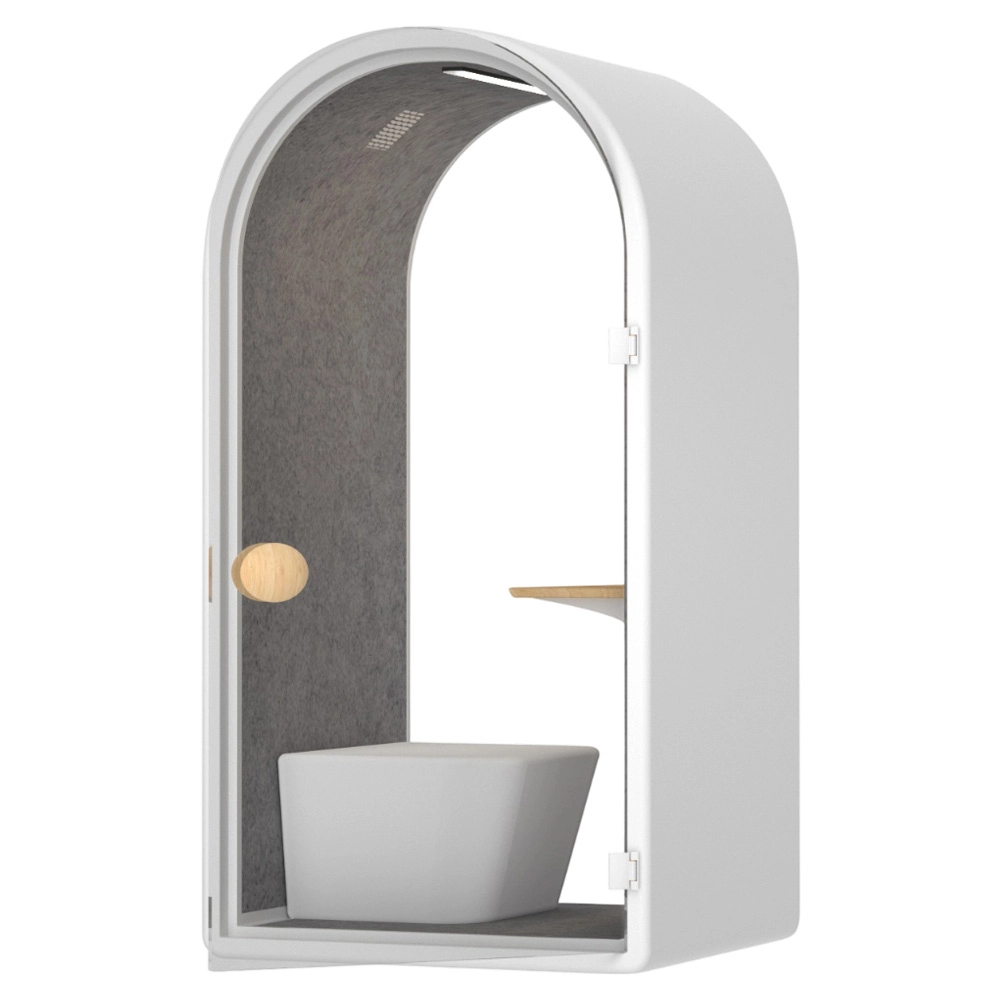
Bulk Purchasing Strategies for Soundproof Study Pods
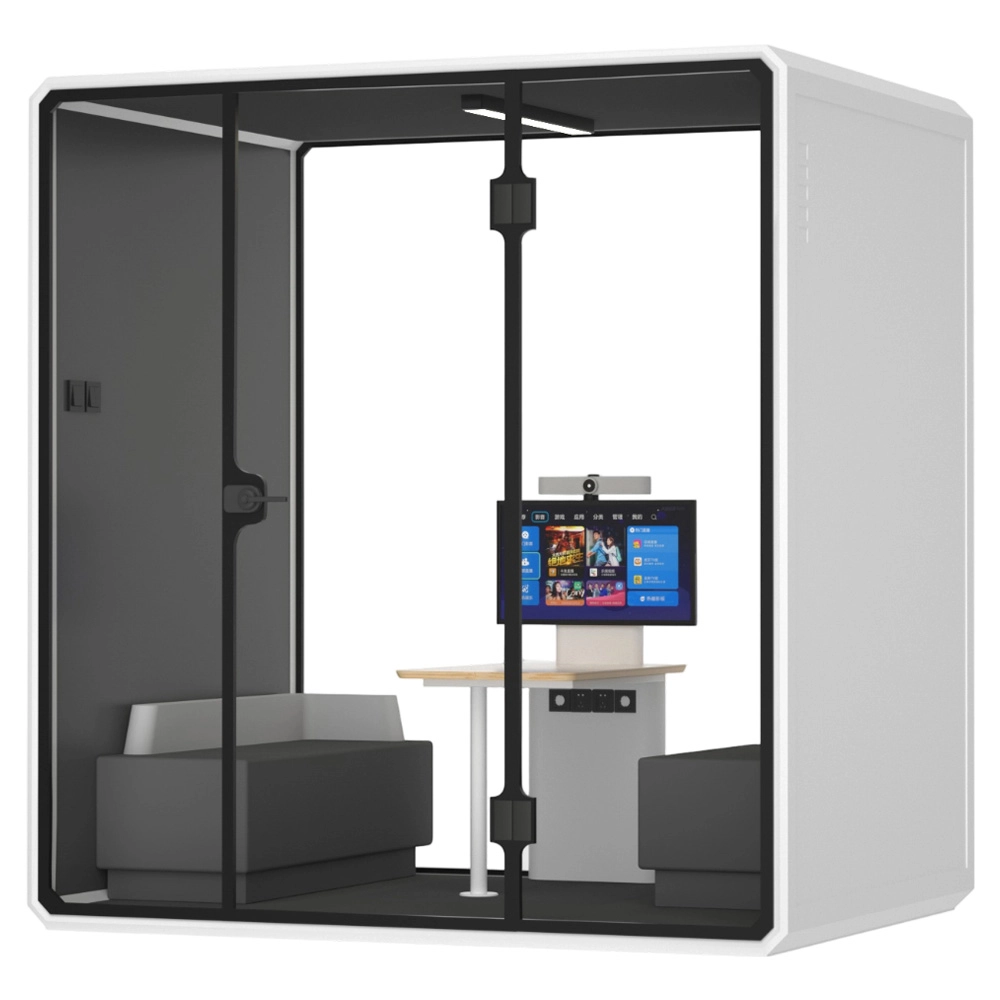
Silence Booth V-Series XL — Prefabricated Soundproof Office Pod for Focused Work
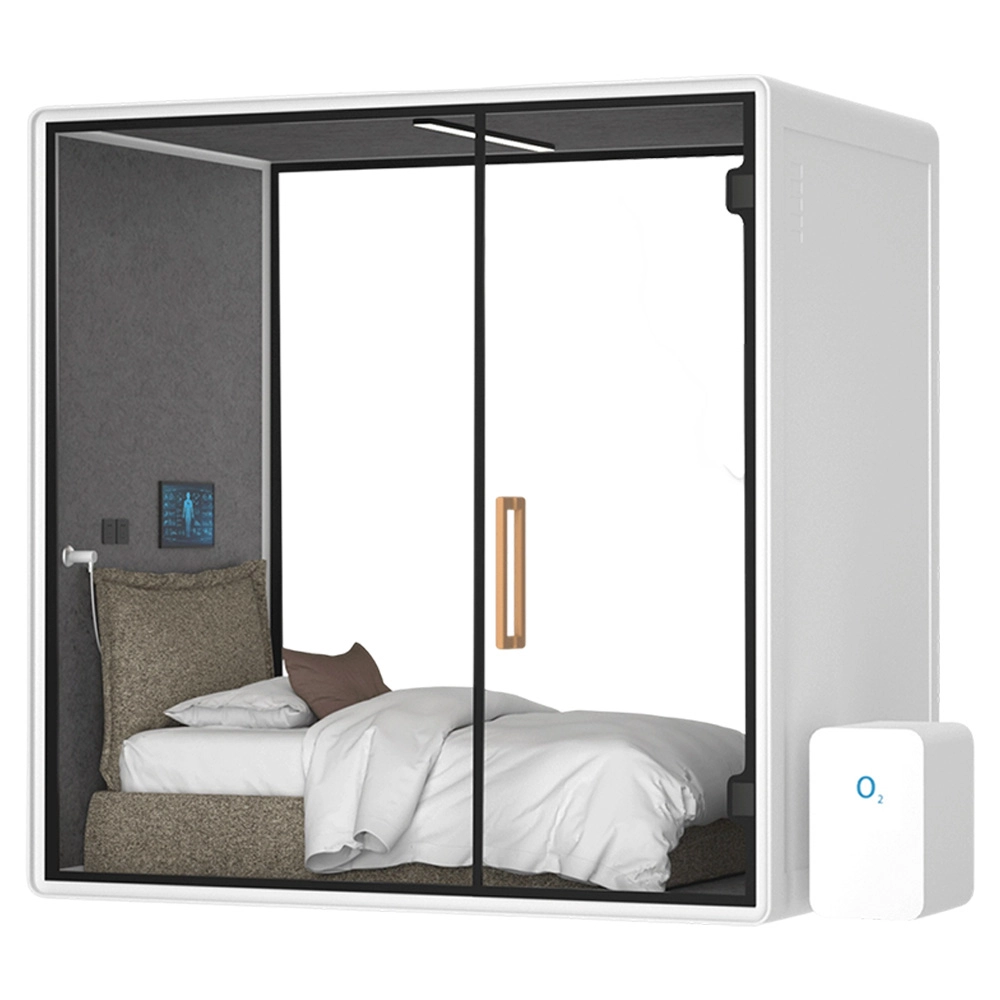
Elevate Recovery with INBOXpod Soundproof Single-Bed Oxygen Pod Therapy
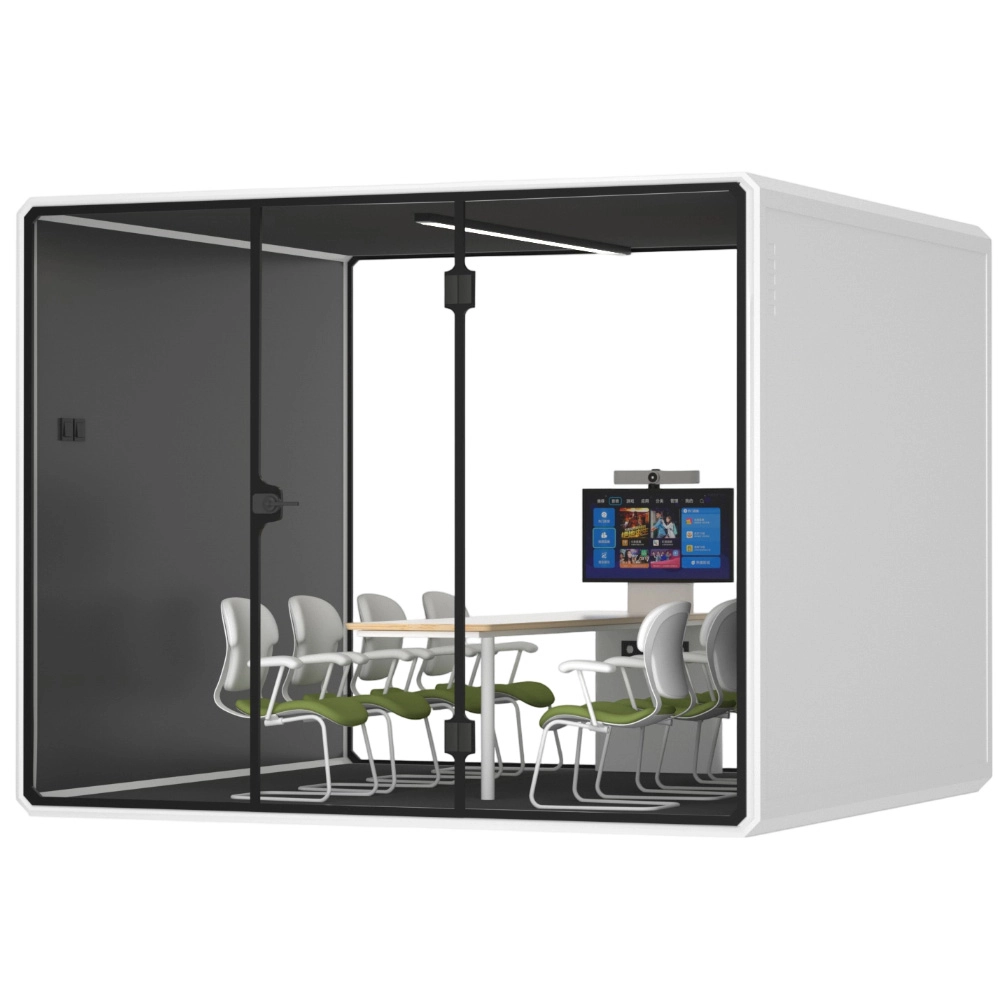
Customization Options for Silence Booth V Series-XXL
Home-demo
Can the booths be customized to fit specific space requirements?
Yes, we offer flexible customization options including size, color, and additional features to perfectly suit your needs.
Do you provide after-sales support and warranty?
Yes, we provide comprehensive after-sales service and warranty to ensure long-term satisfaction with our products.
How long does it take to assemble an INBOXpod booth?
Most of our booths can be assembled without tools in about 30 minutes, making installation quick and hassle-free.
What is the typical sound insulation level of your acoustic booths?
Our booths typically achieve up to 27 dB noise reduction, meeting Class B sound insulation standards suitable for offices and study environments.
What materials are used in the construction of the booths?
Our booths are made from sustainable, high-quality materials including aluminum alloy frames and acoustic panels designed for optimal soundproofing.
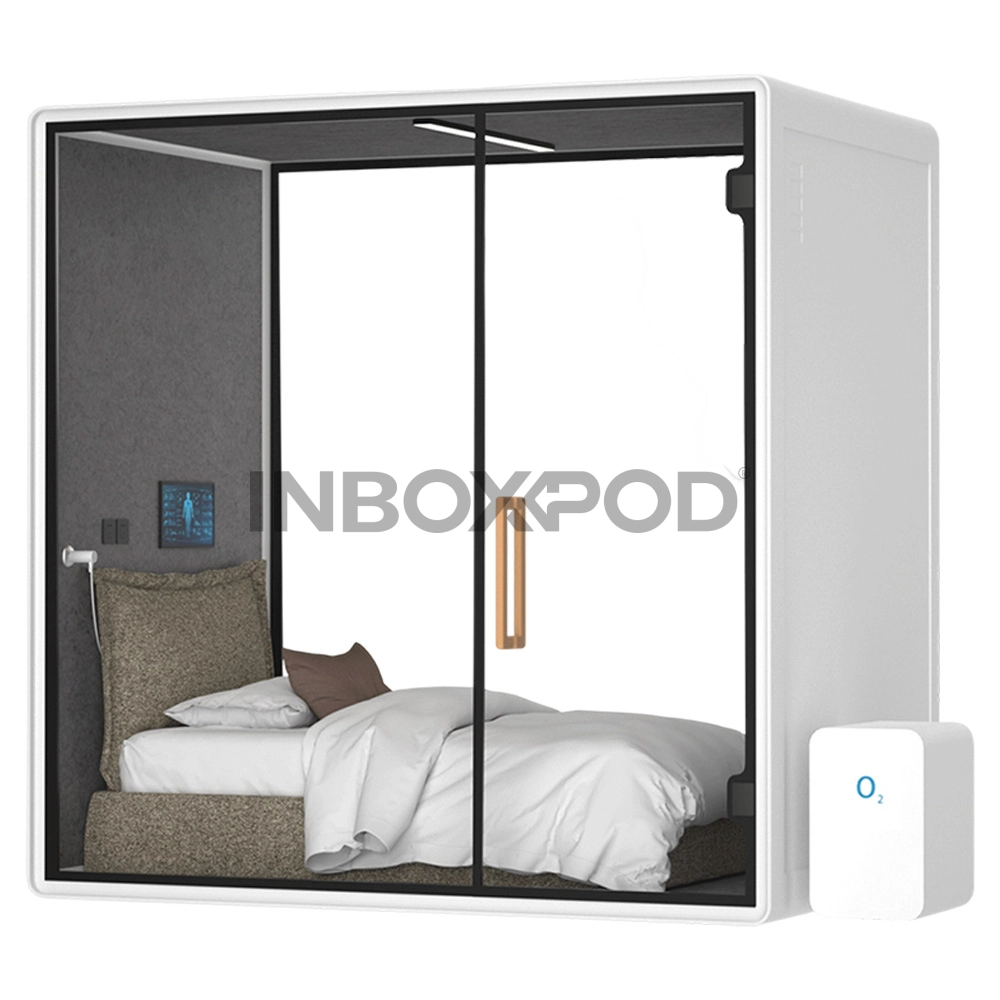
Soundproof Single Bed Oxygen Pod Therapy
Create an immersive deep health oxygen therapy space for you, with a single bed design for ultimate comfort. External size: W2300×D1478×H2300 mm; internal size: W2166×D1403×H2166 mm. Enjoy the nourishment of high-concentration oxygen while lying down, improve sleep, relieve fatigue, enhance immunity, and start a journey of health renewal.
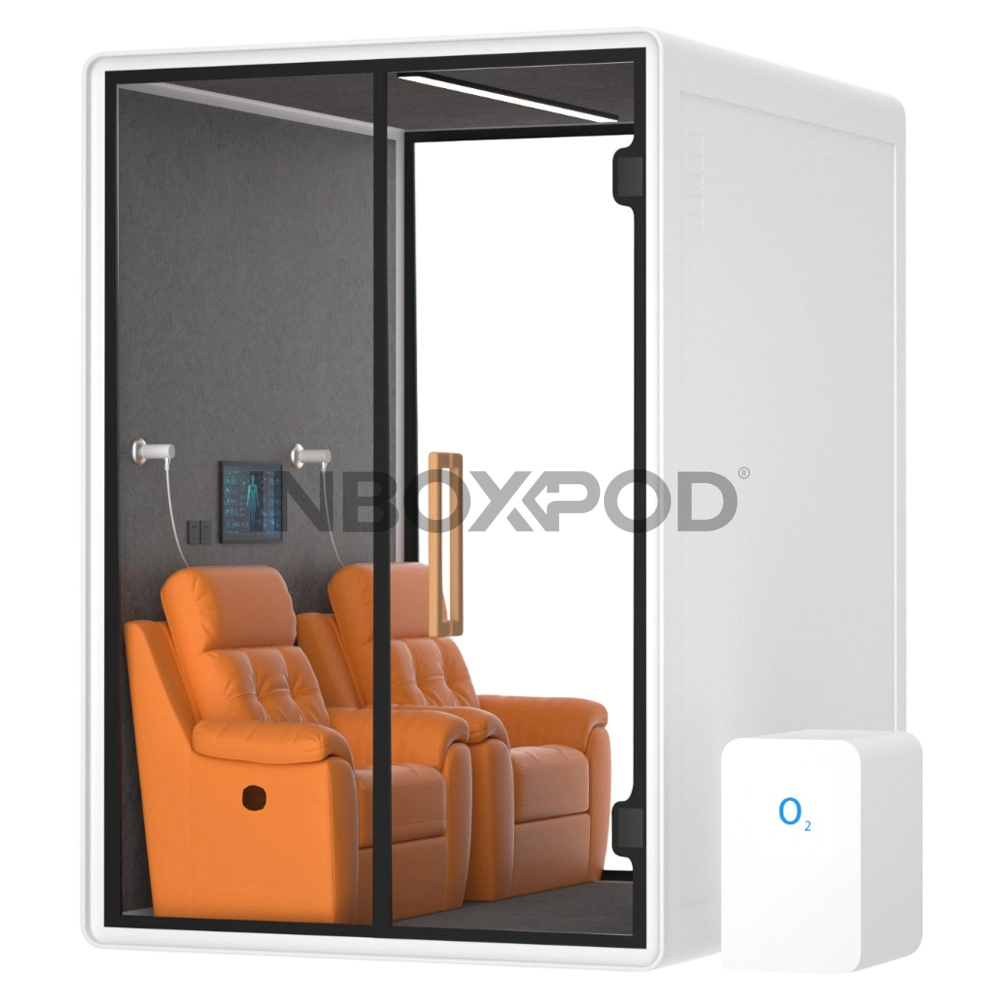
INBOXpod Double Seat Soundproof Oxygen Pod
An oxygen therapy space customized for double social interaction and health, with a double-seat design to promote a win-win situation for interaction and health. External size: W1600×D1929×H2300 mm; internal size: W1466×D1854×H2166 mm. You can improve cardiovascular function and concentration through oxygen therapy with friends and colleagues in a quiet and efficient acoustic environment, making health and social interaction complement each other.
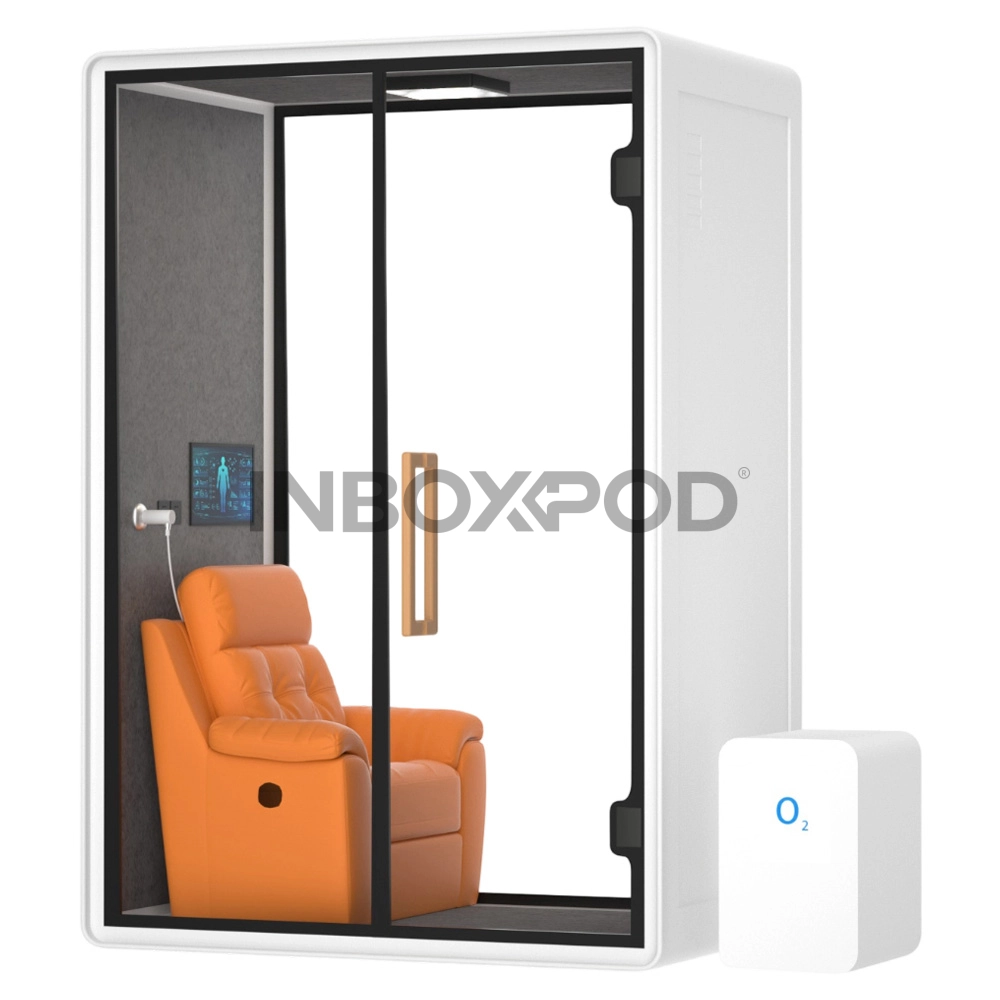
INBOXpod Soundproof Single seat Oxygen Pod
A delicate and compact personal oxygen therapy secret, with a single-seat layout that is flexible and convenient. External size: W1600×D1028×H2300 mm; internal size: W1466×D953×H2166 mm. Create a quiet, private domain for you, where you can inhale high-purity oxygen efficiently during daily relaxation or postoperative recovery, helping to improve cardiopulmonary function and mental state.
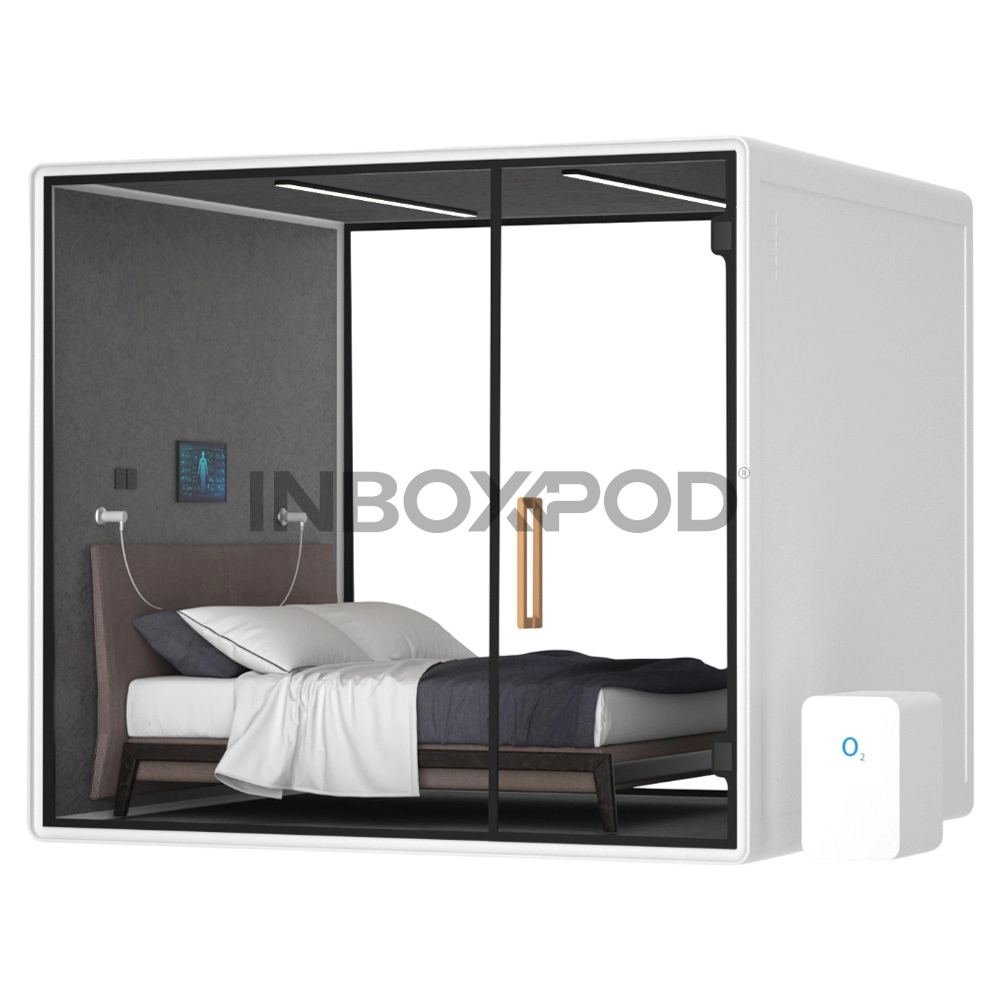
INBOXpod Soundproof Double Bed (small) Oxygen Pod
A double oxygen therapy option that balances space and experience, with a small double-bed layout suitable for various scenarios. External size: W2300×D1854×H2300 mm; internal size: W2300×D1929×H2300 mm. You can share the high-oxygen environment here with relatives and friends, relieve stress, improve physical fitness, and gain health and vitality in company.
Whatsapp: +8613535292957