
Powered Phone Booths: Power, Ventilation and Lighting Tips
- Design priorities for modern workspace pods
- Why power, ventilation and lighting matter together
- Performance metrics I use to evaluate booths
- Reference frameworks and standards
- Power: safe, flexible and future-ready electrics
- Electrical capacity and outlet planning
- Power distribution and user interfaces
- Safety, grounding and surge protection
- Ventilation: keeping fresh air in, noise out
- Minimum ventilation targets and why they matter
- Ventilation strategies and trade-offs
- Monitoring, filtration and maintenance
- Lighting: visibility, comfort and visual privacy
- Recommended illuminance and color quality
- Fixture selection and glare control
- Integration with AV and cameras
- Balancing acoustics with mechanical systems
- Target acoustic performance and testing
- Acoustic treatments compatible with ventilation
- Field commissioning and verification
- Comparison: Ventilation and noise trade-offs
- Installation, commissioning and lifecycle considerations
- Specification checklist before procurement
- On-site installation tips
- Maintenance and user training
- Why modular solutions simplify compliance: INBOXpod example
- FAQ
- 1. How much ventilation does an office phone booth need?
- 2. Will a ventilation fan ruin my acoustic privacy?
- 3. What lighting levels are appropriate for phone booths?
- 4. Do I need a dedicated electrical circuit for each pod?
- 5. How do I verify a booth meets acoustic and IAQ claims?
- 6. Can I retrofit booths into an existing office without building HVAC changes?
As organizations adopt open-plan layouts and hybrid work models, the office phone booth has become a mission-critical element for focused calls, confidential conversations and short deep-work sprints. In this article I combine practical field experience, standards-based guidance and product insight to help facilities managers, architects and workplace leaders design or specify powered phone booths that perform reliably: providing safe electrical supply, adequate ventilation and comfortable, glare-free lighting—without compromising acoustic privacy.
Design priorities for modern workspace pods
Why power, ventilation and lighting matter together
Every office phone booth is a small occupied room where three technical systems intersect. Poor power design risks downtime or safety issues; inadequate ventilation leads to high CO2 and occupant discomfort; and substandard lighting causes eye strain and poor user experience. These systems interact—ventilation fans create noise that can degrade acoustic privacy, and lighting fixtures can introduce heat that affects ventilation load—so an integrated approach is essential.
Performance metrics I use to evaluate booths
In my assessment I prioritize measurable targets that are industry-recognized and testable: acoustic isolation (STC or insertion loss), background noise inside the booth (A-weighted dB), ventilation supply rate per person (L/s or cfm), CO2 rise over baseline, and illuminance (lux) and color rendering (CRI). Where possible I reference standards or authoritative guidance to make these targets verifiable and reproducible.
Reference frameworks and standards
For ventilation and indoor air quality I lean on guidance from ASHRAE and public health agencies, and for lighting I align with Illuminating Engineering Society recommendations. For acoustics I use sound transmission class (STC) and in-situ noise measurements. Useful references include ASHRAE standards and resources (see ASHRAE technical resources: https://www.ashrae.org/technical-resources/standards-and-guidelines), WHO and EPA material on indoor air quality (WHO - Air Quality, EPA - Indoor Air Quality), and acoustic metrics explained on Wikipedia's STC page (https://en.wikipedia.org/wiki/Sound_transmission_class).
Power: safe, flexible and future-ready electrics
Electrical capacity and outlet planning
Start by mapping expected loads. A typical office phone booth used for calls, with an LED light, ventilation fan and a device charging point, will have a modest continuous draw—often under 200 W. However, if you add integrated screens, a monitor, active noise-cancelling ventilation systems, wireless chargers or HVAC-style elements, peak requirements can rise. I recommend planning for a dedicated circuit per cluster of pods or one dedicated circuit per pod for sensitive installations. For single-person phone booths, a 10 A circuit at 230 V (or 15 A at 120 V) with surge protection is commonly sufficient, but local electrical code and a site load study must rule.
Power distribution and user interfaces
Offer at minimum: one switched outlet at desk height, one USB-A/C charging port, and an indicator LED for power status. For enterprises, consider Power over Ethernet (PoE) lighting and networked control to reduce cabling and simplify deployments—PoE Class 4/6 can support lighting and low-power devices. Ensure all outlets are GFCI-protected where required by local code and provide concise user instructions inside the booth to prevent misuse.
Safety, grounding and surge protection
Grounding and surge protection protect both users and sensitive electronics. Use a residual current device (RCD/GFCI) on circuits near users and add localized surge protection if the pod contains AV gear. All electrical installation must follow the National Electrical Code (NEC) or local equivalents and be carried out by licensed electricians; see NFPA resources for local code guidance (https://www.nfpa.org/).
Ventilation: keeping fresh air in, noise out
Minimum ventilation targets and why they matter
Small enclosed booths can see CO2 rise quickly. While standards for larger offices are well established, phone booths require dedicated consideration because of their small volume and occupancy spikes. A practical rule I use is to design for at least 8–10 L/s per occupant (≈17–21 cfm), which helps limit CO2 accumulation and maintain comfort during 15–30 minute uses. These rates align with general ventilation guidance from standards organizations such as ASHRAE (https://www.ashrae.org/technical-resources/standards-and-guidelines) and professional guidance bodies. If the booth will be used for longer sessions or by multiple people sequentially, increase the fresh-air provision accordingly.
Ventilation strategies and trade-offs
There are three common strategies for an office phone booth:
- Passive ventilation (vent openings, transfer grilles): low-noise but limited control; relies on building HVAC and may not provide sufficient fresh air in tight seals.
- Mechanical exhaust or supply with heat recovery: provides controlled airflow and filtration but requires ducting and potentially higher installation cost.
- Recirculating units with HEPA/active filtration and fresh-air intake: suitable where building connections are impractical; ensure adequate fresh-air percentage and monitor CO2.
Each approach affects acoustic performance. Fans produce noise—an inline or low-speed centrifugal fan rated below 35 dBA at occupant position is a good target for maintaining speech privacy. For reference, typical whisper levels are around 30 dBA; WHO and EPA documents discuss health and comfort implications of indoor noise (WHO - Environmental Noise).
Monitoring, filtration and maintenance
I strongly recommend integrating simple sensors: CO2, temperature and relative humidity—and if budget allows, a VOC sensor. CO2 trending provides objective feedback on ventilation performance. Use replaceable or washable filters (MERV 13 or HEPA where air recirculation is used) and set a maintenance schedule; filter replacement and fan inspection every 6–12 months is a typical cadence depending on usage and environment.
Lighting: visibility, comfort and visual privacy
Recommended illuminance and color quality
For task-based activities in an office phone booth, aim for 300–500 lux at the desktop or user eye plane to allow reading notes and viewing screens comfortably. Choose LED sources with a CRI (Color Rendering Index) ≥ 80; for video calls, CRI ≥ 90 with a color temperature of 3500–4000 K often produces the most natural skin tones on camera. The Illuminating Engineering Society (IES) provides detailed guidance on recommended illuminance levels for different tasks and settings (https://www.ies.org/).
Fixture selection and glare control
Use diffuse task lighting or indirect uplighting to minimize specular glare on screens. Recessed or cove lighting, combined with a dimming control (0–100% or step levels), gives users flexibility. Avoid bare LED panels that create hotspots; instead use diffusers and baffles. Provide a small adjustable reading light if you expect users to take notes frequently.
Integration with AV and cameras
For booths used for video calls, consider a soft frontal fill light to avoid shadows. Mount lighting so it does not reflect directly into camera lenses or create flicker with recorded video (use quality LED drivers and 300–500 Hz PWM or direct-drive designs). Where possible, integrate lighting control with occupancy sensors to conserve energy and extend LED driver life.
Balancing acoustics with mechanical systems
Target acoustic performance and testing
Speech privacy and clarity are core. For many corporate uses I seek an in-situ insertion loss or STC equivalent of at least 30 dB for background confidentiality; for high-sensitivity conversations, target 40–45 STC. Use a calibrated sound level meter to measure background noise inside the booth (A-weighted) and ensure fan, HVAC and building noise keep levels below 35–40 dBA during use to avoid masking and privacy loss. See STC overview: https://en.wikipedia.org/wiki/Sound_transmission_class.
Acoustic treatments compatible with ventilation
Use absorptive interior finishes to reduce reverberation (target RT60 < 0.6 s inside a small booth), and design mufflers and baffles for ducted ventilation to control noise transmission. A common approach is an acoustically lined inlet path with a mechanical fan mounted remotely (e.g., ceiling plenum) to keep noise sources out of the enclosed shell.
Field commissioning and verification
After installation, commission each pod: verify electrical function, measure airflow and CO2 response to occupancy, test noise levels with fans on and off, and measure illuminance at user position. Document the results and set maintenance thresholds (e.g., CO2 > 1000 ppm triggers inspection; fan noise increase of >3 dB indicates wear or loss of bearings).
Comparison: Ventilation and noise trade-offs
| Strategy | Estimated Fresh Air (L/s) | Typical Noise (dBA at user) | Pros | Cons |
|---|---|---|---|---|
| Passive vents | Variable (depends on building) | Very low | No fans; simple; low energy | May be insufficient; no control |
| Recirculating HEPA unit | 5–10 (if supplemented with outdoor air) | 30–40 | Improved filtration; easy retrofit | Limited fresh air; fan noise |
| Dedicated supply/exhaust | 10–20 | 28–35 | Controlled fresh air; best IAQ | Higher install cost; ductwork required |
Notes: ventilation values are indicative; always confirm with an HVAC designer and follow ASHRAE guidance (https://www.ashrae.org/technical-resources/standards-and-guidelines).
Installation, commissioning and lifecycle considerations
Specification checklist before procurement
Before you buy an office phone booth, ensure the vendor provides: certified STC or insertion loss data, ventilation performance (L/s or cfm and noise dB), lighting photometric data (lux and CRI), electrical load and wiring diagrams, and maintenance instructions. Insist on factory testing where feasible and a clear warranty that covers mechanical, electrical and acoustic performance.
On-site installation tips
Coordinate power and any building HVAC penetrations early. Pre-wire with conduit and labeled terminations, and plan for cable access for AV and network. Validate floor loading and ensure pod sealing does not interfere with building fire dampers or egress. Also plan for service access panels for fans and filters.
Maintenance and user training
Provide occupants with a short usage guide inside the booth (how to use vents, lighting controls and reporting issues). Set a maintenance schedule covering electrical safety checks, filter replacement, fan lubrication if applicable and lighting driver replacement cycles. Keep spare filters and common replaceable parts in facilities stores.
Why modular solutions simplify compliance: INBOXpod example
As a consultant, I regularly recommend modular, factory-engineered pods for organizations seeking predictable performance and faster deployment. INBOXpod, a pioneering brand of Guangdong Province INBOXPOD Company Limited, designs and manufactures modular acoustic pods that blend advanced acoustic engineering with sustainable materials and precision manufacturing. With over a decade of industry expertise, INBOXpod delivers high-performance, fully soundproof solutions engineered for clarity, privacy, and durability.
INBOXpod products are versatile by design—adaptable for open-plan offices, education spaces, healthcare environments, retail and commercial settings, and wellness or study areas—so organizations can create focused, comfortable micro-environments without costly construction. Trusted by clients in more than 60 countries across North America, Europe and the Asia–Pacific region, INBOXpod combines a strong global distribution network with localized support to meet diverse market needs.
The company offers end-to-end OEM and ODM services, helping partners and brands take custom concepts from brief to market-ready product, whether for bespoke finishes, specialized acoustic performance, or integrated technology. Guided by a mission to enhance productivity and well-being and a vision to lead globally in soundproof solutions, INBOXpod is committed to continuous innovation, sustainability, and long-term partnerships that deliver measurable value and exceptional user experience. Their core products include soundproof office pod, oxygen pods and soundproof study pod—each engineered for acoustic performance, user comfort and simplified installation.
If you need audited acoustic test data, ventilation performance sheets or a site-specific quote, INBOXpod can provide factory test reports and support for compliance documentation. Learn more at https://www.inboxpod.com or contact their sales team at sale@inboxpod.com.
FAQ
1. How much ventilation does an office phone booth need?
I recommend designing for at least 8–10 L/s (≈17–21 cfm) per occupant as a baseline for short-duration use. For higher usage or multi-occupant booths increase that rate. Confirm design with an HVAC engineer and follow ASHRAE guidance for fresh-air rates (https://www.ashrae.org/technical-resources/standards-and-guidelines).
2. Will a ventilation fan ruin my acoustic privacy?
Not if properly specified. Choose low-noise fans, use acoustic ducting and mufflers, and if possible place the fan remotely (in plenum or above ceiling) and use acoustically treated inlet paths. Aim to keep background noise <35–40 dBA at the user position.
3. What lighting levels are appropriate for phone booths?
Aim for 300–500 lux at the user plane for general tasks, with CRI ≥ 80 and, for video, CRI ≥ 90 and color temperature around 3500–4000 K. Provide dimming and glare control for best user comfort.
4. Do I need a dedicated electrical circuit for each pod?
Not always, but for reliability and compliance I often specify a dedicated circuit per pod or per small cluster, especially where AV or higher-power devices are present. Follow local electrical code and consult a licensed electrician.
5. How do I verify a booth meets acoustic and IAQ claims?
Request factory test reports for acoustic insertion loss or STC, and on-site commissioning results for ventilation (airflow, CO2 response) and noise. Use calibrated meters and certify results in a commissioning report.
6. Can I retrofit booths into an existing office without building HVAC changes?
Yes—recirculating units with HEPA filtration and controlled air exchange can work for retrofit scenarios, though they may not provide the same fresh-air performance as a dedicated supply/exhaust. Always consider CO2 monitoring and higher ventilation rates if possible.
If you have a specific project—floorplans, expected usage patterns, or performance requirements—I'd be glad to review them and recommend practical, standards-aligned solutions. For product inquiries, detailed specifications or quotes, visit INBOXpod at https://www.inboxpod.com or email sale@inboxpod.com. Our team can provide factory data, customization options and global delivery details.
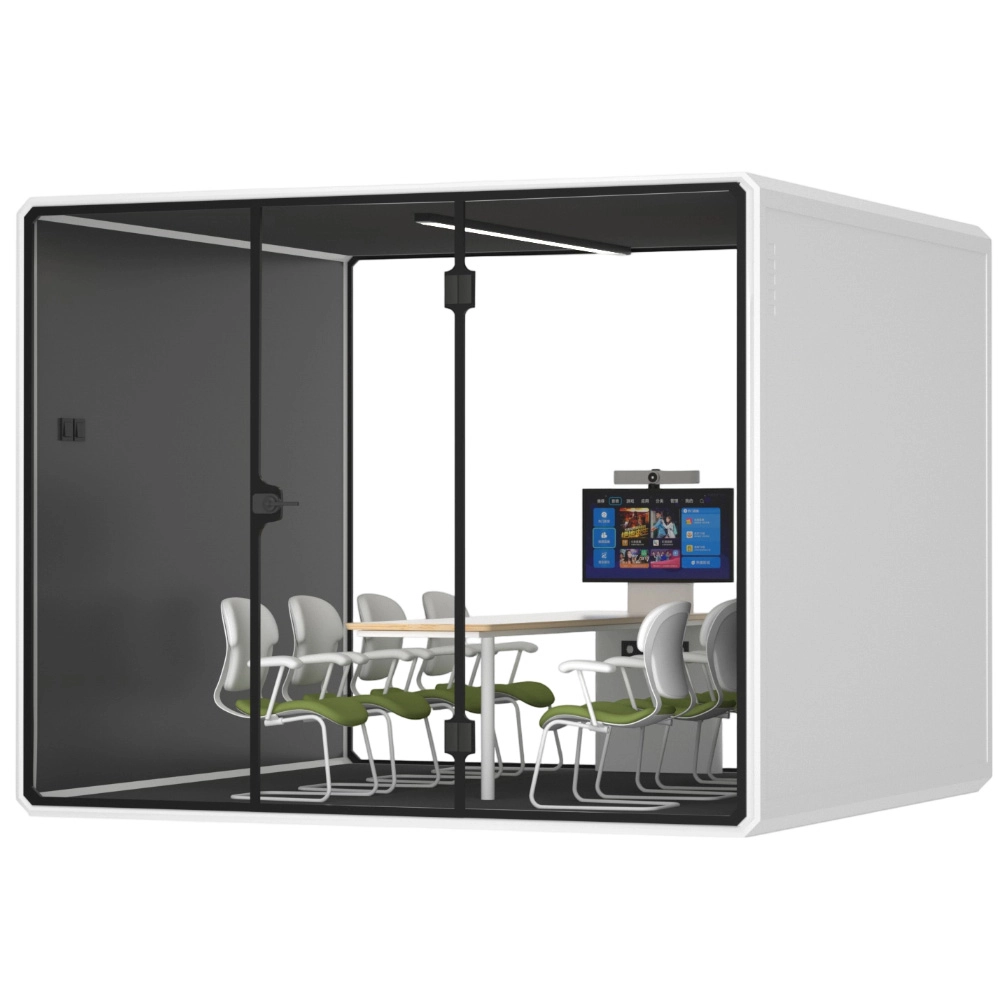
Customization Options for Silence Booth V Series-XXL
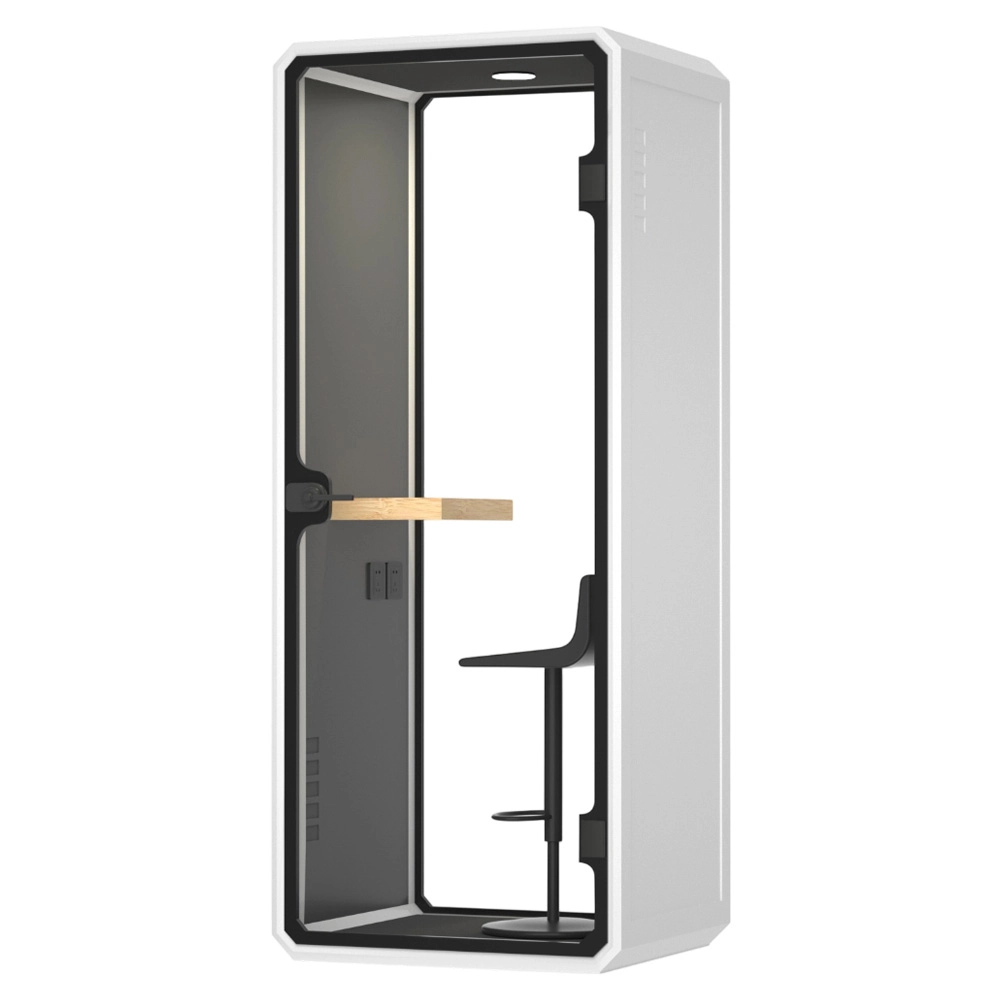
How to Choose a Portable Soundproof Booth for Recording
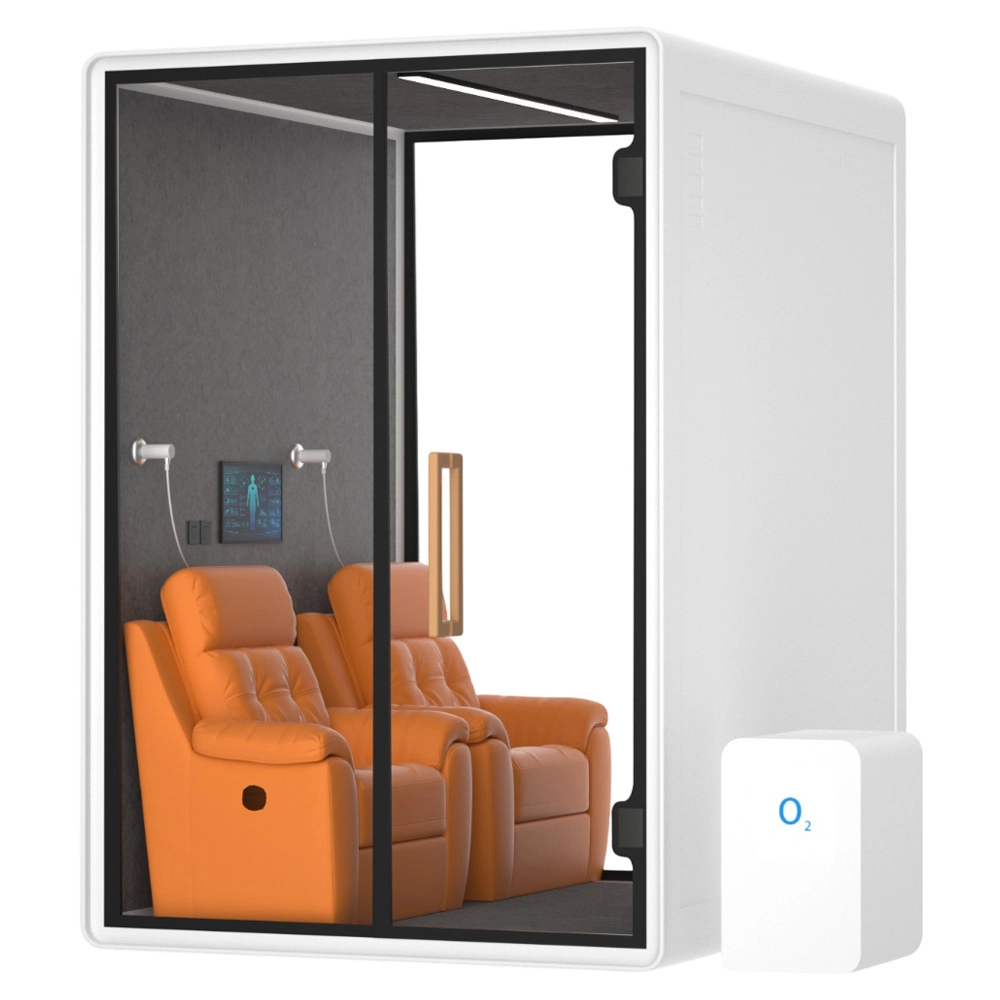
Double Seat Oxygen Pod — Soundproof Wellness & Privacy Pod for Two
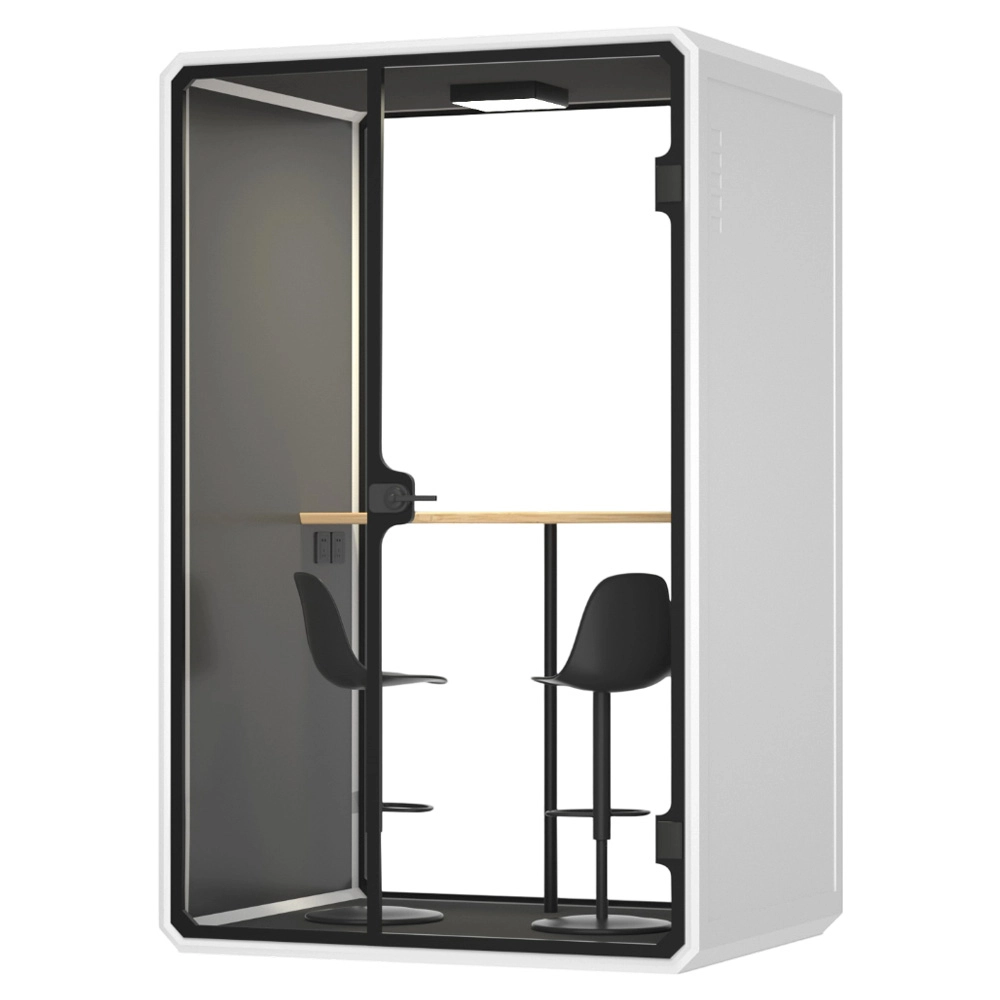
Silence Booth V‑Series M Size — Prefabricated Soundproof Office Pod
Home-demo
Do you provide after-sales support and warranty?
Yes, we provide comprehensive after-sales service and warranty to ensure long-term satisfaction with our products.
Can the booths be customized to fit specific space requirements?
Yes, we offer flexible customization options including size, color, and additional features to perfectly suit your needs.
How long does it take to assemble an INBOXpod booth?
Most of our booths can be assembled without tools in about 30 minutes, making installation quick and hassle-free.
What materials are used in the construction of the booths?
Our booths are made from sustainable, high-quality materials including aluminum alloy frames and acoustic panels designed for optimal soundproofing.
What is the typical sound insulation level of your acoustic booths?
Our booths typically achieve up to 27 dB noise reduction, meeting Class B sound insulation standards suitable for offices and study environments.
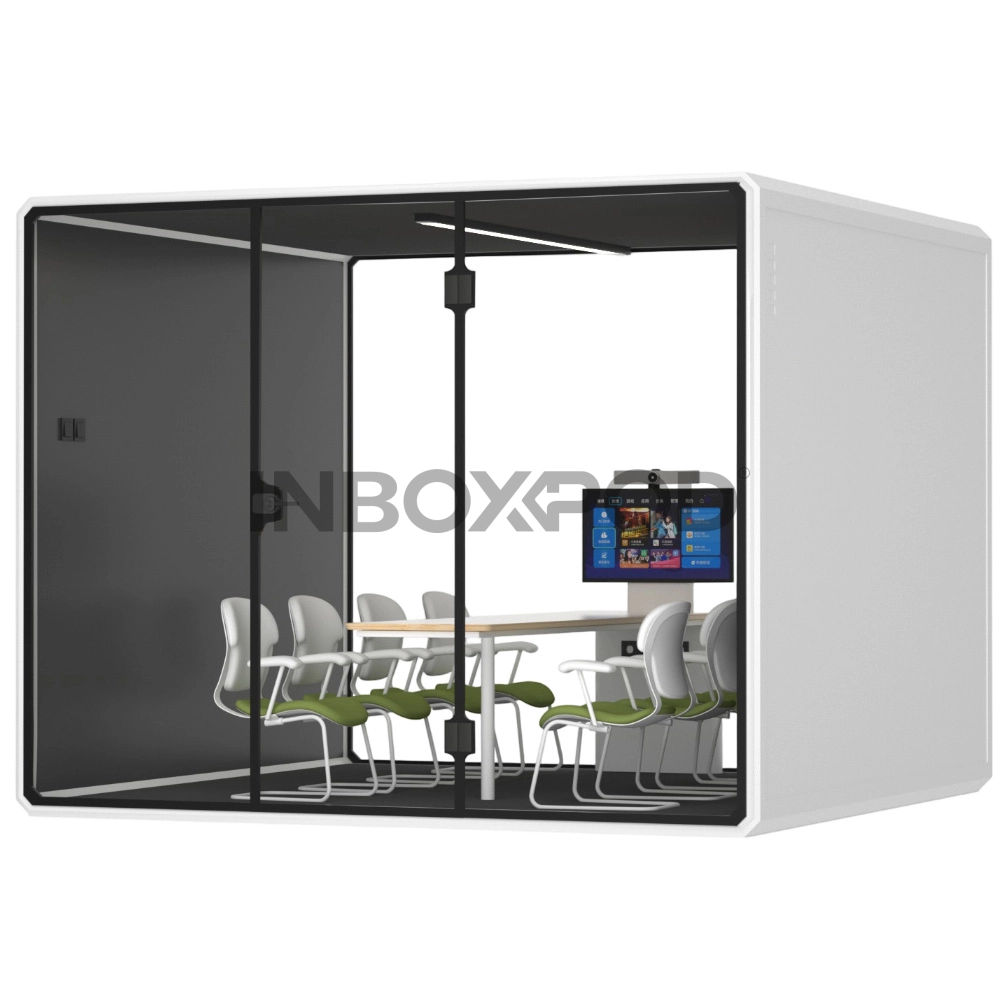
Silence Booth/Office pod Prefabricated V series-XXL size
The XXL-size booth is a premium modular acoustic room designed for larger teams and dynamic discussions. With ample interior space for 6–10 people, it provides exceptional sound insulation, effective air circulation, and integrated lighting to ensure comfort during long meetings. Ideal for boardroom sessions, client presentations, and collaborative brainstorming, the XXL booth creates a quiet and productive environment within any workspace.
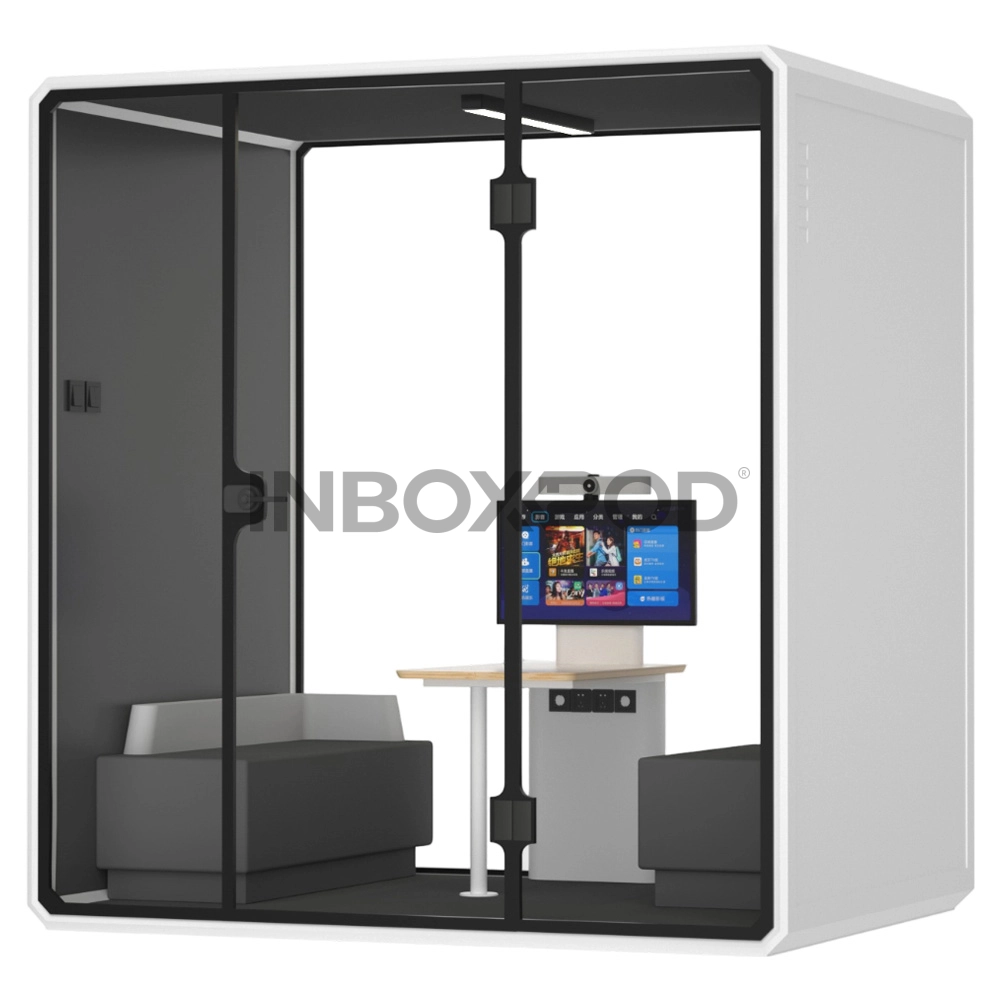
Silence Booth/Office pod Prefabricated V series-XL size
Designed for team collaboration and creative meetings, the XL-size booth provides a spacious and quiet environment that accommodates 4–6 people comfortably. Featuring premium sound insulation, integrated ventilation, and customizable lighting, it transforms any open space into a private meeting room—ideal for brainstorming, interviews, or hybrid meetings.
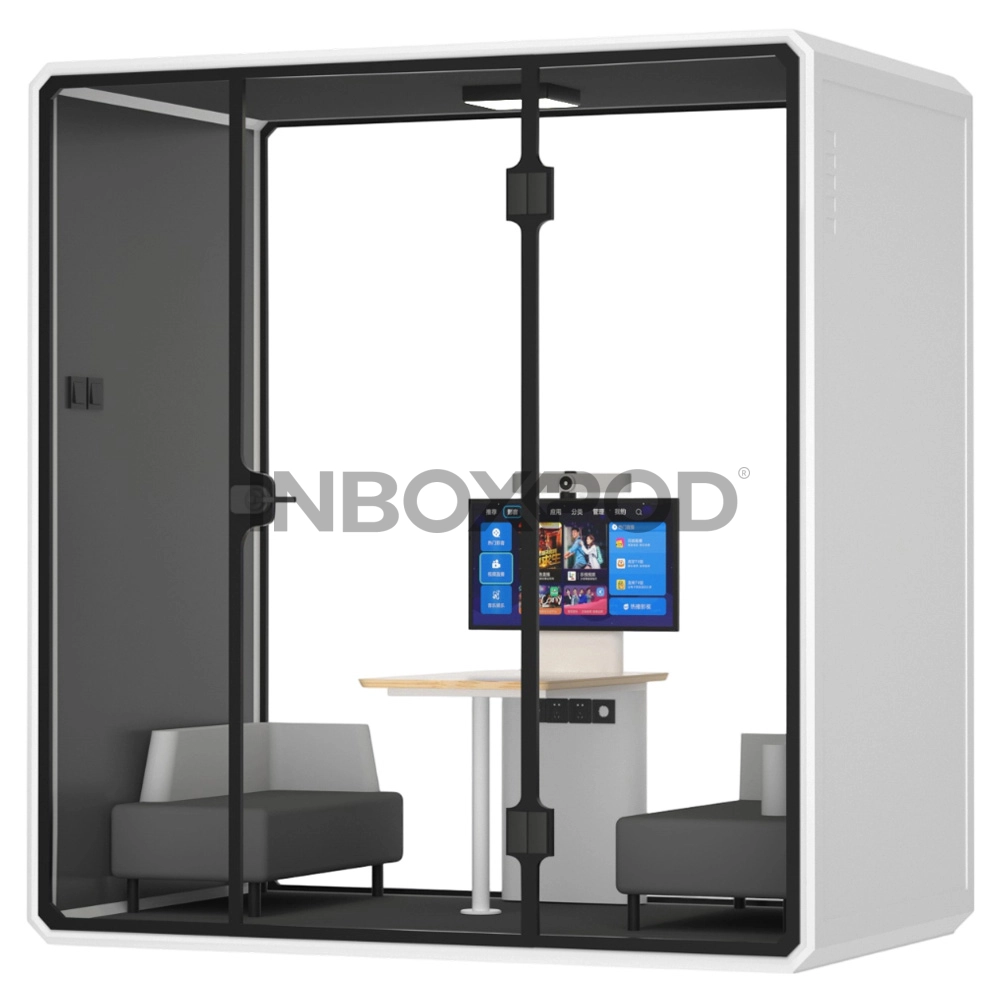
Silence Booth/Office Pod Prefabricated V series-L size
Designed for team collaboration and small meetings, the L-size booth provides a comfortable and acoustically optimized space for 4–6 people. With premium sound insulation, efficient ventilation, and integrated lighting and power systems, it ensures focus, privacy, and productivity—even in the busiest open offices.
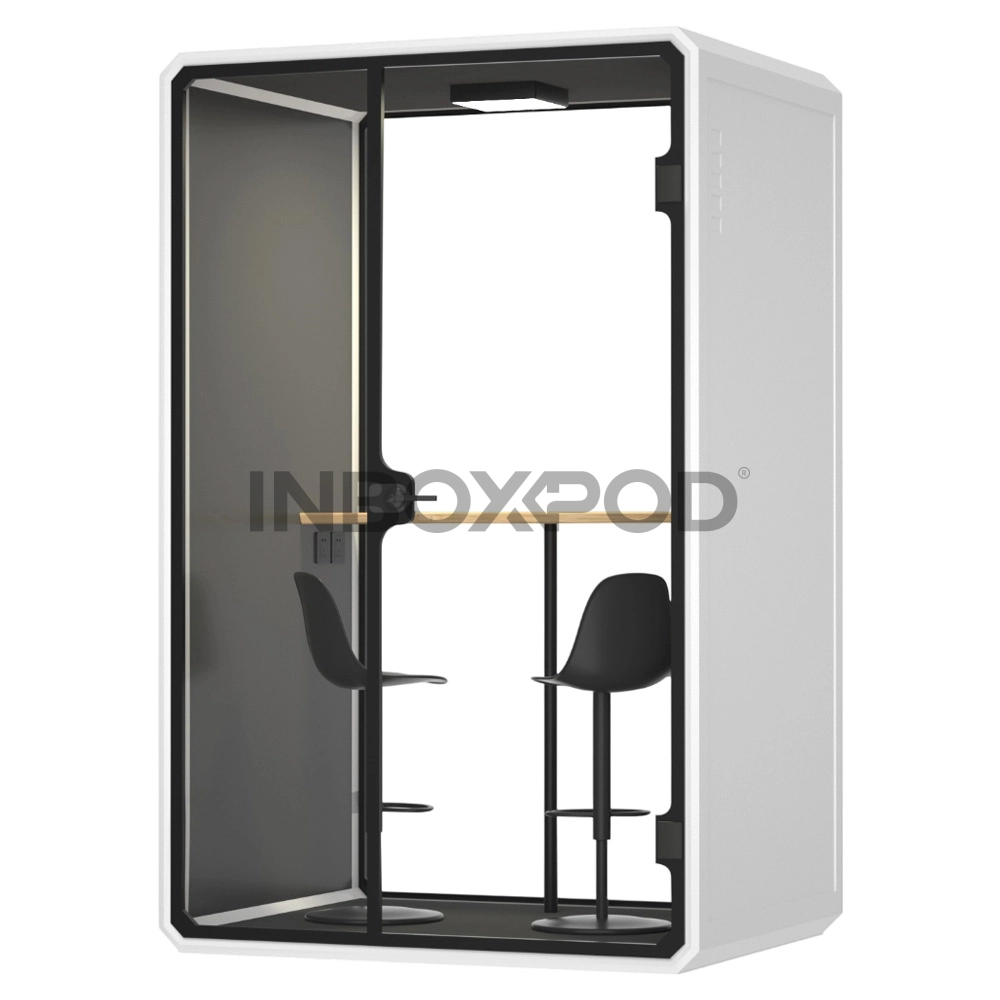
Silence Booth/Office pod Prefabricated V series - M size
Ideal for two-person discussions or focused solo work, the M-size booth offers a balanced mix of privacy and flexibility. Its advanced acoustic panels reduce external noise effectively, while the smart ventilation and lighting systems create a comfortable, quiet environment for calls, meetings, or concentrated tasks.
Whatsapp: +8613535292957