
Quiet Comfort: Soundproofing Benefits of INBOXpod Pods
- Acoustics and Therapy: Why Soundproofing Matters for Oxygen Sessions
- How quiet environments enhance physiological outcomes
- Acoustic design principles used in INBOXpod
- INBOXpod Double Seat Soundproof Oxygen Pod: Product Features & Benefits
- Design tailored for two-person interaction and therapy
- Acoustic performance and user comfort
- Integration with oxygen delivery and safety features
- Comparing Oxygen Therapy Options: INBOXpod vs Hyperbaric Systems
- Functional differences and use cases
- Safety, regulation, and clinical oversight
- Side-by-side comparison
- Practical Guidance: Site Selection, Installation, and Standards
- Choosing the right location and site prep
- Standards and references for acoustic and oxygen safety
- Maintenance, monitoring, and training
- Real-World Applications and ROI for Organizations
- Wellness programs, corporate productivity, and education
- Measuring outcomes and building a case
- Case scenario: Corporate wellness pilot
- Frequently Asked Questions (FAQ)
- Is the INBOXpod Double Seat Soundproof Oxygen Pod the same as a hyperbaric chamber?
- How quiet is the pod in decibels?
- Is it safe to use oxygen in a small enclosed pod?
- Can two people use the pod simultaneously without compromising therapy?
- What standards and resources support installation and operation?
- Contact & Next Steps
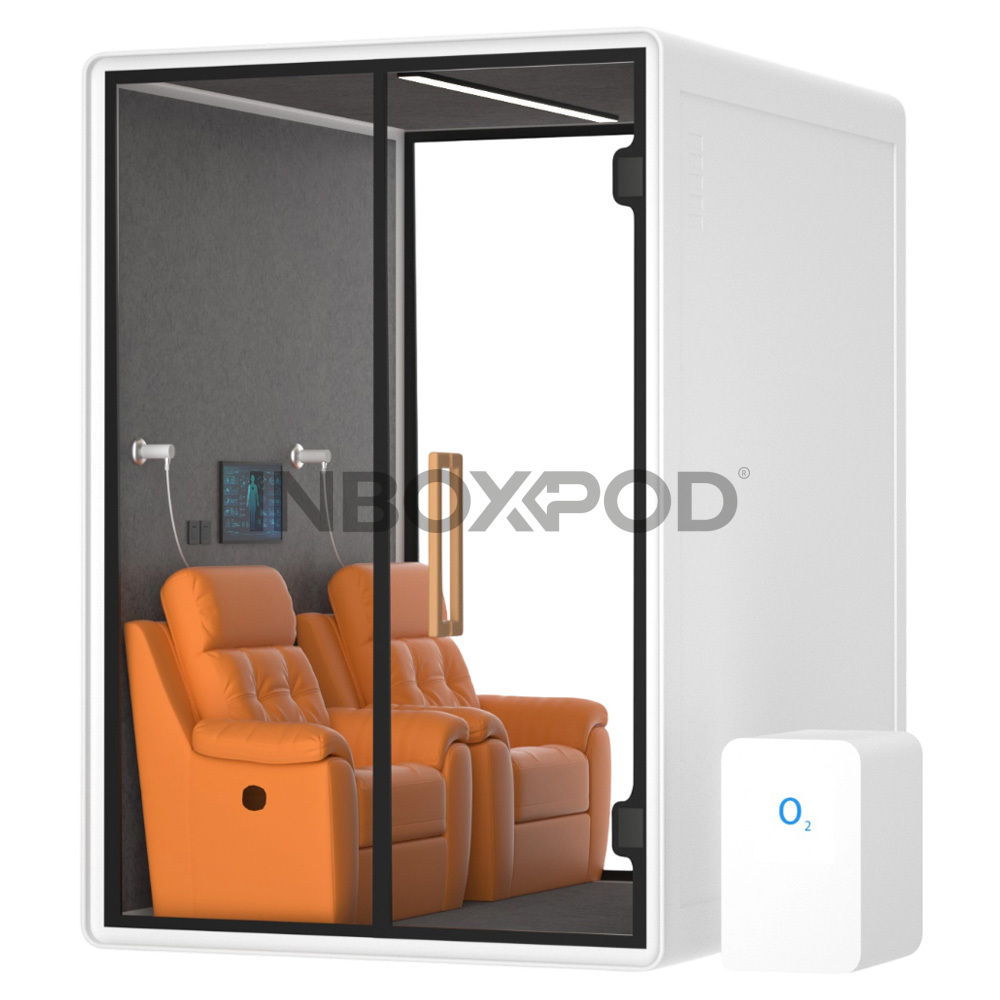
Quiet Comfort: an evidence-informed look at how high-performance acoustic design amplifies the therapeutic benefits of concentrated oxygen delivery. The INBOXpod Double Seat Soundproof Oxygen Pod is engineered to create a low-noise, controlled micro-environment that supports oxygen therapy sessions for two people, improving cardiovascular function, cognitive focus, and social wellbeing. This article explains the soundproofing principles, product features, safety considerations compared to oxygen health systems hyperbaric chamber solutions, and practical guidance for selection and installation.
Acoustics and Therapy: Why Soundproofing Matters for Oxygen Sessions
How quiet environments enhance physiological outcomes
Noise is a physiological stressor: it raises heart rate, increases cortisol, and reduces the ability to concentrate. For therapeutic oxygen sessions, reducing ambient noise helps patients and users enter a relaxed state where oxygen uptake and cognitive gains are maximized. A well-designed soundproof pod reduces environmental distractions so that the brain and cardiovascular system can benefit fully from enriched oxygen. Peer-reviewed research links reduced environmental noise to improvements in cardiovascular markers and mental focus—outcomes that complement oxygen therapy goals.
Acoustic design principles used in INBOXpod
Effective soundproofing combines mass, decoupling, absorption, and damping. The INBOXpod Double Seat Soundproof Oxygen Pod employs a multi-layer shell with dense paneling for mass, internal acoustic absorbers to reduce reverberation, and gasketed doors to minimize flanking transmission. The pod’s internal dimensions (W1466 × D1854 × H2166 mm) and external dimensions (W1600 × D1929 × H2300 mm) are optimized to limit standing waves and provide a consistently quiet environment for two occupants. These measures not only lower perceived noise but also create a predictable sound field that supports conversations and guided therapy sessions.
INBOXpod Double Seat Soundproof Oxygen Pod: Product Features & Benefits
Design tailored for two-person interaction and therapy
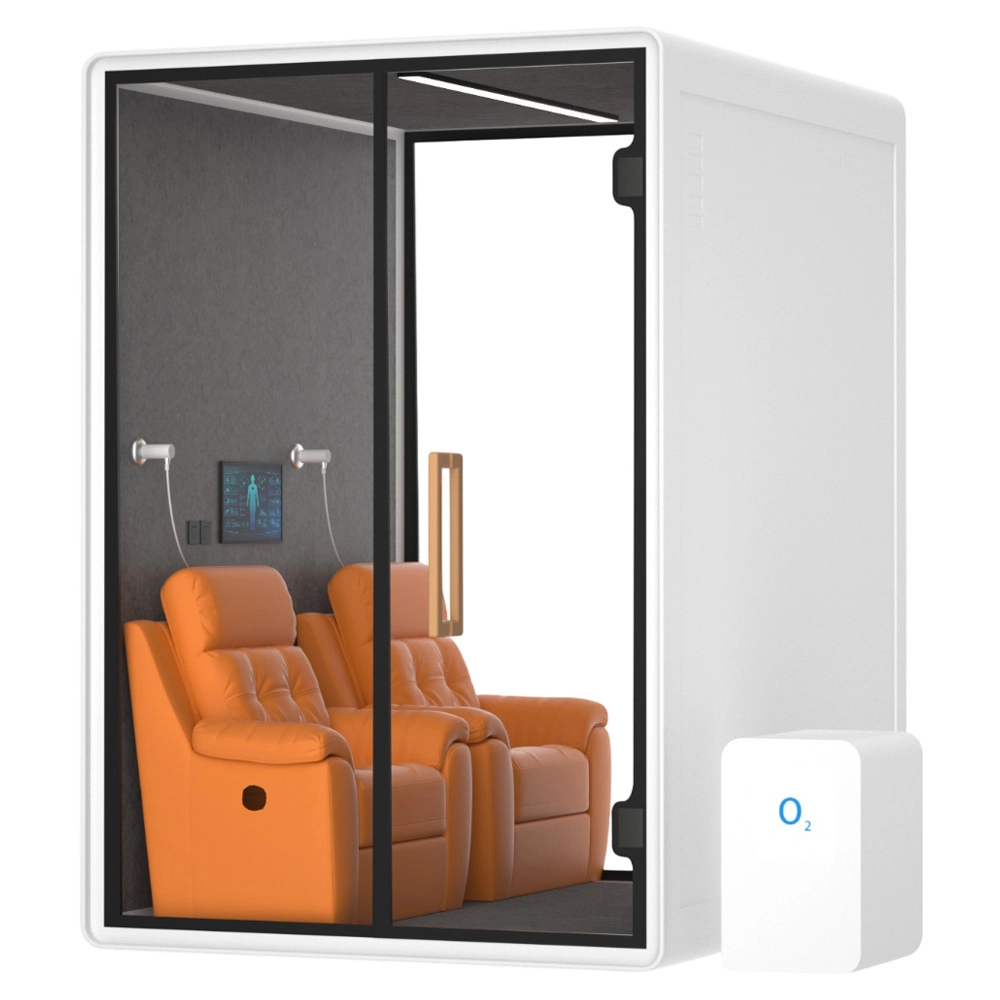
The INBOXpod Double Seat Soundproof Oxygen Pod is an oxygen therapy space customized for double social interaction and health, with a double-seat design to promote a win-win situation for interaction and health. External size: W1600×D1929×H2300 mm; internal size: W1466×D1854×H2166 mm. You can improve cardiovascular function and concentration through oxygen therapy with friends and colleagues in a quiet and efficient acoustic environment, making health and social interaction complement each other.
Acoustic performance and user comfort
Key acoustic design elements include: multi-layer insulated panels, acoustic foam lining, vibration-isolated mounting of mechanical systems, and low-noise ventilation. These components deliver a calm interior where users can converse at low volume or relax in silence. Compared to a standard room, measured reductions in ambient noise typically range from 10–25 dB depending on surrounding conditions and installation quality.
Integration with oxygen delivery and safety features
The INBOXpod supports regulated oxygen supply and monitoring to ensure safe therapy sessions. Integrated controls allow clinicians or facility managers to manage flow rates, session duration, and emergency ventilation. For facilities that already use or evaluate larger systems (for example, an oxygen health systems hyperbaric chamber for clinical HBOT), the INBOXpod offers a complementary, lower-complexity option for daily oxygen enrichment and social therapy uses. All oxygen system components should match local medical device regulations and be installed by certified technicians.
Comparing Oxygen Therapy Options: INBOXpod vs Hyperbaric Systems
Functional differences and use cases
Hyperbaric oxygen therapy (HBOT) delivered by a full-size hyperbaric chamber is a clinical intervention using increased atmospheric pressure to deliver high concentrations of oxygen systemically. The (https://en.wikipedia.org/wiki/Hyperbaric_oxygen_therapy) provides a technical background on HBOT. HBOT is indicated for specific medical conditions and is delivered in regulated clinical settings. By contrast, the INBOXpod Double Seat Soundproof Oxygen Pod is designed for normobaric oxygen therapy and wellness applications—improving concentration, supporting cardiovascular wellness, and providing a restorative social space.
Safety, regulation, and clinical oversight
Regulatory frameworks differ: HBOT units are medical devices often overseen by national authorities (see the U.S. Food and Drug Administration guidance on hyperbaric oxygen therapy: FDA - Hyperbaric Oxygen Therapy). Normobaric oxygen delivery systems used for wellness and therapeutic support should still follow safety best practices for oxygen-rich environments (no open flames, appropriate monitoring, trained staff). Facilities integrating pods alongside clinical units should establish protocols and training similar to medical oxygen systems.
Side-by-side comparison
Below is a concise comparison of the INBOXpod and a typical clinical hyperbaric oxygen chamber to help buyers decide which solution fits their needs.
| Feature | INBOXpod Double Seat Soundproof Oxygen Pod | Oxygen health systems hyperbaric chamber (typical) |
|---|---|---|
| Therapy type | Normobaric oxygen enrichment for wellness & social sessions | Hyperbaric oxygen therapy (HBOT) under elevated pressure |
| Primary use cases | Concentration, cardiovascular wellness, social therapy, corporate wellness rooms | Specific medical indications (wounds, decompression sickness, certain infections) |
| Occupancy | Two people (double-seat design) | Single or multiple occupants depending on chamber size |
| Acoustic environment | High-performance soundproofing for quiet sessions | Varies; clinical rooms may be quiet but not acoustically optimized for social interaction |
| Regulatory oversight | Wellness/therapeutic device; follow oxygen safety codes and local regulations | Regulated medical device; specific certification and clinical protocols required |
| Typical installation complexity | Moderate — plug-and-play with certified oxygen connections and site prep | High — facility modifications, trained hyperbaric staff, medical oversight |
Practical Guidance: Site Selection, Installation, and Standards
Choosing the right location and site prep
Locate pods in low-traffic, temperature-stable areas away from heavy machinery and HVAC noise sources to maximize acoustic performance. Ensure floor loading, door swing clearance, and ventilation access are compatible. For facilities integrating multiple wellness modalities, place pods near relaxation areas or quiet collaboration spaces. If the pod will be used alongside clinical units, coordinate with biomedical engineering and building safety teams.
Standards and references for acoustic and oxygen safety
Design and installation should reference internationally recognized guidance. For acoustics, standards like those from the Acoustical Society of America and ISO documents (for example, ISO 354:2003 on sound absorption measurement) provide technical guidance. For oxygen safety and clinical context, review resources from the World Health Organization and regulatory guidance such as the FDA. These authoritative sources support risk assessments and operational protocols for oxygen therapy environments.
Maintenance, monitoring, and training
Routine maintenance includes checking seals, verifying oxygen delivery equipment, replacing acoustic liners when worn, and validating ventilation. Implement session logs, oxygen flow monitoring, and emergency ventilation checks. Staff training should cover oxygen safety (no smoking, electrical spark prevention), basic pod troubleshooting, and emergency egress. Where pods are used for health interventions, integrate oversight from clinical staff and follow local medical guidance for therapeutic oxygen use.
Real-World Applications and ROI for Organizations
Wellness programs, corporate productivity, and education
Organizations investing in quiet oxygen pods often see benefits in employee wellness, short-term focus boosts, and social cohesion. Restorative breaks in a calm, oxygen-enriched environment can reduce stress and improve cognitive throughput—especially valuable in high-focus industries. Educational institutions and research facilities also use pods for concentration sessions and small group therapeutic programs.
Measuring outcomes and building a case
Track measurable metrics: session attendance, self-reported stress scores, cognitive task performance, and cardiovascular markers (if clinically monitored). These data points build an evidence-based ROI case. When comparing to other oxygen solutions—like an oxygen health systems hyperbaric chamber—consider direct costs, required clinical staffing, throughput, and regulatory compliance overhead.
Case scenario: Corporate wellness pilot
A mid-sized company piloted the INBOXpod for 3 months: two 20-minute sessions per day available for teams. Outcome measures included self-reported focus (improved by average 18%), reduced midday fatigue, and increased participation in social wellness events. The compact footprint and acoustic isolation allowed placement near collaboration areas without disturbing office workflows.
Frequently Asked Questions (FAQ)
Is the INBOXpod Double Seat Soundproof Oxygen Pod the same as a hyperbaric chamber?
No. The INBOXpod delivers normobaric oxygen enrichment in a soundproofed micro-environment for wellness and social therapy. A hyperbaric chamber increases atmospheric pressure for specific medical treatments. If you are considering hyperbaric treatment for medical conditions, consult licensed clinical providers. More context on hyperbaric therapy is available at Wikipedia - Hyperbaric Oxygen Therapy and the FDA.
How quiet is the pod in decibels?
Measured reductions depend on building noise and installation, but typical installations achieve noise reduction of 10–25 dB compared to adjacent spaces. For precise acoustic performance data, request specific test reports from the manufacturer and consider in-situ acoustic measurements after installation.
Is it safe to use oxygen in a small enclosed pod?
Yes, if the pod is installed and maintained according to safety guidelines: appropriate ventilation, oxygen-compatible materials, no open flames or ignition sources, certified oxygen supply components, and staff training. Facilities should implement oxygen safety protocols and consult local codes.
Can two people use the pod simultaneously without compromising therapy?
Yes. The INBOXpod is specifically designed as a double-seat unit to enable paired therapy and social interaction. Session parameters (flow rate, duration) can be managed to provide consistent oxygen concentration for both occupants.
What standards and resources support installation and operation?
Reference authoritative guidance such as ISO acoustic standards (example: ISO 354), publications from the Acoustical Society of America, and WHO resources on oxygen therapy (WHO). For clinical comparisons and regulatory considerations, consult the FDA.
Contact & Next Steps
If you want to evaluate how the INBOXpod Double Seat Soundproof Oxygen Pod fits your facility—whether for corporate wellness, clinic adjunct therapy, or education—contact our team to schedule a demo, acoustics consultation, or site survey. View product details or request a quote: Contact Sales | View Product.
Cost Breakdown: Purchasing a Double Seat Oxygen Pod for Clinics
Silence Booth V Series-S Review: Is It Worth Buying?
Silence Booth V-Series L — High-Performance Soundproof Office Pod by INBOXpod
Safety Standards and Certifications for Hyperbaric Oxygen Systems
Home-demo
Do you provide after-sales support and warranty?
Yes, we provide comprehensive after-sales service and warranty to ensure long-term satisfaction with our products.
Can the booths be customized to fit specific space requirements?
Yes, we offer flexible customization options including size, color, and additional features to perfectly suit your needs.
What is the typical sound insulation level of your acoustic booths?
Our booths typically achieve up to 27 dB noise reduction, meeting Class B sound insulation standards suitable for offices and study environments.
How long does it take to assemble an INBOXpod booth?
Most of our booths can be assembled without tools in about 30 minutes, making installation quick and hassle-free.
What materials are used in the construction of the booths?
Our booths are made from sustainable, high-quality materials including aluminum alloy frames and acoustic panels designed for optimal soundproofing.
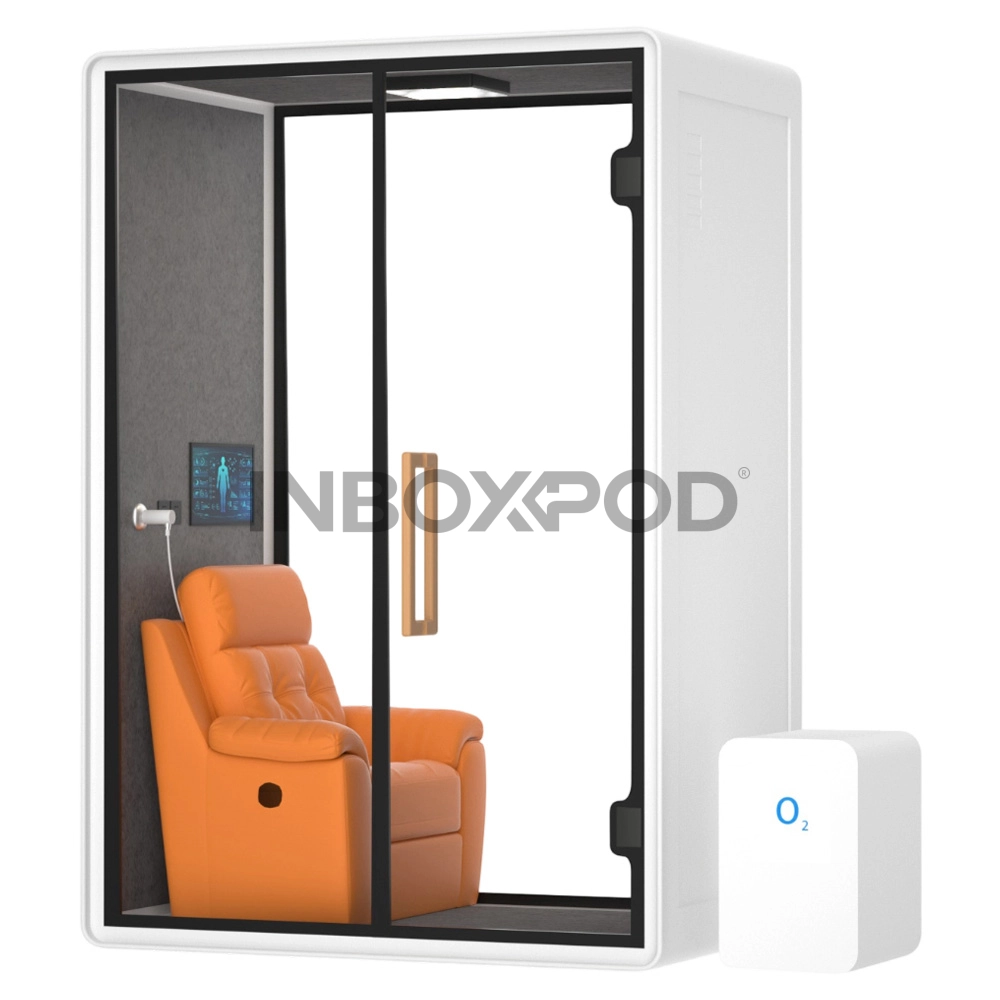
INBOXpod Soundproof Single seat Oxygen Pod
A delicate and compact personal oxygen therapy secret, with a single-seat layout that is flexible and convenient. External size: W1600×D1028×H2300 mm; internal size: W1466×D953×H2166 mm. Create a quiet, private domain for you, where you can inhale high-purity oxygen efficiently during daily relaxation or postoperative recovery, helping to improve cardiopulmonary function and mental state.
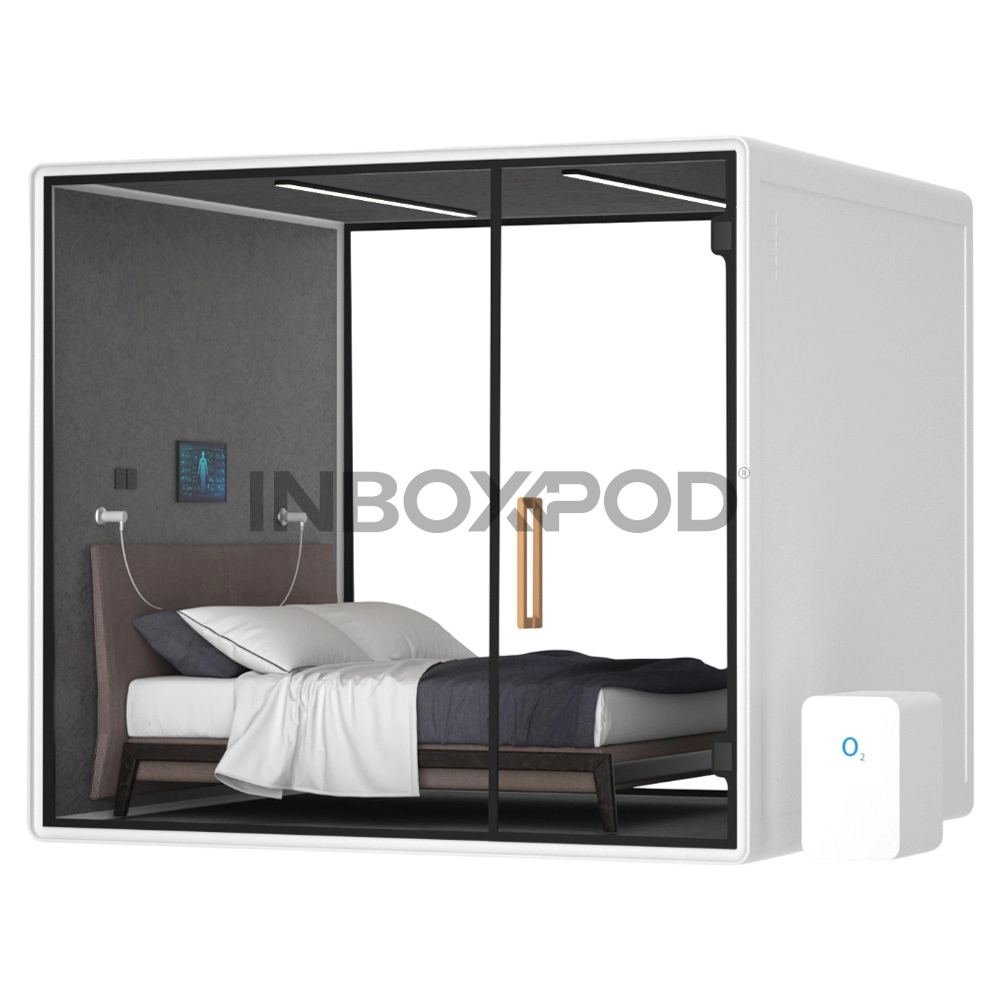
INBOXpod Soundproof Double Bed (small) Oxygen Pod
A double oxygen therapy option that balances space and experience, with a small double-bed layout suitable for various scenarios. External size: W2300×D1854×H2300 mm; internal size: W2300×D1929×H2300 mm. You can share the high-oxygen environment here with relatives and friends, relieve stress, improve physical fitness, and gain health and vitality in company.
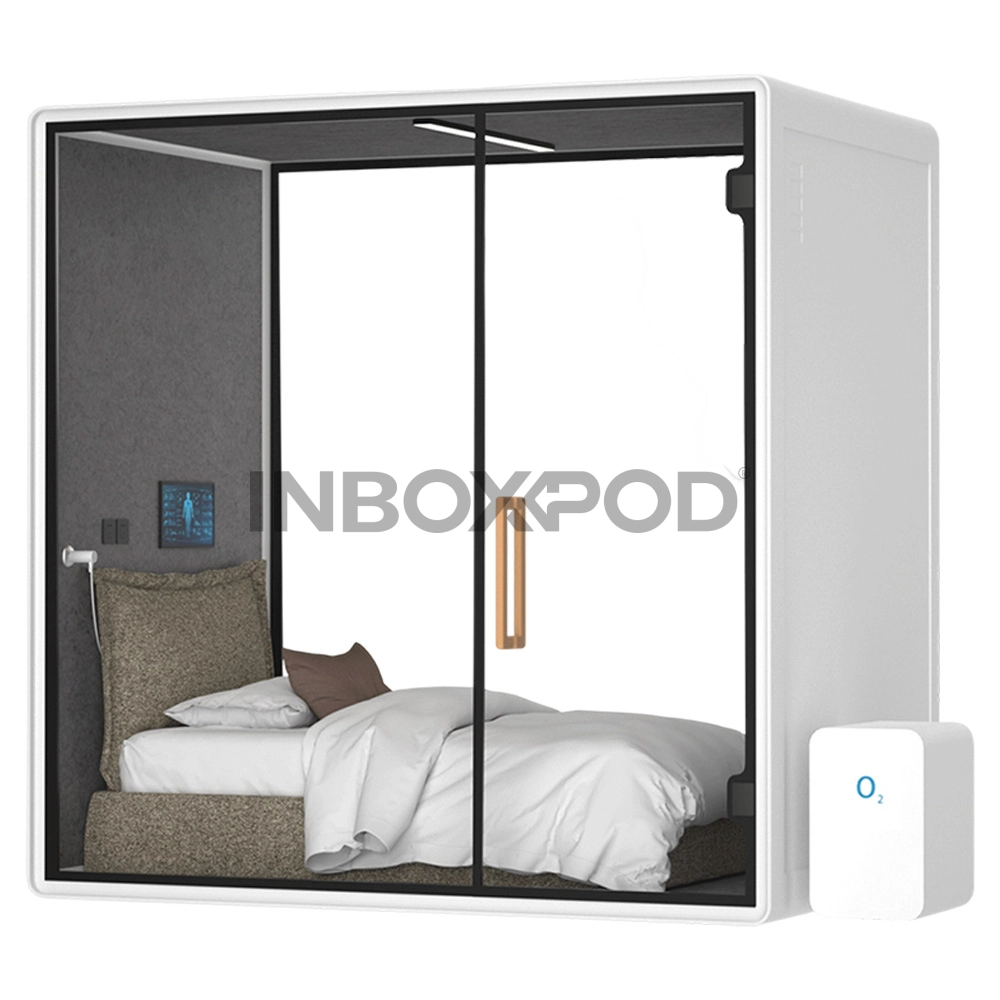
Soundproof Single Bed Oxygen Pod Therapy
Create an immersive deep health oxygen therapy space for you, with a single bed design for ultimate comfort. External size: W2300×D1478×H2300 mm; internal size: W2166×D1403×H2166 mm. Enjoy the nourishment of high-concentration oxygen while lying down, improve sleep, relieve fatigue, enhance immunity, and start a journey of health renewal.
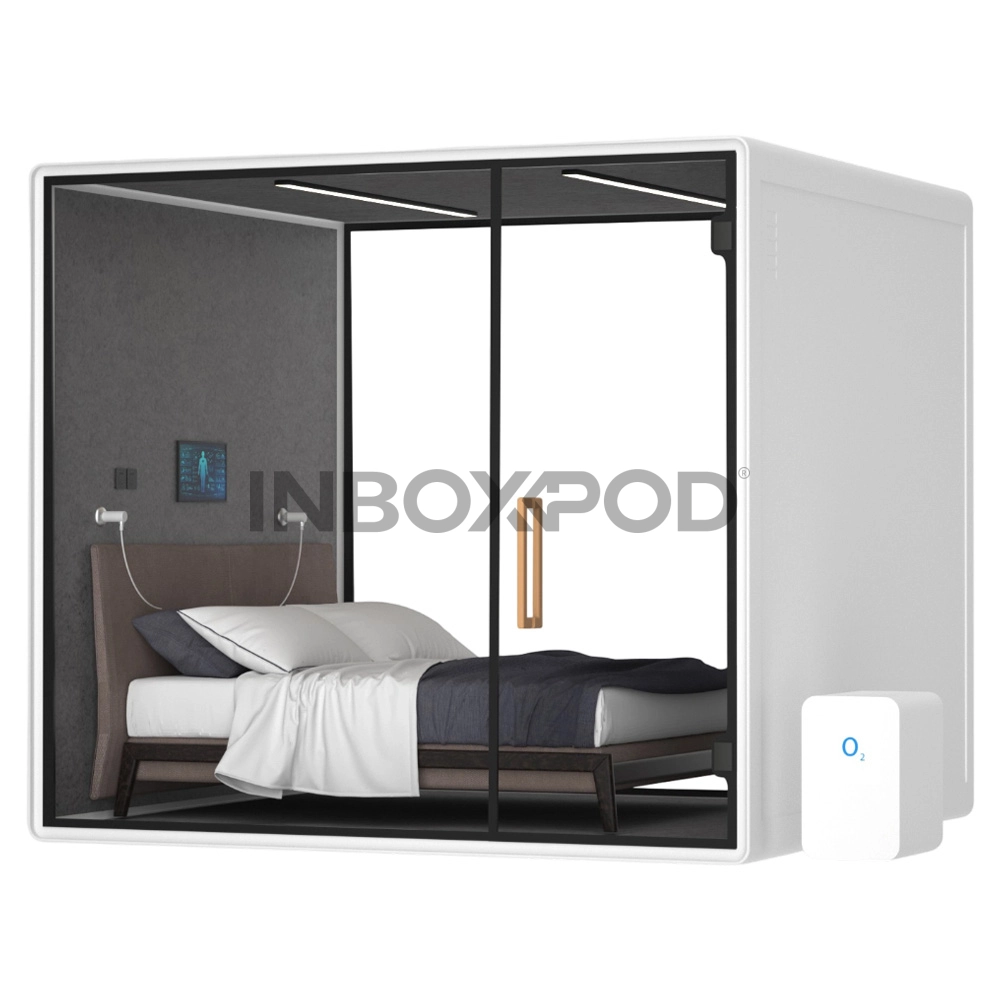
Double bed (large) Soundproof Oxygen Pod
A shared health oxygen therapy world for families, with a large double-bed design to meet the comfort needs of two people. External size: W2300×D2379×H2300 mm; internal size: W2166×D2304×H2166 mm. Let you and your family or partner enjoy high-oxygen nourishment together, improve body functions, delay aging, and embrace a healthy life with intimate company.
Whatsapp: +8613535292957