
Safety Standards and Certifications for Hyperbaric Oxygen Systems
- Understanding Safety Standards for Hyperbaric Oxygen Systems
- Regulatory frameworks that govern hyperbaric oxygen systems
- Key international standards and consensus guidance
- Why semantic compliance matters: oxygen health systems hyperbaric chamber context
- Certifications and Testing: What to Look For
- Design, manufacturing, and quality certifications
- Performance, pressure and safety testing
- Electrical safety and EMC
- Design Considerations and Acoustic Safety for the INBOXpod Double Seat Soundproof Oxygen Pod
- INBOXpod Double Seat Soundproof Oxygen Pod — product overview
- Acoustic and environmental controls: why these matter
- Pressure, structural safety and emergency egress
- Compliance Checklist and Practical Steps for Buyers and Operators
- Pre-purchase verification
- Installation, commissioning and staff training
- Operational monitoring, maintenance and record-keeping
- Risk Mitigation and Best Practices for Safe Operation
- Fire prevention and oxygen-enriched atmosphere control
- Monitoring, alarms and emergency response
- Documentation, traceability and reporting
- Frequently Asked Questions (FAQ)
- Is the INBOXpod a medical hyperbaric chamber?
- What certifications should I request from the manufacturer?
- How do I know if the pod is safe to use in an office or public wellness space?
- Do I need clinical staff to operate the INBOXpod?
- Where can I find more authoritative guidance?
- Contact Sales / View Product
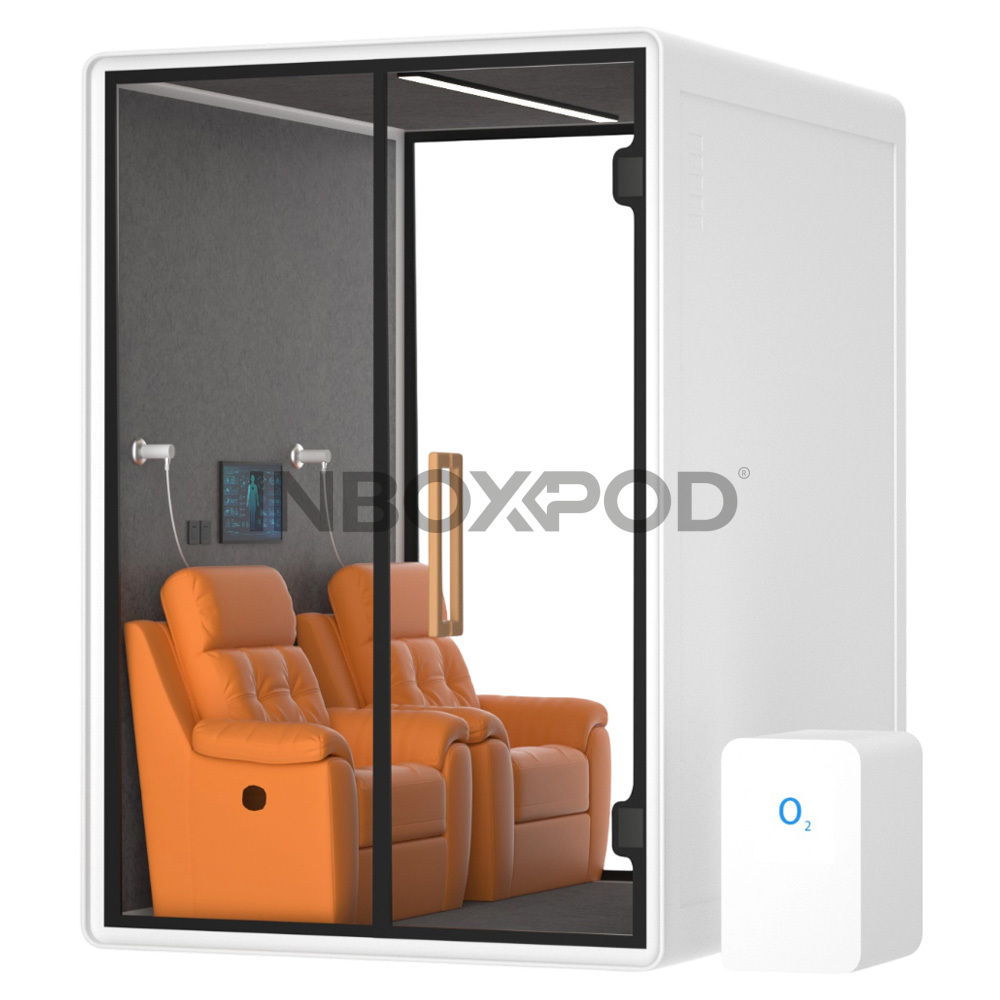
Understanding safety standards and certifications is essential when evaluating oxygen health systems hyperbaric chamber solutions. This article summarizes regulatory frameworks, technical standards, testing and certification processes, and practical compliance steps for buyers and operators — with specific guidance for soundproof, multi-seat products such as the INBOXpod Double Seat Soundproof Oxygen Pod. We reference authoritative sources to help you verify claims and make informed procurement, installation, and operational decisions.
Understanding Safety Standards for Hyperbaric Oxygen Systems
Regulatory frameworks that govern hyperbaric oxygen systems
Hyperbaric oxygen systems may be regulated as medical devices where they are indicated for therapeutic use. In the United States and many other jurisdictions, manufacturers must comply with medical device regulations enforced by agencies such as the U.S. Food and Drug Administration (FDA). Even when a unit is marketed for wellness or recreational oxygenation, local laws may impose safety, electrical, pressure-vessel, and gas-handling requirements. The regulatory classification determines premarket submissions, labeling, and post-market obligations.
Key international standards and consensus guidance
Beyond national regulations, international standards define design, manufacturing, and quality-management expectations. For example, ISO 13485 defines quality management for medical device manufacturers, and ISO 14971 outlines risk management for medical devices. Specialty societies such as the Undersea and Hyperbaric Medical Society (UHMS) publish clinical and safety guidance specific to hyperbaric oxygen therapy, which operators should reference for clinical protocols and chamber safety practices.
Why semantic compliance matters: oxygen health systems hyperbaric chamber context
When evaluating an oxygen health systems hyperbaric chamber, it's important to confirm not only formal certifications but also that the product meets semantic expectations — e.g., proper oxygen concentration controls, pressure relief valves, fire-mitigation features, and monitoring systems. Certifications and documented test reports provide traceability and evidence that the system adheres to recognized safety principles applicable to pressurized, oxygen-rich environments.
Certifications and Testing: What to Look For
Design, manufacturing, and quality certifications
Key certifications that demonstrate a manufacturer’s commitment to safety and quality include:
- ISO 13485 certification — ensures a quality management system for medical device design and production.
- CE marking (EU) — indicates conformity with relevant European directives and standards for medical devices and pressure equipment.
- National approvals — for example, FDA clearance or registration where applicable.
These certifications help buyers verify that processes for design control, supplier management, traceability, and post-market surveillance are in place.
Performance, pressure and safety testing
Look for documented testing that covers:
- Pressure integrity and leak testing (static and cyclic) — validates the chamber’s structural performance under operational conditions.
- Oxygen monitoring and alarm function tests — ensures accurate oxygen concentration sensing and timely alarms for unsafe conditions.
- Fire and ignition risk mitigation testing — evaluates materials and system design in oxygen-enriched atmospheres.
Independent third-party test reports (e.g., notified bodies in the EU or accredited test labs) add credibility. Clinical and engineering white papers that describe bench testing and failure-modes analyses are valuable references; see clinical guidance from UHMS for therapy safety considerations (UHMS).
Electrical safety and EMC
Since hyperbaric and oxygen systems include electrical controls and monitoring, ensure compliance with electrical safety standards (e.g., IEC 60601 series for medical electrical equipment) and electromagnetic compatibility (EMC) standards. Electrical components should be rated for oxygen-enriched environments or isolated properly to minimize ignition risk.
Design Considerations and Acoustic Safety for the INBOXpod Double Seat Soundproof Oxygen Pod
INBOXpod Double Seat Soundproof Oxygen Pod — product overview
INBOXpod Double Seat Soundproof Oxygen Pod
An oxygen therapy space customized for double social interaction and health, with a double-seat design to promote a win-win situation for interaction and health. External size: W1600×D1929×H2300 mm; internal size: W1466×D1854×H2166 mm. You can improve cardiovascular function and concentration through oxygen therapy with friends and colleagues in a quiet and efficient acoustic environment, making health and social interaction complement each other.
Acoustic and environmental controls: why these matter
Soundproofing is a design advantage for wellness environments but must be balanced with safety requirements for oxygen systems. Acoustic panels and seals should be made from non-combustible or low-flame-propagation materials suitable for oxygen-enriched atmospheres. The pod’s ventilation and oxygen delivery systems must maintain safe oxygen concentrations and provide adequate exchange to prevent oxygen accumulation outside intended zones.
Pressure, structural safety and emergency egress
Although many wellness oxygen pods operate near ambient pressure (not true hyperbaric pressures), the term hyperbaric implies pressurization. If the INBOXpod is marketed or configured with pressurization capability, it must meet pressure-vessel standards and include pressure-relief devices, validated seals, and emergency egress features. Clear labeling and operator instructions are essential, and if the unit reaches pressures used for clinical hyperbaric therapy, clinical oversight, credentialing, and appropriate monitoring should be required.
Compliance Checklist and Practical Steps for Buyers and Operators
Pre-purchase verification
Before purchasing an oxygen health systems hyperbaric chamber or a soundproof oxygen pod like INBOXpod, verify:
- Manufacturer certifications (ISO 13485, CE marking if applicable, FDA status).
- Independent test reports for pressure, oxygen monitoring, and fire safety.
- Material safety data on interior finishes and acoustic treatments showing suitability for oxygen-enriched environments.
Installation, commissioning and staff training
Ensure proper installation by trained technicians and a formal commissioning process that includes: leak and pressure tests, oxygen concentration calibration, alarm verification, and emergency procedure drills. Staff should be trained in oxygen safety, egress procedures, and basic troubleshooting. Clinical use should be governed by written protocols aligned with UHMS or local clinical guidance (UHMS).
Operational monitoring, maintenance and record-keeping
Maintain logs for maintenance, testing, and incident reports. Regular preventative maintenance should cover seals, oxygen concentrators, compressors, alarm systems, and the integrity of acoustic materials. Implement a corrective action process and periodic audits to ensure ongoing compliance with applicable standards and local regulations.
| Standard / Organization | Scope | Main focus | Relevance to INBOXpod |
|---|---|---|---|
| FDA (U.S.) | Medical device regulation and oversight | Premarket clearance, labeling, post-market surveillance | Needed if marketed for medical therapy in the U.S.; check intended use and claims |
| ISO 13485 | Quality management for medical devices | Design controls, production, risk management | Indicates manufacturer’s quality system; important for procurement |
| Undersea & Hyperbaric Medical Society (UHMS) | Clinical and safety guidance for hyperbaric medicine | Clinical protocols, chamber safety, operational best practices | Critical for therapy protocols and operator training |
| WHO — Oxygen therapy | Global guidance on oxygen therapy | Safe oxygen delivery, clinical indications, resource guidance | Helpful for clinical-policy context and safe oxygen handling |
Risk Mitigation and Best Practices for Safe Operation
Fire prevention and oxygen-enriched atmosphere control
Oxygen-rich atmospheres increase combustion risk. Best practices include:
- Using only oxygen-compatible materials and lubricants in oxygen-enriched areas.
- Following strict no-smoking and no-ignition policies near units.
- Ensuring electrical systems are designed for oxygen environments or are sufficiently isolated.
Documented risk assessments per ISO 14971 are recommended when oxygen is used at elevated concentrations or pressures.
Monitoring, alarms and emergency response
Real-time monitoring of oxygen concentration, pressure (if pressurized), temperature, and carbon dioxide buildup is essential. Alarms must be audible and visible both inside and outside the pod. Emergency response plans should include immediate evacuation procedures, power-outage protocols, and access to medical help if therapy is being performed for clinical reasons.
Documentation, traceability and reporting
Maintain device history records, maintenance logs, training records, and incident reports. If the product is regulated as a medical device, follow mandatory reporting rules for adverse events to the appropriate authority (e.g., FDA in the United States). Good documentation improves safety, supports warranty and service claims, and helps with regulatory inspections.
Frequently Asked Questions (FAQ)
Is the INBOXpod a medical hyperbaric chamber?
The INBOXpod Double Seat Soundproof Oxygen Pod is designed as an oxygen therapy and wellness pod. Whether it is classified as a medical hyperbaric chamber depends on the configuration and intended use. If used or marketed for clinical hyperbaric therapy (pressurized oxygen therapy for medical conditions), it must meet medical device regulations and pressure-chamber standards applicable in the jurisdiction of use. For wellness uses at ambient pressure, different safety and local consumer-product rules may apply.
What certifications should I request from the manufacturer?
Request copies of ISO 13485 certification, any applicable CE or other regional conformity markings, independent test reports for pressure and oxygen-safety testing, material safety data for interior finishes, and documentation of electrical safety and EMC testing. If the unit is intended for medical use, request evidence of regulatory clearance or classification (e.g., FDA status).
How do I know if the pod is safe to use in an office or public wellness space?
Verify material compatibility with oxygen-enriched environments, ensure proper ventilation and oxygen concentration monitoring, confirm electrical safety ratings, and require staff training and signage. A documented risk assessment, commissioning checklist, and periodic maintenance schedule are minimal expectations for safe operation in shared spaces.
Do I need clinical staff to operate the INBOXpod?
For wellness uses at ambient pressure, trained facility staff can operate the pod following the manufacturer's instructions and safety protocols. If the device is used for therapeutic hyperbaric treatment (pressurized and intended for treating medical conditions), clinical oversight by appropriately credentialed personnel and adherence to clinical guidelines (e.g., UHMS) is necessary.
Where can I find more authoritative guidance?
Authoritative sources include regulatory agencies and specialty societies: the FDA, ISO standards pages, the UHMS for hyperbaric guidance, and the WHO for oxygen therapy principles.
Contact Sales / View Product
If you are evaluating oxygen health systems hyperbaric chamber options for wellness or clinical use, contact our team to discuss certification documents, installation requirements, and trial demonstrations for the INBOXpod Double Seat Soundproof Oxygen Pod. Our specialists can provide technical datasheets, independent test reports, and commissioning checklists to support safe deployment.
How Prefabricated Office Pods Save Time and Installation Costs

12 Best Affordable Office Phone Booths of 2026: Ranked by Real Soundproofing Tests
Logistics and Shipping Considerations for INBOXpod Purchases
Customization Options for Silence Booth V Series-XXL
Home-demo
What materials are used in the construction of the booths?
Our booths are made from sustainable, high-quality materials including aluminum alloy frames and acoustic panels designed for optimal soundproofing.
What is the typical sound insulation level of your acoustic booths?
Our booths typically achieve up to 27 dB noise reduction, meeting Class B sound insulation standards suitable for offices and study environments.
Can the booths be customized to fit specific space requirements?
Yes, we offer flexible customization options including size, color, and additional features to perfectly suit your needs.
Do you provide after-sales support and warranty?
Yes, we provide comprehensive after-sales service and warranty to ensure long-term satisfaction with our products.
How long does it take to assemble an INBOXpod booth?
Most of our booths can be assembled without tools in about 30 minutes, making installation quick and hassle-free.
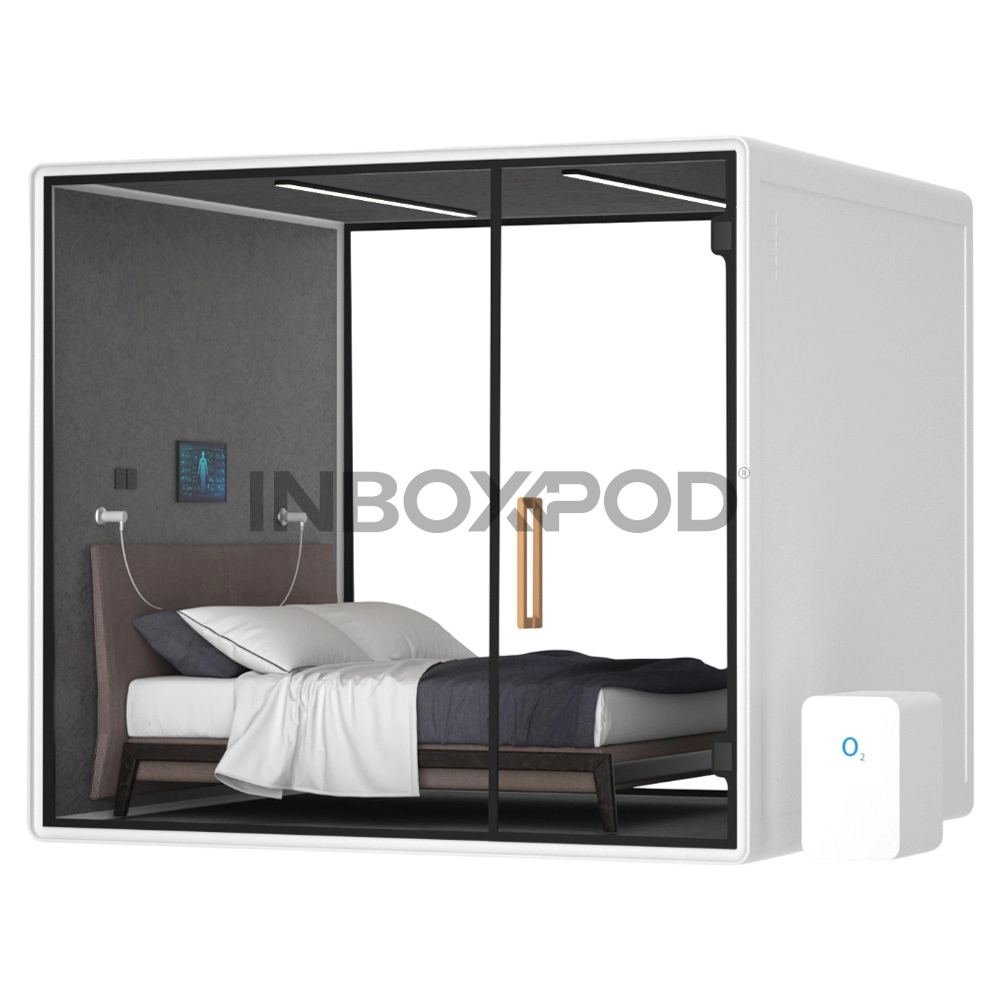
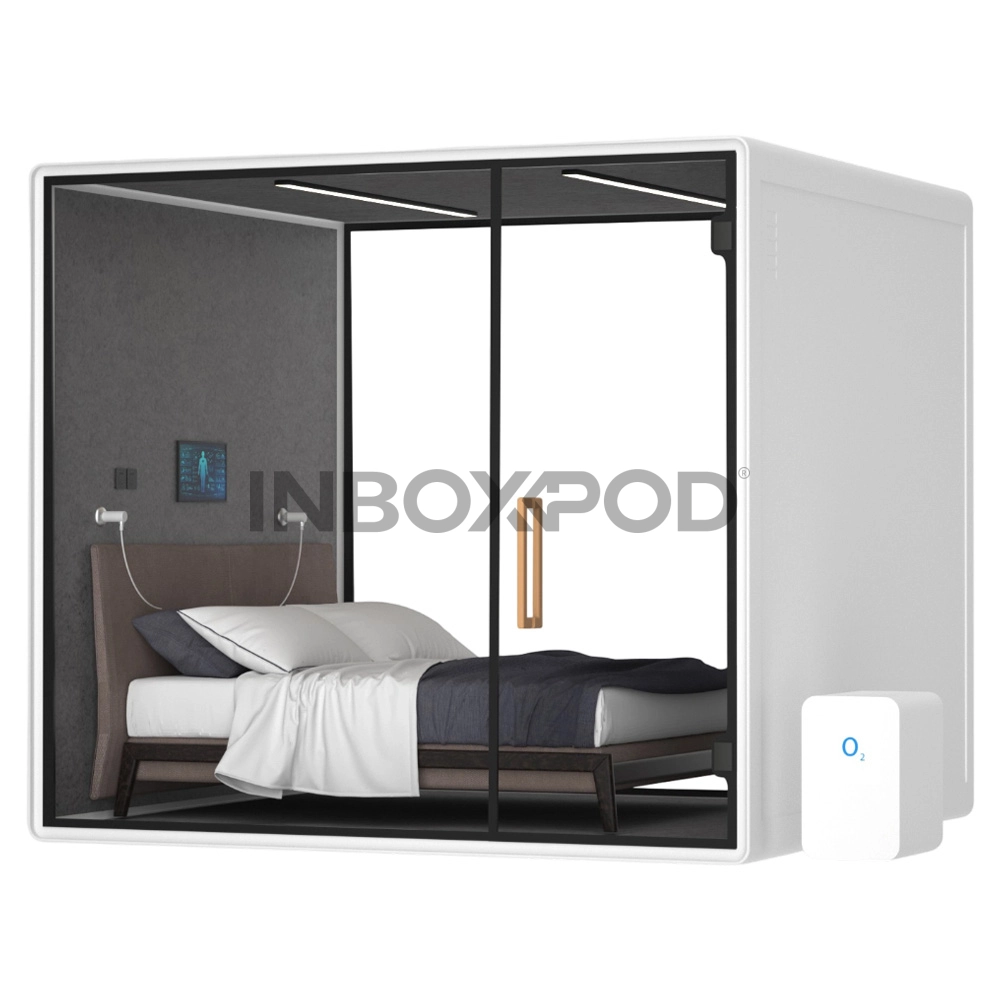
INBOXpod Soundproof Double Bed (small) Oxygen Pod
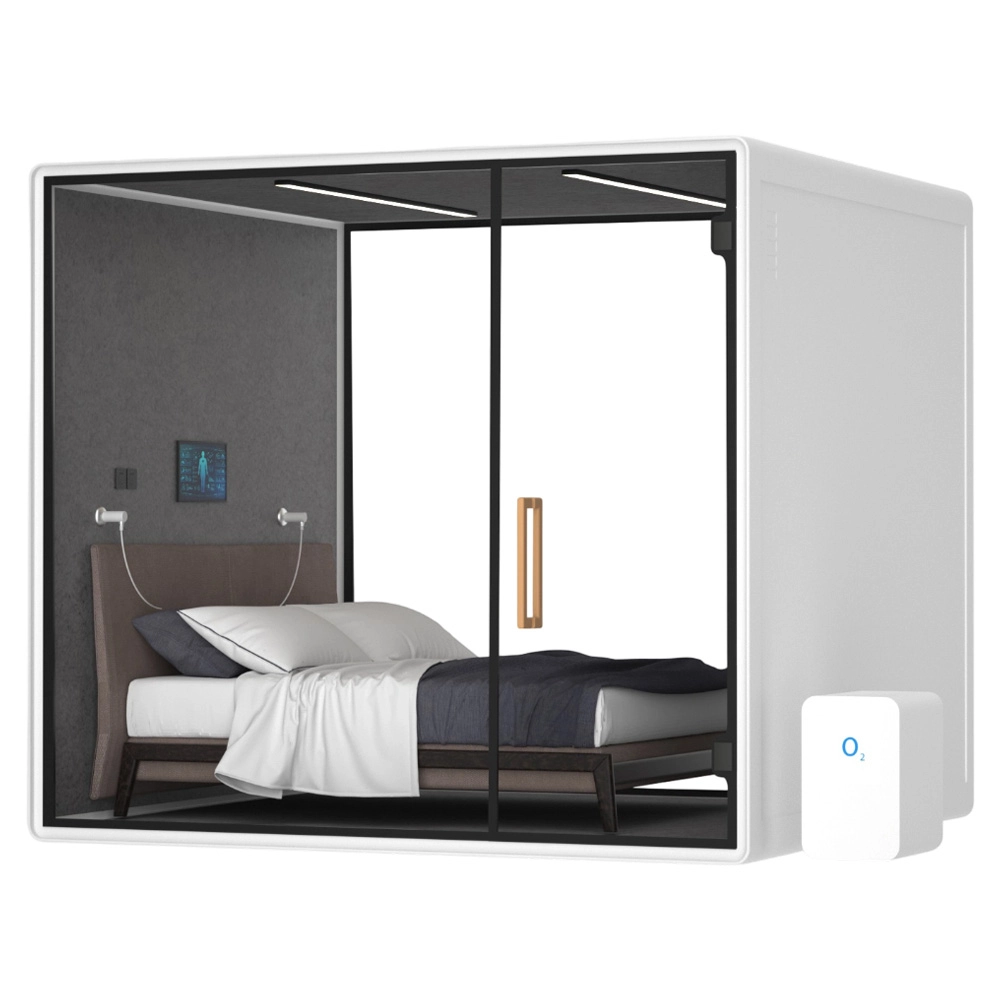
A double oxygen therapy option that balances space and experience, with a small double-bed layout suitable for various scenarios. External size: W2300×D1854×H2300 mm; internal size: W2300×D1929×H2300 mm. You can share the high-oxygen environment here with relatives and friends, relieve stress, improve physical fitness, and gain health and vitality in company.
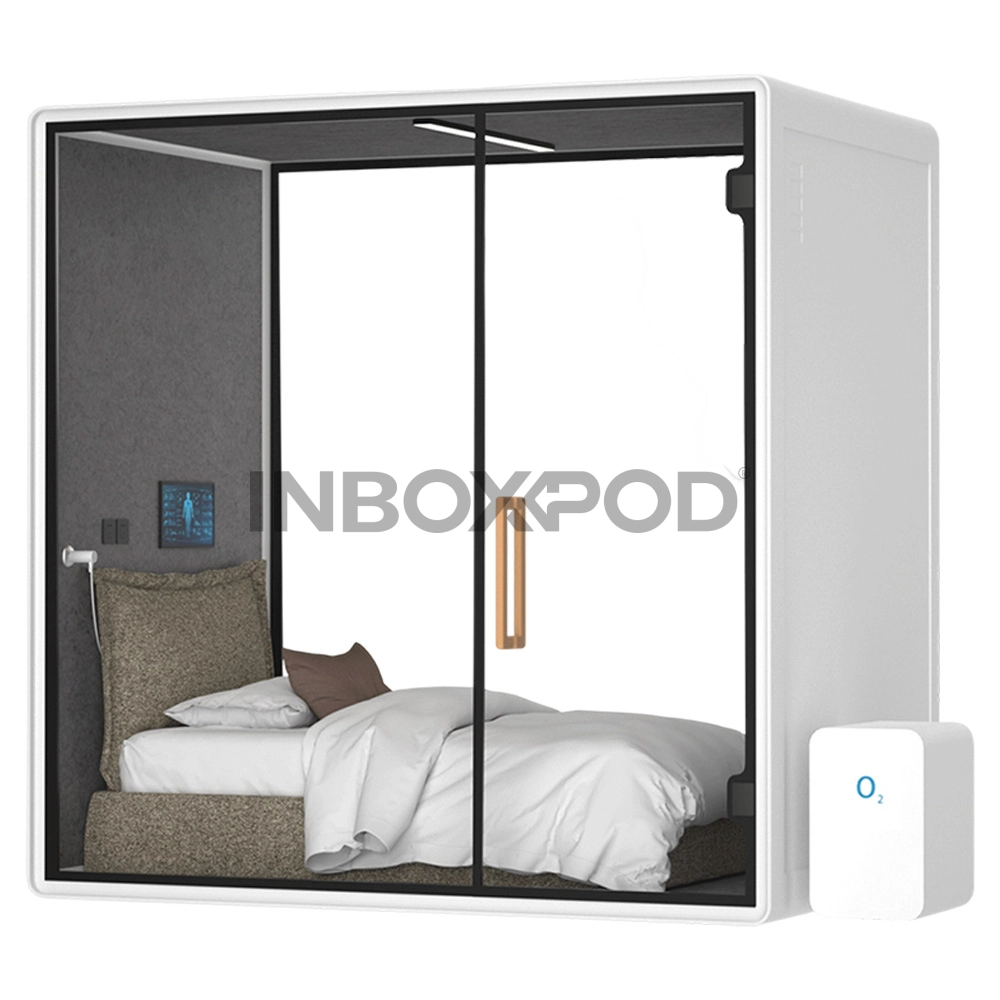
Double bed (large) Soundproof Oxygen Pod
A shared health oxygen therapy world for families, with a large double-bed design to meet the comfort needs of two people. External size: W2300×D2379×H2300 mm; internal size: W2166×D2304×H2166 mm. Let you and your family or partner enjoy high-oxygen nourishment together, improve body functions, delay aging, and embrace a healthy life with intimate company.
Soundproof Single Bed Oxygen Pod Therapy
Create an immersive deep health oxygen therapy space for you, with a single bed design for ultimate comfort. External size: W2300×D1478×H2300 mm; internal size: W2166×D1403×H2166 mm. Enjoy the nourishment of high-concentration oxygen while lying down, improve sleep, relieve fatigue, enhance immunity, and start a journey of health renewal.
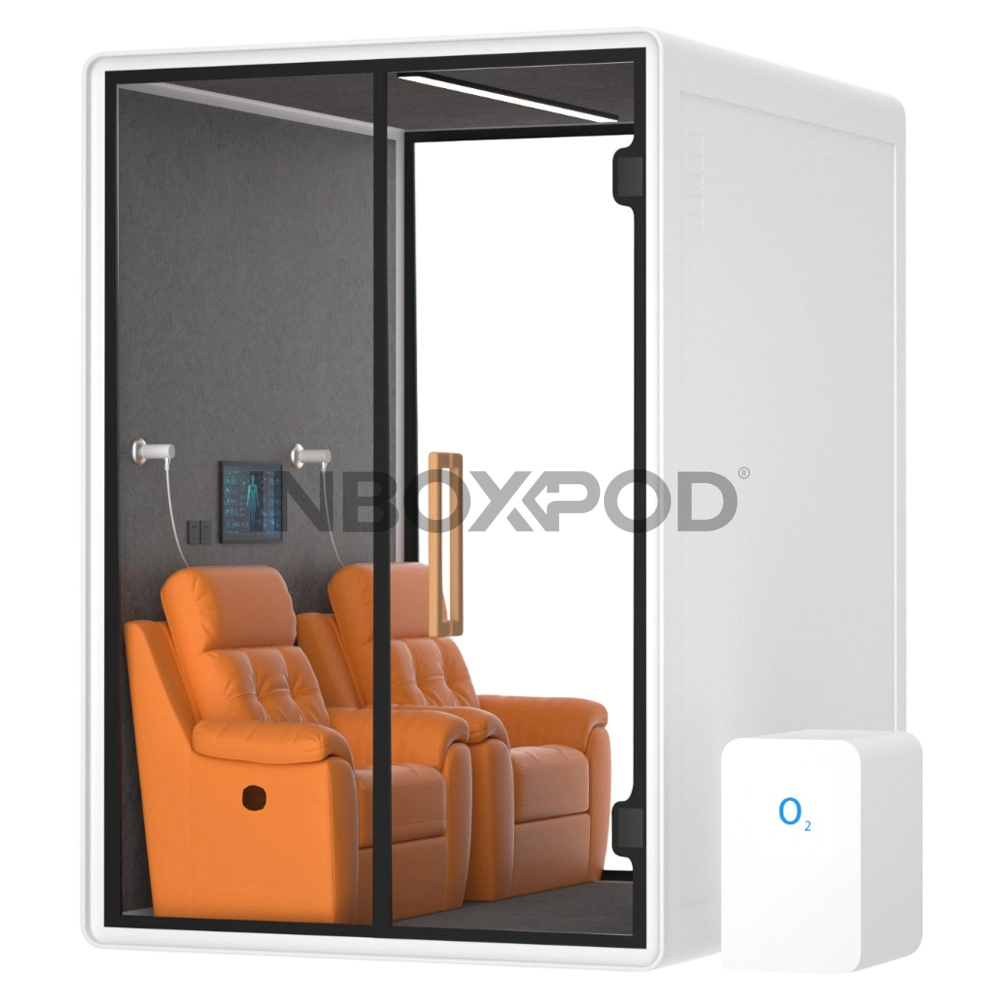
INBOXpod Double Seat Soundproof Oxygen Pod
An oxygen therapy space customized for double social interaction and health, with a double-seat design to promote a win-win situation for interaction and health. External size: W1600×D1929×H2300 mm; internal size: W1466×D1854×H2166 mm. You can improve cardiovascular function and concentration through oxygen therapy with friends and colleagues in a quiet and efficient acoustic environment, making health and social interaction complement each other.
Whatsapp: +8613535292957