
Soundproof Pod Acoustic Ratings: Understanding STC and NRC
- Why acoustic ratings matter for soundproof office pod buyers
- What is STC and why it matters for a soundproof office pod
- What is NRC and how it affects comfort inside a soundproof office pod
- Key differences: STC vs NRC (comparison table)
- How test methods and installation affect real-world performance of a soundproof office pod
- Practical guidance: selecting STC and NRC targets by use case for soundproof office pod
- How to verify acoustic claims when buying a soundproof office pod
- Cost vs performance: what to expect from High Quality soundproof office pod solutions
- INBOXpod — product capability and what sets a leading soundproof pod maker apart
- Why choose INBOXpod’s soundproof office pod, oxygen pods, and soundproof study pod
- Checklist: specifying acoustic performance for procurement of a soundproof office pod
- Common trade-offs and realistic expectations for soundproof office pod performance
- Contact INBOXpod for specification support or product viewing
- Frequently Asked Questions (FAQs)
- 1. Which is more important for privacy: STC or NRC?
- 2. Is an STC rating from the manufacturer trustworthy?
- 3. Can I improve a pod’s field performance after installation?
- 4. What STC should I choose for a recording pod?
- 5. Do glass windows always reduce STC significantly?
- 6. How do I account for HVAC noise when choosing a pod?
- 7. Can pods meet legal privacy requirements (e.g., for counseling)?
- References
Why acoustic ratings matter for soundproof office pod buyers
Choosing a soundproof office pod requires understanding acoustic ratings — not just marketing claims. Two industry-standard metrics, Sound Transmission Class (STC) and Noise Reduction Coefficient (NRC), are commonly quoted. They measure very different acoustic behaviors: STC quantifies how much airborne sound is blocked between spaces, while NRC describes how much sound is absorbed within a space. For anyone evaluating a soundproof office pod for privacy, meeting rooms, focus work, or healthcare applications, knowing which metric matters and what typical pod ratings mean is essential.
What is STC and why it matters for a soundproof office pod
STC (Sound Transmission Class) is a single-number rating that summarizes a partition's ability to reduce airborne sound transmission across a band of frequencies important to human speech. STC is calculated using standardized laboratory measurements (see ASTM E90 / classified by ASTM E413 and ISO 717-1). Higher STC means better isolation from external noise or from adjacent spaces. For soundproof office pod buyers, STC is the primary performance indicator when the goal is speech privacy and preventing conversations from being heard outside the pod.
Typical interpretation for STC in workplace pods:
- STC 25–30: Minimal reduction — normal speech easily audible outside.
- STC 31–35: Moderate reduction — raised voices still intelligible; limited privacy.
- STC 36–45: Good privacy for conversations; soft speech may be inaudible outside.
- STC 46+: Near-complete speech confidentiality in typical office noise conditions.
When specifying pods, aim for STC ratings appropriate to the intended use: private phone calls and HR interviews typically need STC 40+, while focus pods for individual work can be served by STC 35–40 depending on surrounding noise.
What is NRC and how it affects comfort inside a soundproof office pod
NRC (Noise Reduction Coefficient) is a single-number average of sound absorption coefficients measured across octave bands (typically 250, 500, 1000, and 2000 Hz), per ASTM C423. NRC describes how much sound energy is absorbed by interior surfaces — it does not measure how much sound escapes. For pods, NRC tells you about internal acoustics: echo, reverberation time, and speech intelligibility inside the pod.
Practical NRC guidance for pods:
- NRC 0.0–0.25: Very reflective — will sound “live” and echo-prone; poor speech clarity for conferencing.
- NRC 0.3–0.5: Moderately damped — acceptable for short calls but not ideal for long meetings.
- NRC 0.6–0.85: Well-damped — clear speech, comfortable for discussions and calls.
- NRC 0.9+: Highly absorptive — very quiet interior, suitable for recording or critical listening.
For a soundproof office pod, designers typically target NRC between 0.6 and 0.8 to balance conversational clarity and a comfortable, non-dead acoustic.
Key differences: STC vs NRC (comparison table)
| Metric | Measured Property | Test Standard | Relevance to soundproof office pod | Typical target range |
|---|---|---|---|---|
| STC | Airborne sound transmission loss (how much sound is blocked) | ASTM E90 / Classified per ASTM E413, ISO 717-1 | Determines speech privacy and external noise isolation | 35–50 (pod designs commonly 35–46) |
| NRC | Sound absorption averaged over key frequencies | ASTM C423 | Affects reverberation, internal clarity, and user comfort | 0.6–0.85 for comfortable pods |
How test methods and installation affect real-world performance of a soundproof office pod
Laboratory-rated STC and NRC numbers are starting points. Real-world results depend on installation details and ancillary paths for sound:
- Flanking transmission: Sound can bypass a pod through adjacent structures, floors, ceilings, or service openings. A pod installed on a noisy floor may perform worse than its lab STC unless floor isolation and sealing are addressed.
- Seals and doors: Gaps, HVAC penetrations, and door edges reduce effective STC dramatically. Proper gaskets, threshold seals, and continuous seals are essential.
- HVAC and ventilation: Mechanical systems can transmit noise; incorporating attenuators or decoupled duct runs preserves isolation.
- Furniture and glazing: Glass panels reduce STC relative to solid walls unless laminated acoustic glass is used; interior surface finishes change NRC.
When evaluating a soundproof office pod, request tested configurations or on-site verification (field STC or field insertion loss tests) and ask for details about seals, mounting, and HVAC integration.
Practical guidance: selecting STC and NRC targets by use case for soundproof office pod
Select acoustic targets based on purpose:
- Private phone booth: STC 35–40, NRC 0.6–0.8 — keeps most speech private and provides comfortable interior acoustics.
- Two-person meeting pod: STC 40–46, NRC 0.6–0.85 — better outside isolation and clear interior speech for collaboration.
- Recording or voice-over pod: STC 46+, NRC 0.9+ with specific low-frequency treatment — requires high isolation and highly controlled interior acoustics.
- Healthcare or counseling pod: STC 45+ and NRC 0.6–0.8, plus privacy-compliant door seals and HVAC masking as required by local codes.
How to verify acoustic claims when buying a soundproof office pod
Ask manufacturers for the following documentation:
- Laboratory test reports: ASTM E90/STC classification and ASTM C423 absorption test reports for the exact unit configuration (including glazing, door types, and ventilation options).
- Field test data: If available, on-site (field) STC or insertion loss measurements for installations in conditions similar to your site.
- Detail drawings: Joinery, seals, mounting and HVAC integration details to assess flanking paths.
- Warranty and service: Clear terms for acoustic performance and remediation if installed performance does not meet specified ratings.
Bring an acoustician or a qualified facilities engineer into procurement for mission-critical installations to validate claims and specify acceptance tests.
Cost vs performance: what to expect from High Quality soundproof office pod solutions
Higher STC/NRC performance generally increases cost due to heavier partition constructions, acoustic glass, multi-layer composites, and dedicated ventilation treatments. However, a well-designed mid-range pod (STC 38–44, NRC 0.6–0.8) often delivers most practical benefits for corporate offices without the High Quality necessary for studio-grade isolation. Cost drivers include: engineered absorption materials, multi-layer wall assemblies, specialized seals and doors, sound-rated glazing, and integrated HVAC attenuators.
INBOXpod — product capability and what sets a leading soundproof pod maker apart
INBOXpod, a pioneering brand of Guangdong Province INBOXPOD Company Limited, designs and manufactures modular acoustic pods that blend advanced acoustic engineering with sustainable materials and precision manufacturing. With over a decade of industry expertise, we deliver high-performance, fully soundproof solutions engineered for clarity, privacy, and durability. Our pods are versatile by design—adaptable for open-plan offices, education spaces, healthcare environments, retail and commercial settings, and wellness or study areas—so organizations can create focused, comfortable micro-environments without costly construction. Trusted by clients in more than 60 countries across North America, Europe and the Asia–Pacific region, INBOXpod combines a strong global distribution network with localized support to meet diverse market needs. We offer end-to-end OEM and ODM services, helping partners and brands take custom concepts from brief to market-ready product, whether for bespoke finishes, specialized acoustic performance, or integrated technology. Guided by a mission to enhance productivity and well-being and a vision to lead globally in soundproof solutions, INBOXpod is committed to continuous innovation, sustainability, and long-term partnerships that deliver measurable value and exceptional user experience.
Why choose INBOXpod’s soundproof office pod, oxygen pods, and soundproof study pod
- Proven acoustic engineering: lab-tested STC and NRC configurations with options for glass, solid walls, and upgraded seals.
- Modular manufacturing: rapid on-site deployment with repeatable quality and minimized floor disruption.
- Sustainability: selection of recyclable and low-VOC materials to support healthy indoor environments.
- Global experience: deliveries and local support in 60+ countries, which helps ensure installation meets local acoustic and building requirements.
- Customization and OEM/ODM services: tailored acoustics, finishes, and integrated tech packages for lighting, HVAC, and AV.
INBOXpod’s core product lines — soundproof office pod, oxygen pods, and soundproof study pod — span individual focus booths to multi-person meeting pods and specialized wellness booths, delivering configurable acoustic performance (STC/NRC) to match use-case requirements.
Checklist: specifying acoustic performance for procurement of a soundproof office pod
- Define the use case (phone booth, two-person meeting, recording).
- Set minimum STC and NRC targets based on the use case and surrounding environment.
- Request lab reports for the exact product configuration and field test results where available.
- Confirm door/threshold, ventilation, and sealing details in the contract.
- Plan for acceptance testing (on-site insertion loss or field STC) after installation.
Common trade-offs and realistic expectations for soundproof office pod performance
High STC against speech does not guarantee silence for low-frequency building noise (mechanical hum, footsteps). Low-frequency control often requires mass, decoupling, and specialized damping. Similarly, very absorptive interiors (high NRC) can feel unnaturally dead when overdone — balance is key. Vendors who provide both lab test results and installation guidelines give the clearest path to predictable outcomes.
Contact INBOXpod for specification support or product viewing
If you are specifying soundproof office pods for a workplace, education or healthcare project and need verified STC/NRC performance, contact INBOXpod for datasheets, test reports, and consultation. We can advise on the most cost-effective configuration to meet privacy, speech intelligibility, and comfort requirements and provide OEM/ODM options for customized branding and acoustics.
Frequently Asked Questions (FAQs)
1. Which is more important for privacy: STC or NRC?
STC is more important for privacy because it measures how much sound is blocked from leaving the pod. NRC affects interior sound quality but not how much sound escapes.
2. Is an STC rating from the manufacturer trustworthy?
Manufacturer STC values are reliable when supported by third-party laboratory reports (ASTM E90/E413). Always request the test report for the exact configuration you plan to buy, including doors and glazing options.
3. Can I improve a pod’s field performance after installation?
Yes — common remedies include sealing gaps around doors, adding mass-loaded barriers to flanking surfaces, upgrading seals and door thresholds, and using duct attenuators for ventilation paths. A qualified acoustical consultant can perform an on-site assessment and recommend targeted fixes.
4. What STC should I choose for a recording pod?
For recording or broadcast, aim for STC 46+ combined with interior absorption targeting low reverberation (NRC 0.9+ or specific octave-band treatment). Low-frequency isolation often requires additional mass and decoupling.
5. Do glass windows always reduce STC significantly?
Standard glass reduces STC compared with solid walls, but laminated acoustic glazing or multi-layer insulated glass with air gaps can achieve high STC values. Verify glazing configurations with lab reports for the pod model you choose.
6. How do I account for HVAC noise when choosing a pod?
Ask the manufacturer about integrated ventilation options with attenuation or add silencers in ductwork. Specify mechanical noise limits (NC or dBA) for the ventilated pod to ensure internal comfort without compromising STC.
7. Can pods meet legal privacy requirements (e.g., for counseling)?
Pods can meet privacy requirements when designed and installed to appropriate STC levels and when combined with administrative controls. Check local regulations for counseling and healthcare privacy and validate with field tests.
Ready to evaluate soundproof office pods for your space? Contact INBOXpod for product datasheets, laboratory reports, and a consultation to match acoustic performance to your needs.
References
- ASTM E90: Standard Test Method for Laboratory Measurement of Airborne Sound Transmission Loss of Building Partitions — ASTM International. Accessed 2025-11-29: https://www.astm.org/Standards/E90.htm
- ASTM E413: Classification for Rating Sound Insulation — ASTM International. Accessed 2025-11-29: https://www.astm.org/Standards/E413.htm
- ASTM C423: Standard Test Method for Sound Absorption and Sound Absorption Coefficients by the Reverberation Room Method — ASTM International. Accessed 2025-11-29: https://www.astm.org/Standards/C423.htm
- ISO 717-1: Acoustics — Rating of Sound Insulation in Buildings and of Building Elements — ISO. Accessed 2025-11-29: https://www.iso.org/standard/14111.
- Acoustical Surfaces — Explanation of STC and NRC ratings. Accessed 2025-11-29: https://www.acousticalsurfaces.com/learning_center/acoustic_basics/stc_nrc.htm
- Gensler Research Institute, Workplace Survey insights on privacy and focused work (context on demand for pods). Accessed 2025-11-29: https://www.gensler.com/research
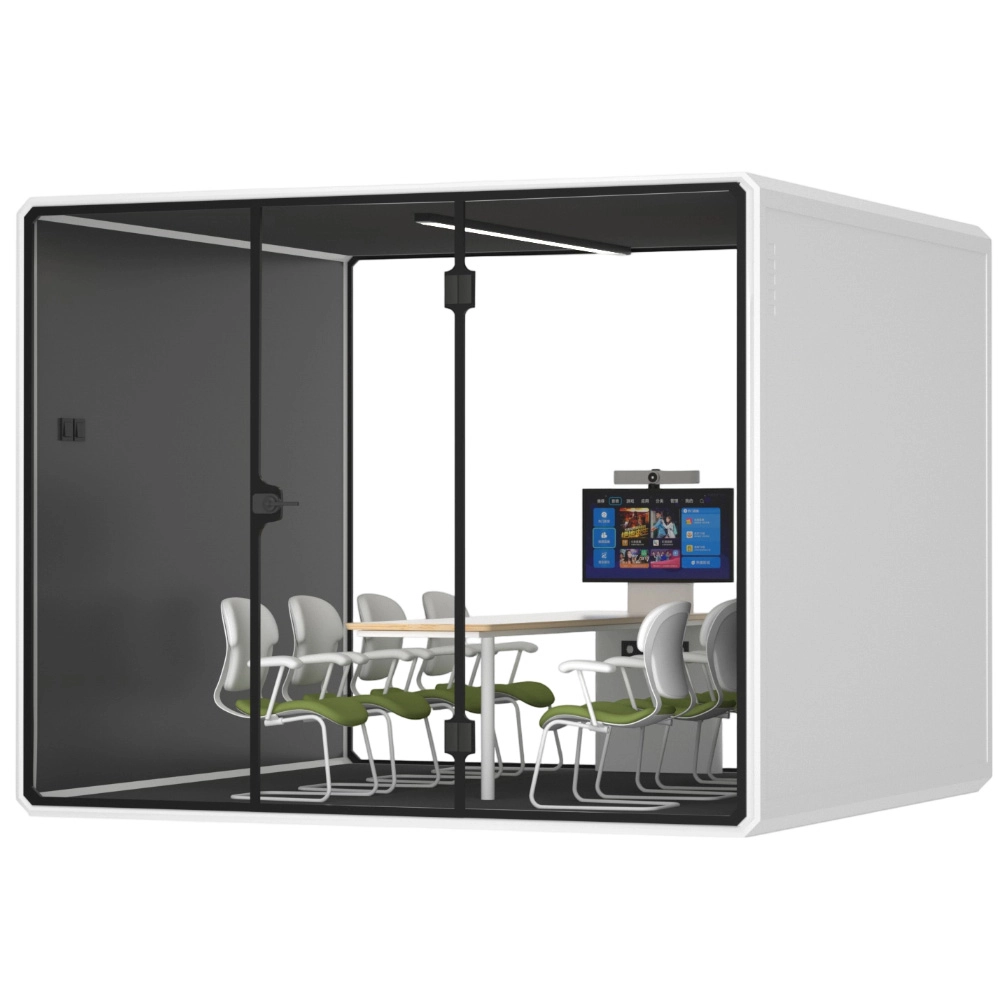
Customization Options for Silence Booth V Series-XXL
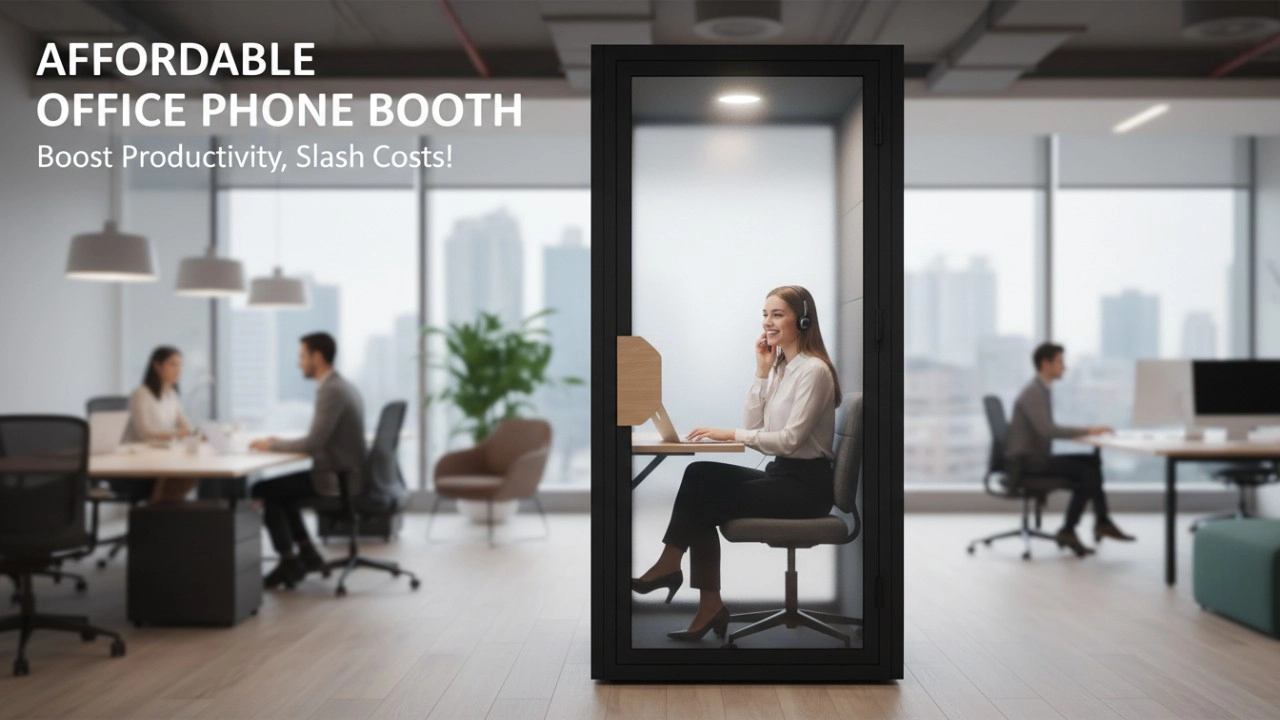
12 Best Affordable Office Phone Booths of 2026: Ranked by Real Soundproofing Tests
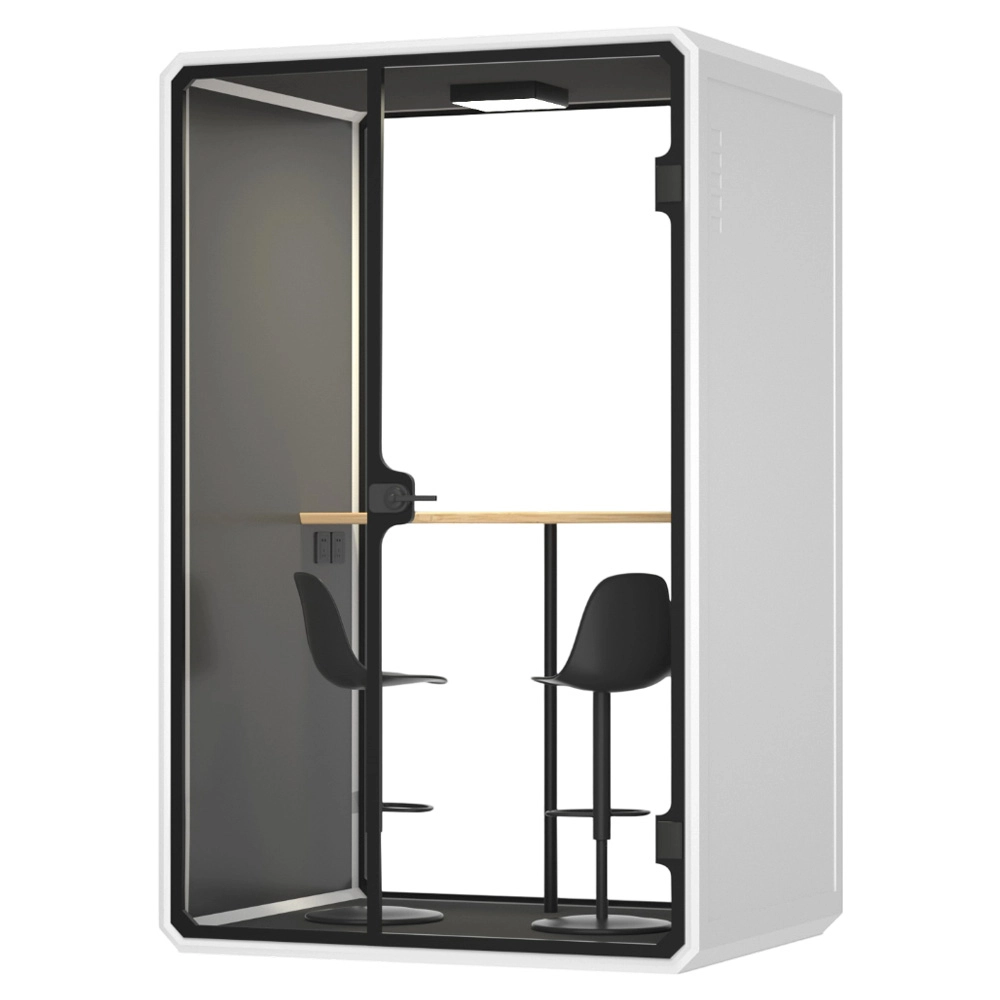
Customizing Silence Booths: For Brand and Workflow Needs
Comparing Prefab Office Pods vs Traditional Construction
Home-demo
Can the booths be customized to fit specific space requirements?
Yes, we offer flexible customization options including size, color, and additional features to perfectly suit your needs.
What is the typical sound insulation level of your acoustic booths?
Our booths typically achieve up to 27 dB noise reduction, meeting Class B sound insulation standards suitable for offices and study environments.
Do you provide after-sales support and warranty?
Yes, we provide comprehensive after-sales service and warranty to ensure long-term satisfaction with our products.
What materials are used in the construction of the booths?
Our booths are made from sustainable, high-quality materials including aluminum alloy frames and acoustic panels designed for optimal soundproofing.
How long does it take to assemble an INBOXpod booth?
Most of our booths can be assembled without tools in about 30 minutes, making installation quick and hassle-free.
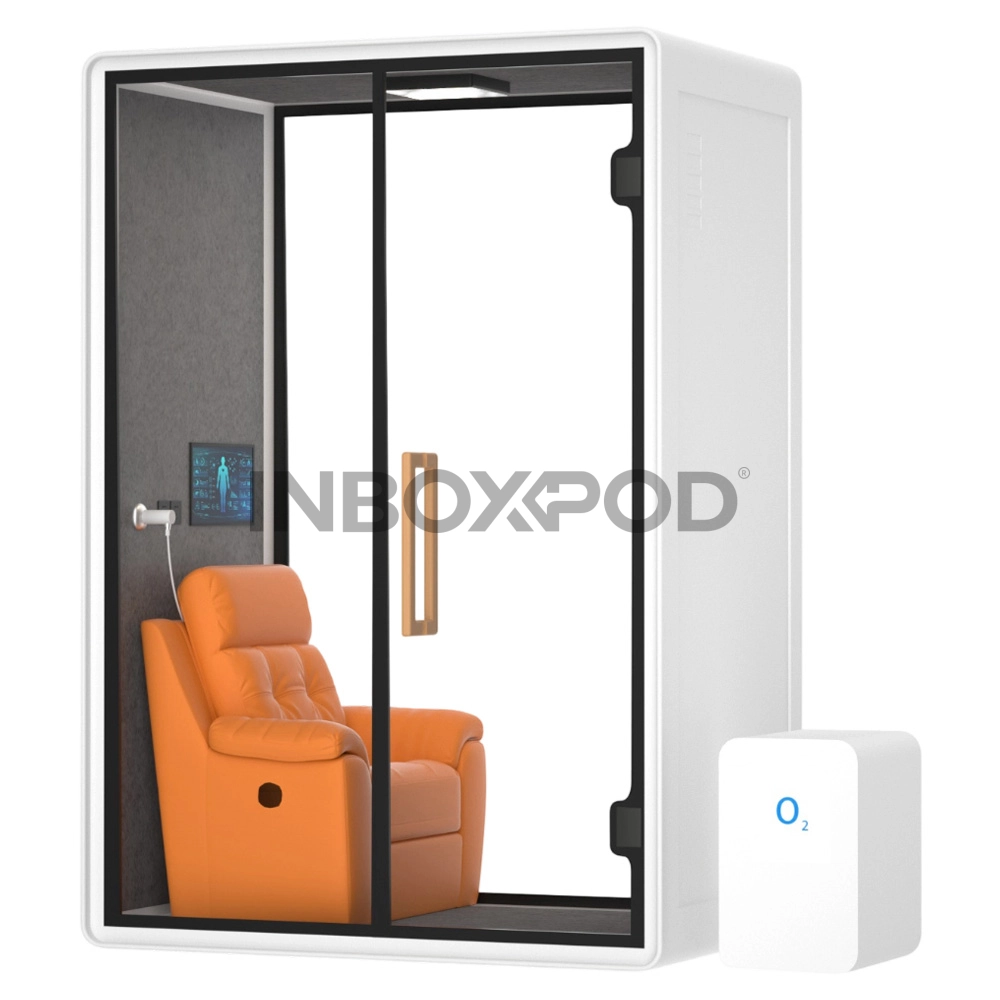
INBOXpod Soundproof Single seat Oxygen Pod
A delicate and compact personal oxygen therapy secret, with a single-seat layout that is flexible and convenient. External size: W1600×D1028×H2300 mm; internal size: W1466×D953×H2166 mm. Create a quiet, private domain for you, where you can inhale high-purity oxygen efficiently during daily relaxation or postoperative recovery, helping to improve cardiopulmonary function and mental state.
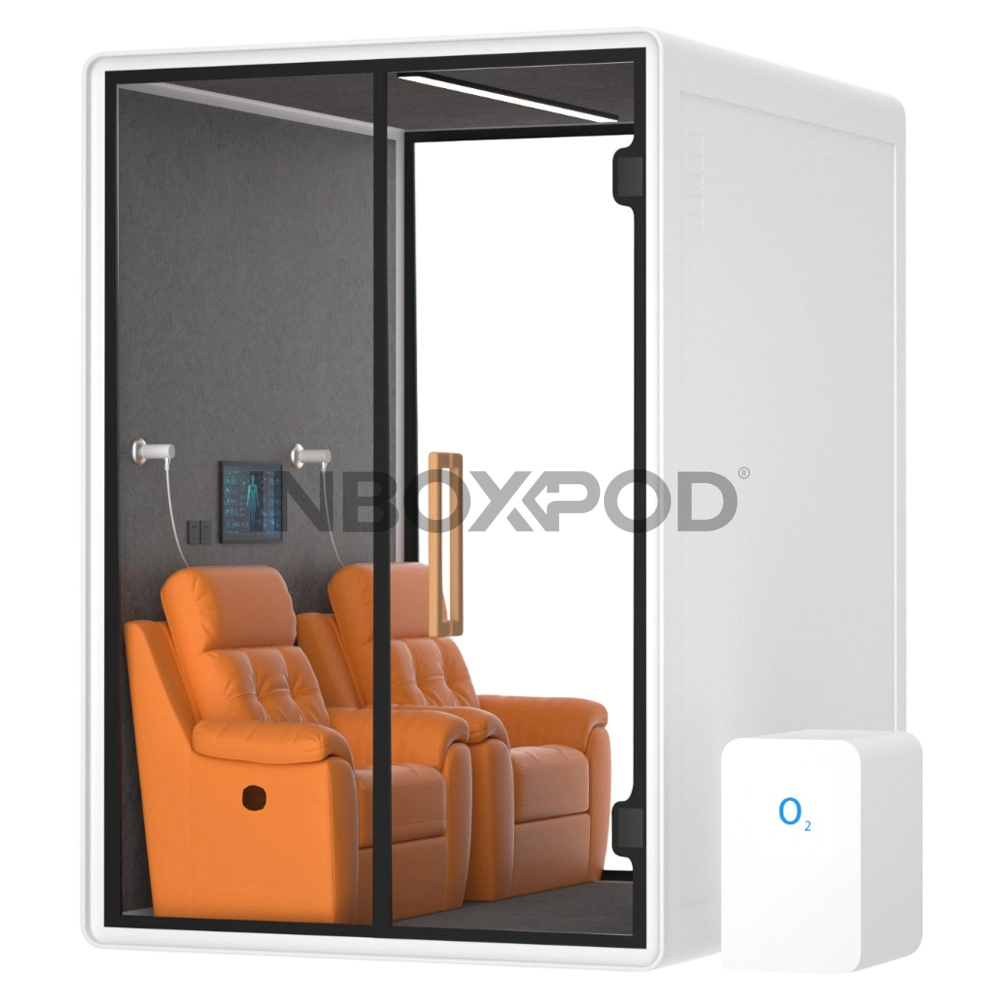
INBOXpod Double Seat Soundproof Oxygen Pod
An oxygen therapy space customized for double social interaction and health, with a double-seat design to promote a win-win situation for interaction and health. External size: W1600×D1929×H2300 mm; internal size: W1466×D1854×H2166 mm. You can improve cardiovascular function and concentration through oxygen therapy with friends and colleagues in a quiet and efficient acoustic environment, making health and social interaction complement each other.
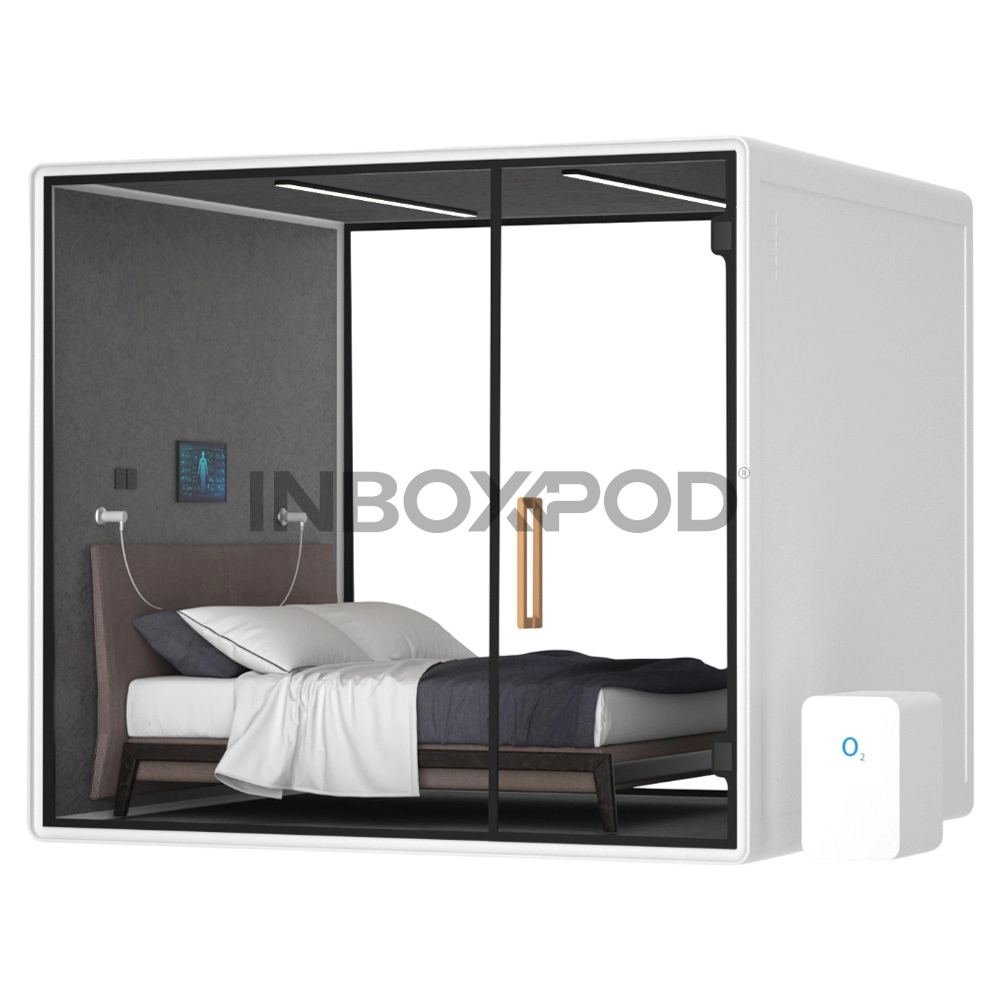
INBOXpod Soundproof Double Bed (small) Oxygen Pod
A double oxygen therapy option that balances space and experience, with a small double-bed layout suitable for various scenarios. External size: W2300×D1854×H2300 mm; internal size: W2300×D1929×H2300 mm. You can share the high-oxygen environment here with relatives and friends, relieve stress, improve physical fitness, and gain health and vitality in company.
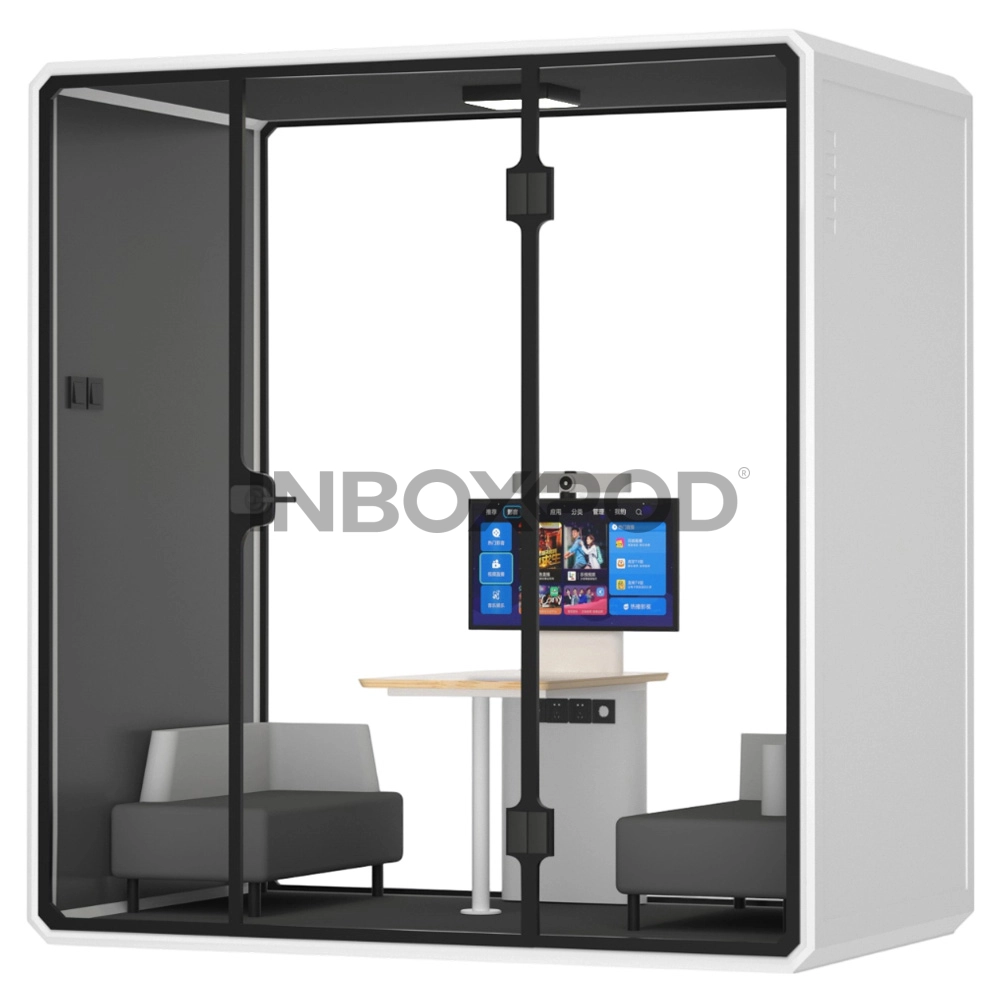
Silence Booth/Office Pod Prefabricated V series-L size
Designed for team collaboration and small meetings, the L-size booth provides a comfortable and acoustically optimized space for 4–6 people. With premium sound insulation, efficient ventilation, and integrated lighting and power systems, it ensures focus, privacy, and productivity—even in the busiest open offices.
Whatsapp: +8613535292957