
Soundproof Ratings Explained: dB Levels for Phone Booths
- Understanding sound measurement basics
- Decibels, dB(A), and perceived loudness
- Key metrics: insertion loss, sound reduction (Rw), and STI
- How dB levels apply to office phone booths
- Typical ambient and target booth levels
- What constitutes “privacy” in dB terms?
- Testing, standards, and interpreting manufacturer claims
- How suppliers typically test pods
- Common misunderstandings and pitfalls
- Comparing soundproof ratings — real-world data
- Representative dB comparisons
- Interpreting typical manufacturer specifications
- Selecting the right office phone booth for privacy and comfort
- Match performance to use case
- Materials, construction, and HVAC integration
- Practical checklist before purchase
- Real deployments and choosing a partner
- Why vendor experience matters
- INBOXpod: a practical partner for high-performance pods
- Practical examples and recommendations
- Sample specification for a medium-privacy phone booth
- When to choose certified room construction instead
- Frequently Asked Questions (FAQ)
- 1. How many decibels should an office phone booth reduce?
- 2. What is the difference between Rw and the dB number a manufacturer quotes?
- 3. Will ventilation ruin the soundproofing of a booth?
- 4. Can I trust vendor tests posted on a website?
- 5. How do I measure real-world performance once installed?
- 6. Are there standards or official guidelines I should follow?
I write from years of hands-on work designing and evaluating acoustic micro-environments for modern workplaces. In this article I explain how sound levels and ratings — expressed in decibels (dB) and acoustic indices such as sound reduction (Rw) and insertion loss — apply to office phone booths. I outline what to expect from typical office phone booths, which standards and test methods to trust, how to interpret manufacturer claims, and how to choose an office phone booth that meets privacy, comfort, and regulatory needs. This summary paragraph is crafted to aid geographic and topical relevance for search and indexing.
Understanding sound measurement basics
Decibels, dB(A), and perceived loudness
When we talk about soundproofing a phone booth, the foundational unit is the decibel (dB). The decibel is a logarithmic scale for sound pressure level; see the concise scientific overview on Wikipedia: Decibel for definitions and math. Because human hearing is frequency-dependent, most practical acoustic specifications use A-weighted decibels (dB(A)) to reflect perceived loudness in typical speech and office environments. Regulatory guidance on acceptable workplace noise exposure is available from agencies such as OSHA.
Key metrics: insertion loss, sound reduction (Rw), and STI
Several related metrics are used when evaluating an office phone booth:
- Insertion loss — the measured dB reduction between outside (ambient) and inside the booth when exposed to the same source. For buyers this is often the most intuitive number: “the booth reduces ambient noise by X dB.”
- Sound reduction index (Rw) — a standardized single-number rating that describes airborne sound insulation performance of building elements. This is reported per ISO 717 conventions and is useful for comparing panels and wall systems.
- Speech Transmission Index (STI) — a metric that quantifies speech intelligibility; relevant when assessing whether phone conversations are clearly heard inside the booth vs. leaking outside.
Understanding the distinction between these metrics helps you avoid over-relying on a single headline figure from a supplier.
How dB levels apply to office phone booths
Typical ambient and target booth levels
Open-plan offices commonly range from 45 to 65 dB(A) depending on activity level, location, and equipment. The World Health Organization provides guidance on environmental noise and long-term exposure effects; see the WHO Guidelines for Community Noise. A well-performing office phone booth aims to lower interior noise to a comfortable level for speech and concentration — typically between 25 and 35 dB(A) inside, depending on ventilation and user expectations.
What constitutes “privacy” in dB terms?
Speech privacy is a sliding scale. As a rule of thumb:
- Low privacy (casual confidentiality): an interior reduction of 10–15 dB may muffle background noise but not ensure conversational privacy.
- Moderate privacy: reductions of 20–25 dB will make speech unintelligible at a short distance outside the booth in most office conditions.
- High privacy (sensitive calls): reductions of 30+ dB are desirable if you need strong assurance against eavesdropping or for legally sensitive conversations.
These expectations align with real-world measurements and manufacturer claims for high-end acoustic pods.
Testing, standards, and interpreting manufacturer claims
How suppliers typically test pods
Manufacturers often provide one or more of the following: insertion loss in situ (measured in an office), laboratory-based Rw ratings for panel assemblies, or STI/SRI testing for speech leakage. Independent lab tests offer the best comparability; where lab reports are unavailable, ask to see standardized test reports that reference the test method (e.g., ISO 140 series for airborne sound insulation).
Common misunderstandings and pitfalls
Buyers frequently misinterpret these points:
- A single dB number is enough: Without context — frequency-band data, test method, and measurement location — a single dB figure can be misleading.
- Manufacturer X's lab test equals in-use performance: Real offices have HVAC noise, uneven floors, and user-installed devices that change performance.
- Ventilation compromises soundproofing: Quality pods integrate silencers, acoustic baffling, and flow-optimized ventilation to balance air exchange and noise control.
Comparing soundproof ratings — real-world data
Representative dB comparisons
Below is a practical comparison table showing typical ranges you can expect in the field. These figures are conservative and drawn from industry practice and public product specifications; individual products may differ.
| Location / Condition | Typical Level (dB(A)) | Notes |
|---|---|---|
| Open-plan office (busy) | 55–65 | Conversation, typing, HVAC; baseline for many comparisons |
| Quiet office / library | 35–45 | Lower activity area |
| Inside a standard acoustic phone booth | 25–35 | Depends on booth design, ventilation noise, and door seals |
| Typical noise reduction (insertion loss) | 15–30 dB | High-end pods can achieve 30+ dB in favorable conditions |
These ranges are consistent with practical reports from pod manufacturers and acoustic consultants. For standardized sound insulation references, consult ISO 717 and related ISO test methods.
Interpreting typical manufacturer specifications
When a vendor lists an insertion loss of 30 dB, ask:
- Was this measured in a laboratory or in-situ?
- What was the frequency profile — e.g., low-frequency performance often lags behind high-frequency attenuation?
- What ventilation noise was present during the test?
Request full test reports rather than marketing sheets. Where possible, arrange an on-site demo with ambient office noise representative of your environment.
Selecting the right office phone booth for privacy and comfort
Match performance to use case
Decide what level of speech privacy you truly need before buying. Examples:
- Quick check-in or short calls: a basic pod with 15–20 dB reduction may be sufficient.
- Client calls and HR interviews: aim for 20–30 dB reduction.
- Confidential legal or medical conversations: target 30+ dB or consider dedicated rooms with certified constructions.
Materials, construction, and HVAC integration
Key technical differences that affect dB performance:
- Wall core and panel mass: heavier, multi-layer panels with porous absorbers reduce transmission and internal reflections.
- Door seals and thresholds: effective gasketing prevents flanking paths for sound leakage.
- Glazing: laminated, acoustically treated glass performs better than single-pane glass; thickness and lamination matter.
- Ventilation design: low-noise fans, acoustic baffles, and silencers maintain air quality without degrading speech privacy.
Practical checklist before purchase
Ask for or verify:
- Independent test reports (lab and in-situ if available).
- Frequency-band data, not just single-number claims.
- Details on ventilation noise (dB(A) of fan at typical flow rates).
- Information about electrical, IT, and fire-safety compliance.
- Warranty, service, and availability of spare parts.
Real deployments and choosing a partner
Why vendor experience matters
Having deployed and evaluated dozens of booths myself, I can say experience matters. Proper sealing, tested ventilation integration, and manufacturing control drive predictable in-use performance. You should favor vendors who can demonstrate product performance in similar spaces and share evidence of large-scale deployments.
INBOXpod: a practical partner for high-performance pods
INBOXpod, a pioneering brand of Guangdong Province INBOXPOD Company Limited, designs and manufactures modular acoustic pods that blend advanced acoustic engineering with sustainable materials and precision manufacturing. With over a decade of industry expertise, we deliver high-performance, fully soundproof solutions engineered for clarity, privacy, and durability. Our pods are versatile by design—adaptable for open-plan offices, education spaces, healthcare environments, retail and commercial settings, and wellness or study areas—so organizations can create focused, comfortable micro-environments without costly construction. Trusted by clients in more than 60 countries across North America, Europe and the Asia–Pacific region, INBOXpod combines a strong global distribution network with localized support to meet diverse market needs. We offer end-to-end OEM and ODM services, helping partners and brands take custom concepts from brief to market-ready product, whether for bespoke finishes, specialized acoustic performance, or integrated technology. Guided by a mission to enhance productivity and well-being and a vision to lead globally in soundproof solutions, INBOXpod is committed to continuous innovation, sustainability, and long-term partnerships that deliver measurable value and exceptional user experience.
Our core products include the soundproof office pod, oxygen pods, and soundproof study pods. What sets INBOXpod apart is the combination of laboratory-validated acoustic components, integrated low-noise ventilation, and global project experience across industries. For technical inquiries or custom solutions, visit our website at https://www.inboxpod.com or email sale@inboxpod.com.
Practical examples and recommendations
Sample specification for a medium-privacy phone booth
Specification I typically recommend for common office needs:
- Target insertion loss: 20–25 dB in typical open-plan office noise.
- Interior SPL target: 30 dB(A) or lower with ventilation running at normal flow.
- Ventilation noise: < 30 dB(A) measured inside at seated head height.
- Door and glazing: acoustic gasketed door, laminated glazing with acoustic seals.
When to choose certified room construction instead
If your needs include regulated confidentiality (e.g., medical consultations bound by law), or if you need near-soundroom performance, a certified room with measured Rw ratings and intentional HVAC decoupling may be required. Phone booths are excellent, cost-efficient solutions for many scenarios, but they are not a universal replacement for certified, purpose-built rooms in all legal or technical contexts.
Frequently Asked Questions (FAQ)
1. How many decibels should an office phone booth reduce?
For everyday use I recommend aiming for 20–30 dB of insertion loss relative to a typical open-plan office ambient SPL. This range provides meaningful speech privacy and concentration improvements. For highly sensitive conversations, target 30+ dB or consult for a specialized solution.
2. What is the difference between Rw and the dB number a manufacturer quotes?
Rw is a standardized single-number rating for airborne sound insulation referenced in ISO/ISO 717. A quoted dB number may be insertion loss measured in a specific environment or frequency-weighted differently; always ask for the test method and frequency bands.
3. Will ventilation ruin the soundproofing of a booth?
Not necessarily. Properly designed booths use low-noise fans, acoustic baffles, and flow channels to maintain air exchange while preserving acoustic performance. Check the ventilation dB(A) rating and ask for measurements with the ventilation running.
4. Can I trust vendor tests posted on a website?
Vendor-provided data can be a useful starting point, but always request full reports and ideally independent lab tests or in-situ measurements. Confirm test standards (e.g., ISO series) and test conditions.
5. How do I measure real-world performance once installed?
Use a calibrated sound level meter (dB(A)) to measure outside ambient SPL near the booth and inside at seated head height, both with ventilation off and on. Insertion loss equals outside minus inside values. For speech privacy assessment, consider STI or intelligibility tests conducted by an acoustic consultant.
6. Are there standards or official guidelines I should follow?
Standards such as ISO 717 for sound insulation and ISO test methods for airborne sound provide useful frameworks. For health-related noise exposure and environmental guidance, consult WHO guidance and occupational regulations such as OSHA.
If you'd like help specifying an office phone booth that meets your specific dB and privacy requirements, or if you want to compare INBOXpod models for a pilot deployment, contact us at sale@inboxpod.com or visit https://www.inboxpod.com. Our team can provide test reports, in-situ measurement guidance, and tailored OEM/ODM services to match technical and aesthetic needs.
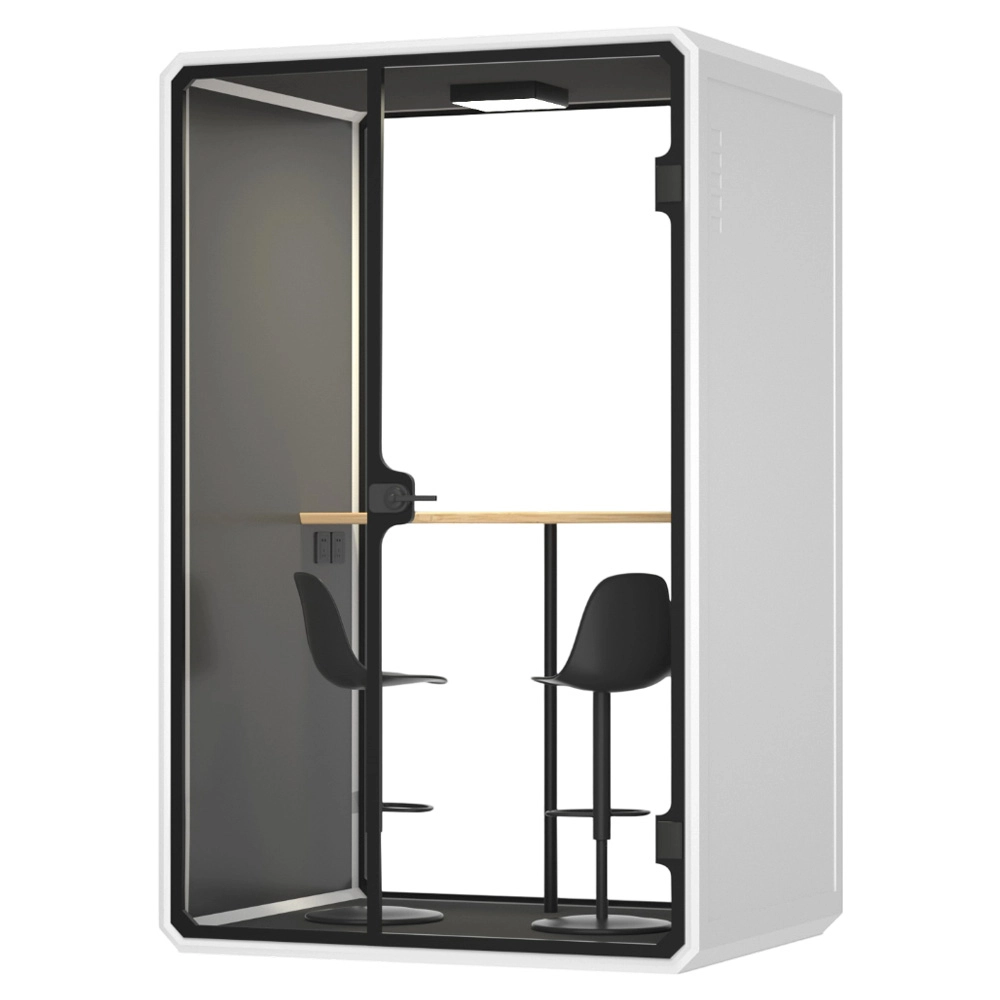
Acoustic Performance Metrics Procurement Teams Need
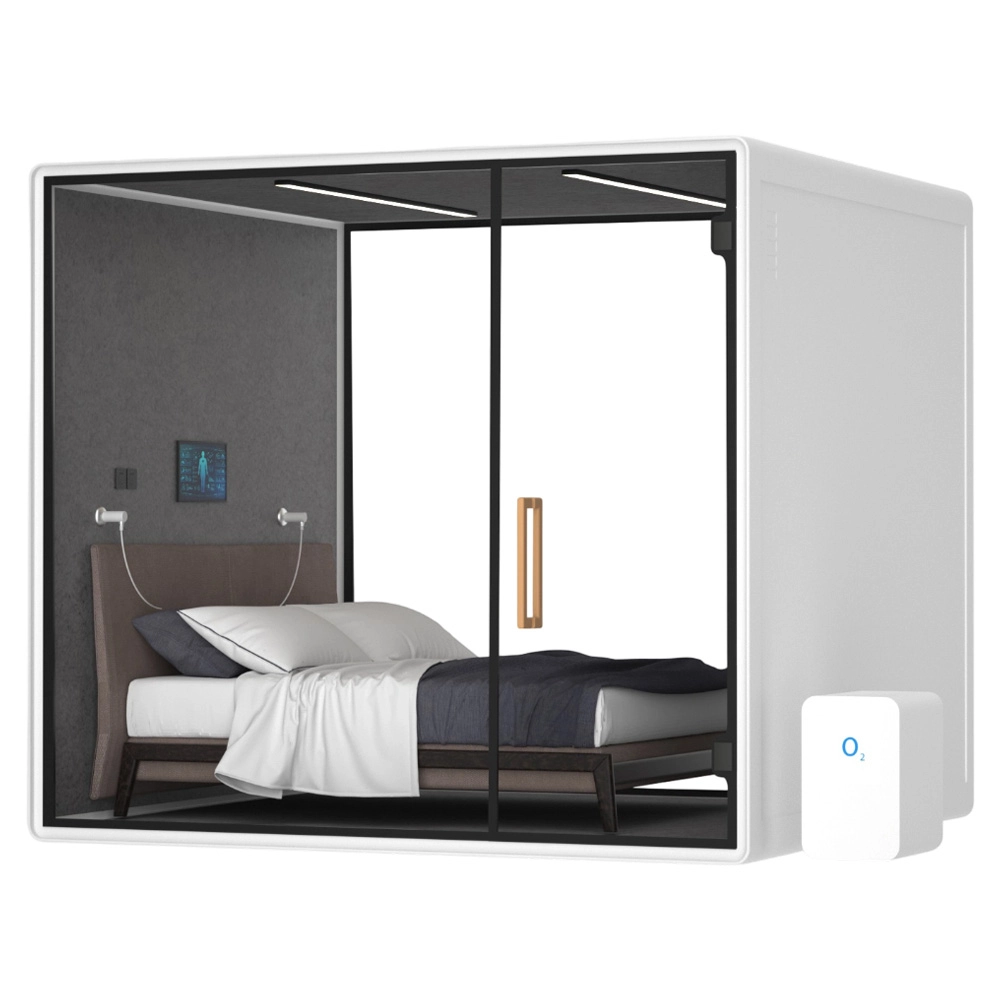
Bulk Buying Strategies for INBOXpod: Distributors & Resellers
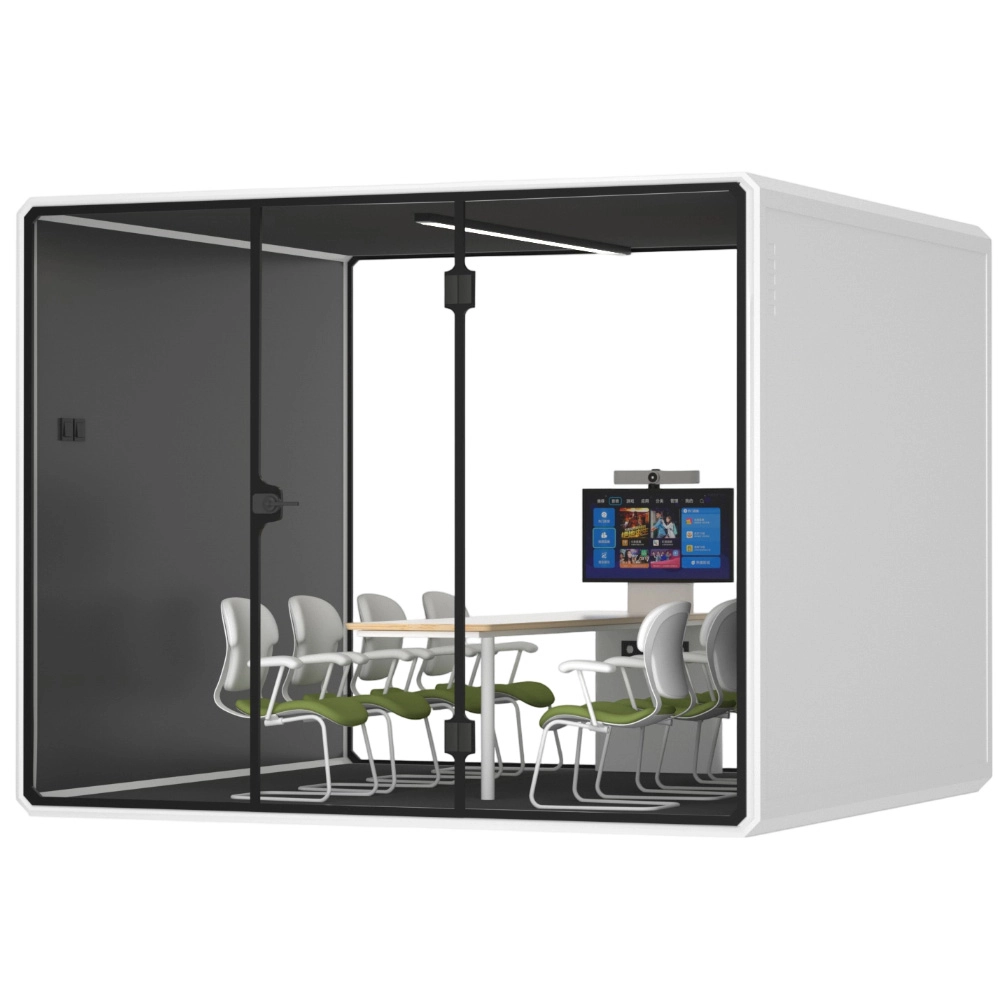
Space Planning Tips When Adding a Prefab Silence Booth
Customization Options for Silence Booth V Series-XXL
Home-demo
Do you provide after-sales support and warranty?
Yes, we provide comprehensive after-sales service and warranty to ensure long-term satisfaction with our products.
What materials are used in the construction of the booths?
Our booths are made from sustainable, high-quality materials including aluminum alloy frames and acoustic panels designed for optimal soundproofing.
How long does it take to assemble an INBOXpod booth?
Most of our booths can be assembled without tools in about 30 minutes, making installation quick and hassle-free.
Can the booths be customized to fit specific space requirements?
Yes, we offer flexible customization options including size, color, and additional features to perfectly suit your needs.
What is the typical sound insulation level of your acoustic booths?
Our booths typically achieve up to 27 dB noise reduction, meeting Class B sound insulation standards suitable for offices and study environments.
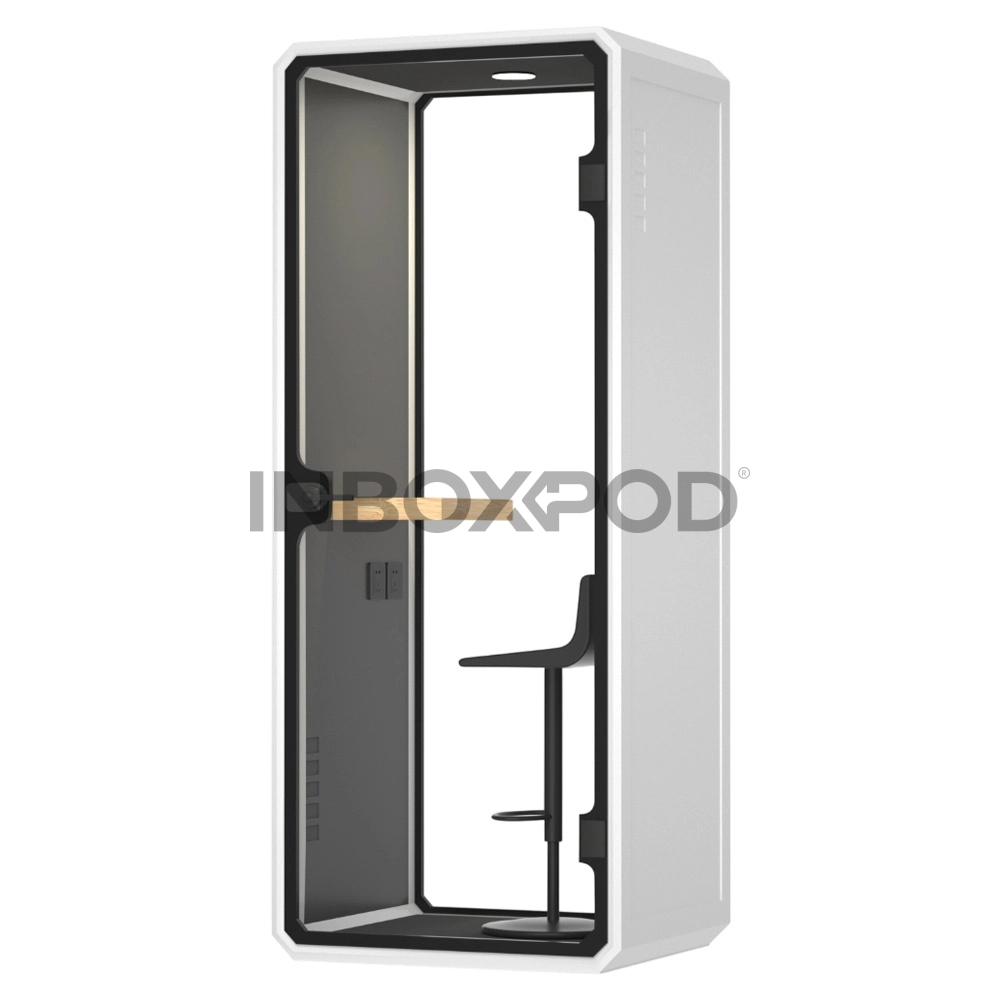
Silence Booth/Office pod Prefabricated V series-S size
Built with high-performance acoustic materials and a modular prefabricated structure, it offers excellent sound insulation, fast installation, and efficient space utilization.
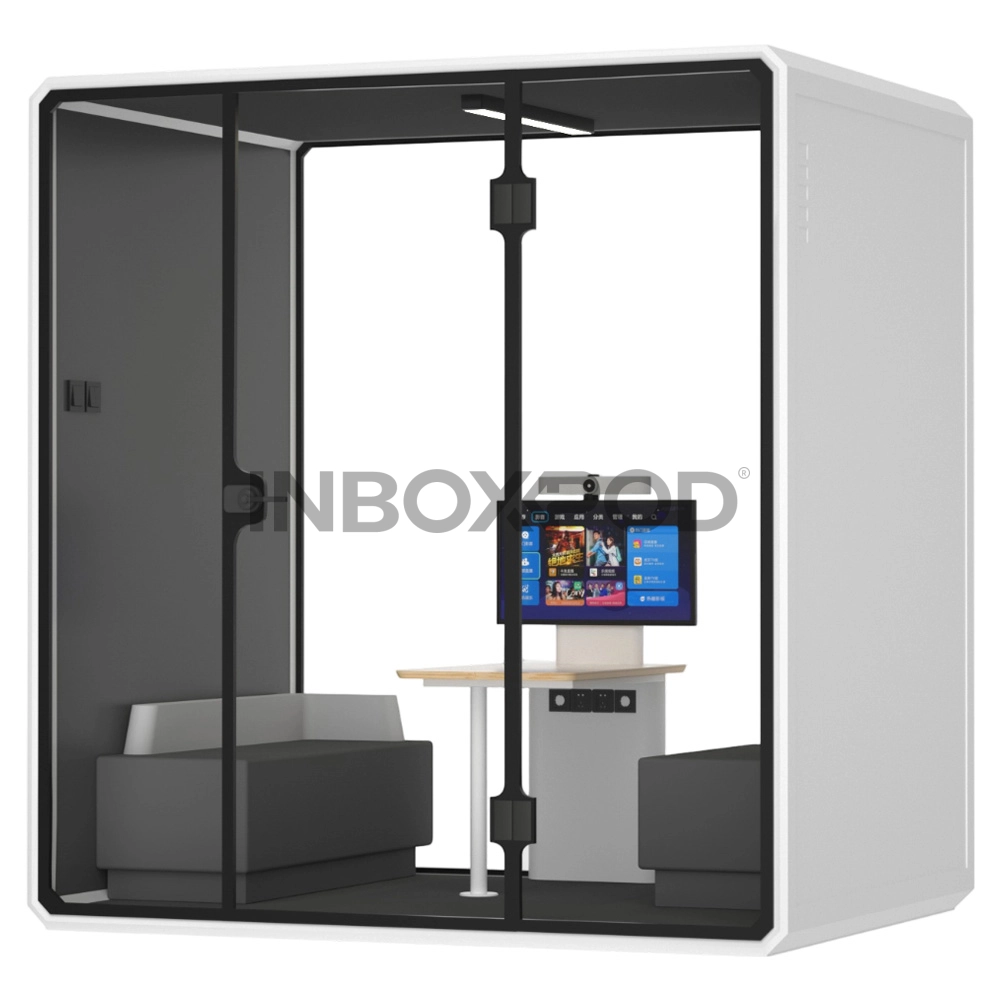
Silence Booth/Office pod Prefabricated V series-XL size
Designed for team collaboration and creative meetings, the XL-size booth provides a spacious and quiet environment that accommodates 4–6 people comfortably. Featuring premium sound insulation, integrated ventilation, and customizable lighting, it transforms any open space into a private meeting room—ideal for brainstorming, interviews, or hybrid meetings.
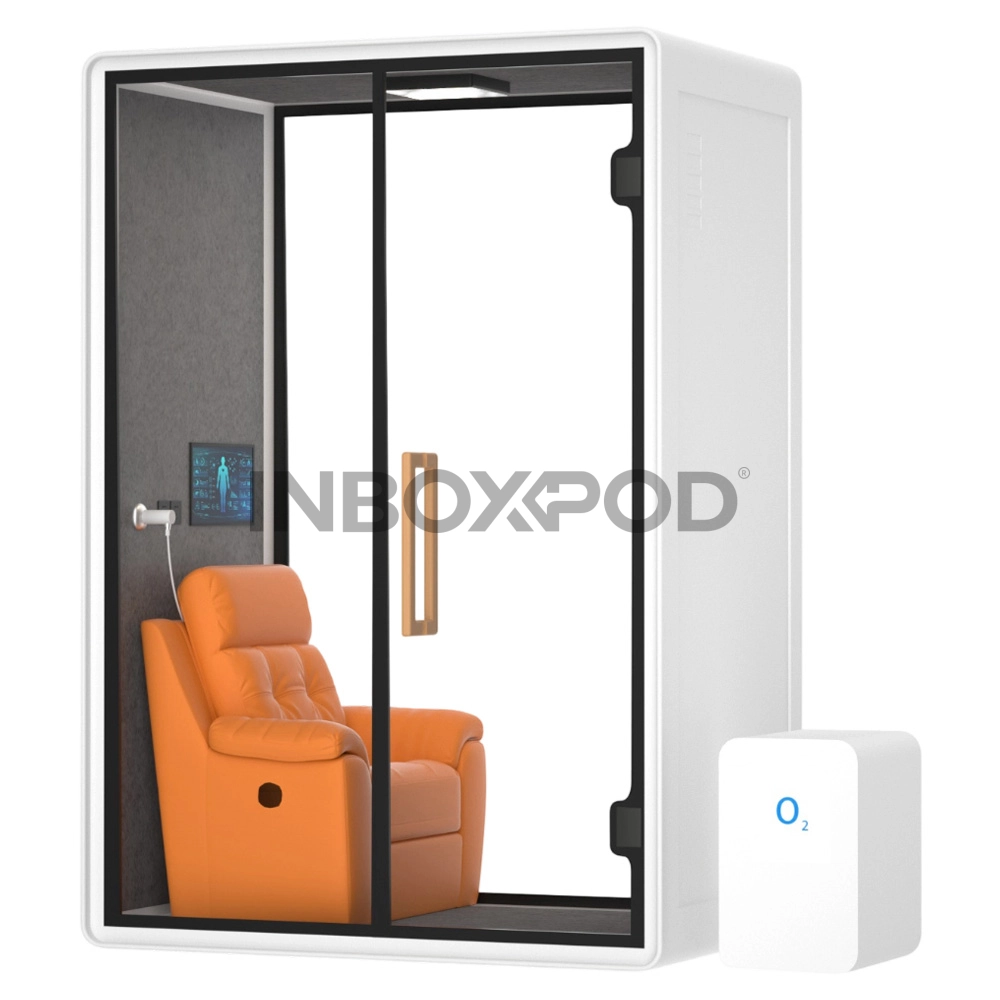
INBOXpod Soundproof Single seat Oxygen Pod
A delicate and compact personal oxygen therapy secret, with a single-seat layout that is flexible and convenient. External size: W1600×D1028×H2300 mm; internal size: W1466×D953×H2166 mm. Create a quiet, private domain for you, where you can inhale high-purity oxygen efficiently during daily relaxation or postoperative recovery, helping to improve cardiopulmonary function and mental state.
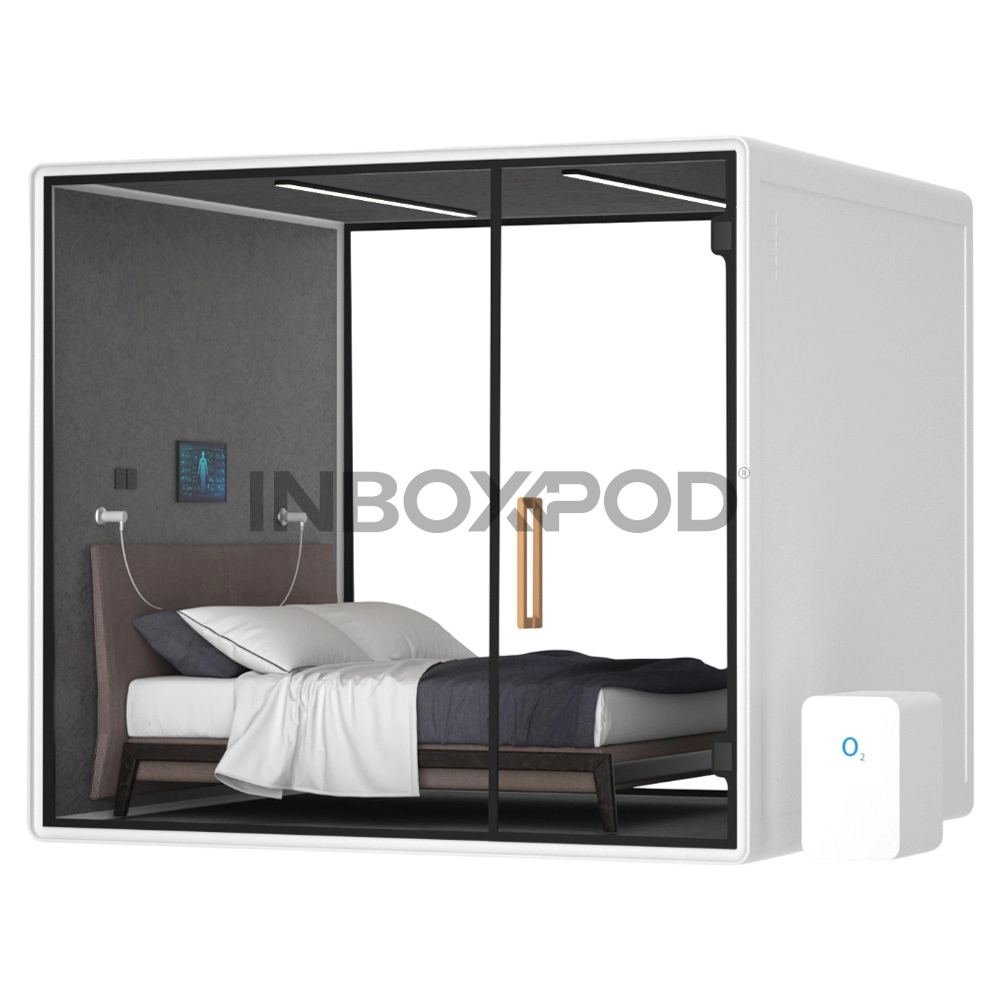
INBOXpod Soundproof Double Bed (small) Oxygen Pod
A double oxygen therapy option that balances space and experience, with a small double-bed layout suitable for various scenarios. External size: W2300×D1854×H2300 mm; internal size: W2300×D1929×H2300 mm. You can share the high-oxygen environment here with relatives and friends, relieve stress, improve physical fitness, and gain health and vitality in company.
Whatsapp: +8613535292957