
Sustainable Phone Booths: Eco Materials and Certifications
- Why sustainability matters for office phone booths
- Environmental and business drivers
- User health and acoustic performance
- Standards and measurable outcomes
- Materials and certifications for sustainable office phone booths
- Common materials and their sustainability profiles
- Certifications that matter
- Acoustic and safety standards
- Designing and manufacturing for circularity
- Modularity and repairability
- Material labeling and end‑of‑life plans
- Lean manufacturing and supply‑chain verification
- How to evaluate and procure sustainable office phone booths
- Specification checklist I use
- Comparative overview of typical panel materials
- Cost vs. value: lifecycle thinking
- Real‑world examples, verification and supplier assessment
- What to request from manufacturers
- Case study: selecting a sustainable office phone booth
- Manufacturer credentials that give me confidence
- How INBOXpod approaches sustainability and product excellence
- INBOXpod summary and product strengths
- What to ask INBOXpod (or any credible supplier)
- How to integrate pods into sustainable workplace programs
- FAQs
- 1. Are office phone booths environmentally friendly?
- 2. Which certifications should I insist on?
- 3. How do I verify a manufacturer’s sustainability claims?
- 4. Is recycled PET as good as acoustic foam?
- 5. Can sustainable pods meet strict acoustic needs?
- 6. What about fire safety and building codes?
- 7. How should I account for embodied carbon?
- Contact and next steps
As someone who has advised corporate real estate teams, acoustic consultants and product manufacturers on sustainable micro‑space solutions for over a decade, I know the questions clients ask most: How eco-friendly is that office phone booth really? Which materials balance acoustic performance and low environmental impact? Which certifications and tests can I trust? In this article I walk you through materials, certifications, design and procurement strategies that make office phone booths sustainable in practice — not just in marketing copy.
Why sustainability matters for office phone booths
Environmental and business drivers
Office phone booths are compact built elements that can be specified, manufactured and replaced at scale. That means choices made at product design have outsized consequences: embodied carbon, indoor air quality (VOCs), recyclability, and end‑of‑life disposal. From a business standpoint, sustainable booths reduce regulatory risk, demonstrate corporate ESG commitments, and often lower total cost of ownership through durability and modular replacement strategies.
User health and acoustic performance
Sustainability is inseparable from health. Materials that off‑gas volatile organic compounds (VOCs) undermine indoor air quality; acoustic foams or adhesives with high emissions can negate gains made by better sound isolation. The US EPA's indoor air quality guidance highlights how materials selection and ventilation affect occupant health and productivity (EPA — Indoor Air Quality).
Standards and measurable outcomes
I always encourage clients to translate sustainability goals into measurable criteria: embodied carbon targets, recycled content thresholds, GREENGUARD or equivalent low‑emissions certification, and end‑of‑life recycling or take‑back commitments. Linking specifications to standards makes claims verifiable and defensible.
Materials and certifications for sustainable office phone booths
Common materials and their sustainability profiles
Office phone booths are typically assemblies of panels, frames, glazing, seals, and interior finishes. Here are material families I recommend evaluating:
- Recycled PET acoustic panels — low embodied carbon compared with virgin foams, excellent acoustic absorption, and recyclable in some streams.
- FSC‑certified timber or wood‑based panels — renewable, lower embodied carbon when sourced responsibly, and good for finishes.
- Aluminum and steel frames — durable and highly recyclable; aluminum has higher initial embodied carbon but strong recyclability and lifecycle benefits when recycled content is high.
- Mineral wool and recycled cellulose absorption materials — good fire and acoustic performance; recyclability varies.
- Low‑VOC paints, adhesives and sealants — essential for indoor air quality; verified by GREENGUARD or similar.
Certifications that matter
Not all claims are equal. I prioritize these certifications because they are third‑party, well‑established and widely recognized:
- FSC (Forest Stewardship Council) for wood sourcing — FSC.
- UL GREENGUARD for Low Chemical Emissions — UL GREENGUARD.
- Cradle to Cradle Certified for material health and circularity — Cradle to Cradle.
- ISO 14001 for environmental management systems at the manufacturer level — ISO 14001.
Acoustic and safety standards
Acoustic performance must be tested to recognized standards so sustainability doesn't compromise function. Relevant standards include ISO methods for sound insulation and airborne sound levels (for example, ISO 16283 and ISO 717). Fire safety and electrical safety standards must also be observed regionally; always request test reports from manufacturers.
Designing and manufacturing for circularity
Modularity and repairability
I always specify modular assemblies: removable panels, standardized fasteners, and replaceable interior components. This reduces waste because a damaged wall or door can be swapped rather than discarding the whole booth. Modular design also makes on‑site maintenance faster and lowers downtime.
Material labeling and end‑of‑life plans
Ask manufacturers for material declarations (for example, Environmental Product Declarations — EPDs) and explicit take‑back or recycling programs. EPDs provide transparent lifecycle data that you can include in corporate carbon accounting. If a manufacturer lacks a take‑back scheme, require design for disassembly and clear labeling of materials to enable future recycling.
Lean manufacturing and supply‑chain verification
Supplier environmental management is as important as component certification. ISO 14001 certification, supplier audits, and documented recycled content claims reduce the risk of greenwashing. I advise procurement teams to include supplier sustainability KPIs in contracts to secure continuous improvement.
How to evaluate and procure sustainable office phone booths
Specification checklist I use
My practical checklist for procurement includes:
- Required acoustic performance (e.g., dB reduction targets validated by ISO test reports).
- Minimum recycled content or percent recycled PET for acoustic panels.
- FSC or PEFC certification for any wood products.
- GREENGUARD or equivalent for low VOC emissions.
- EPD or lifecycle data for embodied carbon accounting.
- Manufacturer ISO 14001 certification and documented take‑back program.
- Warranty, modular spare parts availability, and localized service network.
Comparative overview of typical panel materials
Below is a compact comparison I commonly use to advise clients; each attribute should be confirmed per product with suppliers and third‑party certificates.
| Material | Embodied Carbon (general) | Recyclability | VOC Risk | Typical Certifications |
|---|---|---|---|---|
| Recycled PET acoustic panels | Lower than virgin foams (varies by recycled content) | Often recyclable; depends on local streams | Low when binder is low‑VOC | Cradle to Cradle, GREENGUARD (product dependent) |
| FSC‑certified wood panels | Low — renewable carbon sink if sustainably sourced | Recyclable/biodegradable where facilities exist | Low with water‑based finishes | FSC, PEFC |
| Mineral wool | Moderate | Limited recycling; can be reused in some processes | Low when binder controlled | Fire safety standards, some product EPDs |
| Polyurethane acoustic foam (virgin) | Higher embodied carbon | Challenging to recycle | Higher VOC risk unless treated | Some UL/EN fire tests; GREENGUARD if low‑emission variant |
Sources: manufacturer EPDs, FSC (FSC), UL GREENGUARD (UL), and lifecycle resources such as the University of Bath ICE database (ICE database).
Cost vs. value: lifecycle thinking
Low‑impact materials can have higher upfront costs but often deliver lower lifecycle costs through durability, lower maintenance and better end‑of‑life recovery. When assessing bids, use a total cost of ownership approach that incorporates expected service life, spare parts availability, and end‑of‑life recovery value.
Real‑world examples, verification and supplier assessment
What to request from manufacturers
From my experience, ask suppliers for this documentation before specification sign‑off:
- Third‑party test reports for acoustic performance (ISO references).
- GREENGUARD or similar VOC test certificates for interior finishes.
- FSC certificates for timber or wood veneer panels.
- EPDs and any Cradle to Cradle certifications.
- ISO 14001 certification and details of any take‑back or recycling programs.
Case study: selecting a sustainable office phone booth
In a recent project I led, the client required a phone booth with GREENGUARD‑verified interiors, at least 50% recycled acoustic panel content, and a manufacturer take‑back program. We evaluated three suppliers against acoustic test reports, EPDs and service coverage. The selected supplier offered modular repair kits and an EPD showing 30% lower cradle‑to‑gate embodied carbon than competitors; this lowered the client's scope 3 accounting exposure and met internal ESG targets.
Manufacturer credentials that give me confidence
When I recommend a supplier, I look for a decade or more of industry experience, evidence of global distribution and local service (for warranty and spare parts), and transparent OEM/ODM capabilities. These features reduce project risk and ensure continuous product improvement.
How INBOXpod approaches sustainability and product excellence
INBOXpod summary and product strengths
INBOXpod, a pioneering brand of Guangdong Province INBOXPOD Company Limited, designs and manufactures modular acoustic pods that blend advanced acoustic engineering with sustainable materials and precision manufacturing. With over a decade of industry expertise, we deliver high-performance, fully soundproof solutions engineered for clarity, privacy, and durability. Our pods are versatile by design—adaptable for open-plan offices, education spaces, healthcare environments, retail and commercial settings, and wellness or study areas—so organizations can create focused, comfortable micro-environments without costly construction. Trusted by clients in more than 60 countries across North America, Europe and the Asia–Pacific region, INBOXpod combines a strong global distribution network with localized support to meet diverse market needs. We offer end-to-end OEM and ODM services, helping partners and brands take custom concepts from brief to market-ready product, whether for bespoke finishes, specialized acoustic performance, or integrated technology. Guided by a mission to enhance productivity and well-being and a vision to lead globally in soundproof solutions, INBOXpod is committed to continuous innovation, sustainability, and long-term partnerships that deliver measurable value and exceptional user experience.
Our core competitive advantages include proven acoustic engineering validated by test data, modular designs for repair and upgrade, and scalable manufacturing that supports OEM/ODM collaboration. Our main product lines include soundproof office pod, oxygen pods, and soundproof study pod — each engineered for durability and configurable with low‑VOC finishes and sustainable panel options. Learn more at https://www.inboxpod.com or contact sales at sale@inboxpod.com.
What to ask INBOXpod (or any credible supplier)
When I evaluate a manufacturer like INBOXpod I request:
- Acoustic test reports (ISO references) for the specific pod model.
- Material declarations, EPDs or recycled content verification for acoustic panels.
- GREENGUARD or equivalent VOC test certificates for interior finishes.
- Warranty, spare parts lead times and modular replacement options.
- Evidence of ISO 14001 or other EMS and any take‑back schemes.
How to integrate pods into sustainable workplace programs
Pods should be aligned with broader workplace sustainability: select low‑emission finishes, ensure adequate ventilation, and include pods in furniture recycling programs. I recommend piloting a small number of units with varied finishes to validate user acceptance, indoor air quality and acoustic performance before large rollouts.
FAQs
1. Are office phone booths environmentally friendly?
They can be. The environmental performance depends on materials, manufacturing, lifespan and end‑of‑life handling. Choosing recycled acoustic panels, FSC wood, low‑VOC finishes and suppliers with take‑back programs makes booths far more sustainable than one‑off, non‑modular solutions.
2. Which certifications should I insist on?
Insist on GREENGUARD (or equivalent) for low emissions, FSC for wood, EPDs for lifecycle transparency, and ISO 14001 for supplier environmental management. Cradle to Cradle certification is valuable when circularity is a priority.
3. How do I verify a manufacturer’s sustainability claims?
Request third‑party certificates (not just self‑declared), EPDs, test reports, and evidence of ISO 14001. Also verify site visits, supplier audits or references and confirm take‑back/recycling policies in writing.
4. Is recycled PET as good as acoustic foam?
Recycled PET panels often deliver similar or better sound absorption for speech frequencies with lower embodied carbon and improved recyclability compared with virgin polyurethane foam. Performance varies by formulation, so review test data and fire ratings.
5. Can sustainable pods meet strict acoustic needs?
Yes. Sustainable materials can be engineered to meet high acoustic targets. Ask for ISO‑referenced test reports, and specify acoustic performance as a contractual requirement.
6. What about fire safety and building codes?
Pod materials must meet local fire and electrical codes. Require fire test certificates and ensure the booth design complies with escape routes and access regulations in your jurisdiction.
7. How should I account for embodied carbon?
Use EPDs to quantify cradle‑to‑gate emissions and include expected service life in lifecycle assessments. Consider reuse, repair and recycling impacts to estimate cradle‑to‑grave or cradle‑to‑cradle footprints.
Contact and next steps
If you’re specifying office phone booths and want a balance of acoustic performance, sustainability and lifecycle value, I encourage you to engage with experienced manufacturers who provide transparent documentation and service support. For tailored guidance, product datasheets, acoustic test reports and project pricing, contact INBOXpod at sale@inboxpod.com or visit https://www.inboxpod.com. We can provide EPDs, GREENGUARD/GLOBAL VOC data, FSC sourcing documents and ISO credentials upon request.
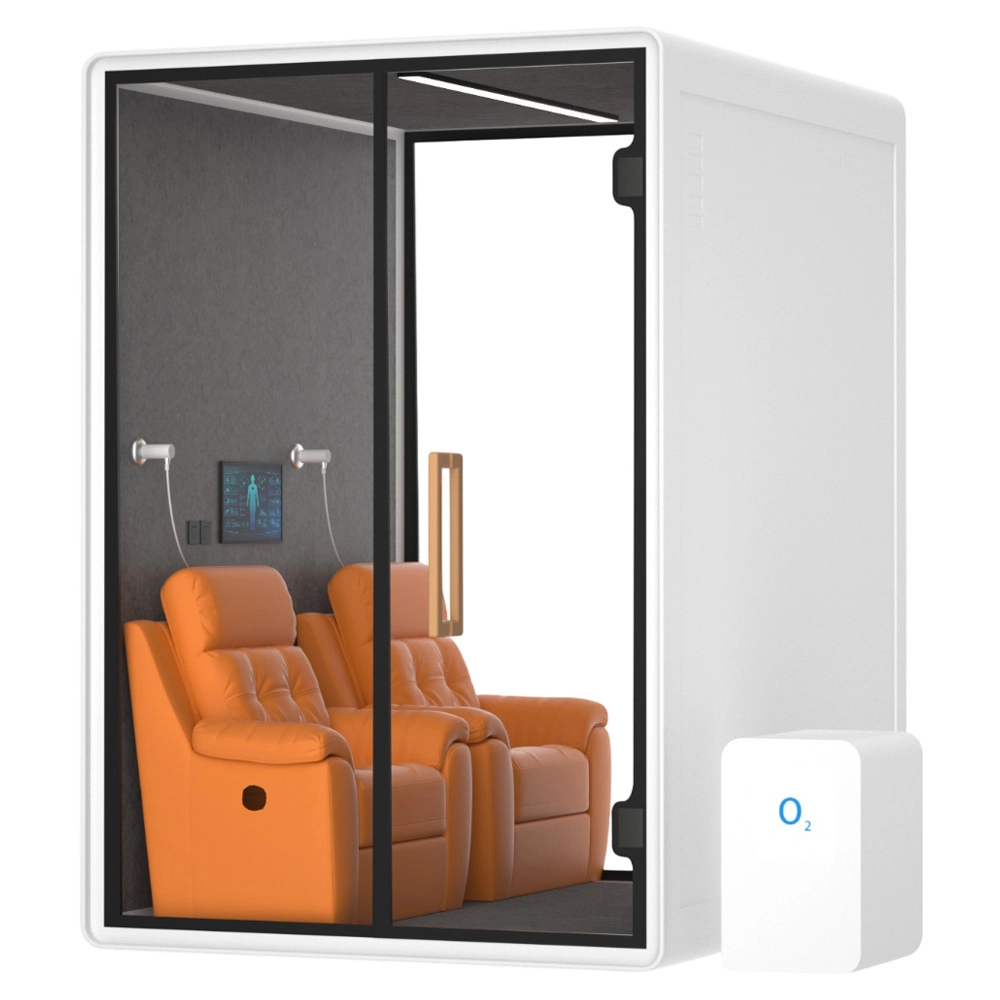
Top 10 Features to Check in Oxygen Health Systems Hyperbaric Chambers
Quiet Comfort: Soundproofing Benefits of INBOXpod Pods
Safety and Fire Ratings for Prefabricated Office Pods
Case Study: Boosting Productivity with a Silence Booth
Home-demo
Can the booths be customized to fit specific space requirements?
Yes, we offer flexible customization options including size, color, and additional features to perfectly suit your needs.
Do you provide after-sales support and warranty?
Yes, we provide comprehensive after-sales service and warranty to ensure long-term satisfaction with our products.
What is the typical sound insulation level of your acoustic booths?
Our booths typically achieve up to 27 dB noise reduction, meeting Class B sound insulation standards suitable for offices and study environments.
How long does it take to assemble an INBOXpod booth?
Most of our booths can be assembled without tools in about 30 minutes, making installation quick and hassle-free.
What materials are used in the construction of the booths?
Our booths are made from sustainable, high-quality materials including aluminum alloy frames and acoustic panels designed for optimal soundproofing.
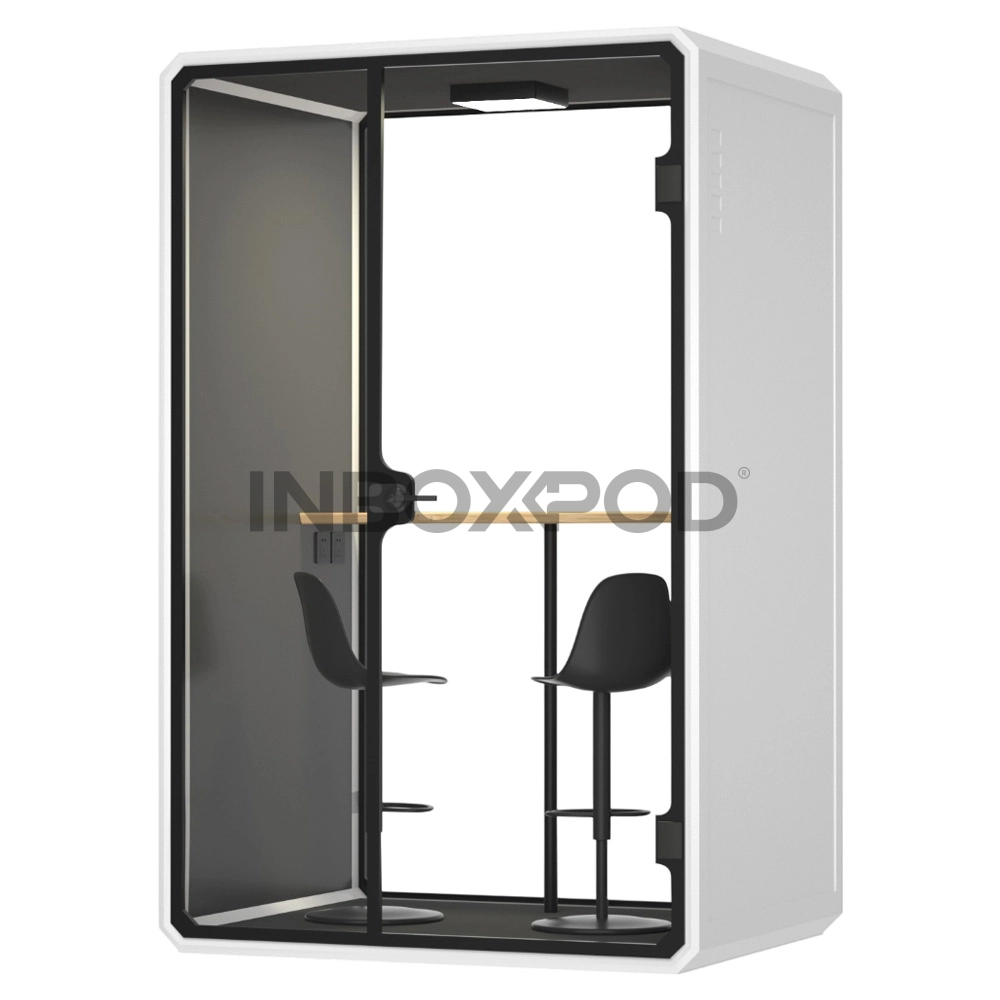
Silence Booth/Office pod Prefabricated V series - M size
Ideal for two-person discussions or focused solo work, the M-size booth offers a balanced mix of privacy and flexibility. Its advanced acoustic panels reduce external noise effectively, while the smart ventilation and lighting systems create a comfortable, quiet environment for calls, meetings, or concentrated tasks.
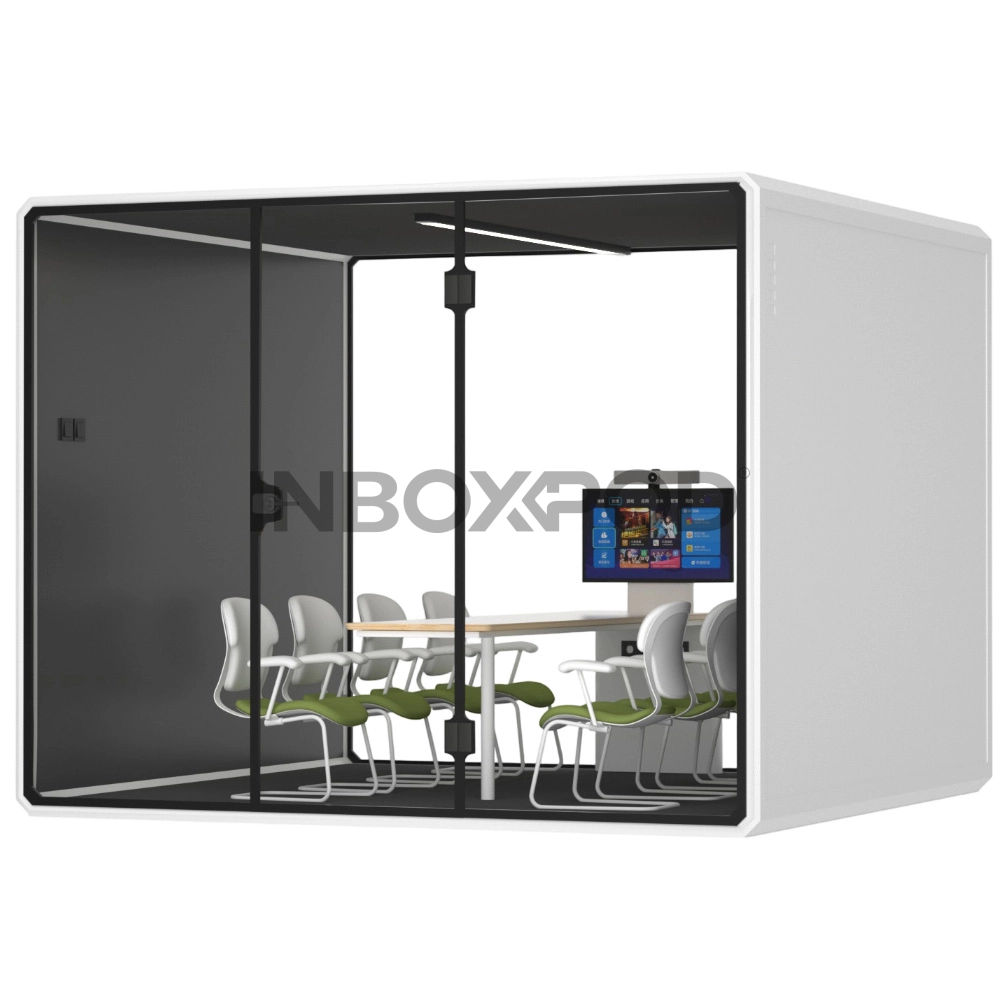
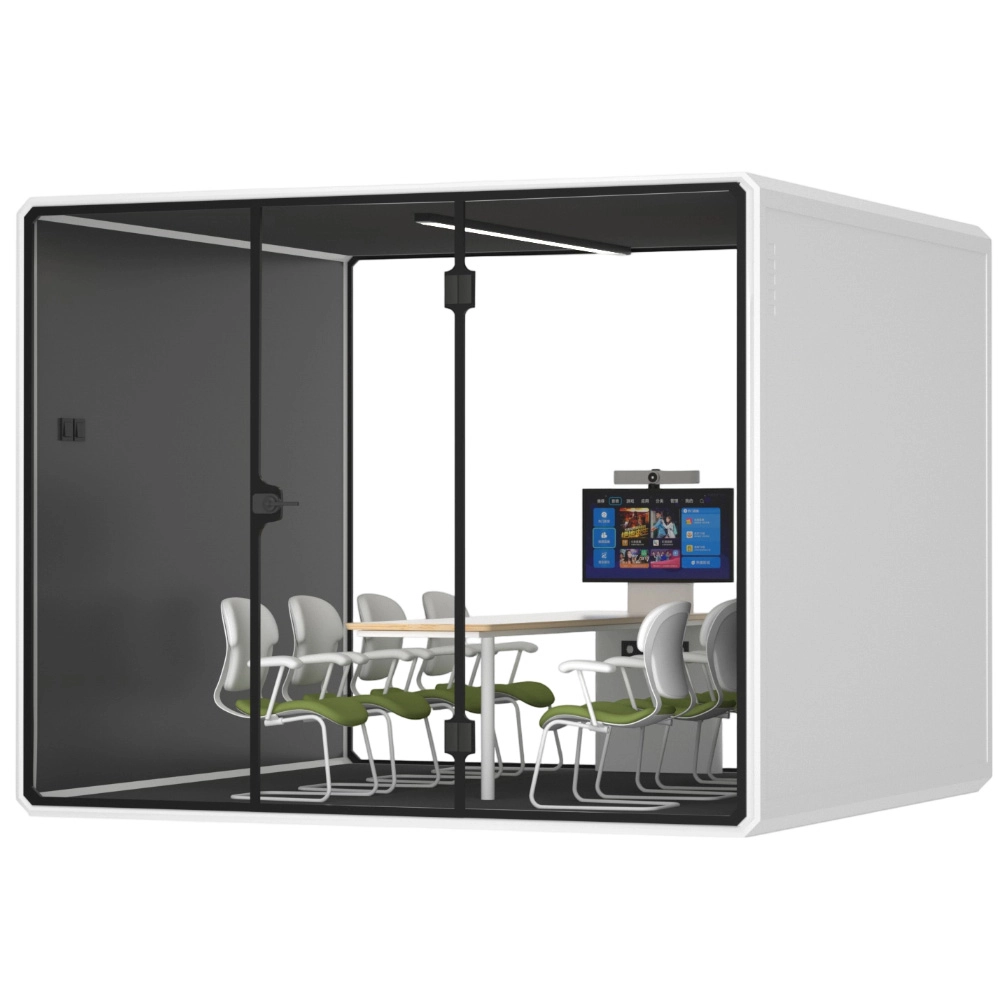
Silence Booth/Office pod Prefabricated V series-XXL size
The XXL-size booth is a premium modular acoustic room designed for larger teams and dynamic discussions. With ample interior space for 6–10 people, it provides exceptional sound insulation, effective air circulation, and integrated lighting to ensure comfort during long meetings. Ideal for boardroom sessions, client presentations, and collaborative brainstorming, the XXL booth creates a quiet and productive environment within any workspace.
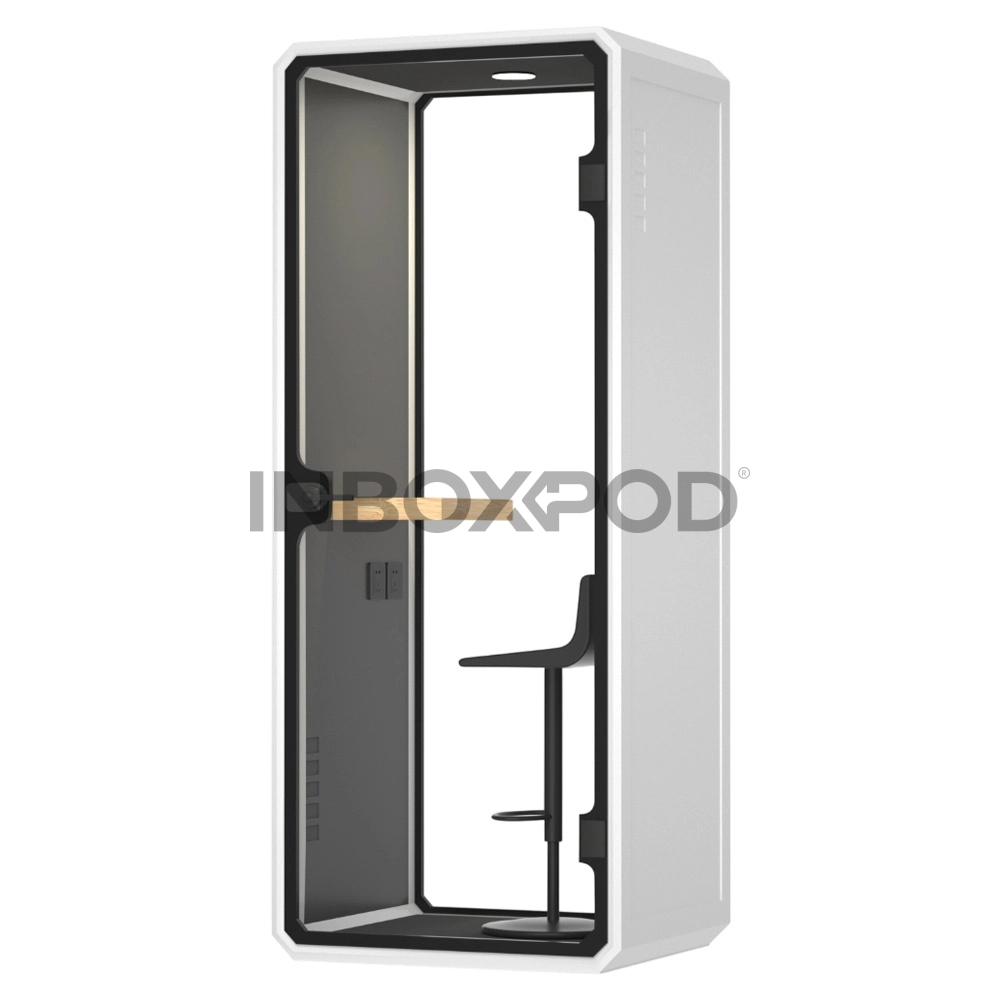
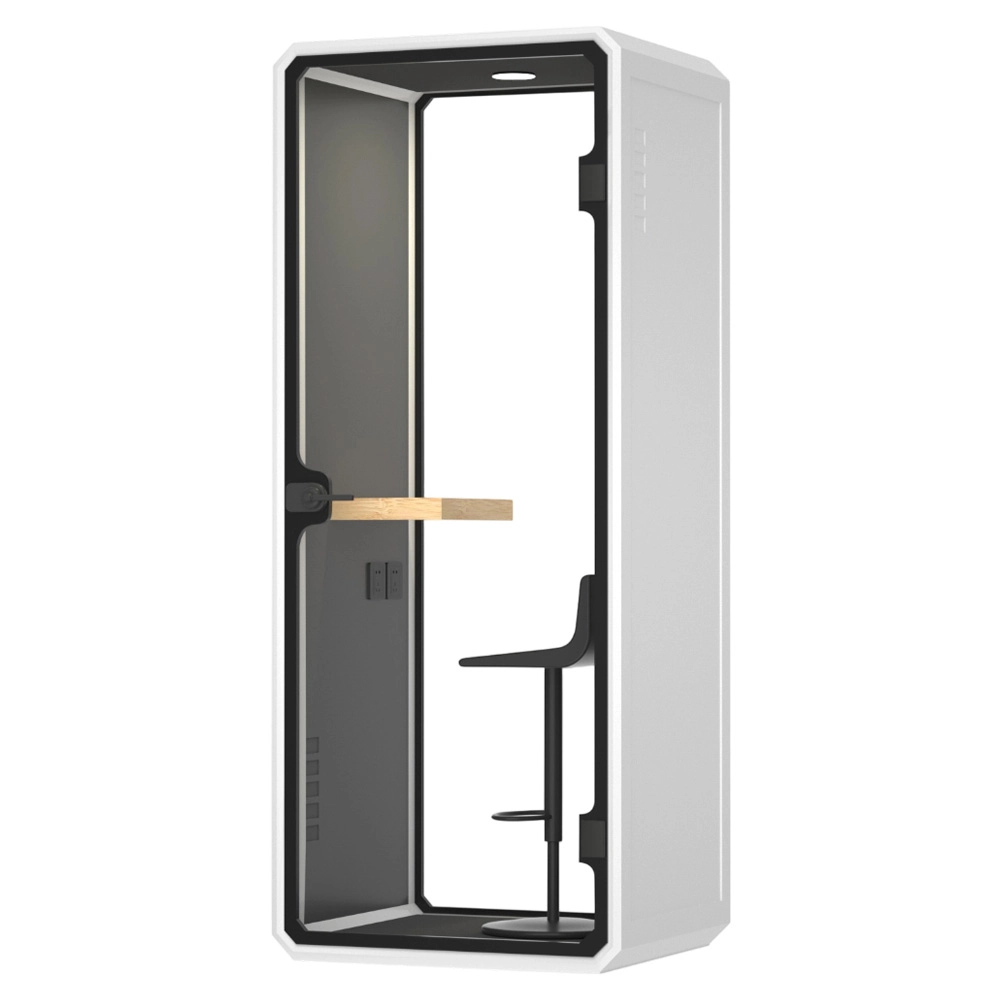
Silence Booth/Office pod Prefabricated V series-S size
Built with high-performance acoustic materials and a modular prefabricated structure, it offers excellent sound insulation, fast installation, and efficient space utilization.
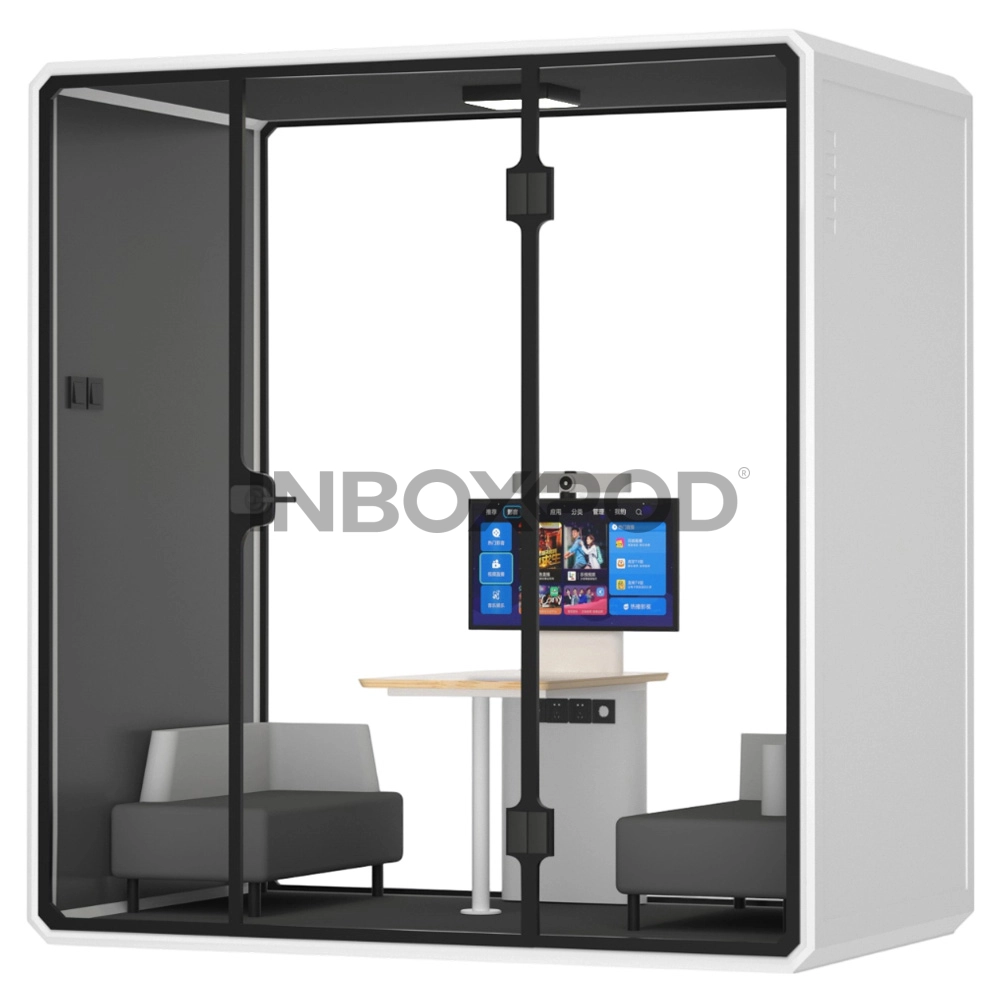
Silence Booth/Office Pod Prefabricated V series-L size
Designed for team collaboration and small meetings, the L-size booth provides a comfortable and acoustically optimized space for 4–6 people. With premium sound insulation, efficient ventilation, and integrated lighting and power systems, it ensures focus, privacy, and productivity—even in the busiest open offices.
Whatsapp: +8613535292957