
How to plan office layout around acoustic meeting pods?
- How much actual sound reduction can I expect from an acoustic meeting pod for sensitive conversations, and how does it compare to traditional partitions?
- Do acoustic pods compromise office air circulation or become stuffy, and what specific HVAC systems ensure optimal air quality?
- What are the hidden challenges of integrating power, data, and AV into these pods, and what are the best practices for future-proofing their tech capabilities?
- Beyond just fitting them in, how can I strategically place acoustic pods to truly enhance workflow and collaboration without creating dead zones or obstructing natural light?
- What are the specific long-term maintenance requirements for acoustic pods, particularly for their soundproofing materials and internal systems, and how do they impact overall ROI?
- Are there specific fire safety, accessibility (ADA/DDA), or building code compliance issues I need to be aware of when installing acoustic meeting pods in various commercial settings?
Unlocking Office Harmony: Your Deep Dive into Acoustic Meeting Pods
In today's dynamic work environment, the open-plan office, while fostering collaboration, often struggles with a pervasive issue: noise. This challenge directly impacts focus, productivity, and privacy. Enter acoustic meeting pods – innovative, soundproof office solutions designed to carve out quiet zones for focused work, confidential calls, or small team meetings. As a professional content writer with deep expertise in both office design and the soundproof pod field, I've noticed beginners often grapple with specific, complex questions that go beyond basic product specifications. Let's delve into these critical areas to help you confidently plan your office layout around acoustic meeting pods and make informed purchasing decisions.
How much actual sound reduction can I expect from an acoustic meeting pod for sensitive conversations, and how does it compare to traditional partitions?
Many beginners fixate on advertised decibel (dB) reduction figures, but the real-world impact for sensitive conversations is about perception. High-quality office privacy pods typically offer a noise reduction rating (NRR) of 30-38 dB. What does this mean in practice? A standard conversation registers around 60 dB. Inside a well-designed pod, this can be reduced to a whisper-like 22-30 dB, effectively rendering private discussions inaudible to those outside. Crucially, it's not just about the numbers; it's about the frequency range. Speech privacy requires attenuation across the human voice spectrum (around 250 Hz to 4 kHz). Quality pods use multi-layered absorption materials and airtight seals to achieve this across the critical speech frequencies. In contrast, standard office partitions, often rated for Sound Transmission Class (STC) 30-35, are designed more for visual separation than true acoustic isolation. While they might muffle sound, confidential conversations can still be overheard. For complete speech privacy and a truly quiet office zone, a purpose-built focus pod significantly outperforms traditional drywall or cubicle walls.
Do acoustic pods compromise office air circulation or become stuffy, and what specific HVAC systems ensure optimal air quality?
This is a critical pain point for many considering sealed modular office rooms. Poor ventilation can lead to stuffiness, CO2 build-up, and a decrease in occupant comfort and cognitive function. Modern portable office pods are designed with integrated, low-noise ventilation systems. Look for pods that offer an air exchange rate of at least 20-30 times per hour. For example, Inbox Pods are engineered with advanced air circulation, refreshing the air every 3 minutes. This significantly exceeds typical office ventilation rates (around 6-8 air changes per hour) and meets stringent indoor air quality (IAQ) standards like ASHRAE 62.1. These systems often utilize quiet fans and strategically placed vents to ensure continuous fresh airflow without compromising the noise reduction capabilities. Many also include CO2 sensors and filters (like HEPA or activated carbon) to remove pollutants and allergens, ensuring a healthy and comfortable environment for focused work or private calls.
What are the hidden challenges of integrating power, data, and AV into these pods, and what are the best practices for future-proofing their tech capabilities?
Integrating technology smoothly is often an afterthought that causes significant headaches. The primary challenge lies in delivering robust power and data connectivity without compromising the pod's acoustic integrity. Best practices involve: 1) Integrated Cabling Systems: High-quality pods come with pre-wired power outlets, USB charging ports, and Ethernet access points built into the walls or furniture. Avoid pods that require external cabling running across the floor, which can be a trip hazard and visually unappealing. 2) Strategic AV Placement: For collaboration pods, consider integrated VESA mounts for monitors, built-in soundbars, and hidden microphone arrays to facilitate seamless video conferencing. 3) Future-Proofing: Opt for pods with ample, accessible conduit pathways or modular plates that allow for easy upgrades to new power standards (e.g., USB-C PD) or data technologies (e.g., fiber optic cables). Consider smart lighting controls and occupancy sensors that integrate with your building's management system. Wireless charging pads are also becoming a standard expectation for enhancing user convenience and reducing cable clutter, contributing to a truly effective office productivity solution.
Beyond just fitting them in, how can I strategically place acoustic pods to truly enhance workflow and collaboration without creating dead zones or obstructing natural light?
Strategic placement of silent meeting spaces is an art. Instead of simply filling empty spaces, consider your office's natural flow and 'activity zones.' 1) High-Traffic Area Buffers: Place pods near high-traffic areas or noisy zones (e.g., breakrooms, printer stations) to act as acoustic buffers, protecting surrounding open workspaces. 2) Proximity to Teams: Position smaller phone booths or individual work pods close to specific teams who frequently need privacy for calls or concentrated work. Larger meeting pods can be centrally located for shared access. 3) Natural Light & Views: Whenever possible, avoid blocking windows. If a pod must be near a window, choose models with transparent glass panels to maintain visual connectivity and natural light penetration. Placing pods along perimeter walls or near existing columns can be effective. 4) Creating 'Neighborhoods': Use pods to define distinct work 'neighborhoods' – quiet zones, collaborative hubs, and social areas – guiding employee behavior and maximizing efficiency. According to a 2023 CBRE report, deliberate zoning is key to successful agile office design, and pods are central to creating these distinct environments.
What are the specific long-term maintenance requirements for acoustic pods, particularly for their soundproofing materials and internal systems, and how do they impact overall ROI?
The long-term value of your investment hinges on understanding maintenance. High-quality office sound solutions are built for durability, but they aren't maintenance-free. Key areas include: 1) Ventilation Filters: HVAC filters need regular cleaning or replacement (typically every 3-6 months) to maintain air quality and system efficiency. Clogged filters can reduce airflow and increase noise. 2) Door Seals: Gaskets and seals around doors are crucial for acoustic performance. Check these annually for wear and tear; damaged seals can leak sound. 3) Surface Cleaning: Interior and exterior surfaces should be cleaned regularly according to manufacturer guidelines to maintain aesthetics and hygiene. 4) Integrated Tech Checks: Periodically test power outlets, USB ports, and AV connections to ensure functionality. 5) Material Durability: Reputable manufacturers use durable, stain-resistant fabrics and finishes. While these require less maintenance, addressing spills promptly extends their life. The impact on ROI is significant: proactive maintenance prevents costly repairs, maintains optimal performance, and ensures the pod remains a valuable asset for years, contributing to sustained productivity gains and employee satisfaction. Neglecting maintenance can degrade acoustic performance and air quality, eroding the initial investment.
Are there specific fire safety, accessibility (ADA/DDA), or building code compliance issues I need to be aware of when installing acoustic meeting pods in various commercial settings?
Yes, navigating compliance is crucial and often overlooked. 1) Fire Safety: All materials used in the pod (fabrics, panels, glass) should meet local fire safety codes, often requiring Class A fire ratings. Ensure the pod does not block emergency exits or fire suppression systems (sprinklers). Some jurisdictions may require specific fire alarm integration or additional sprinkler heads inside larger pods. Always verify with your local fire marshal. 2) Accessibility (ADA/DDA): Pods must comply with accessibility standards like the Americans with Disabilities Act (ADA) in the US or Disability Discrimination Act (DDA) in the UK. This means ensuring adequate door width (typically 32-36 inches clear opening), low-profile thresholds for wheelchair access, and sufficient interior maneuvering space. Larger pods should be designed to accommodate a wheelchair turnaround (e.g., a 60-inch diameter clear floor space). 3) Building Codes: Depending on the size and permanence, pods can sometimes be classified as temporary structures or even require permits if they connect to building utilities or exceed certain dimensions. Always consult with a local architect or code specialist, especially for permanent installations or those that affect egress paths. Reputable manufacturers provide documentation on their products' compliance with relevant standards, but local interpretation can vary.
Acoustic meeting pods are more than just furniture; they are strategic investments in your organization's productivity, privacy, and overall well-being. By addressing these often-complex questions upfront, you can ensure a seamless integration that enhances your workspace, boosts employee satisfaction, and delivers a significant return on investment. From guaranteed speech privacy to advanced air quality and robust tech integration, the right pods transform your open office into a harmonized, efficient ecosystem.
Ready to create a quieter, more productive workspace? Contact us today for a personalized quote and discover how Inbox Pod can revolutionize your office environment. Visit www.inboxpod.com or email us at sale@inboxpod.com.
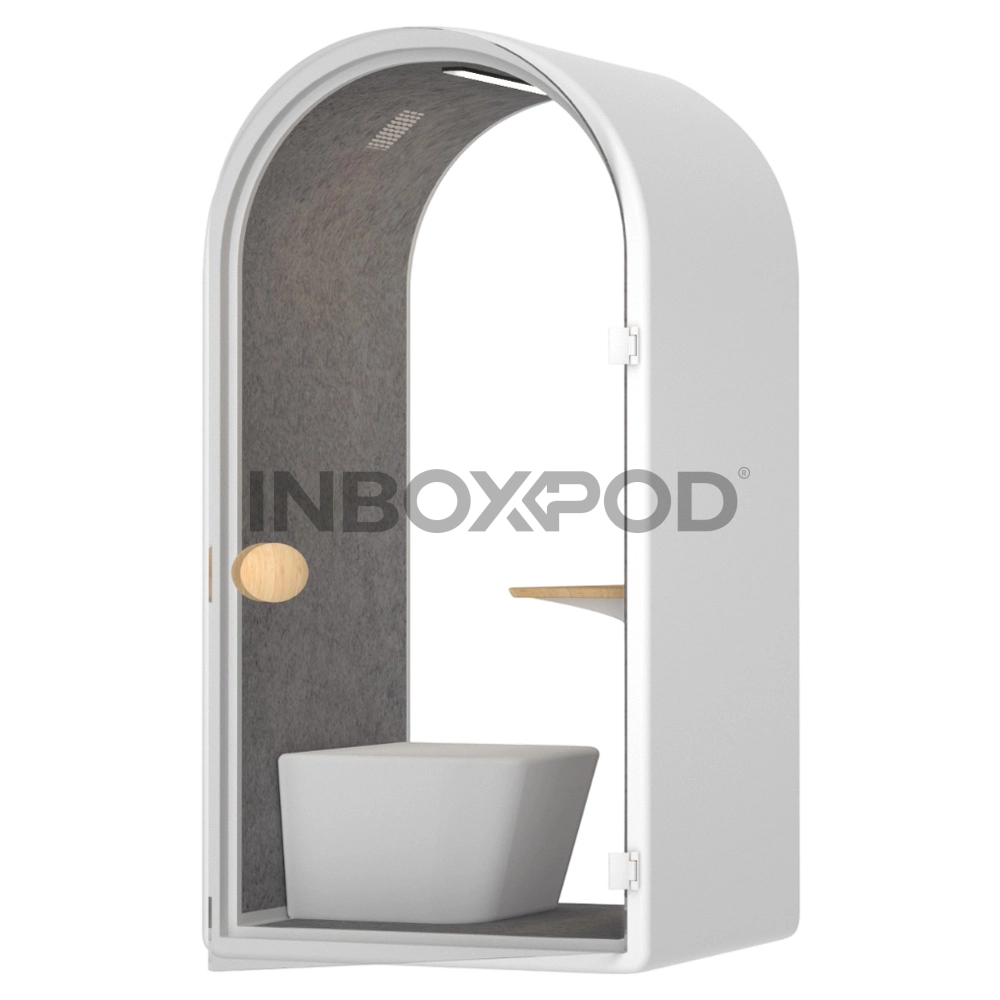
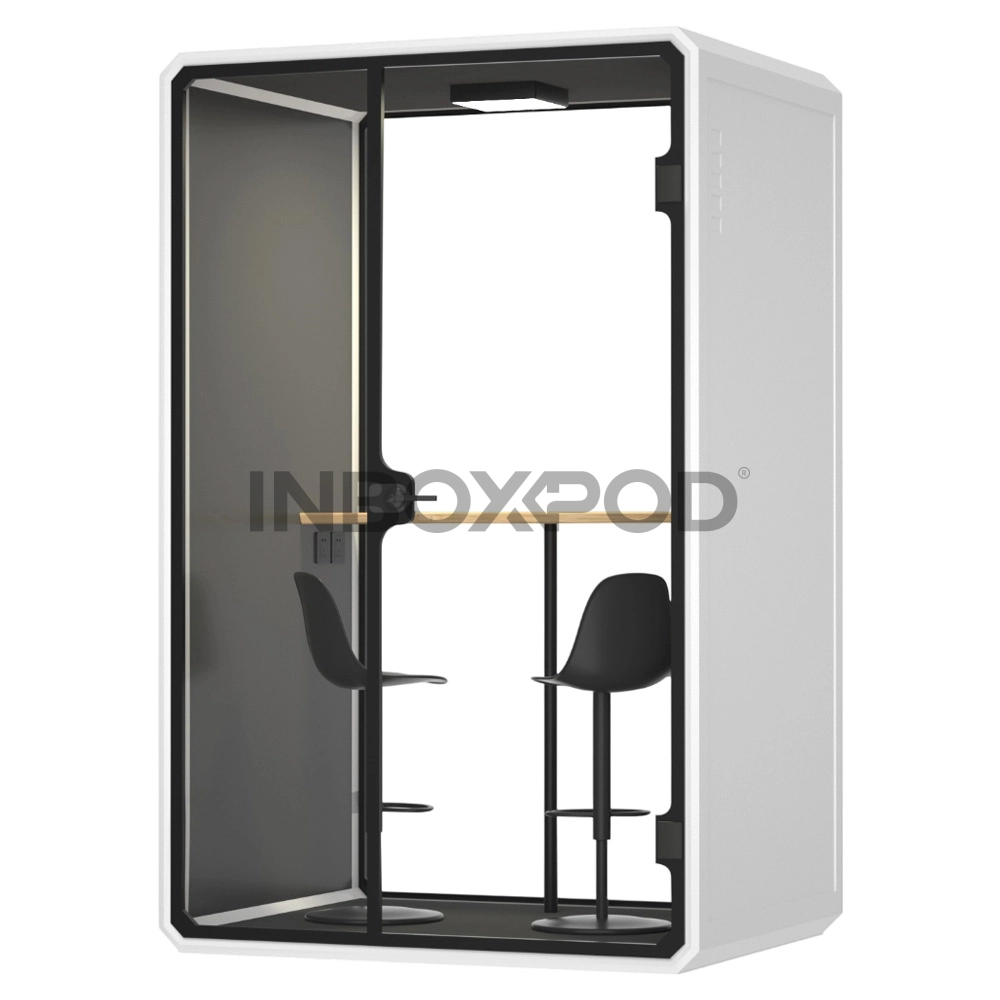
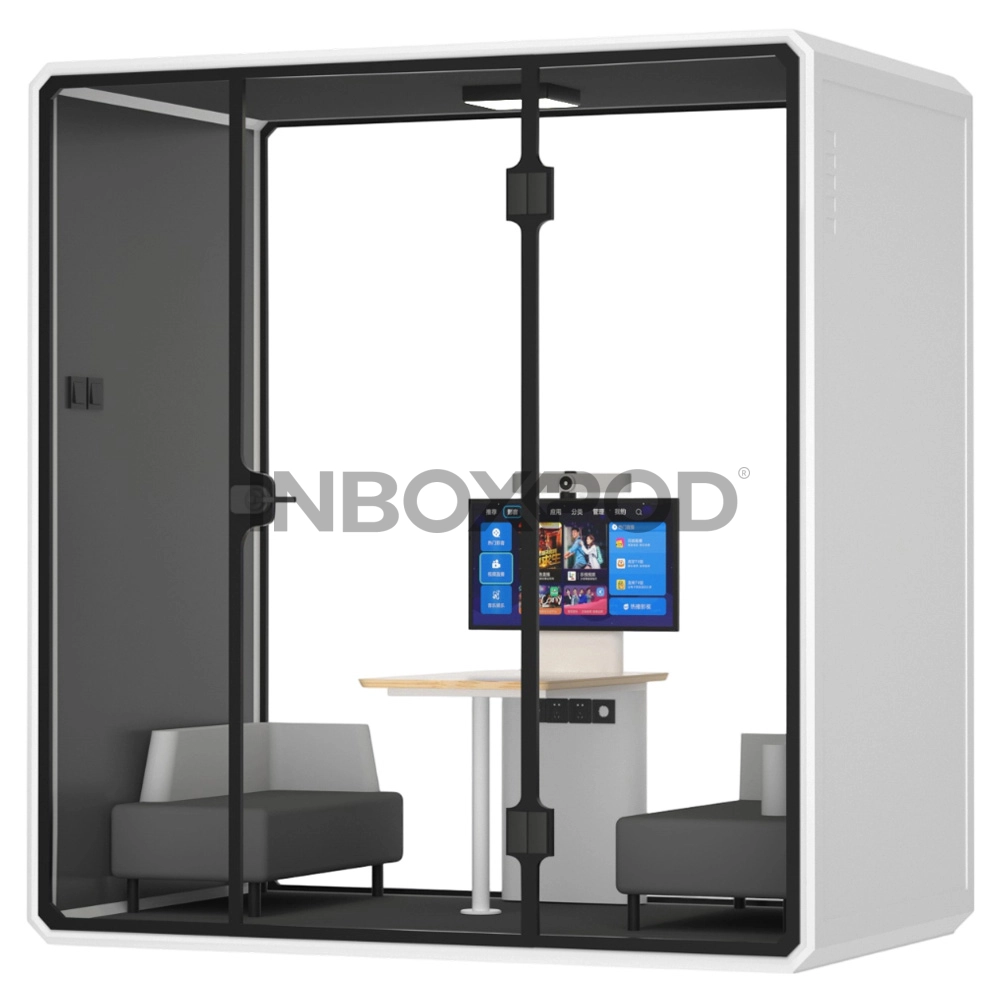
Home-demo
Can the booths be customized to fit specific space requirements?
Yes, we offer flexible customization options including size, color, and additional features to perfectly suit your needs.
Do you provide after-sales support and warranty?
Yes, we provide comprehensive after-sales service and warranty to ensure long-term satisfaction with our products.
What is the typical sound insulation level of your acoustic booths?
Our booths typically achieve up to 27 dB noise reduction, meeting Class B sound insulation standards suitable for offices and study environments.
What materials are used in the construction of the booths?
Our booths are made from sustainable, high-quality materials including aluminum alloy frames and acoustic panels designed for optimal soundproofing.
How long does it take to assemble an INBOXpod booth?
Most of our booths can be assembled without tools in about 30 minutes, making installation quick and hassle-free.
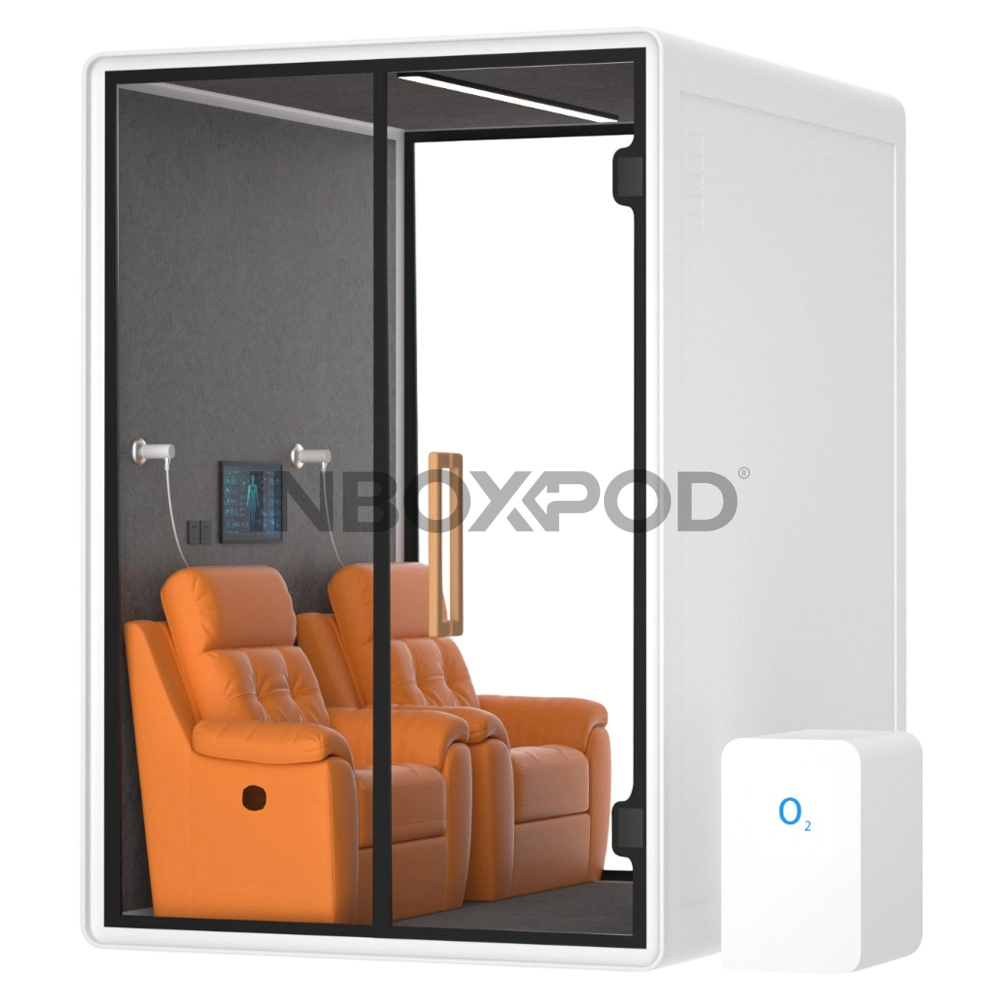
INBOXpod Double Seat Soundproof Oxygen Pod
An oxygen therapy space customized for double social interaction and health, with a double-seat design to promote a win-win situation for interaction and health. External size: W1600×D1929×H2300 mm; internal size: W1466×D1854×H2166 mm. You can improve cardiovascular function and concentration through oxygen therapy with friends and colleagues in a quiet and efficient acoustic environment, making health and social interaction complement each other.
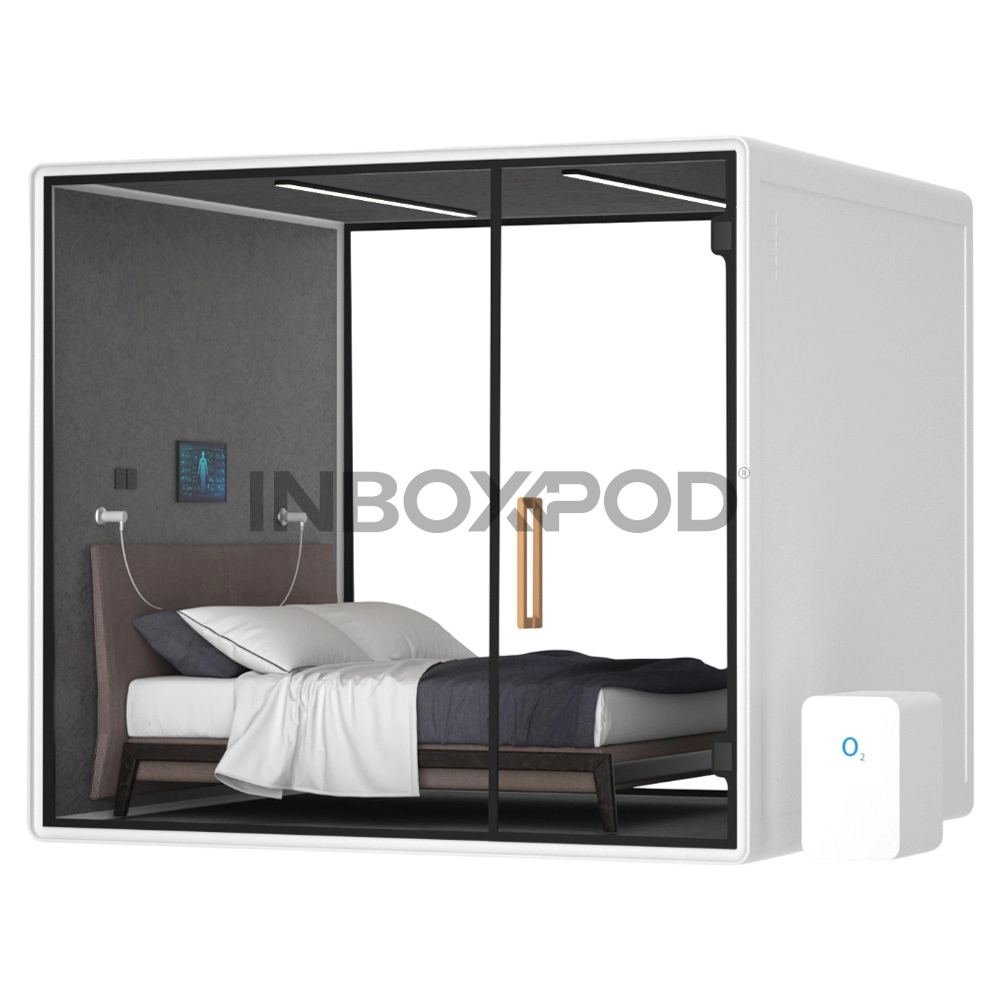
INBOXpod Soundproof Double Bed (small) Oxygen Pod
A double oxygen therapy option that balances space and experience, with a small double-bed layout suitable for various scenarios. External size: W2300×D1854×H2300 mm; internal size: W2300×D1929×H2300 mm. You can share the high-oxygen environment here with relatives and friends, relieve stress, improve physical fitness, and gain health and vitality in company.
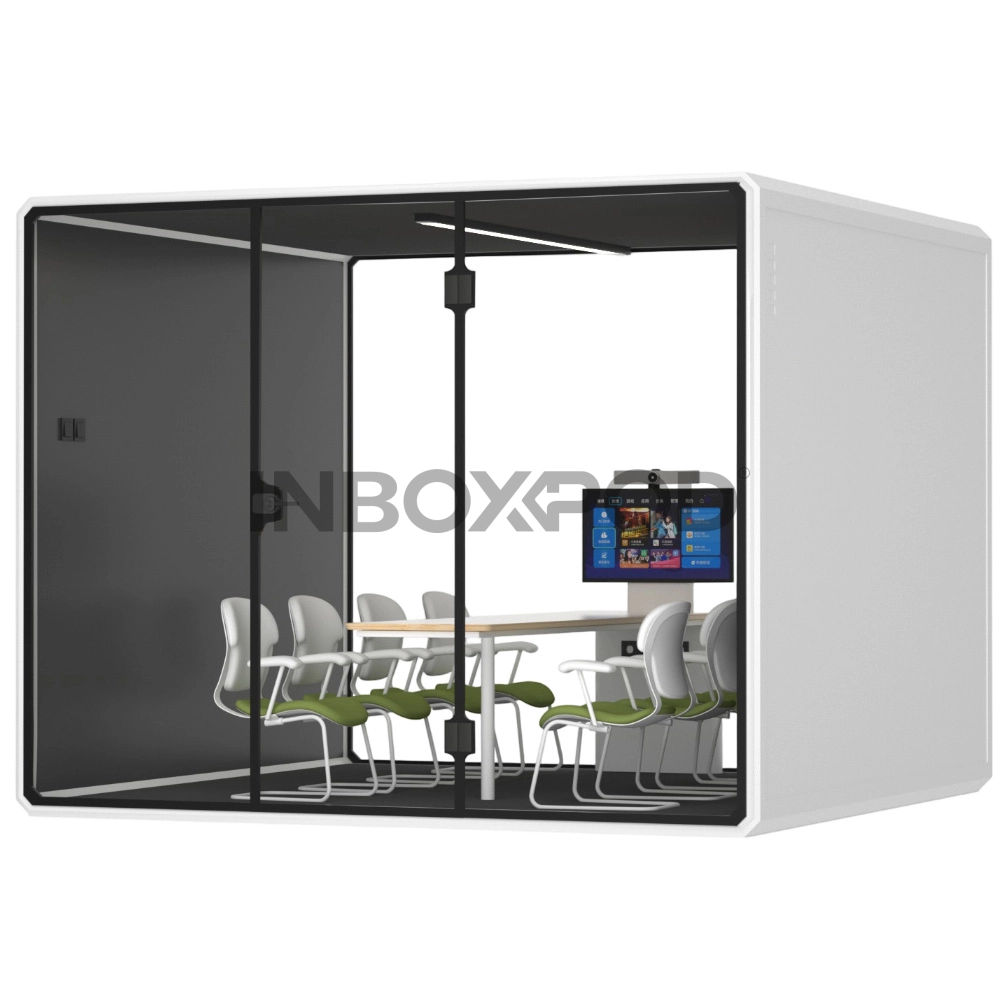
Silence Booth/Office Pod Prefabricated V series-L size
Designed for team collaboration and small meetings, the L-size booth provides a comfortable and acoustically optimized space for 4–6 people. With premium sound insulation, efficient ventilation, and integrated lighting and power systems, it ensures focus, privacy, and productivity—even in the busiest open offices.
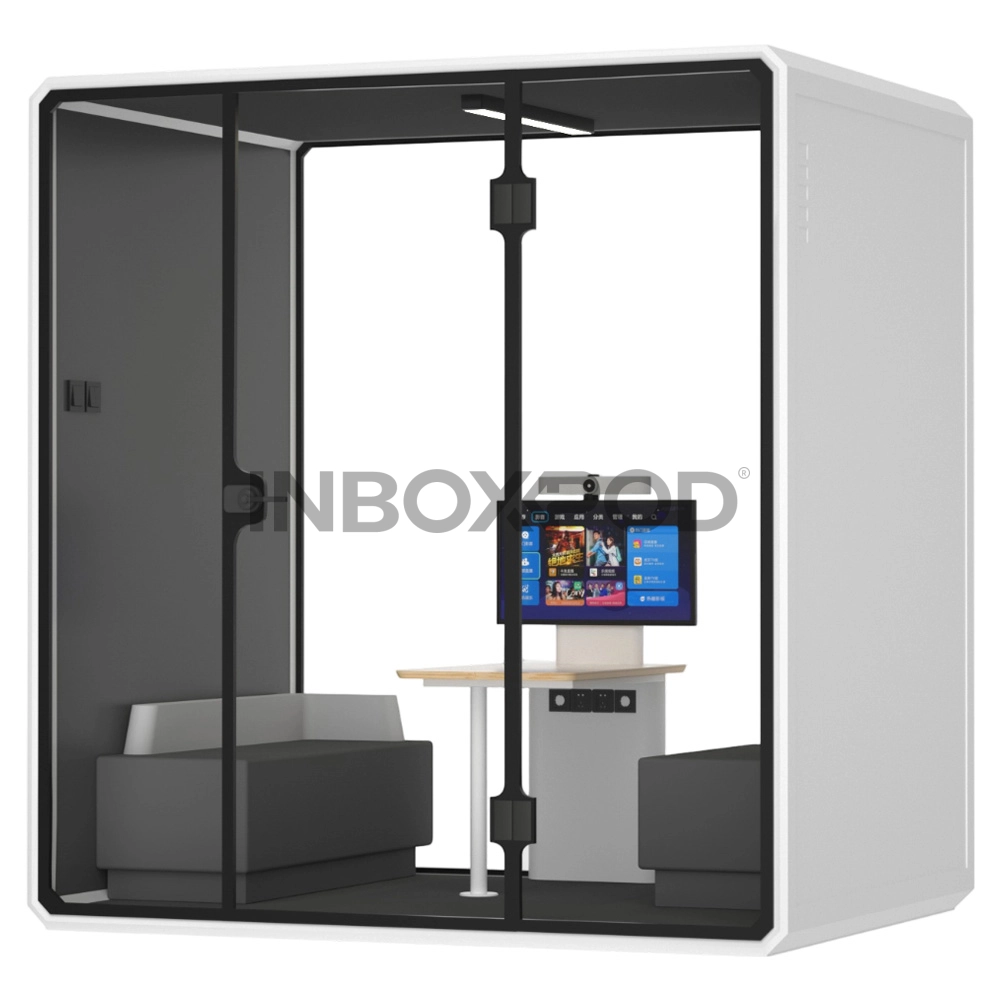
Silence Booth/Office pod Prefabricated V series - M size
Ideal for two-person discussions or focused solo work, the M-size booth offers a balanced mix of privacy and flexibility. Its advanced acoustic panels reduce external noise effectively, while the smart ventilation and lighting systems create a comfortable, quiet environment for calls, meetings, or concentrated tasks.
Stay Updated with INBOXpod Insights
Subscribe to receive the latest articles, industry news, and updates on our acoustic solutions. Stay informed and discover distribution opportunities with INBOXpod.
Whatsapp: +8613535292957