
How do acoustic meeting pods compare to traditional meeting rooms?
- What specific dB reduction can I realistically expect from an acoustic meeting pod, and how does it compare to a standard drywall office wall for confidential conversations?
- Beyond the initial purchase, what are the hidden long-term costs (e.g., HVAC integration, relocation, maintenance) associated with deploying multiple acoustic office pods versus renovating a traditional meeting room?
- How do acoustic pods ensure adequate ventilation and air quality for extended meetings, especially compared to a room connected to a building's central HVAC system?
- What are the practical considerations and actual costs involved in relocating an acoustic meeting pod within an office space or to a new building, and how does this flexibility impact long-term space planning?
- What are the standard and optional integrated technology features (power, data, AV) in modern acoustic office pods, and how do they impact connectivity and presentation capabilities compared to a wired traditional meeting room?
- Beyond noise reduction, what are the often-overlooked environmental sustainability aspects and material certifications to look for when selecting an acoustic pod, and how do these align with corporate green initiatives?
- How do acoustic meeting pods compare to traditional meeting rooms regarding long-term flexibility, and what is the real-world impact on office design and employee morale?
In today's dynamic work environments, the demand for adaptable and efficient spaces is at an all-time high. As companies transition from rigid office layouts to more agile workspaces, acoustic meeting pods have emerged as a leading solution for fostering productivity and privacy. But for many, the nuances of these soundproof office pods remain unclear. How do they truly compare to traditional meeting rooms, and what are the critical considerations for a smart investment? As experts in the soundproof pod field, we’ve gathered the most pressing, pain-point-oriented questions from beginners and provided comprehensive, data-driven answers to guide your purchasing journey.
What specific dB reduction can I realistically expect from an acoustic meeting pod, and how does it compare to a standard drywall office wall for confidential conversations?
When investing in quiet office spaces, understanding realistic noise reduction is paramount. While many brands market 'soundproof pods,' achieving 100% soundproofing in a modular unit is practically impossible. What you should expect is significant noise reduction and enhanced speech privacy. Standard acoustic meeting pods typically offer a sound attenuation of 30-35 dB. High Quality models, utilizing advanced multi-layer construction, denser acoustic materials, and superior sealing mechanisms, can push this to 35-40+ dB.
To put this in perspective:
- 30-35 dB reduction can transform a noisy open-plan office (often 60-70 dB) into a whisper-quiet private space (25-35 dB inside). This level is generally sufficient for preventing casual eavesdropping and ensuring productive, distraction-free work and phone calls.
- 35-40+ dB reduction significantly enhances speech privacy, making it very difficult for external listeners to understand conversations, even if they are in close proximity. This range is ideal for highly confidential discussions, sensitive HR meetings, or deep focus work requiring minimal auditory disturbance.
Comparison to Traditional Drywall: A standard interior office drywall partition (e.g., two layers of 1/2-inch drywall on steel studs with insulation) typically achieves an STC (Sound Transmission Class) rating of 35-45. This means a well-engineered acoustic pod can directly compete with, or even surpass, the noise isolation of a basic traditional meeting room wall. While traditional construction can achieve much higher STC ratings (50-60+) with specialized techniques, this comes at a higher cost and requires permanent installation. The key advantage of a modular acoustic pod lies in its portability and speed of deployment while still offering comparable, or superior, privacy to standard office walls.
Beyond the initial purchase, what are the hidden long-term costs (e.g., HVAC integration, relocation, maintenance) associated with deploying multiple acoustic office pods versus renovating a traditional meeting room?
When evaluating office phone booths and meeting room solutions, the total cost of ownership extends beyond the upfront price. Here’s what to consider:
- HVAC Integration: Unlike traditional rooms connected to a building’s central HVAC, privacy pods require integrated ventilation systems. Most quality pods include these, but consider the energy consumption of their dedicated fans and lighting. Modern pods are designed for energy efficiency (e.g., LED lighting, occupancy sensors), but operating multiple units adds to your electricity bill. However, this is often offset by avoiding complex, expensive modifications to your building’s core HVAC, which would be necessary for new traditional rooms.
- Relocation Costs: This is where modular offices truly excel. Renovating a traditional meeting room is a permanent, disruptive, and costly endeavor. Relocating an acoustic office pod is comparatively straightforward. Depending on size and complexity, a team can disassemble and reassemble a pod within 1-2 days, with costs typically ranging from £500 - £2000 per move (depending on labor rates and distance in the UK, for example). This flexibility means significant savings if your office layout changes or if you move buildings, making them a future-proof investment.
- Maintenance: Acoustic pods generally require minimal maintenance, involving surface cleaning, occasional filter replacement for ventilation systems (a low-cost item), and checking integrated electronics. High-quality soundproof office pods are built with durable materials, reducing wear and tear.
- Space Utilization & Productivity ROI: While not a 'hidden cost,' ignoring the return on investment from improved space utilization and enhanced employee productivity is a critical oversight. Deploying focused work zones can reduce general office noise and provide dedicated spaces, which studies suggest can significantly boost employee output and well-being.
How do acoustic pods ensure adequate ventilation and air quality for extended meetings, especially compared to a room connected to a building's central HVAC system?
Ensuring excellent air quality is paramount for occupant comfort, health, and productivity in enclosed spaces. Reputable manufacturers design their acoustic meeting pods with sophisticated, integrated ventilation systems that often surpass the basic air exchange rates of older building HVAC systems.
- Dedicated Ventilation Systems: Modern quiet office pods feature active ventilation systems that continuously draw fresh air in and expel stale air. These systems are usually equipped with quiet fans and, crucially, HEPA filters or similar filtration technology. This ensures the air inside is regularly replenished and cleaned of allergens, dust, and airborne particles.
- Air Change Rate (ACR): High-quality pods aim for an ACR that provides 60-90 m³ of fresh air per hour per person, often exceeding recommended standards for individual workspaces and small meeting rooms. This high exchange rate prevents CO2 buildup, a common issue in poorly ventilated spaces that leads to fatigue and reduced concentration. Many pods also feature CO2 sensors that automatically adjust fan speed to maintain optimal air quality.
- Comparison to Central HVAC: While a building's central HVAC system handles overall air exchange, it often struggles to provide tailored ventilation to every specific zone. Central systems can also recirculate air, potentially spreading contaminants. Acoustic pods, with their dedicated, filtered, and often demand-controlled ventilation, offer a localized and superior air quality solution, specifically benefiting the occupants within the pod. This targeted approach ensures your focused work zones are not just acoustically isolated but also environmentally pristine.
What are the practical considerations and actual costs involved in relocating an acoustic meeting pod within an office space or to a new building, and how does this flexibility impact long-term space planning?
The inherent modularity and portability of portable meeting rooms are among their greatest advantages, particularly for dynamic businesses and flexible office design.
- Relocation Process: Moving a soundproof office pod involves systematic disassembly and reassembly. For most standard pods (e.g., single-person phone booths or two-person huddle rooms), the process typically takes 3-6 hours for disassembly and 3-6 hours for reassembly by experienced technicians. This includes disconnecting power, carefully dismantling panels, transporting components, and re-erecting the unit. Minimal disruption to daily office operations is a hallmark.
- Actual Costs of Relocation: The cost varies significantly based on pod size, distance, and whether you use in-house staff or professional installers.
- Internal Office Move: For a short distance within the same floor, expect costs for labor (2-4 technicians for half to full day), ranging from £300 to £1000.
- Inter-Floor/Inter-Building Move: This involves additional logistics like elevator access, protection during transit, and potentially specialized moving equipment. Costs can range from £800 to £2500 per pod, inclusive of labor, transport, and reinstallation. This is a fraction of the cost and disruption of modifying permanent structures.
- Impact on Long-Term Space Planning: This flexibility is a game-changer for businesses. It provides adaptability as workforce numbers fluctuate, and allows office layouts to be reconfigured swiftly without costly construction. It also reduces risk for long-term lease commitments – your investment in acoustic meeting pods moves with you if you relocate, unlike fixed traditional meeting rooms. This agility in office design allows companies to respond rapidly to changing needs, making acoustic pods a strategic asset for future-proofing your workspace.
What are the standard and optional integrated technology features (power, data, AV) in modern acoustic office pods, and how do they impact connectivity and presentation capabilities compared to a wired traditional meeting room?
Modern acoustic meeting pods are designed to be fully functional, self-contained collaborative workspaces, often rivaling or exceeding the technological capabilities of many traditional meeting rooms, particularly older ones.
- Standard Integrated Technology:
- Power Outlets: Virtually all office phone booths and pods come equipped with multiple power outlets (e.g., UK 3-pin sockets, USB-A, USB-C) for charging laptops and devices, typically recessed for convenience.
- Data Ports: Ethernet ports (RJ45) are standard, ensuring a stable, high-speed internet connection crucial for video conferencing and large file transfers.
- Lighting: Integrated LED lighting, often dimmable and with adjustable color temperature, provides optimal illumination. Occupancy sensors are common, automatically turning lights and ventilation on/off to save energy.
- Optional/Advanced Features:
- Integrated Displays/Smart Boards: Larger meeting room solutions often offer options for wall-mounted displays, interactive whiteboards, or touchscreens.
- Video Conferencing Kits: Pre-installed high-definition cameras, microphones, and speakers optimized for platforms like Zoom or Teams provide a seamless virtual meeting experience.
- Wireless Charging: Some High Quality privacy pods include integrated wireless charging pads.
- Booking Systems: Integration with office booking systems allows for easy scheduling and management.
- Impact on Connectivity & Presentation:
- Seamless Plug-and-Play: Acoustic pods minimize setup time. Users simply plug in their laptop (or connect wirelessly), and they’re ready.
- Enhanced AV Quality: The controlled acoustic environment inside a soundproof office pod means less background noise interfering with microphones and clearer audio. This significantly improves virtual meeting quality.
- Reliability: Dedicated power and data lines, combined with optimized AV equipment, offer a more reliable and consistent user experience than shared office infrastructure.
Beyond noise reduction, what are the often-overlooked environmental sustainability aspects and material certifications to look for when selecting an acoustic pod, and how do these align with corporate green initiatives?
As businesses increasingly prioritize Environmental, Social, and Governance (ESG) goals, the sustainability of office furniture, including acoustic meeting pods, has become a critical selection criterion. Beyond the obvious benefit of reducing office noise, here are key environmental aspects to consider:
- Recycled and Recyclable Materials: Look for soundproof office pods constructed from a high percentage of recycled content (e.g., recycled PET felt for acoustic panels, recycled steel frames) and materials that are easily recyclable at the end of the pod's life cycle. This significantly reduces demand for virgin resources and minimizes landfill waste.
- Low Volatile Organic Compound (VOC) Emissions: Materials like adhesives, paints, and fabrics can off-gas VOCs, negatively impacting indoor air quality and occupant health. Prioritize products certified with low VOC emissions, often indicated by standards like GREENGUARD Gold or FSC (Forest Stewardship Council) certification for any wood components. This aligns directly with creating a healthier workspace and contributing to WELL Building Standard initiatives.
- Energy Efficiency: Evaluate the energy consumption of the integrated lighting and ventilation systems. Modern acoustic office phone booths typically use energy-efficient LED lighting with motion sensors and smart ventilation systems that adjust fan speed based on occupancy or CO2 levels, minimizing power usage.
- Longevity and Durability: A truly sustainable product is one that lasts. Look for robust construction, high-quality finishes, and easily replaceable components, extending the product's lifespan and reducing the frequency of replacement.
- Certifications to Look For:
- GREENGUARD Gold: Certifies products with low chemical emissions.
- FSC: Ensures wood products come from responsibly managed forests.
- EPD (Environmental Product Declaration): Provides transparent, verified environmental performance data.
By choosing acoustic pods with these sustainability credentials, companies not only enhance their environmental footprint but also visibly demonstrate their commitment to corporate green initiatives, attracting eco-conscious talent and satisfying stakeholder expectations.
How do acoustic meeting pods compare to traditional meeting rooms regarding long-term flexibility, and what is the real-world impact on office design and employee morale?
The core distinction between acoustic meeting pods and traditional meeting rooms lies in their inherent flexibility, with significant real-world impacts on office dynamics.
- Long-Term Flexibility: Traditional meeting rooms are permanent fixtures. Once built, reconfiguring or relocating them is costly, disruptive, and time-consuming. Modular offices and portable meeting rooms, conversely, are designed for agility. As discussed, they can be easily disassembled, moved, and reassembled within hours or days. This means your workspace can evolve with your business needs – whether that’s expanding a team, changing office layouts, or even relocating entirely. This unmatched flexibility offers a clear advantage in a world where business needs are constantly shifting.
- Impact on Office Design: Acoustic pods empower flexible office design, allowing for dynamic zoning of open-plan spaces. You can create focused work zones, huddle rooms, or private phone booths precisely where and when they are needed, without structural changes. This optimizes expensive floor space, turning previously underutilized areas into high-value assets. It transforms a rigid office into a truly agile workspace.
- Impact on Employee Morale and Productivity: The presence of dedicated quiet office spaces directly addresses a major pain point in open-plan offices: noise and lack of privacy. By providing readily accessible privacy pods, employees feel more valued and empowered to choose the environment that best suits their task – be it a quiet area for deep work, a confidential space for calls, or a small collaborative workspace. This leads to reduced stress, increased job satisfaction, and a significant boost in productivity, as distractions are minimized. The ability to escape constant ambient noise has been shown to improve concentration and cognitive performance, making acoustic pods not just a spatial solution but a crucial element of employee well-being.
In conclusion, while traditional meeting rooms serve their purpose, acoustic meeting pods offer a superior, future-proof solution for modern workplaces. They provide comparable or enhanced noise reduction, greater long-term cost efficiency through flexibility and portability, superior indoor air quality, cutting-edge integrated technology, and align strongly with critical sustainability goals. These benefits collectively contribute to a more dynamic, productive, and employee-centric office environment.
Ready to transform your workspace with cutting-edge soundproof pod solutions? Contact us today for a personalized quote and discover how Inbox Pod can elevate your office environment. Visit www.inboxpod.com or email us at sale@inboxpod.com.
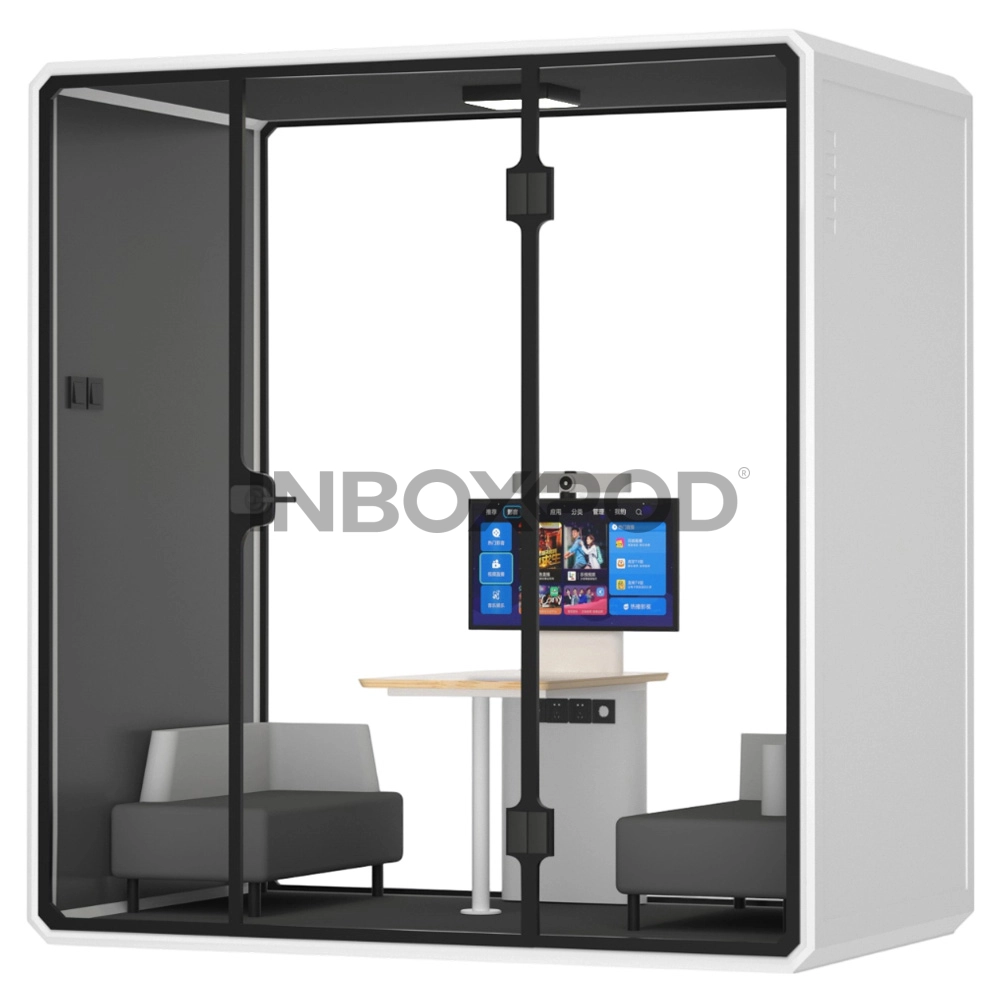
Home-demo
What is the typical sound insulation level of your acoustic booths?
Our booths typically achieve up to 27 dB noise reduction, meeting Class B sound insulation standards suitable for offices and study environments.
What materials are used in the construction of the booths?
Our booths are made from sustainable, high-quality materials including aluminum alloy frames and acoustic panels designed for optimal soundproofing.
How long does it take to assemble an INBOXpod booth?
Most of our booths can be assembled without tools in about 30 minutes, making installation quick and hassle-free.
Can the booths be customized to fit specific space requirements?
Yes, we offer flexible customization options including size, color, and additional features to perfectly suit your needs.
Do you provide after-sales support and warranty?
Yes, we provide comprehensive after-sales service and warranty to ensure long-term satisfaction with our products.
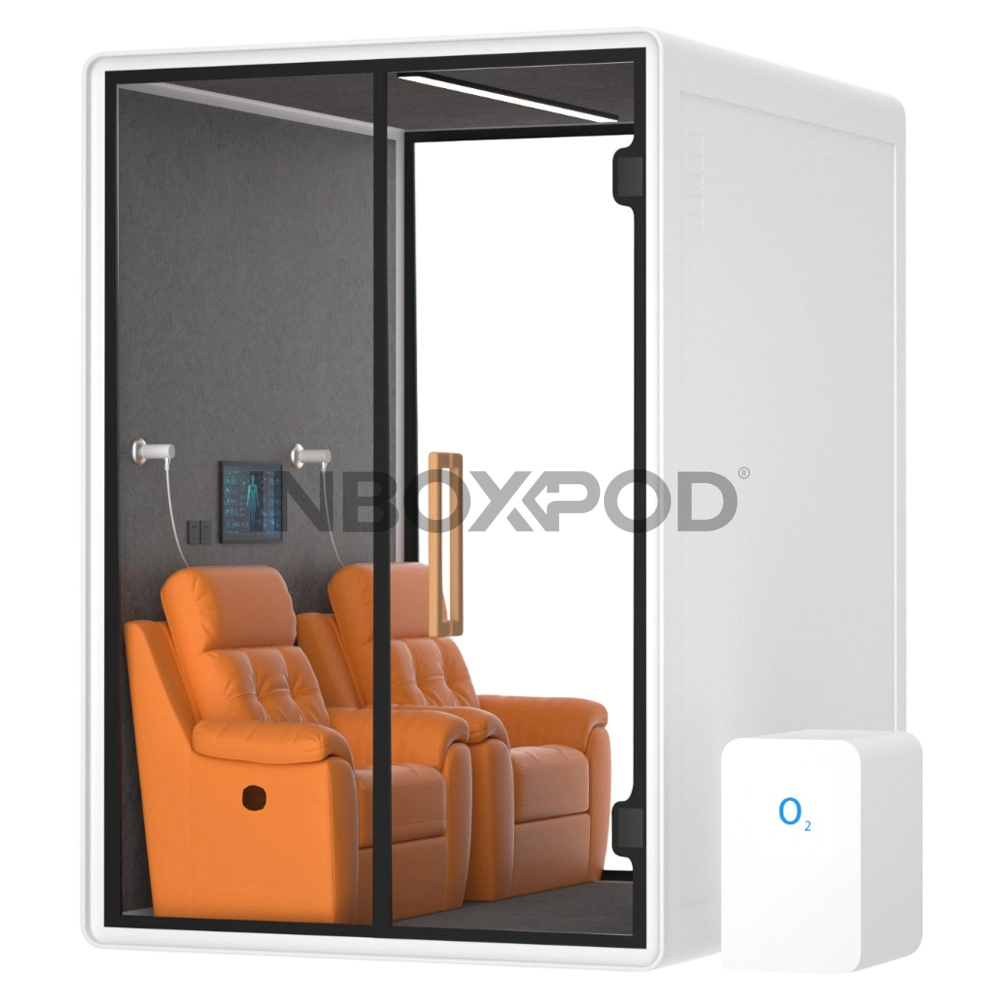
INBOXpod Double Seat Soundproof Oxygen Pod
An oxygen therapy space customized for double social interaction and health, with a double-seat design to promote a win-win situation for interaction and health. External size: W1600×D1929×H2300 mm; internal size: W1466×D1854×H2166 mm. You can improve cardiovascular function and concentration through oxygen therapy with friends and colleagues in a quiet and efficient acoustic environment, making health and social interaction complement each other.
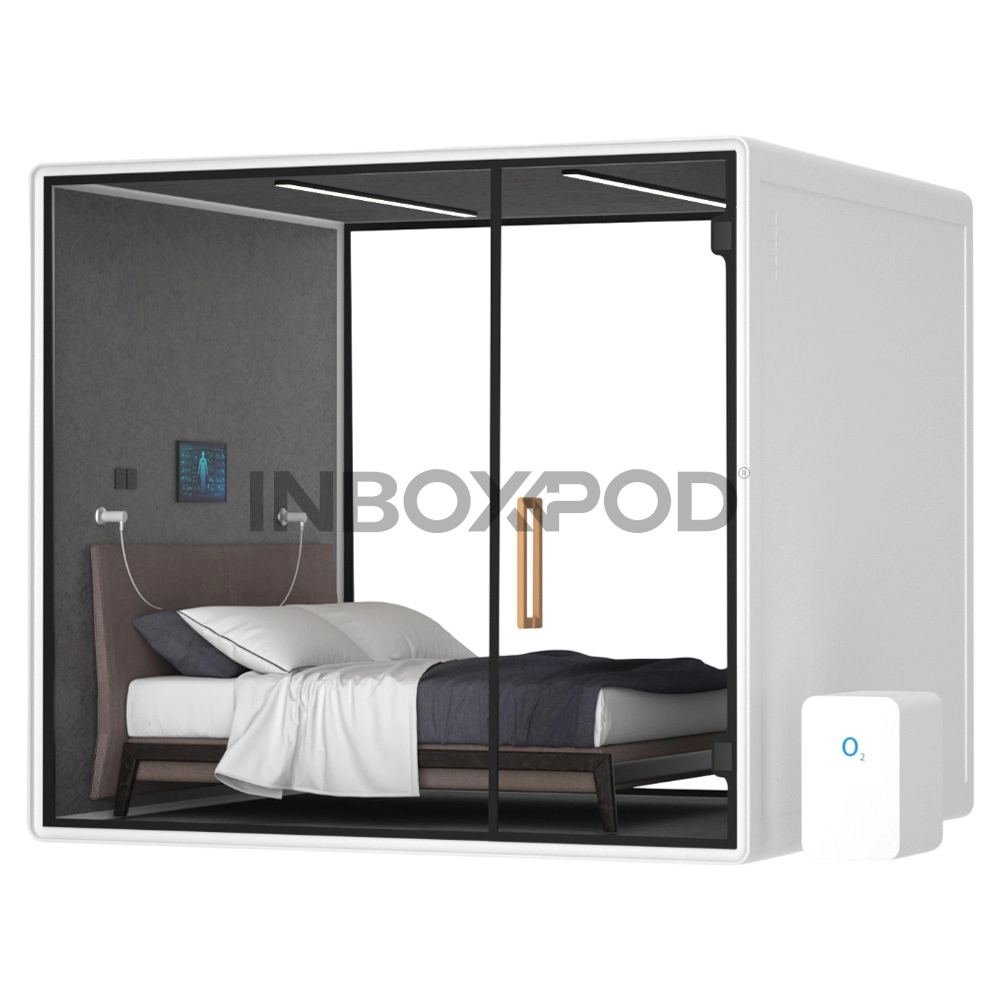
INBOXpod Soundproof Double Bed (small) Oxygen Pod
A double oxygen therapy option that balances space and experience, with a small double-bed layout suitable for various scenarios. External size: W2300×D1854×H2300 mm; internal size: W2300×D1929×H2300 mm. You can share the high-oxygen environment here with relatives and friends, relieve stress, improve physical fitness, and gain health and vitality in company.
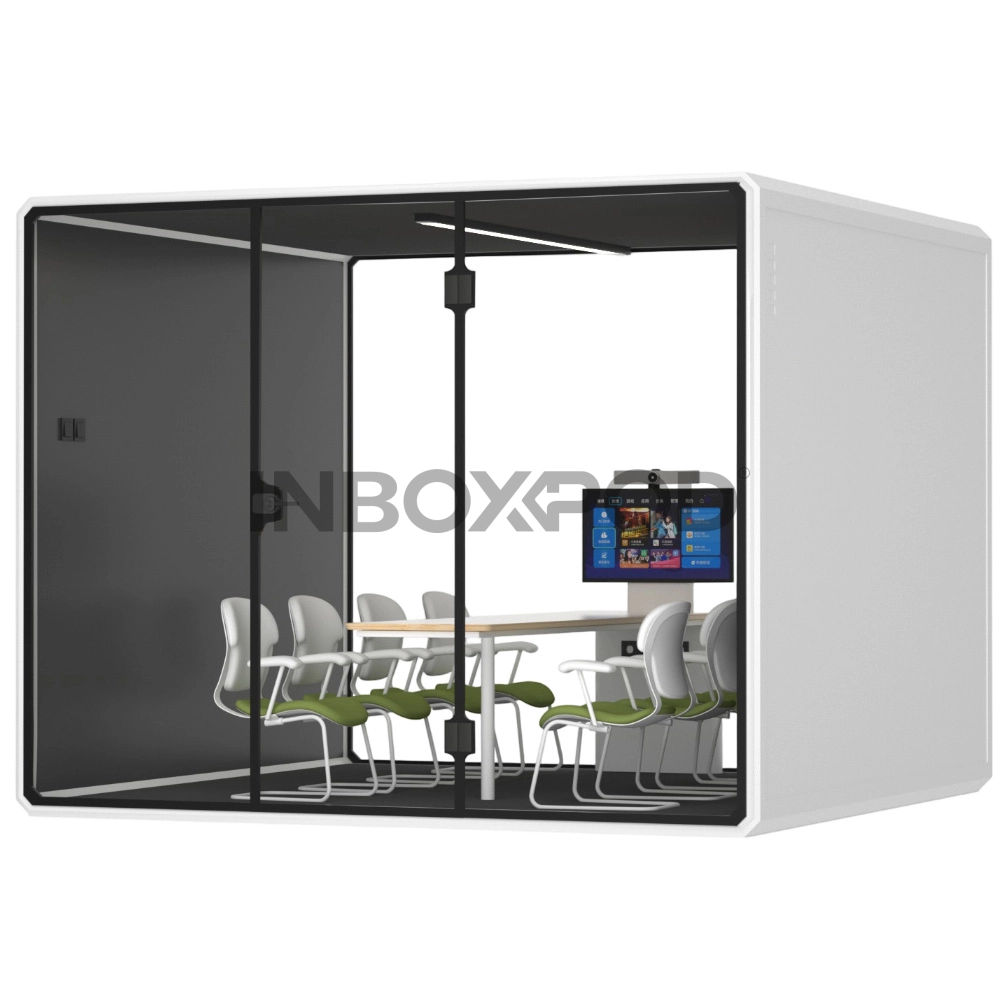
Silence Booth/Office Pod Prefabricated V series-L size
Designed for team collaboration and small meetings, the L-size booth provides a comfortable and acoustically optimized space for 4–6 people. With premium sound insulation, efficient ventilation, and integrated lighting and power systems, it ensures focus, privacy, and productivity—even in the busiest open offices.
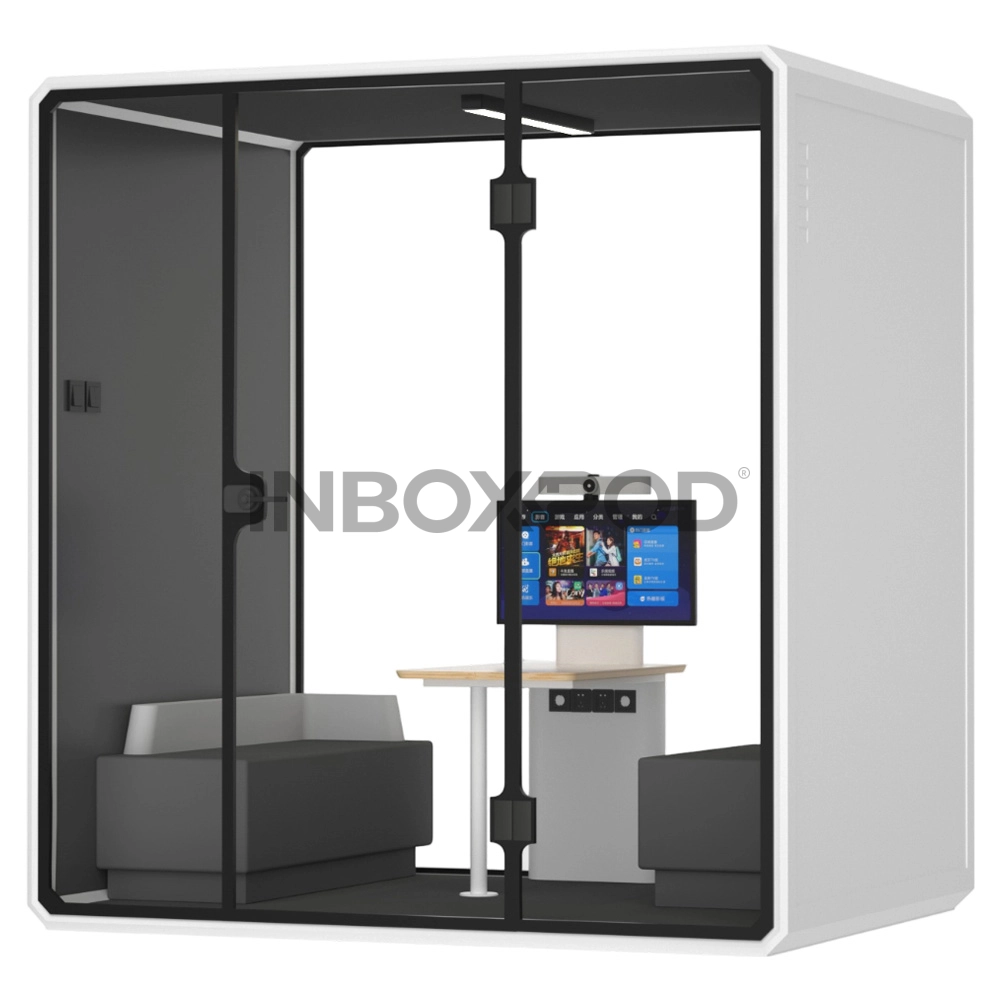
Silence Booth/Office pod Prefabricated V series - M size
Ideal for two-person discussions or focused solo work, the M-size booth offers a balanced mix of privacy and flexibility. Its advanced acoustic panels reduce external noise effectively, while the smart ventilation and lighting systems create a comfortable, quiet environment for calls, meetings, or concentrated tasks.
Stay Updated with INBOXpod Insights
Subscribe to receive the latest articles, industry news, and updates on our acoustic solutions. Stay informed and discover distribution opportunities with INBOXpod.
Whatsapp: +8613535292957