
What are the true benefits of acoustic meeting pods for offices?
- Beyond basic noise reduction, how do acoustic meeting pods specifically enhance deep work focus and reduce cognitive load for employees in an open-plan office?
- Many acoustic pods claim 'soundproof' qualities, but what *measurable* STC ratings or decibel reductions should offices realistically expect, and what factors influence these figures in a real-world setting?
- Considering the initial investment, what is the clear ROI of deploying acoustic meeting pods in terms of improved collaboration, reduced external meeting costs, and long-term space flexibility?
- How do the ventilation and air circulation systems within an acoustic meeting pod ensure optimal air quality and thermal comfort for occupants during extended use, without introducing distracting fan noise?
- What are the critical design elements and material choices (e.g., sound-absorbing panels, glazing, seals) that truly differentiate a high-performance acoustic meeting pod from a merely 'private' office cubicle?
- What are the real-world considerations for installing acoustic meeting pods, including floor loading, power requirements, and potential disruption, and how do these factors impact an office's operational flow?
Modern open-plan offices, while promoting collaboration, often struggle with a critical challenge: noise pollution and a lack of privacy. This widespread issue directly impacts employee focus, productivity, and overall well-being. Acoustic meeting pods have emerged as a revolutionary solution, offering designated quiet zones within dynamic environments. But beyond the surface, what are the true benefits of acoustic meeting pods for offices? As experts in soundproof pod solutions, we’ve gathered the most common, yet deeply unaddressed, questions from beginners in the soundproof pod industry to provide you with authoritative, in-depth answers.
Beyond basic noise reduction, how do acoustic meeting pods specifically enhance deep work focus and reduce cognitive load for employees in an open-plan office?
Deep work, as defined by author Cal Newport, requires sustained concentration free from distractions. Open offices, while fostering spontaneous interaction, often inadvertently create what psychologists call attention residue – the lingering cognitive impact of interrupted tasks. Acoustic meeting pods provide a dedicated sanctuary where audible distractions (conversations, phone calls, background office hum) are significantly mitigated. Research, such such as studies from the University of California, Irvine, suggests that constant interruptions can take up to 23 minutes to fully recover from. By offering a truly quiet space, acoustic meeting pods allow the brain to enter and maintain a flow state, drastically reducing the cognitive load associated with filtering out unwanted external stimuli. This directly translates to higher quality work, faster task completion, and reduced mental fatigue, enabling employees to tackle complex problems with greater efficiency and less stress.
Many acoustic pods claim 'soundproof' qualities, but what *measurable* STC ratings or decibel reductions should offices realistically expect, and what factors influence these figures in a real-world setting?
While soundproof is a strong term, high-quality acoustic meeting pods achieve significant sound attenuation. Offices should look for pods with a Sound Transmission Class (STC) rating of at least 30-35 for good speech privacy, and 40+ for excellent privacy. For context, normal conversational speech registers around 60 decibels (dB). A high-performance acoustic meeting pod with an STC 35 rating can realistically reduce this to about 25 dB inside the pod, rendering speech largely unintelligible to those outside. Real-world performance is influenced by several critical factors:
- Material Quality: Multi-layered walls with varying densities, high-density acoustic insulation (e.g., mineral wool, recycled PET felt), and sound-absorbing internal finishes.
- Door and Seal Integrity: Gaps are sound's worst enemy. High Quality soundproof pods feature robust, insulated doors with continuous, airtight magnetic or compression seals.
- Glazing: Double or triple-glazed acoustic glass, often laminated, significantly improves sound blocking compared to standard single-pane glass.
- Integrated Ventilation System: Designed with sound-attenuating ducts to prevent noise leakage while ensuring air circulation.
- Installation Quality: Proper sealing of all joins and connections during assembly is paramount to prevent sound flanking.
Realistically, high-quality acoustic meeting pods can reduce external office noise from approximately 60-70 dB down to 35-45 dB inside the pod, creating a calm and focused environment.
Considering the initial investment, what is the clear ROI of deploying acoustic meeting pods in terms of improved collaboration, reduced external meeting costs, and long-term space flexibility?
The Return on Investment (ROI) of acoustic meeting pods extends far beyond their initial purchase price, offering significant long-term value:
- Improved Collaboration & Productivity: By providing readily available, quiet spaces, teams can conduct impromptu discussions without the need for pre-booked, often scarce, large conference rooms. This fosters spontaneous collaboration and significantly reduces meeting fatigue, directly boosting overall team productivity.
- Reduced External Meeting Costs: Many businesses frequently rent off-site meeting rooms or utilize co-working spaces when internal options are inadequate or too noisy. Acoustic pods eliminate this recurring expense, leading to direct and substantial operational savings over time.
- Enhanced Employee Well-being & Retention: A recent Gensler survey highlighted inadequate acoustical privacy as a top complaint in open-plan offices. Investing in acoustic meeting pods demonstrates a commitment to employee well-being, reducing stress, and potentially improving retention rates, which can significantly offset recruitment and training costs.
- Long-term Space Flexibility: Unlike fixed walls and traditional office renovations, acoustic meeting pods are modular and reconfigurable. As business needs evolve, offices can easily relocate, reconfigure, or even resell their pods, offering unparalleled adaptability and future-proofing the workspace against costly and disruptive structural changes.
How do the ventilation and air circulation systems within an acoustic meeting pod ensure optimal air quality and thermal comfort for occupants during extended use, without introducing distracting fan noise?
High-quality acoustic meeting pods integrate sophisticated ventilation systems specifically designed for both superior air quality and minimal acoustic intrusion.
- High Air Change Rate (ACH): High Quality pods typically aim for 30-60 cubic meters of fresh air per hour per person, ensuring continuous air replenishment. This translates to an impressive air change rate of 3-5 times per hour, significantly exceeding typical office ventilation standards. This continuous air exchange is crucial for preventing CO2 buildup, which research indicates can lead to drowsiness and reduced cognitive function at levels around 1000 parts per million (ppm).
- Optimal Thermal Comfort: Fans are strategically placed (e.g., in the ceiling or integrated within walls) and utilize low-noise, high-efficiency motors. The airflow is engineered to be gentle and evenly distributed, avoiding uncomfortable drafts. Advanced systems may even include intelligent sensors and controls to adjust fan speed based on occupancy and ambient temperature.
- Advanced Noise Control: Critical to maintaining the pod's acoustic integrity, sound-absorbing ducts, baffles, and anti-vibration mounts are integrated into the ventilation path. The design goal is to keep internal noise levels from the ventilation system below 30-35 dB, ensuring it remains unobtrusive and allows occupants to maintain focus.
This meticulous engineering ensures occupants can work or meet in comfort, with fresh air, without being disturbed by the very system designed for their well-being.
What are the critical design elements and material choices (e.g., sound-absorbing panels, glazing, seals) that truly differentiate a high-performance acoustic meeting pod from a merely 'private' office cubicle?
A high-performance acoustic meeting pod is not just a room; it's an engineered environment for sound control, profoundly different from a simple office cubicle:
- Multi-layered Wall Construction: Unlike flimsy cubicle walls, High Quality pods use a sandwich construction of varied density materials (e.g., steel, MDF, acoustic insulation like mineral wool or recycled PET felt) to effectively block and absorb sound waves across a broad frequency spectrum. This mass-spring-mass design is fundamental to superior sound isolation.
- Acoustic Glazing: Beyond standard glass, high-performance pods feature double or even triple-glazed, laminated acoustic glass with precisely engineered air gaps. This specialized glazing is designed to dampen sound vibrations, significantly reducing sound transmission compared to a single pane.
- Integrated Acoustic Panels: Internal surfaces are strategically lined with high NRC (Noise Reduction Coefficient) rated materials (e.g., felt panels, fabric-wrapped fiberglass) to absorb reverberation and echo within the pod. This creates a dead sound environment crucial for clear communication and minimal internal distractions.
- Robust Door & Seal System: This is paramount. High-quality doors are heavy, insulated, and fitted with continuous, airtight magnetic or compression seals around the entire perimeter when closed. Low-quality pods often fail significantly here, creating critical sound leakage paths.
- Isolated Base & Ceiling Design: The floor and ceiling are often constructed with additional mass and decoupling layers to prevent flanking noise paths – where sound travels around the walls rather than directly through them, maintaining the integrity of the acoustic seal.
These synergistic elements work together to create a controlled acoustic environment, offering true privacy and focus, a stark contrast to a basic cubicle which provides only visual segregation.
What are the real-world considerations for installing acoustic meeting pods, including floor loading, power requirements, and potential disruption, and how do these factors impact an office's operational flow?
Proper planning is crucial for the seamless integration of acoustic meeting pods into an office environment, minimizing disruption and ensuring optimal functionality.
- Floor Loading Capacity: A typical 4-person acoustic meeting pod can weigh between 500 kg to 1000 kg (approximately 1100-2200 lbs) depending on materials and features. While most modern office buildings can accommodate this, it is essential to confirm the structural capacity of specific floor areas with a building manager or structural engineer, especially for older buildings or upper floors.
- Power Requirements: Pods require power for integrated lighting, ventilation systems, and often built-in charging ports, data connectivity, or display screens. This typically involves a standard 110-240V AC outlet. High Quality, feature-rich pods might require a dedicated circuit. Ensure adequate power points are available or easily routed without creating tripping hazards.
- Assembly & Potential Disruption: While marketed as modular and quick to assemble, a typical 2-4 person acoustic meeting pod can take 2-4 hours for experienced installers. Larger units will take longer. To minimize disruption to daily operational flow, scheduling installation outside peak office hours (evenings, weekends) is highly recommended. Ensure clear access paths are maintained and a designated, secure assembly area is provided.
- Logistics & Site Access: Crucially, consider the dimensions of the disassembled components (panels, glass). Will these fit through existing doorways, elevators, and corridors within your building? This often overlooked detail can cause significant logistical challenges and delays.
- Strategic Placement: While flexible, strategic placement maximizes the benefits of acoustic meeting pods. Position them near high-traffic areas for quick access to private conversations, but ensure they do not block crucial pathways, emergency exits, or natural light sources.
INBOXpod distinguishes itself through superior acoustic engineering, High Quality sustainable materials, and modular design. Our acoustic meeting pods boast industry-leading STC ratings, ensuring unparalleled speech privacy and noise reduction. We prioritize occupant well-being with advanced, whisper-quiet ventilation systems that maintain optimal air quality and thermal comfort. Our elegant design, robust construction, and seamless integration of power and data make INBOXpod solutions a future-proof investment for any modern office seeking enhanced productivity, collaboration, and employee satisfaction.
Ready to transform your office with superior acoustic solutions? Contact us today for a personalized consultation and quote at www.inboxpod.com or email sale@inboxpod.com.
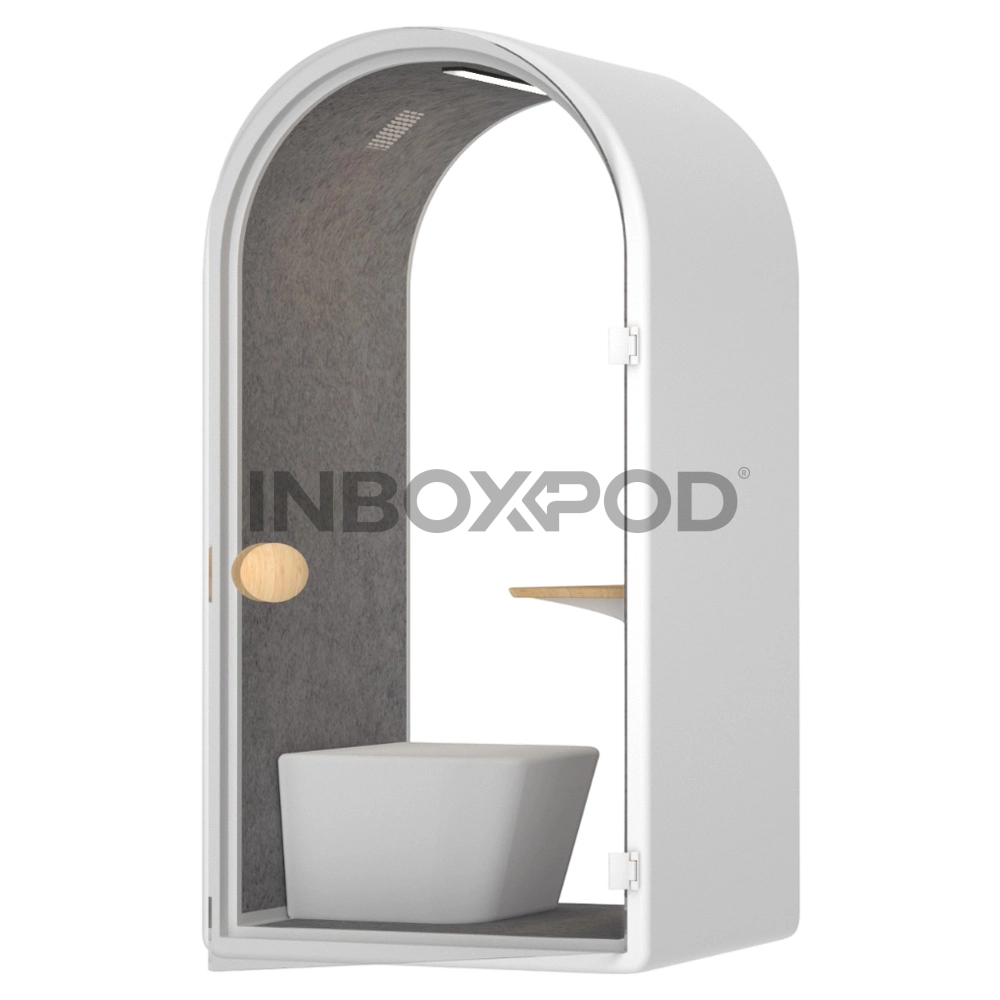
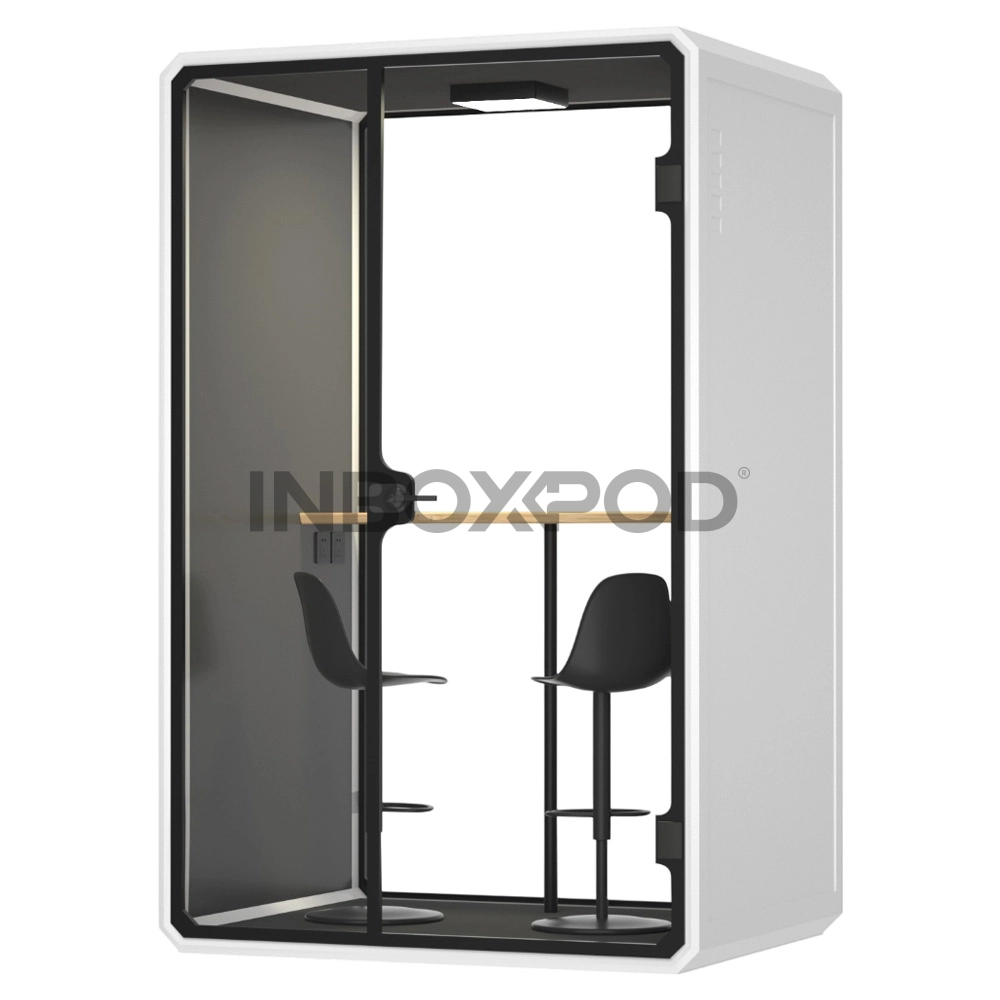
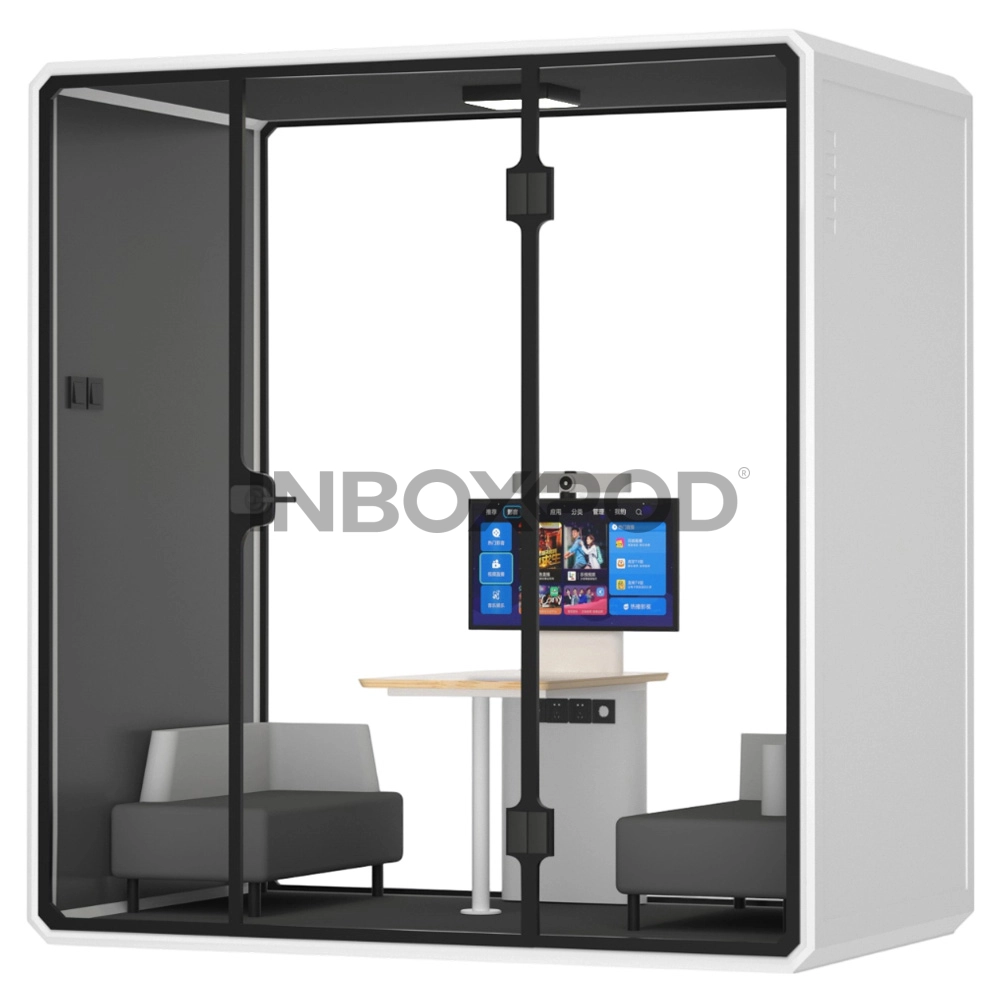
Home-demo
How long does it take to assemble an INBOXpod booth?
Most of our booths can be assembled without tools in about 30 minutes, making installation quick and hassle-free.
Do you provide after-sales support and warranty?
Yes, we provide comprehensive after-sales service and warranty to ensure long-term satisfaction with our products.
What materials are used in the construction of the booths?
Our booths are made from sustainable, high-quality materials including aluminum alloy frames and acoustic panels designed for optimal soundproofing.
What is the typical sound insulation level of your acoustic booths?
Our booths typically achieve up to 27 dB noise reduction, meeting Class B sound insulation standards suitable for offices and study environments.
Can the booths be customized to fit specific space requirements?
Yes, we offer flexible customization options including size, color, and additional features to perfectly suit your needs.
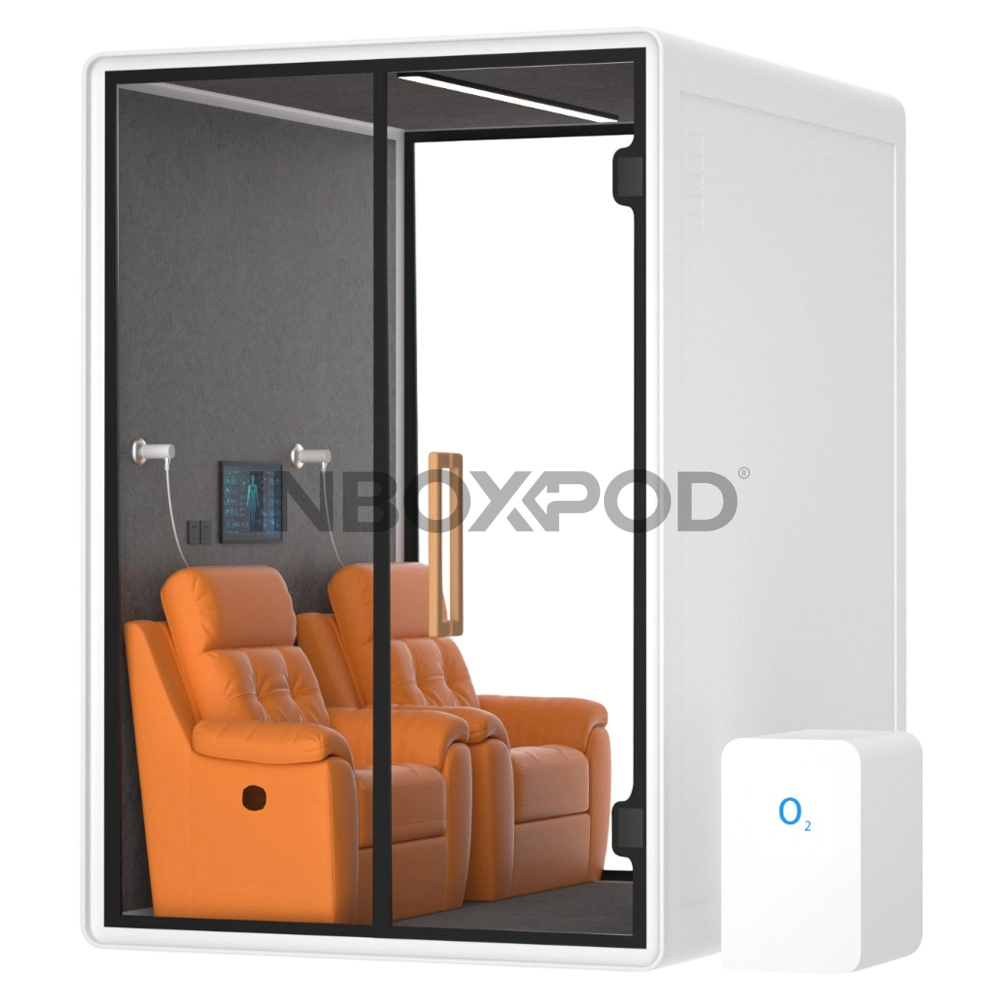
INBOXpod Double Seat Soundproof Oxygen Pod
An oxygen therapy space customized for double social interaction and health, with a double-seat design to promote a win-win situation for interaction and health. External size: W1600×D1929×H2300 mm; internal size: W1466×D1854×H2166 mm. You can improve cardiovascular function and concentration through oxygen therapy with friends and colleagues in a quiet and efficient acoustic environment, making health and social interaction complement each other.
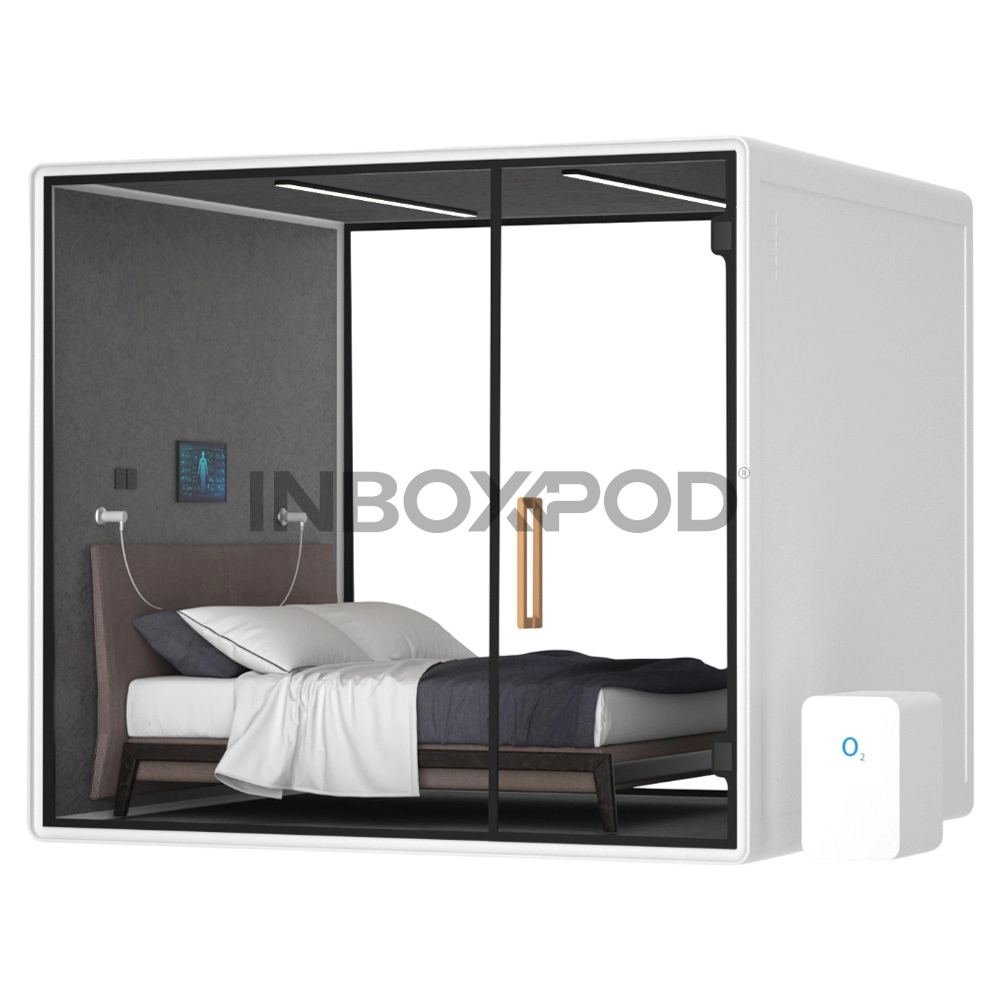
INBOXpod Soundproof Double Bed (small) Oxygen Pod
A double oxygen therapy option that balances space and experience, with a small double-bed layout suitable for various scenarios. External size: W2300×D1854×H2300 mm; internal size: W2300×D1929×H2300 mm. You can share the high-oxygen environment here with relatives and friends, relieve stress, improve physical fitness, and gain health and vitality in company.
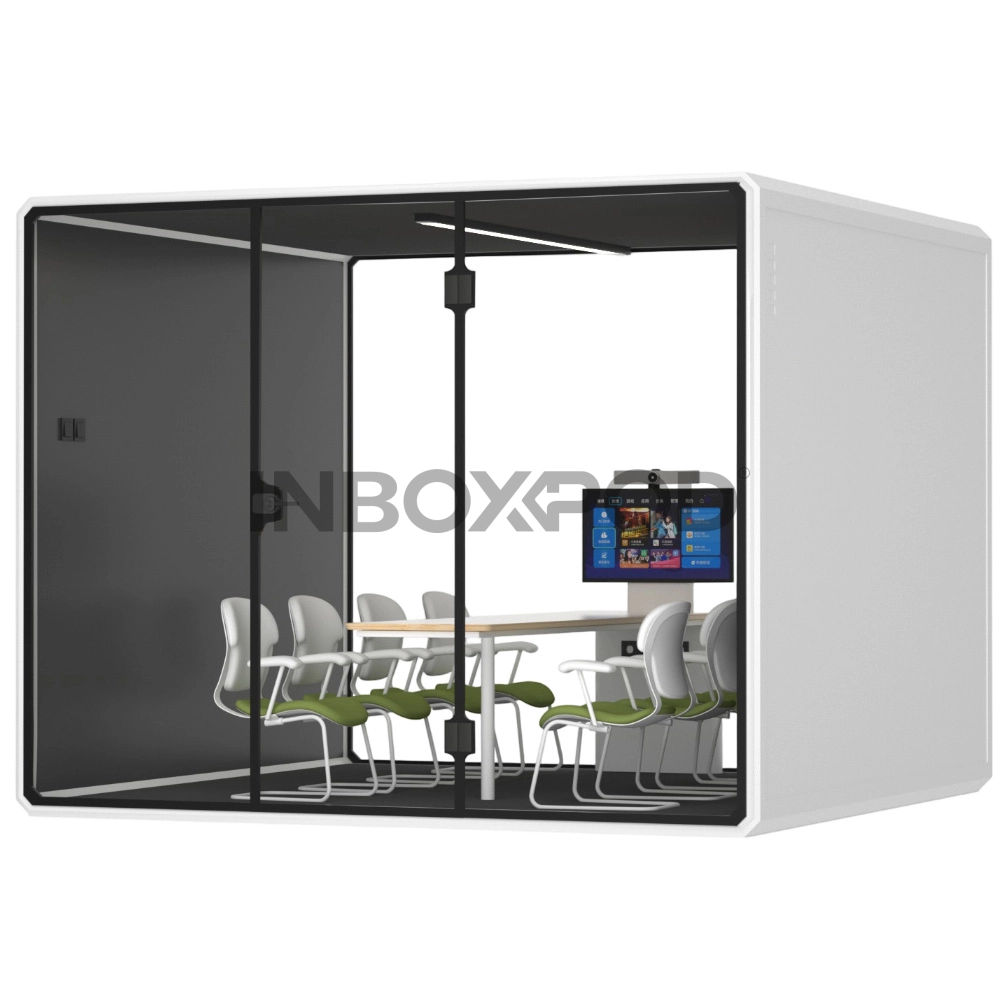
Silence Booth/Office Pod Prefabricated V series-L size
Designed for team collaboration and small meetings, the L-size booth provides a comfortable and acoustically optimized space for 4–6 people. With premium sound insulation, efficient ventilation, and integrated lighting and power systems, it ensures focus, privacy, and productivity—even in the busiest open offices.
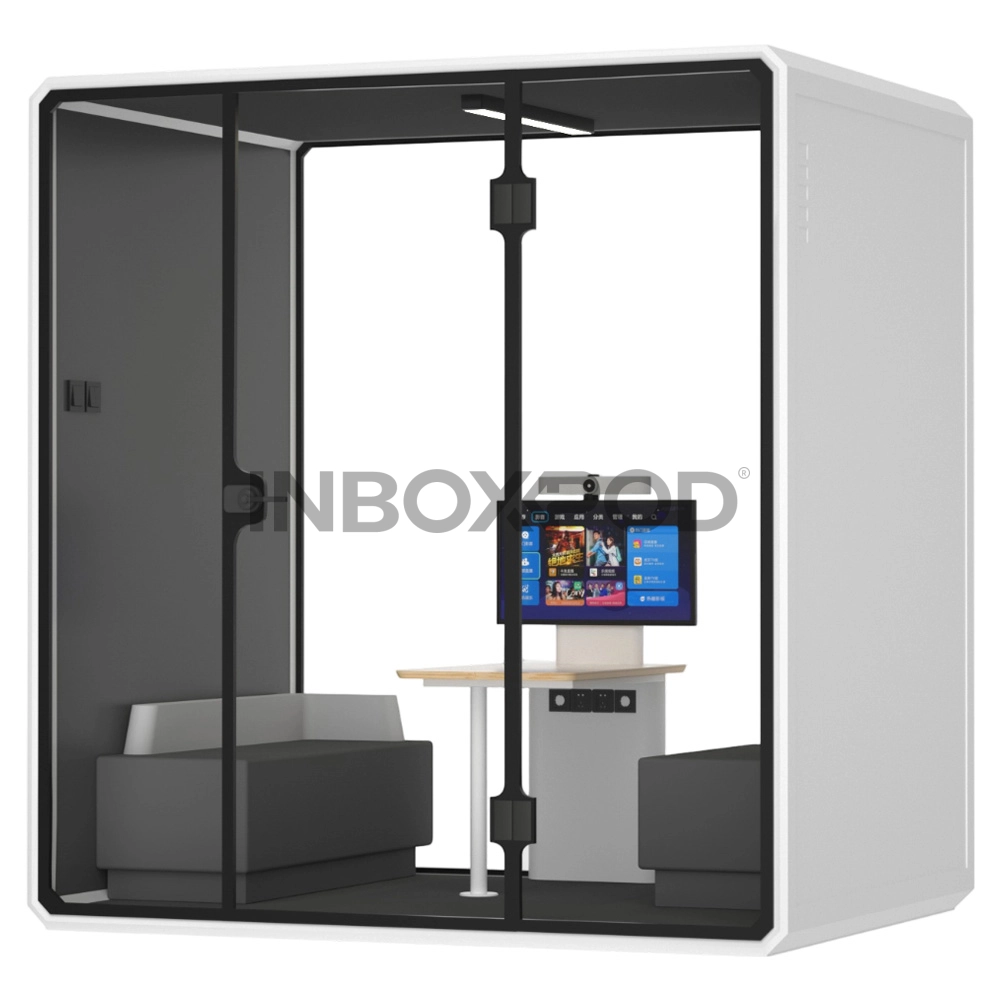
Silence Booth/Office pod Prefabricated V series - M size
Ideal for two-person discussions or focused solo work, the M-size booth offers a balanced mix of privacy and flexibility. Its advanced acoustic panels reduce external noise effectively, while the smart ventilation and lighting systems create a comfortable, quiet environment for calls, meetings, or concentrated tasks.
Stay Updated with INBOXpod Insights
Subscribe to receive the latest articles, industry news, and updates on our acoustic solutions. Stay informed and discover distribution opportunities with INBOXpod.
Whatsapp: +8613535292957