
What noise reduction is needed for hyperbaric chambers in pods?
- What are the specific decibel levels and primary noise sources of a typical commercial hyperbaric oxygen therapy (HBOT) chamber, and how do these impact patient experience within an integrated soundproof pod?
- Beyond just acoustic insulation, what critical safety and ventilation modifications are essential for securely integrating an oxygen health systems hyperbaric chamber into a sealed soundproof pod to prevent oxygen accumulation and ensure patient safety?
- What advanced vibration isolation techniques are most effective for preventing low-frequency noise and structural transmission from hyperbaric chamber compressors and air handling units into the surrounding soundproof pod structure?
- Considering the unique requirements of an oxygen-rich environment, what specific fire-rated and non-flammable acoustic materials should be prioritized for noise reduction within a soundproof pod housing an oxygen health systems hyperbaric chamber?
- For a typical wellness clinic setting, what specific STC (Sound Transmission Class) and NRC (Noise Reduction Coefficient) ratings should a soundproof pod achieve to effectively attenuate noise from a hyperbaric chamber to create a serene patient experience?
- What are the common challenges and best practices for routing power, data, and oxygen supply lines through a soundproof pod wall to an oxygen health systems hyperbaric chamber without compromising acoustic integrity or safety protocols?
Mastering Quiet: Integrating Oxygen Health Systems Hyperbaric Chambers into Soundproof Pods
The pursuit of optimal wellness often leads to innovative therapeutic solutions like hyperbaric oxygen therapy (HBOT). As demand for these advanced oxygen health systems hyperbaric chambers grows, so does the need for their seamless, quiet integration into clinics, wellness centers, and private spaces. However, the powerful machinery behind a pressurized oxygen environment—compressors, oxygen concentrators, and ventilation units—generates significant operational noise. This noise can detract from the therapeutic experience and disrupt surrounding environments. For those new to this complex integration, especially concerning what noise reduction is needed for hyperbaric chambers in pods, many questions arise that often lack truly in-depth, practical answers online. At Inbox Pod, we leverage our extensive expertise in soundproofing and understanding of medical environments to demystify these challenges.
What are the specific decibel levels and primary noise sources of a typical commercial hyperbaric oxygen therapy (HBOT) chamber, and how do these impact patient experience within an integrated soundproof pod?
A commercial hyperbaric oxygen therapy (HBOT) chamber itself is generally quiet internally once at pressure, but its ancillary equipment is the main culprit for external noise pollution. The primary noise sources include the air compressor (often the loudest, ranging from 65-85 dBA), the oxygen concentrator (typically 40-55 dBA), and various cooling fans or ventilation systems (35-50 dBA) that maintain the chamber's internal environment and external equipment temperature. These noise levels, particularly the compressor's robust operation, can create a highly distracting environment, making relaxation difficult for patients undergoing high-pressure oxygen treatment. Without adequate mitigation, the hum, whir, and occasional thrum from these components can permeate walls, significantly diminishing the therapeutic benefits of the session. For a truly serene patient experience, ambient noise within the pod should ideally be reduced to below 40 dBA, preferably in the 30-35 dBA range, similar to a quiet library or a tranquil garden, enhancing the overall efficacy of the oxygen delivery systems.
Beyond just acoustic insulation, what critical safety and ventilation modifications are essential for securely integrating an oxygen health systems hyperbaric chamber into a sealed soundproof pod to prevent oxygen accumulation and ensure patient safety?
Integrating an oxygen health systems hyperbaric chamber within a sealed soundproof pod demands more than just sound attenuation; paramount are safety and proper ventilation, especially given the presence of medical oxygen systems. The primary concern is preventing oxygen accumulation, which poses a severe fire risk (NFPA 99, Health Care Facilities Code, outlines critical standards for medical gas systems). Essential modifications include: (1) Dedicated Exhaust System: A robust, independent exhaust system for the pod is crucial, with sufficient air changes per hour (ACH) to ensure that any potential oxygen leakage from the chamber or its supply lines is rapidly diluted and expelled. This system must not recirculate air within the pod. (2) Oxygen Monitoring: Installing continuous oxygen level monitors within the pod, with audible and visual alarms that trigger if concentrations exceed safe thresholds (e.g., 23.5%). (3) Emergency Shut-off: Easily accessible emergency power and oxygen supply shut-offs, both inside and outside the pod. (4) Fire Suppression: While the chamber itself might have specific fire protocols, the pod should align with overall building fire safety codes, possibly requiring non-sprinkler-compatible solutions or specific fire detection systems suitable for oxygen-enriched environments. These steps are vital to maintain a safe environment for both patients and operators of the therapeutic oxygen systems.
What advanced vibration isolation techniques are most effective for preventing low-frequency noise and structural transmission from hyperbaric chamber compressors and air handling units into the surrounding soundproof pod structure?
Low-frequency noise and structural vibrations are particularly challenging to mitigate, as they travel efficiently through solid materials. For oxygen health systems hyperbaric chambers, the compressor and sometimes air handling units are significant sources. Effective vibration isolation techniques include: (1) Floating Floor Systems: Installing the hyperbaric chamber's support equipment on a decoupled floating floor system, typically using spring isolators or high-density rubber pads to break the transmission path between the equipment and the building structure. (2) Vibration Isolation Mounts: Placing specialized vibration isolators (e.g., neoprene pads, coiled springs, or air springs) directly under the compressor unit, tailored to its specific weight and operating frequency. (3) Flexible Connections: Utilizing flexible hoses and duct connectors for all plumbing (air, oxygen) and electrical conduits connected to the chamber and its ancillary equipment. Rigid connections act as direct sound bridges. (4) Mass-Loaded Barriers: Incorporating heavy, dense materials in the soundproof pod's construction (e.g., multiple layers of drywall, mass-loaded vinyl) to help absorb and dampen low-frequency energy. These combined strategies are crucial for effectively decoupling the vibrational energy and preventing it from radiating as bothersome noise throughout the soundproof pod and surrounding building, ensuring a quiet therapeutic environment.
Considering the unique requirements of an oxygen-rich environment, what specific fire-rated and non-flammable acoustic materials should be prioritized for noise reduction within a soundproof pod housing an oxygen health systems hyperbaric chamber?
The selection of acoustic materials for a soundproof pod housing an oxygen health systems hyperbaric chamber is critically influenced by fire safety in an oxygen-rich environment. Prioritization must be given to materials with high fire ratings and non-combustible properties to prevent rapid flame spread. Recommended materials include: (1) Mineral Wool or Rockwool: These offer excellent acoustic absorption and insulation, are naturally non-combustible, and have high melting points, making them superior to fiberglass in high-risk environments. (2) Fire-Rated Gypsum Board: Using multiple layers of Type X or Type C fire-rated gypsum board for walls and ceilings provides significant mass for sound blocking and enhances fire resistance. (3) Non-Flammable Adhesives and Sealants: All construction components, including glues and caulks, must be rated for low flame spread and smoke development (e.g., ASTM E84 Class A). (4) Steel or Aluminum Framing: While not acoustic materials themselves, these non-combustible framing elements are preferred over wood in such sensitive installations. (5) Specialty Fabrics/Finishes: Any fabric or finish used inside the pod for aesthetic or further acoustic purposes must be inherently flame-retardant (e.g., treated polyester or wool, meeting Class A fire ratings) and tested for use in high-oxygen environments. Selecting these materials diligently ensures both superior noise reduction and uncompromising safety for a clinical setting utilizing advanced oxygen delivery systems.
For a typical wellness clinic setting, what specific STC (Sound Transmission Class) and NRC (Noise Reduction Coefficient) ratings should a soundproof pod achieve to effectively attenuate noise from a hyperbaric chamber to create a serene patient experience?
To create a truly serene patient experience in a wellness clinic housing an oxygen health systems hyperbaric chamber, specific acoustic performance targets are essential. (1) STC (Sound Transmission Class) Rating: This measures how well a building partition attenuates airborne sound. Given that HBOT compressors can reach 65-85 dBA, and a serene environment requires around 30-35 dBA, a substantial reduction of 30-55+ dB is needed. Therefore, the soundproof pod's walls, ceiling, and door assembly should aim for an STC rating of at least STC 50-55, with STC 60+ being ideal for optimal performance and blocking those challenging low-frequency sounds. An STC 50 means 'loud speech barely audible,' while STC 60 means 'virtually inaudible.' (2) NRC (Noise Reduction Coefficient) Rating: This measures the amount of sound energy absorbed by a material within a space. While STC deals with sound *transmission*, NRC addresses sound *reverberation* inside the pod. High NRC materials (e.g., acoustic panels) within the pod reduce echoes and internal reflections, creating a more pleasant acoustic environment for the patient. An NRC rating of 0.80 to 0.95 for internal finishes is highly recommended. Achieving these ratings ensures that the therapeutic applications of the hyperbaric chamber are delivered in an acoustically optimized and comfortable setting.
What are the common challenges and best practices for routing power, data, and oxygen supply lines through a soundproof pod wall to an oxygen health systems hyperbaric chamber without compromising acoustic integrity or safety protocols?
Routing essential services into a soundproof pod for an oxygen health systems hyperbaric chamber is a critical design phase where acoustic integrity and safety often clash. Common challenges include: (1) Flanking Paths: Any penetration, no matter how small, can create a 'flanking path' for sound to bypass the acoustic barriers. (2) Vibration Transmission: Rigid pipes or conduits can transmit equipment vibrations directly through the wall. (3) Oxygen Leakage Points: Improper sealing can lead to unsafe oxygen accumulation. Best practices include: (1) Acoustic Sealants and Gaskets: Use non-hardening, non-flammable acoustic sealants (e.g., silicone caulk rated for fire/smoke) to meticulously seal all gaps around conduits and pipes. Gaskets should be used for cover plates. (2) Staggered Openings: Where possible, stagger penetrations across double-wall constructions so they don't create a direct line of sight for sound. (3) Flexible Connections: Employ flexible, vibration-isolating conduits and hoses for the final connections to the chamber to prevent structure-borne noise. (4) Oversized Sleeves: Install pipes and cables through oversized sleeves, then pack the void with non-combustible acoustic insulation (like mineral wool) before sealing with acoustic caulk. (5) Dedicated Service Panels: Design a centralized, acoustically treated service panel or bulkhead where all connections converge, allowing for easier maintenance and sealing. Adhering to these practices ensures that essential power, data, and oxygen supply lines support the medical oxygen systems without undermining the pod's superior soundproofing or the stringent safety requirements of clinical settings.
Integrating oxygen health systems hyperbaric chambers into soundproof pods requires specialized knowledge to ensure both therapeutic efficacy and occupant safety. By addressing the specific challenges of noise reduction, vibration isolation, fire safety, and meticulous service routing, Inbox Pod delivers bespoke solutions that transform potentially noisy equipment into a cornerstone of a serene wellness environment. Our expertise in creating acoustically superior spaces ensures your investment in HBOT provides maximum comfort and peace of mind.
For a custom quote and to explore how Inbox Pod can design the perfect soundproof solution for your hyperbaric chamber needs, please contact us today. Visit our website at www.inboxpod.com or email us at sale@inboxpod.com.
Home-demo
What is the typical sound insulation level of your acoustic booths?
Our booths typically achieve up to 27 dB noise reduction, meeting Class B sound insulation standards suitable for offices and study environments.
Do you provide after-sales support and warranty?
Yes, we provide comprehensive after-sales service and warranty to ensure long-term satisfaction with our products.
What materials are used in the construction of the booths?
Our booths are made from sustainable, high-quality materials including aluminum alloy frames and acoustic panels designed for optimal soundproofing.
How long does it take to assemble an INBOXpod booth?
Most of our booths can be assembled without tools in about 30 minutes, making installation quick and hassle-free.
Can the booths be customized to fit specific space requirements?
Yes, we offer flexible customization options including size, color, and additional features to perfectly suit your needs.
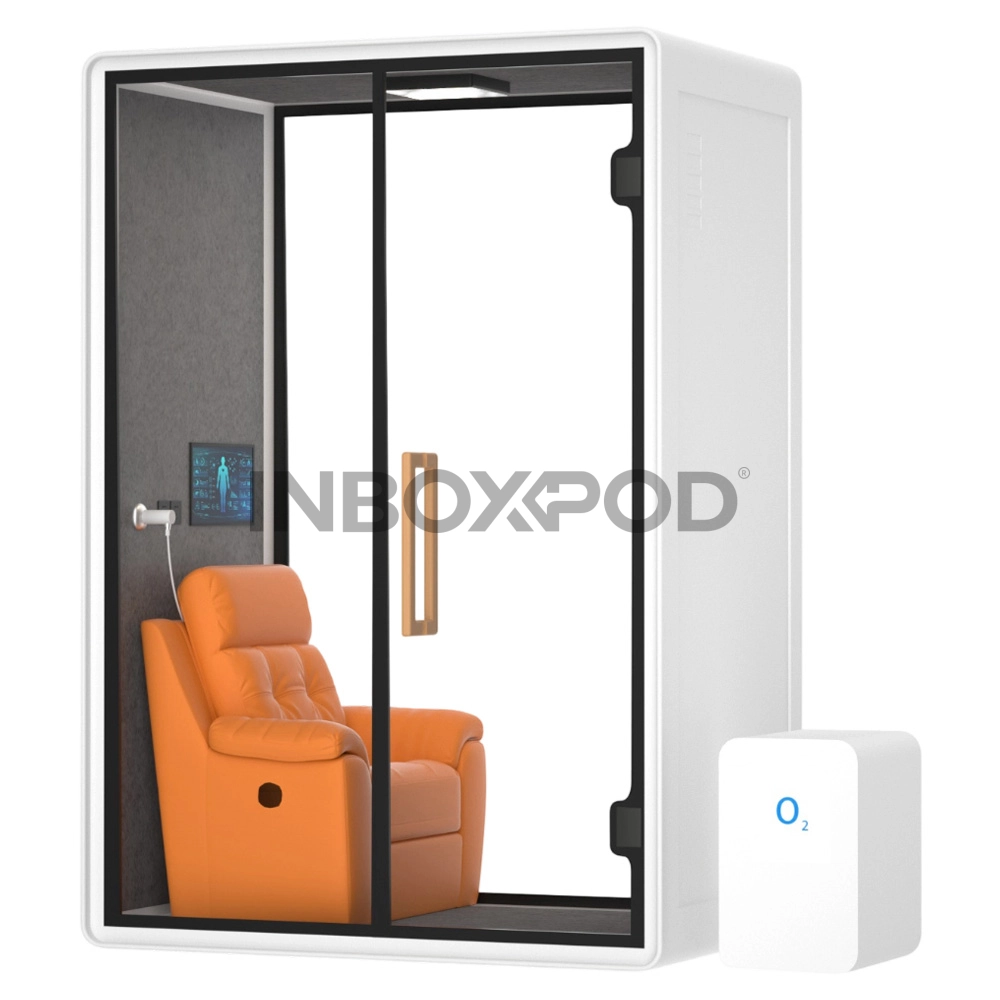
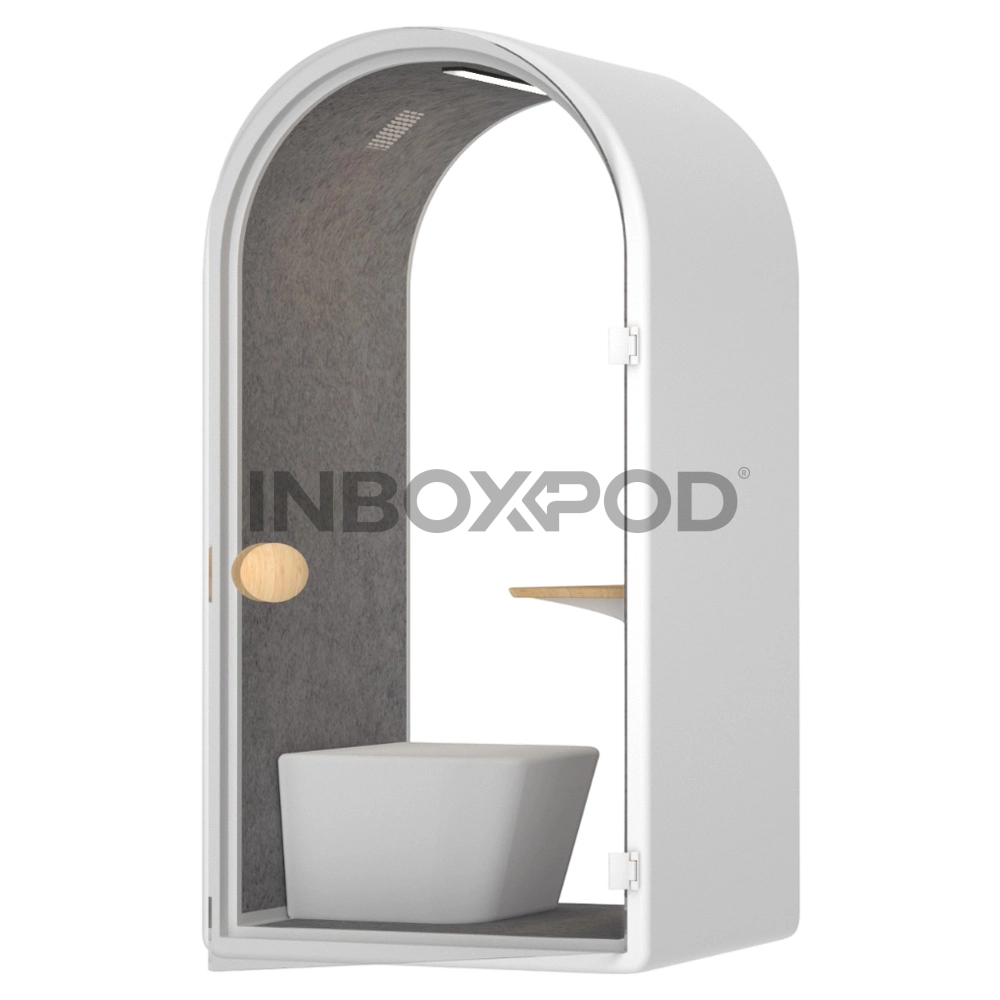
INBOXpod Soundproof Single seat Oxygen Pod
A delicate and compact personal oxygen therapy secret, with a single-seat layout that is flexible and convenient. External size: W1600×D1028×H2300 mm; internal size: W1466×D953×H2166 mm. Create a quiet, private domain for you, where you can inhale high-purity oxygen efficiently during daily relaxation or postoperative recovery, helping to improve cardiopulmonary function and mental state.
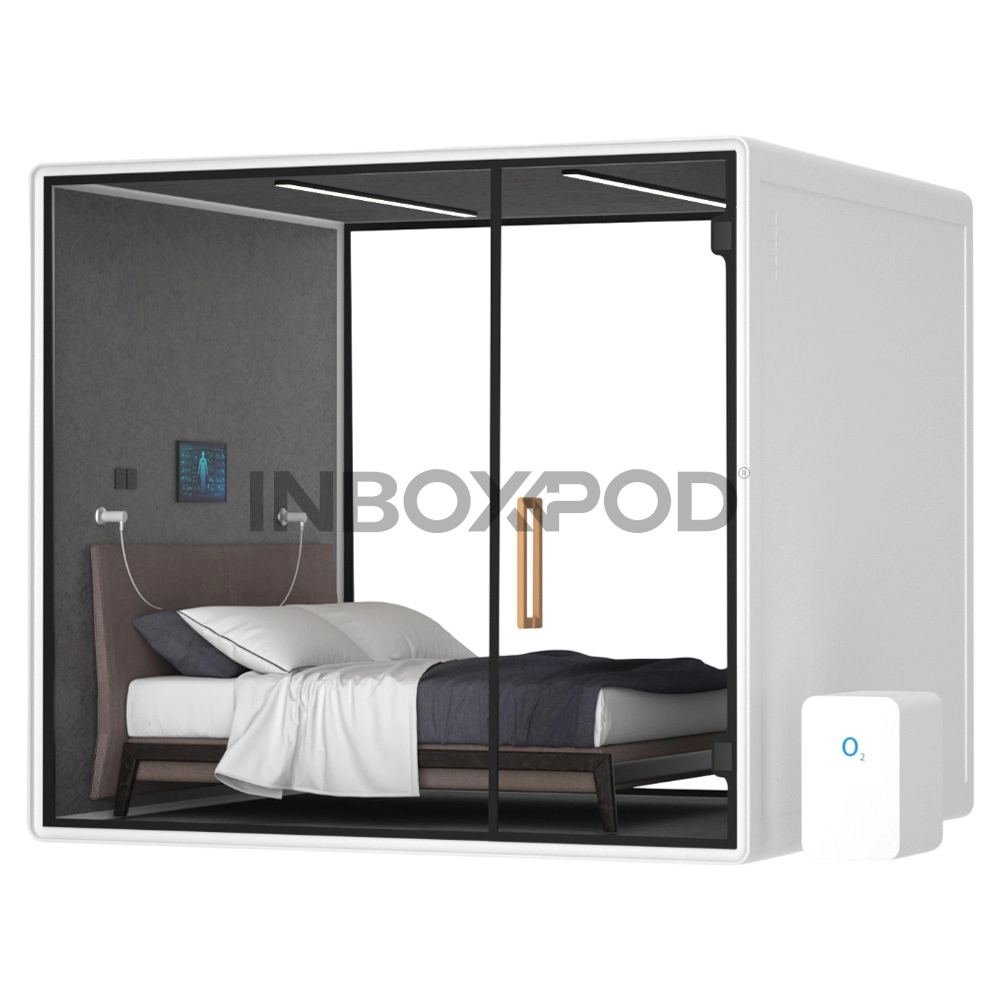
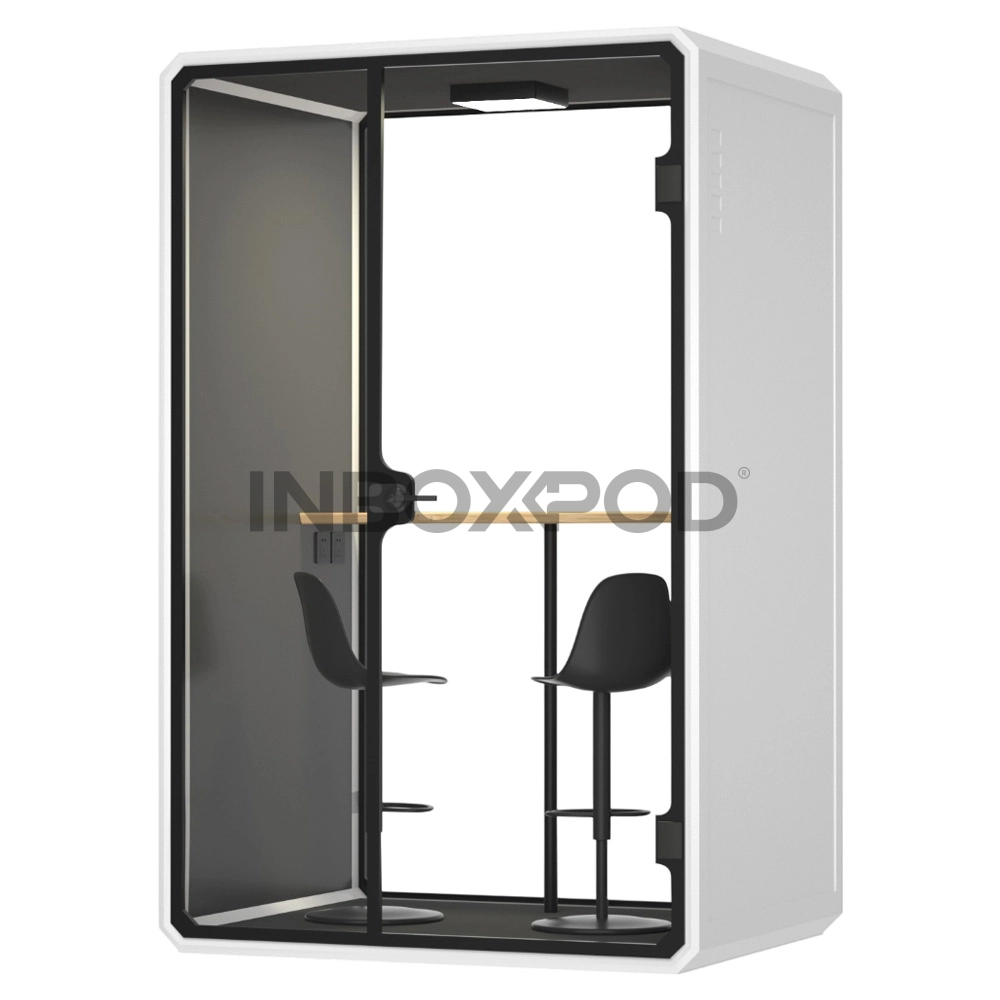
INBOXpod Soundproof Double Bed (small) Oxygen Pod
A double oxygen therapy option that balances space and experience, with a small double-bed layout suitable for various scenarios. External size: W2300×D1854×H2300 mm; internal size: W2300×D1929×H2300 mm. You can share the high-oxygen environment here with relatives and friends, relieve stress, improve physical fitness, and gain health and vitality in company.
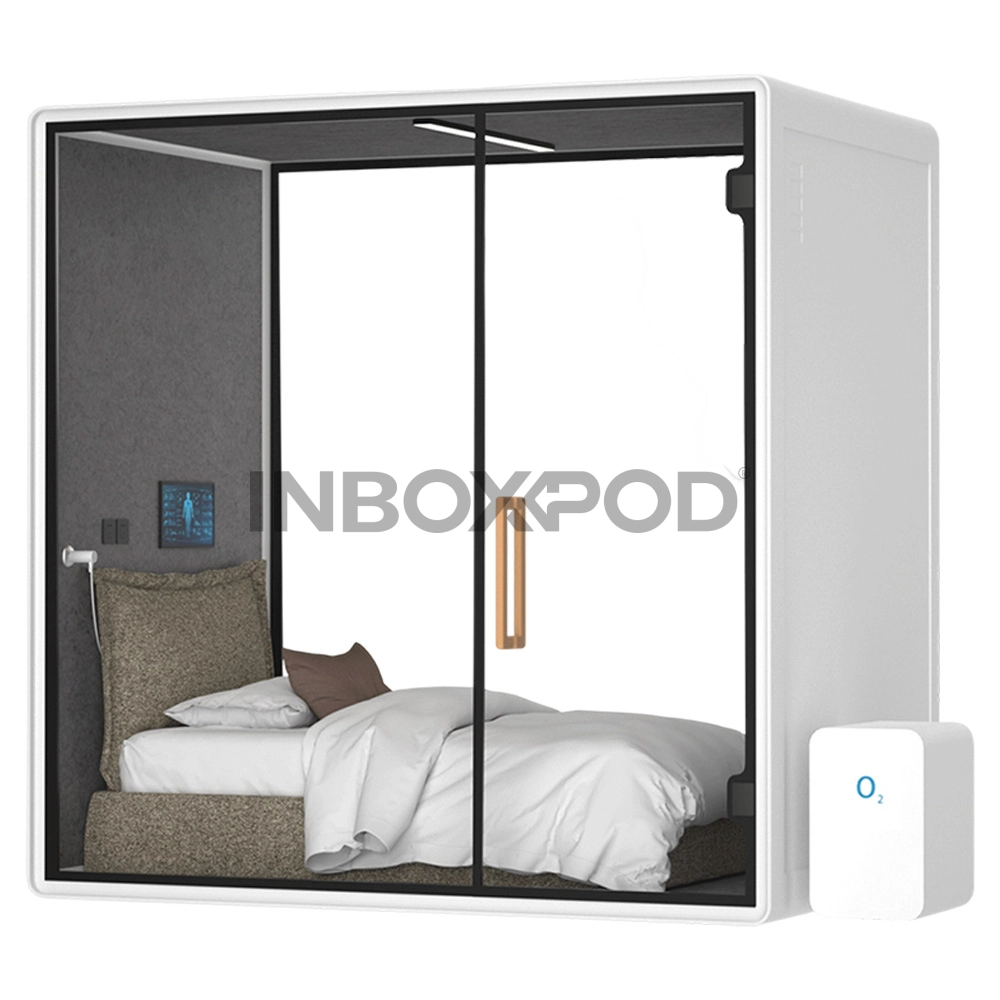
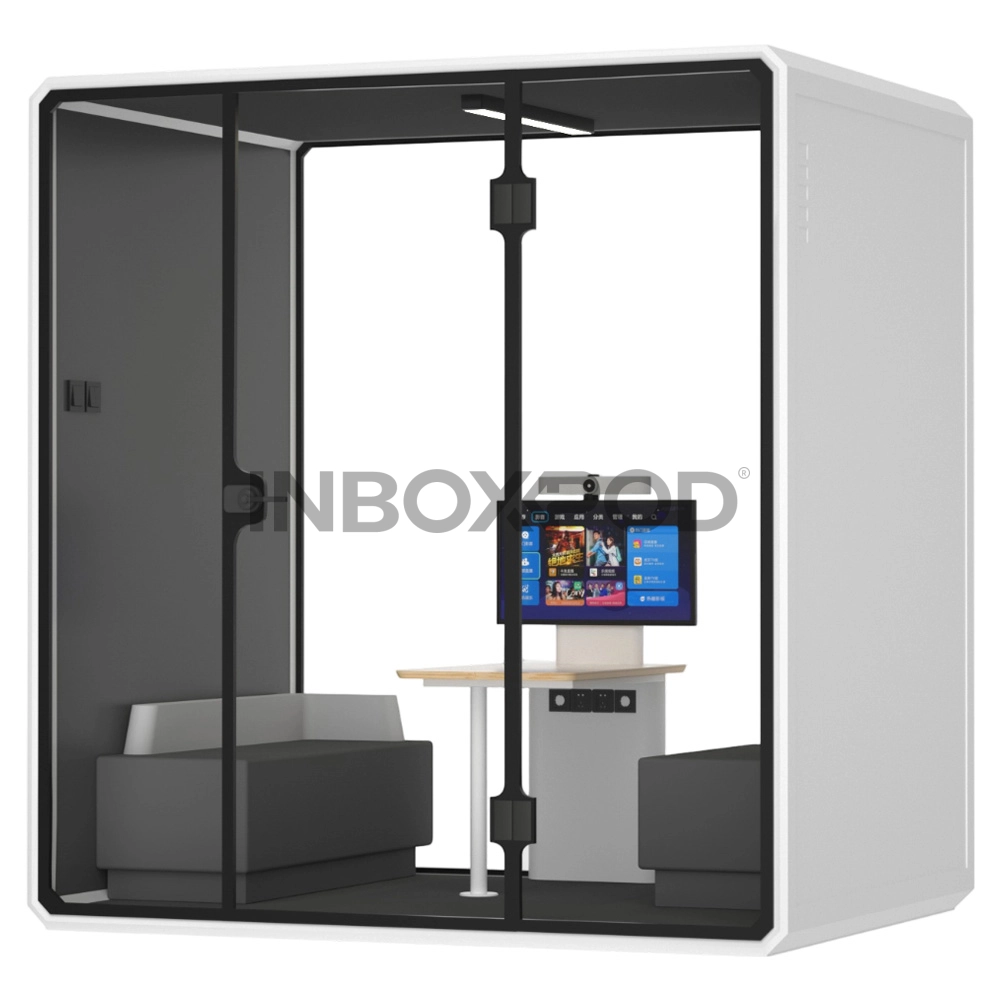
Soundproof Single Bed Oxygen Pod Therapy
Create an immersive deep health oxygen therapy space for you, with a single bed design for ultimate comfort. External size: W2300×D1478×H2300 mm; internal size: W2166×D1403×H2166 mm. Enjoy the nourishment of high-concentration oxygen while lying down, improve sleep, relieve fatigue, enhance immunity, and start a journey of health renewal.
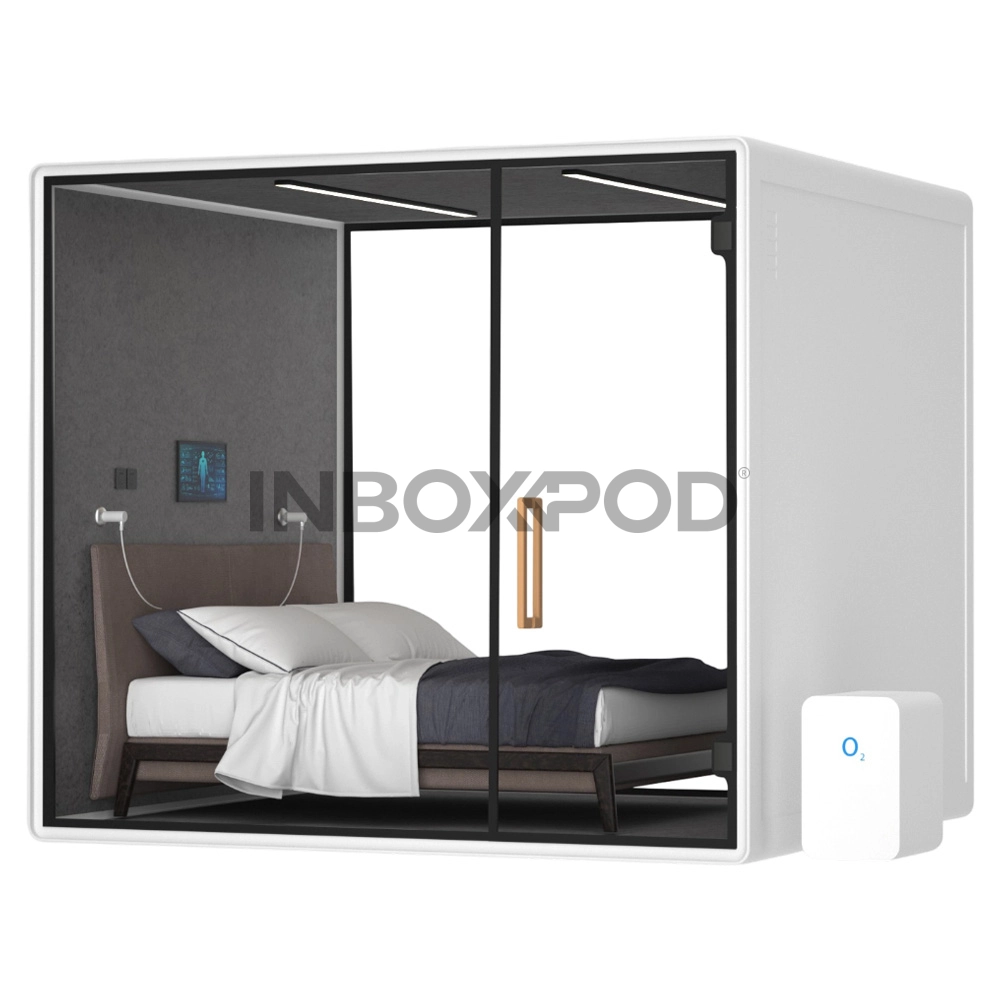
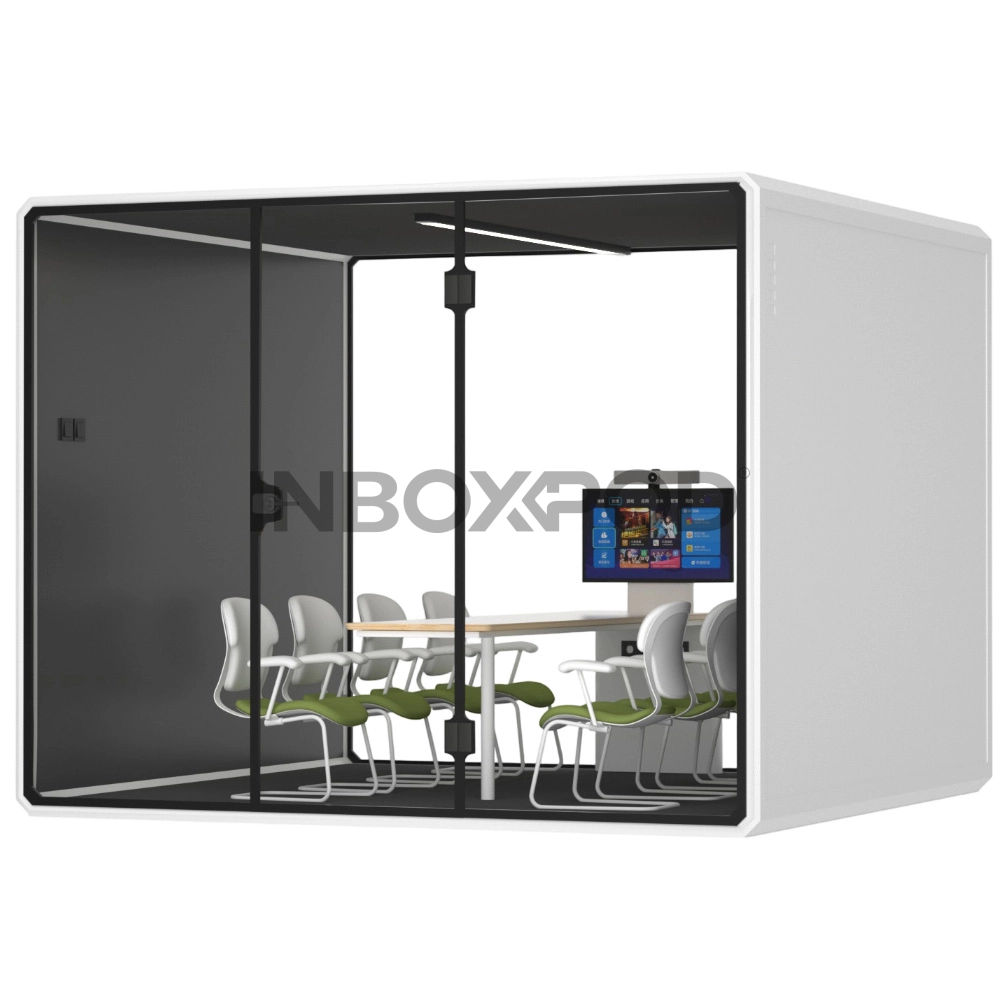
Double bed (large) Soundproof Oxygen Pod
A shared health oxygen therapy world for families, with a large double-bed design to meet the comfort needs of two people. External size: W2300×D2379×H2300 mm; internal size: W2166×D2304×H2166 mm. Let you and your family or partner enjoy high-oxygen nourishment together, improve body functions, delay aging, and embrace a healthy life with intimate company.
Stay Updated with INBOXpod Insights
Subscribe to receive the latest articles, industry news, and updates on our acoustic solutions. Stay informed and discover distribution opportunities with INBOXpod.
Whatsapp: +8613535292957