
How much do soundproof meeting pods cost?
- How truly effective are soundproof meeting pods for sensitive, confidential discussions, and what specific acoustic metrics should I scrutinize beyond marketing buzzwords?
- Beyond the initial purchase price, what are the often-overlooked ongoing or 'hidden' costs associated with owning and maintaining soundproof meeting pods over a 3-5 year lifespan?
- My open-plan office struggles with constant distractions; what tangible ROI can I expect from investing in soundproof pods in terms of employee productivity, well-being, and ly, company profitability?
- How do soundproof pods manage internal air quality and temperature without generating noticeable fan noise or feeling stuffy during extended use, especially for multiple occupants?
- Given modern office design often features tight corridors or restricted access, what are the practical logistical challenges and typical timelines for delivering and installing larger soundproof meeting pods?
- What advanced acoustic materials and design features truly differentiate a High Quality soundproof meeting pod from a basic one in terms of speech privacy, and how can I verify these features during evaluation?
- Elevate Your Workspace with High Quality Acoustic Privacy Solutions
Unlocking Quiet: Your Expert Guide to Soundproof Meeting Pods
Soundproof meeting pods are rapidly becoming an indispensable asset in modern office environments, offering much-needed acoustic privacy and focused workspaces amidst the hustle of open-plan layouts. However, for those new to the market, a myriad of questions arise that often receive superficial or outdated answers. As experts in the field of acoustic office solutions, we aim to provide you with the deep insights necessary to make an informed decision for your workspace.
How truly effective are soundproof meeting pods for sensitive, confidential discussions, and what specific acoustic metrics should I scrutinize beyond marketing buzzwords?
The term soundproof is often used colloquially and can be misleading. In reality, no architectural element is 100% soundproof; rather, professional soundproof meeting pods are designed for significant sound attenuation and speech privacy. For sensitive discussions, you need more than just general noise reduction; you need to prevent intelligible speech from escaping or entering the pod.
Key metrics to scrutinize:
- STC (Sound Transmission Class): This is the most crucial rating for airborne sound insulation. A higher STC value indicates better sound blocking. For a pod to effectively handle confidential conversations, look for an STC rating of 30-35 at minimum, with 35-40+ being ideal for excellent speech privacy. An STC 30 means that loud speech is largely unintelligible, while STC 40 means it's barely audible. Be wary of pods only listing noise reduction in decibels (dB) without an STC or Rw equivalent, as dB reduction can be measured inconsistently.
- Rw (Weighted Sound Reduction Index): Similar to STC, Rw is a European standard that measures the sound insulation of a material or building element. An Rw rating around 30-35dB is generally considered good for office speech privacy.
- Speech Privacy Index (SPI): While less commonly advertised, some manufacturers may provide data on SPI, which directly assesses how effective a space is at preventing speech from being understood by others. Look for testing data that specifically addresses speech frequencies (typically 500-4000 Hz).
True acoustic performance relies on multi-layered walls (e.g., MDF, acoustic foam, plasterboard), double-glazed or laminated acoustic glass, robust perimeter door seals, and a solid door core. Simply having thick walls isn't enough; sealing all gaps is paramount for creating effective quiet workspaces.
Beyond the initial purchase price, what are the often-overlooked ongoing or 'hidden' costs associated with owning and maintaining soundproof meeting pods over a 3-5 year lifespan?
The sticker price of a soundproof office pod is just one piece of the puzzle. Over their lifespan, several other costs can accumulate:
- Shipping & Delivery: Depending on your location and the pod's origin, freight costs can be substantial, especially for larger units or international shipments. Ensure these are factored into your budget.
- Professional Installation: While many pods are designed for modular assembly, larger soundproof enclosures often benefit from professional installation, which adds to the initial setup cost. An average small pod might take 2-4 hours for 2-3 people, while a larger meeting booth could take 4-8 hours. DIY can save money but risks improper assembly, compromising acoustic performance or warranty.
- Electrical Hookup & Data Integration: Most modern pods come equipped with integrated power outlets, USB charging, and sometimes data ports. You may need to run dedicated power lines or network cables, incurring electrician or IT technician fees, especially if your office infrastructure requires modification.
- HVAC & Air Quality Maintenance: Integrated ventilation systems, while essential, require periodic filter replacement (e.g., every 6-12 months) to maintain optimal air quality and fan efficiency. This is a recurring operational cost.
- Cleaning & Wear and Tear: Like any office furniture, the interior and exterior surfaces will require regular cleaning. Fabric panels, if present, may need specialized cleaning. Over time, components like door seals, lighting, or fans might need replacement, though high-quality commercial-grade pods are built for durability.
- Space Reconfiguration: If you ever need to relocate the pod within your office or to a new office, professional disassembly and reassembly will incur costs. The beauty of modular meeting rooms is their portability, but moving them isn't free.
When calculating the total cost of ownership (TCO), consider these factors to get a true picture of your investment in acoustic privacy solutions.
My open-plan office struggles with constant distractions; what tangible ROI can I expect from investing in soundproof pods in terms of employee productivity, well-being, and ly, company profitability?
The ROI of investing in soundproof meeting pods, or focus rooms, is multifaceted and often extends beyond simple cost savings. Studies consistently show that excessive noise and lack of privacy in open-plan offices significantly diminish employee productivity and satisfaction.
Tangible ROI elements include:
- Increased Productivity: Research by organizations like the American Psychological Association suggests that constant interruptions can lead to a significant drop in productivity, sometimes up to 40%. Providing dedicated quiet workspaces allows employees to concentrate better, complete tasks faster, and produce higher-quality work. This directly translates to more efficient operations and output.
- Enhanced Employee Well-being & Retention: A noisy environment is a major source of stress and burnout. Offering acoustic office pods demonstrates an investment in employee comfort and mental health. Happier, less stressed employees are more engaged, more loyal, and less likely to seek opportunities elsewhere, reducing costly turnover.
- Improved Collaboration & Confidentiality: Paradoxically, providing private spaces can improve overall collaboration. Teams can hold focused discussions without disturbing others, and sensitive conversations (HR, sales, client calls) can occur securely, protecting company information and client trust. This strengthens business relationships and reduces communication friction.
- Optimal Space Utilization: Modular sound dampening enclosures allow you to create versatile zones within an existing open-plan layout without expensive and time-consuming traditional construction. This flexibility can be particularly valuable for growing companies or those needing to adapt quickly to changing space requirements.
- Reduced Need for Off-Site Meetings: With private meeting spaces readily available, teams are less likely to book external meeting rooms or coffee shops, saving on travel time and expenses.
- Positive Brand Image: A modern office with well-designed quiet workspaces signals to prospective employees and clients that your company values its people and embraces contemporary work strategies, enhancing your employer brand and corporate image.
While direct monetary ROI can be harder to quantify for some of these benefits, the cumulative impact on your bottom line through increased efficiency, reduced stress, and improved talent retention is substantial.
How do soundproof pods manage internal air quality and temperature without generating noticeable fan noise or feeling stuffy during extended use, especially for multiple occupants?
Effective ventilation and air quality management are critical for any enclosed space, especially soundproof work pods designed for extended use by multiple individuals. Poor ventilation quickly leads to stuffiness, CO2 buildup, and discomfort, negating the benefits of privacy.
Leading manufacturers integrate sophisticated systems to address this:
- Silent Fan Systems: High-quality privacy pods utilize low-noise, high-efficiency fans, often strategically placed within the ceiling or wall structure with acoustic dampening materials. These fans are designed to operate below the human hearing threshold for distraction (typically below 30-35 dB, similar to a whisper). They pull stale air out and draw fresh air in through discreet vents.
- Optimal Air Exchange Rates: Professional soundproof enclosures are designed to achieve high air exchange rates, often measured in Cubic Feet per Minute (CFM) or Air Changes Per Hour (ACH). For a small phone booth, you might see 60-80 CFM; for a larger meeting pod, it could be 150-250 CFM, ensuring the air inside is completely replaced every few minutes (e.g., 20-30 ACH). This prevents CO2 buildup and keeps the air feeling fresh.
- Passive Air Inlets and Outlets: Air is typically drawn in from the lower sections of the pod and expelled from the top, creating a natural convection current that aids circulation. These inlets/outlets are designed with baffles or labyrinths to prevent sound leakage while allowing airflow.
- Temperature Regulation: While most pods don't have their own independent HVAC units, efficient air exchange helps in regulating temperature. Some High Quality models might include small, integrated cooling units or allow for connection to the building's HVAC. Additionally, the selection of interior materials like breathable fabrics can contribute to comfort. Many modern pods also feature motion sensors to activate ventilation and lighting only when occupied, conserving energy.
- Optional HEPA Filtration: Some advanced acoustic pods offer optional HEPA filters to remove allergens, dust, and airborne particles, further enhancing air quality, which is a significant health benefit in shared office environments.
Given modern office design often features tight corridors or restricted access, what are the practical logistical challenges and typical timelines for delivering and installing larger soundproof meeting pods?
Logistics for delivering and installing soundproof meeting pods, especially larger models, require careful planning to avoid headaches. These aren't just lightweight pieces of furniture.
Practical logistical challenges:
- Doorway and Corridor Access: Pod components, particularly large wall panels and glass sections, can be bulky. It's crucial to measure all doorways, elevator clearances, and corridor widths from the loading dock to the final installation site. A standard double door (60 inches or 150 cm) is generally sufficient, but single doors or narrow turns can pose significant issues. For very large components, some buildings may require temporary removal of doors or door frames.
- Elevator Capacity: If your office is not on the ground floor, freight elevator dimensions (height, width, depth, and weight capacity) are critical. Ensure the elevator can accommodate the largest and heaviest pod components.
- Loading Dock & Staging Area: A designated loading dock and a clear staging area close to the installation site are essential for efficient unloading and unpacking. Lack of space can lead to delays and increased labor costs.
- Floor Protection: Components can be heavy, so ensure proper floor protection (e.g., floor runners, plywood) is in place, especially over carpet or sensitive flooring, to prevent damage during transit and assembly.
- Power & Data Accessibility: While not a delivery challenge, ensure the final location has readily accessible power outlets and network drops, or plan for extension runs.
Typical timelines:
- Delivery: Once manufactured, shipping can take anywhere from 2-4 weeks for domestic shipments to 6-12+ weeks for international freight, depending on origin and destination. Expedited shipping is often available at a High Quality.
- Installation:
- Small Phone Booth (1-person): Typically 2-4 hours for 2-3 experienced installers.
- Medium Focus Pod (2-4 person): Often 4-8 hours for 3-4 experienced installers.
- Large Meeting Pod (4-6+ person): Can take 6-12+ hours, or even a full day, for 3-5 experienced installers, sometimes requiring two separate installation days depending on complexity and crew availability.
It's always recommended to work with suppliers who offer professional installation services or provide detailed, clear assembly instructions and support. Proper pre-site surveys can prevent most logistical issues.
What advanced acoustic materials and design features truly differentiate a High Quality soundproof meeting pod from a basic one in terms of speech privacy, and how can I verify these features during evaluation?
The difference between a basic office phone booth and a High Quality acoustic privacy solution lies in the sophisticated application of materials and meticulous design details.
Key differentiating features and how to verify them:
- Multi-Layered Wall Construction: High Quality pods often feature a sandwich construction of varying densities (e.g., MDF, gypsum board, mass loaded vinyl, acoustic foam) and air gaps. This multi-layered approach is far more effective at blocking a broad range of sound frequencies than a single thick panel.
- Verification: Ask for detailed cross-section diagrams or material specifications. You might not be able to dismantle a demo unit, but reputable manufacturers will provide transparent information on their material composition and STC ratings.
- High-Performance Acoustic Glass: Instead of standard tempered glass, High Quality pods use double or even triple-glazed acoustic glass, often with a laminated interlayer (like PVB) that dampens sound vibrations. This is crucial as glass can be an acoustic weak point.
- Verification: Look for thicker glass panes (e.g., 6mm+ per pane) and specifically inquire if it's acoustic-grade laminated glass. Tap the glass; a duller, more solid sound can indicate better acoustic properties.
- Advanced Door Sealing Mechanisms: The door is another common sound leak. High Quality pods feature robust, multi-point magnetic or compression seals (like automotive-grade seals) around the entire door perimeter, and often a drop-down bottom seal (automatic sweep seal) that engages when the door closes.
- Verification: Close the door and observe for any visible light gaps. Run your hand around the perimeter to feel for air leaks. Listen for a distinct, solid thud when the door closes, indicating a good seal.
- Acoustically Treated Ventilation and Cable Pass-Throughs: All penetrations (for air, power, data) are potential sound leaks. High Quality pods integrate sound baffles or labyrinth designs into their ventilation systems and provide grommeted, sealed cable pass-throughs that don't compromise sound isolation.
- Verification: Observe the vent design. Are they simple holes, or are they integrated with channels to trap sound? Check cable entry points for secure, sealed access.
- Integrated Acoustic Absorbers: Beyond blocking sound, High Quality pods often incorporate interior acoustic panels (e.g., felt, fabric-wrapped fiberglass) to absorb sound within the pod, reducing echo and reverberation for a more comfortable and clear conversation experience. This also enhances speech intelligibility within the pod itself.
- Verification: Note the interior surfaces. Are they mostly hard and reflective, or are there soft, porous materials on walls and ceilings? A quick clap inside a pod can reveal its reverberation characteristics; less echo is better.
- Robust Framework and Leveling: A strong, stable frame minimizes vibrations that can transmit sound. Adjustable leveling feet are important for ensuring a tight seal on uneven floors.
- Verification: Feel the solidity of the structure. Check for adjustable feet underneath.
When evaluating soundproof enclosures, always request performance certificates or independent testing data (e.g., from an accredited lab) to back up any claims. Visit a showroom or request a demo unit if possible, to experience the acoustic performance firsthand.
Elevate Your Workspace with High Quality Acoustic Privacy Solutions
Investing in high-quality soundproof meeting pods is a strategic decision that offers far-reaching benefits for any modern office. From significantly boosting employee productivity and well-being through dedicated quiet workspaces, to ensuring confidential discussions remain private, these acoustic office solutions are more than just furniture—they are vital tools for an efficient and harmonious workplace. Their modular design offers unparalleled flexibility, and with proper selection based on clear acoustic metrics and a holistic understanding of long-term costs, they represent a smart, sustainable investment. Choosing a reliable provider ensures you gain not just a pod, but a truly transformative acoustic environment.
Ready to transform your office with the perfect acoustic privacy solution? Contact us today for a personalized quote tailored to your specific needs!
Website: www.inboxpod.comEmail: sale@inboxpod.com
Home-demo
Do you provide after-sales support and warranty?
Yes, we provide comprehensive after-sales service and warranty to ensure long-term satisfaction with our products.
What is the typical sound insulation level of your acoustic booths?
Our booths typically achieve up to 27 dB noise reduction, meeting Class B sound insulation standards suitable for offices and study environments.
Can the booths be customized to fit specific space requirements?
Yes, we offer flexible customization options including size, color, and additional features to perfectly suit your needs.
What materials are used in the construction of the booths?
Our booths are made from sustainable, high-quality materials including aluminum alloy frames and acoustic panels designed for optimal soundproofing.
How long does it take to assemble an INBOXpod booth?
Most of our booths can be assembled without tools in about 30 minutes, making installation quick and hassle-free.
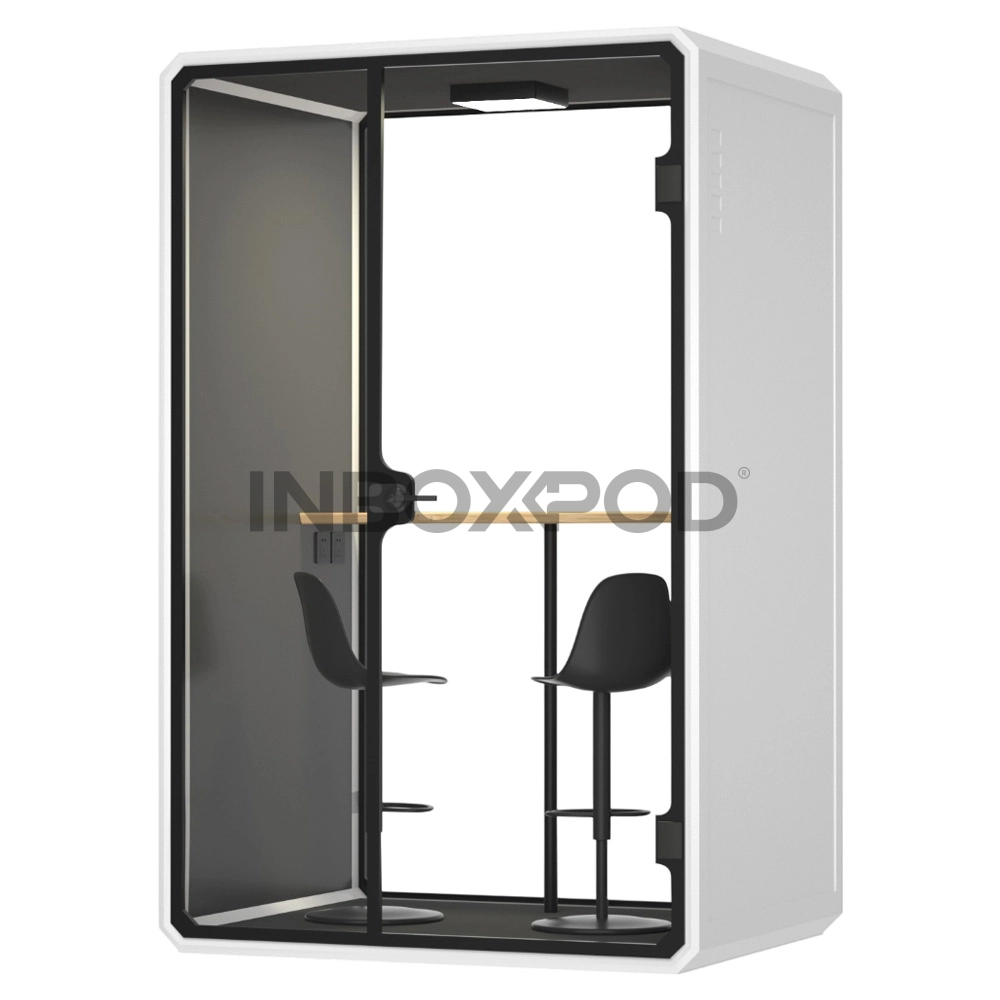
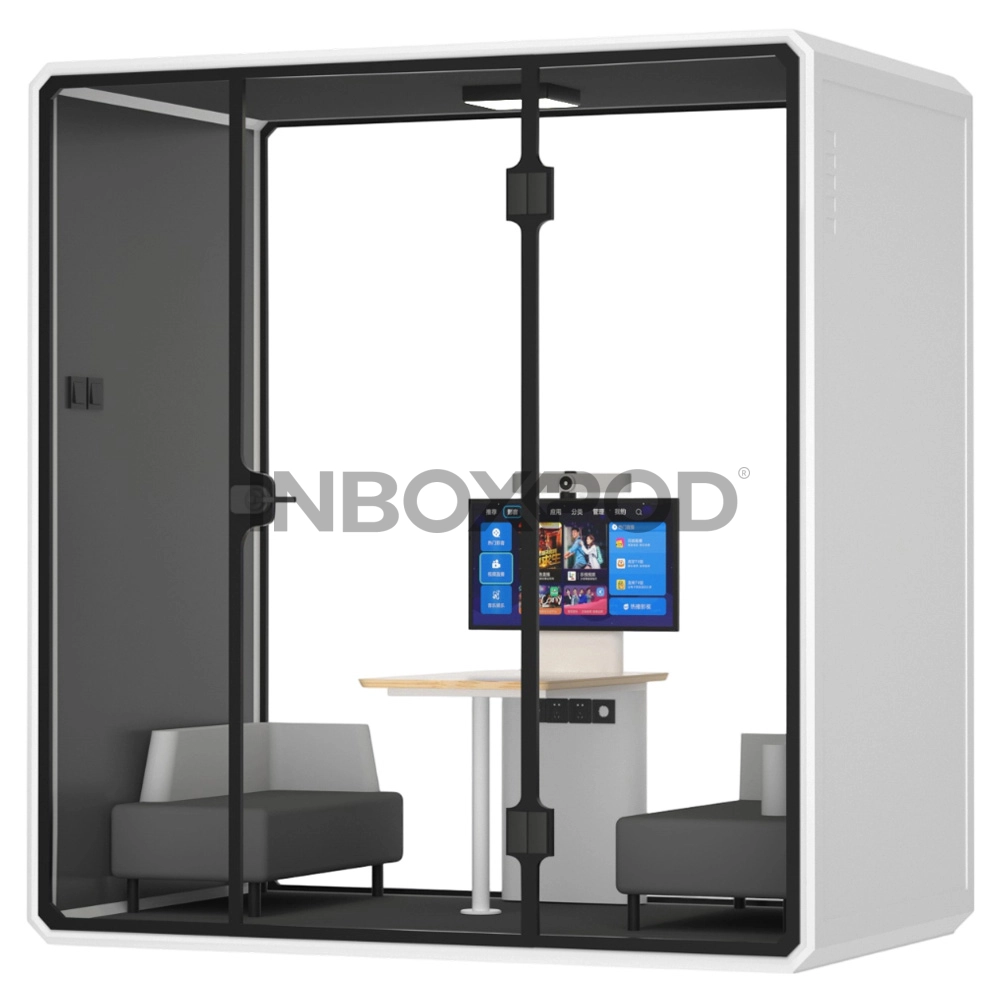
Silence Booth/Office Pod Prefabricated V series-L size
Designed for team collaboration and small meetings, the L-size booth provides a comfortable and acoustically optimized space for 4–6 people. With premium sound insulation, efficient ventilation, and integrated lighting and power systems, it ensures focus, privacy, and productivity—even in the busiest open offices.
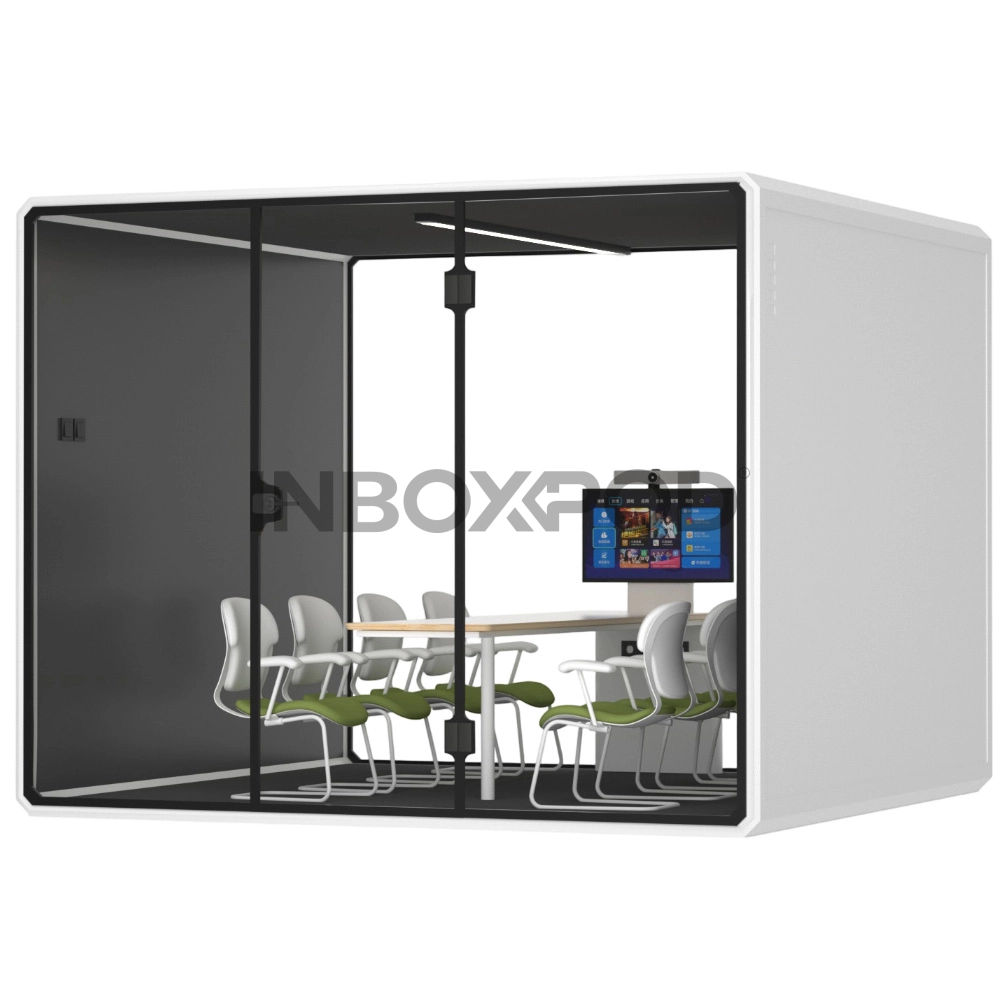
Silence Booth/Office pod Prefabricated V series-XXL size
The XXL-size booth is a premium modular acoustic room designed for larger teams and dynamic discussions. With ample interior space for 6–10 people, it provides exceptional sound insulation, effective air circulation, and integrated lighting to ensure comfort during long meetings. Ideal for boardroom sessions, client presentations, and collaborative brainstorming, the XXL booth creates a quiet and productive environment within any workspace.
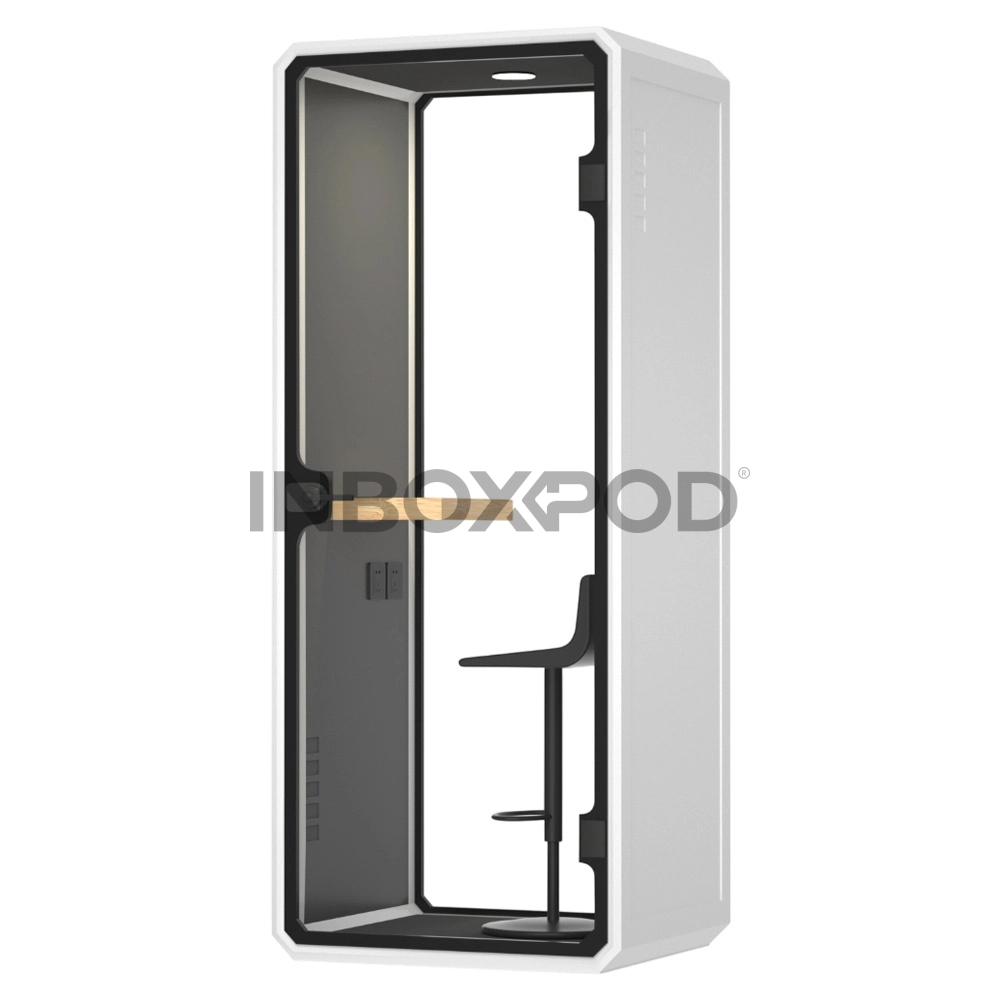
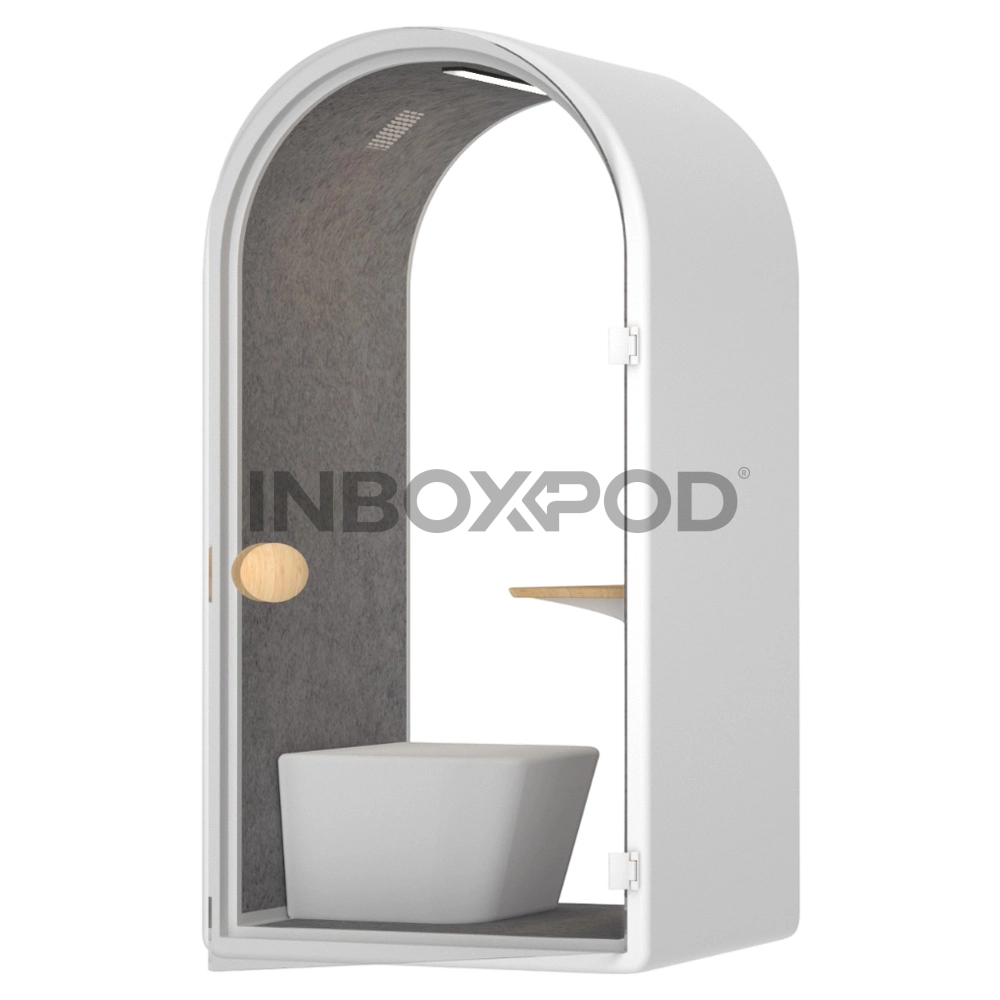
Silence Booth/Office pod Prefabricated V series-S size
Built with high-performance acoustic materials and a modular prefabricated structure, it offers excellent sound insulation, fast installation, and efficient space utilization.
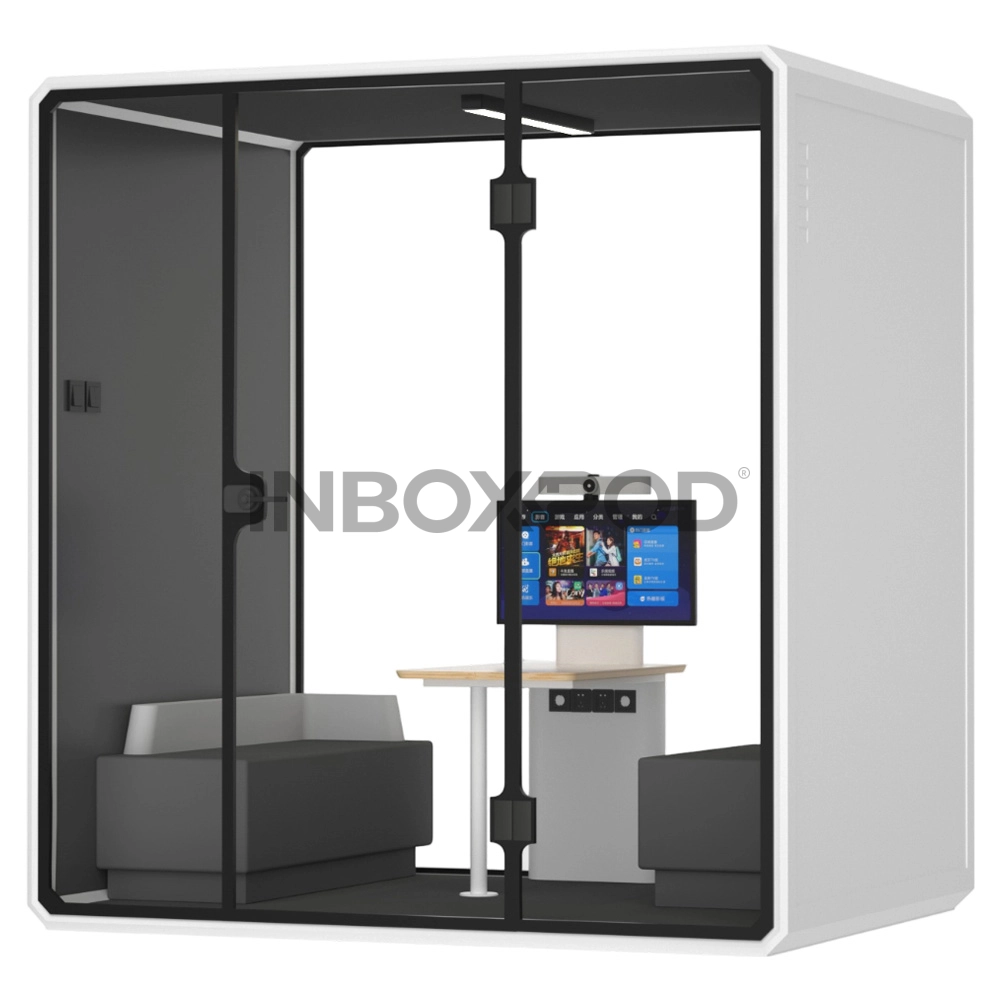
Silence Booth/Office pod Prefabricated V series-XL size
Designed for team collaboration and creative meetings, the XL-size booth provides a spacious and quiet environment that accommodates 4–6 people comfortably. Featuring premium sound insulation, integrated ventilation, and customizable lighting, it transforms any open space into a private meeting room—ideal for brainstorming, interviews, or hybrid meetings.
Stay Updated with INBOXpod Insights
Subscribe to receive the latest articles, industry news, and updates on our acoustic solutions. Stay informed and discover distribution opportunities with INBOXpod.
Whatsapp: +8613535292957